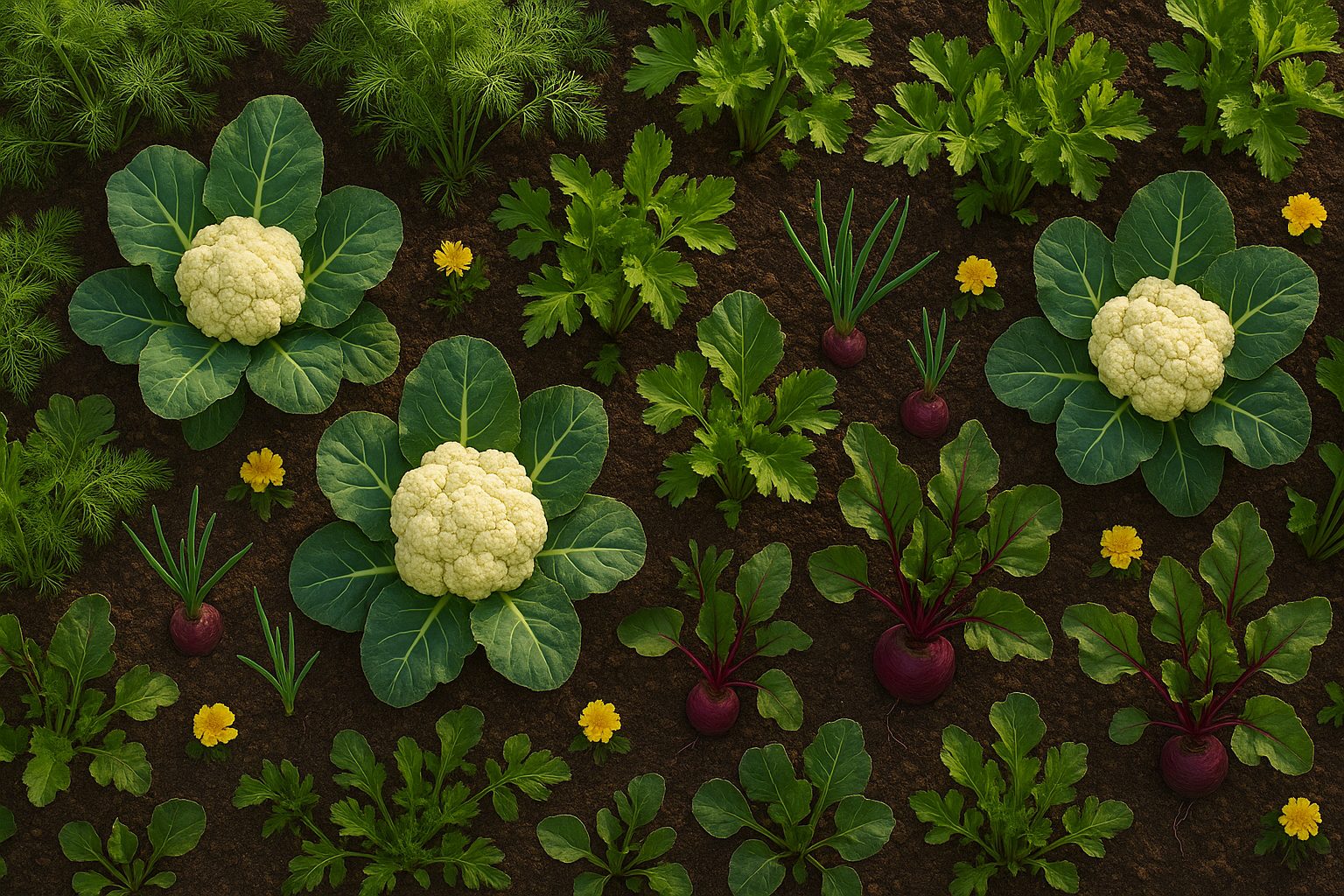
Introduction to Cauliflower Companion Planting
If you want to get the best harvest from your garden, it’s smart to learn which veggies to avoid near cauliflower. Companion planting is the time-tested practice of growing certain crops together to help each other thrive, strengthen resistance to pests, and boost overall yields.
When it comes to cauliflower, choosing garden neighbors wisely can make a surprising difference. Some plants provide natural shade, attract helpful insects, or improve the soil—while others might stunt your cauliflower’s growth, compete for nutrients, or invite pests.
Knowing which plants to pair and which to skip is essential for anyone hoping for fat, healthy cauliflower heads. For instance, planting cauliflower with beans or peas can be beneficial, while certain aromatic herbs or fast-growing veggies may hinder its progress. Companion planting doesn’t just mean mixing crops—it’s about truly understanding the interactions between species in your veggie patch.
In this article, we’ll explore which plants make the best companions for cauliflower, why you should avoid certain vegetables near it, and the science behind these choices. Plus, you’ll find practical tips to design your own companion planting plan for a thriving, resilient garden.
Why Companion Planting Works for Cauliflower
Companion planting is a time-tested gardening strategy that offers multiple benefits for cauliflower, making your garden both healthier and more productive. By carefully pairing cauliflower with plants like celery, onions, or marigolds, you can help ward off common pests such as cabbage worms and aphids—pests that tend to avoid the odors or natural chemicals released by these companions.
For example, planting marigolds nearby produces a scent that confuses or deters many insects, acting as a natural repellent. In addition to natural pest control, companion planting improves growth by allowing plants to share space efficiently; shallow-rooted herbs like dill can grow beside cauliflower without competing for nutrients, maximizing your garden’s yield even in smaller plots.
Certain companions also boost soil health: legumes such as beans and peas add nitrogen to the soil, which is especially beneficial for hungry crops like cauliflower. Plus, some gardeners notice that cauliflower grown alongside aromatic herbs like sage or thyme develops a more nuanced flavor—an added bonus for your kitchen.
By making smart plant pairings, you not only protect your cauliflower from pests but also create a more productive, space-efficient, and flavorful harvest.
Best Companion Plants for Cauliflower
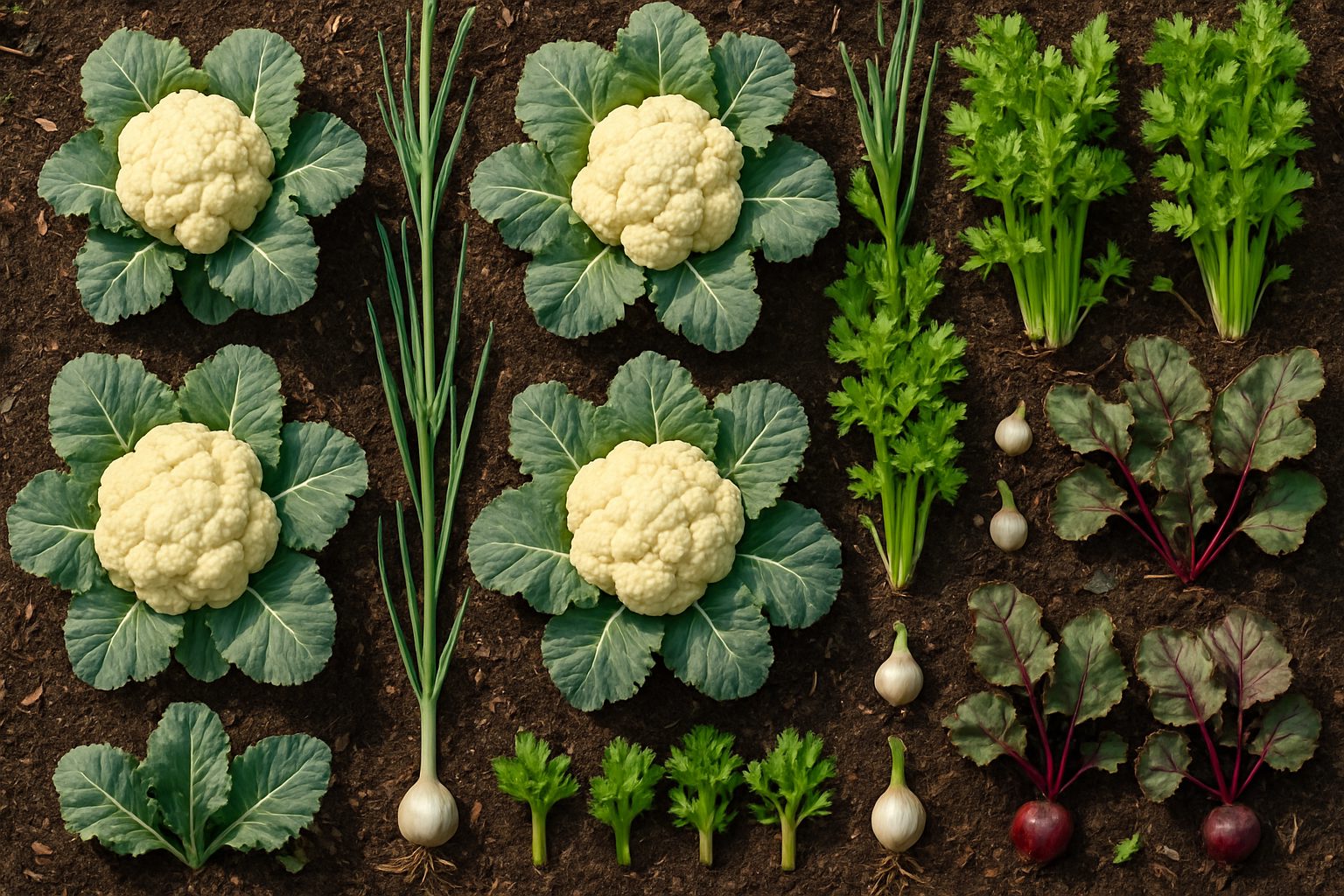
When planning your cauliflower patch, choosing the right companions can make all the difference in plant health and harvest success. Onions and garlic are top choices—they emit strong scents that naturally repel common pests like cabbage worms and aphids, which often target cauliflower. Plant these alliums in rows or clumps around the perimeter of your cauliflower bed for a protective barrier.
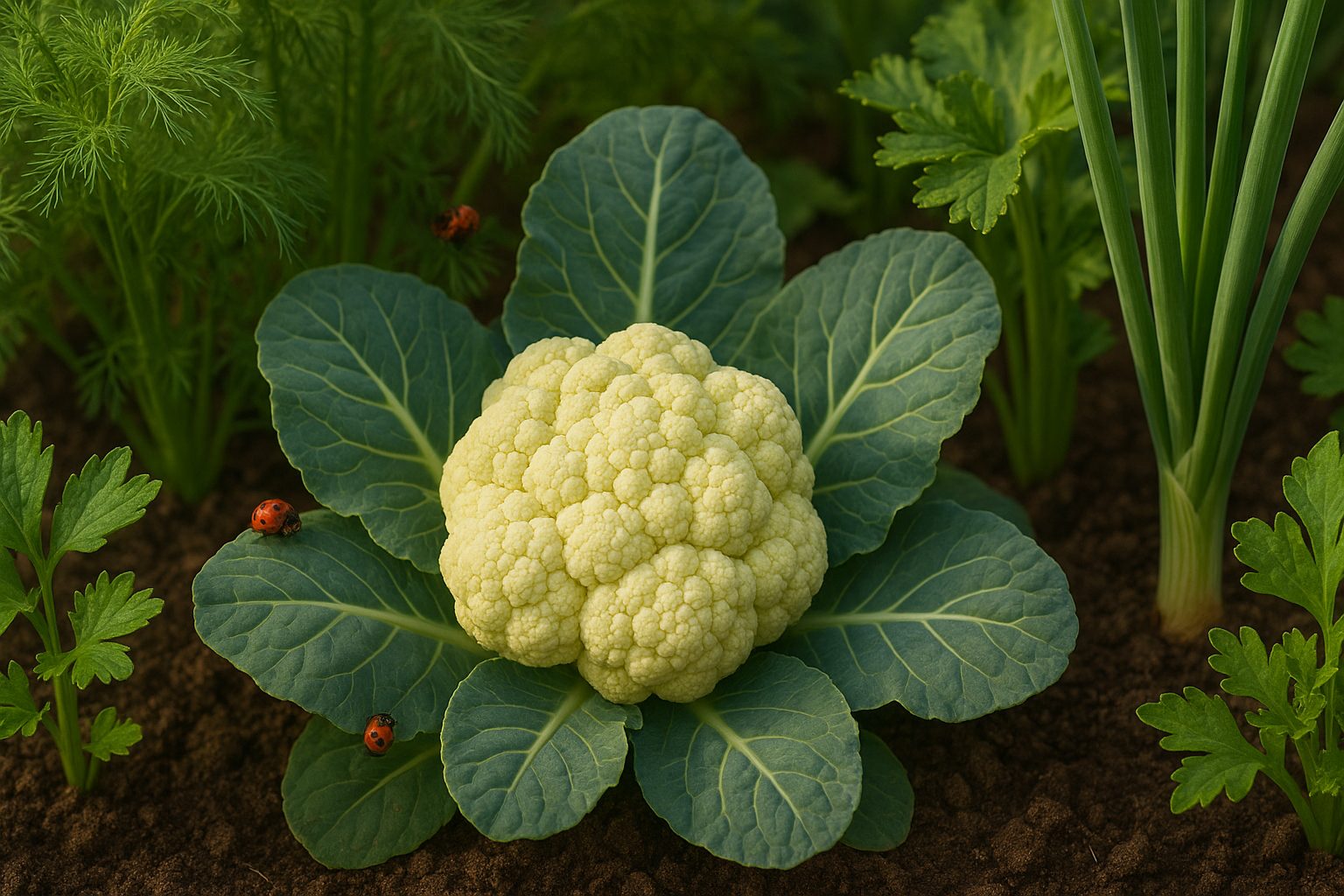
Dill is another excellent companion; it not only attracts beneficial insects such as ladybugs and predatory wasps that prey on cauliflower pests but also improves pollination and overall garden diversity. For best effect, tuck dill between cauliflower plants or at the corners of your bed, leaving space for its feathery foliage to grow without crowding neighboring crops.
Celery is a helpful partner because it boosts flavor and may deter pests while thriving in similar moist, fertile conditions as cauliflower. Interplant celery in alternating rows or staggered patterns to maximize space and create a lush canopy that helps moderate soil temperature and retain moisture.
Beets make a clever addition too; their shallow roots won’t compete with cauliflower’s deeper system, and beets contribute organic matter to the soil when their leaves are trimmed and used as mulch. Plant beets beside or in front of cauliflower, ensuring they receive enough light while their leafy tops provide gentle shade during hot spells.
To get the most from your companion planting efforts, aim for a checkerboard layout or use blocks of alternating species for easy root space management and natural pest barriers. Always leave adequate space based on each plant’s mature size—typically about 18-24 inches for cauliflower—so airflow isn’t restricted, which helps prevent diseases.
By combining onions, garlic, dill, celery, and beets thoughtfully, you’ll create a dynamic, resilient cauliflower bed that reduces pests, boosts growth, and increases the odds of a plentiful harvest.
Plants to Avoid Near Cauliflower
When planning your cauliflower patch, it’s important to know which plants to avoid nearby. Strawberries, for example, are poor companions because they can attract pests and diseases—like aphids and slugs—that also target cauliflower, quickly spreading problems between the two.
Similarly, tomatoes and peppers aren’t ideal neighbors; these nightshades compete with cauliflower for nutrients, particularly calcium, and can encourage fungal issues in shared soil.
Beans and other legumes may seem like good companions because they fix nitrogen, but for cauliflower, this nutrient excess can actually stunt flower growth and reduce yields.
These mismatched pairings often result in crowded roots, increased vulnerability to pests, and subpar harvests. If your garden space is tight and you can’t separate these plants by distance, consider using raised beds or large containers to keep incompatible crops apart.
Alternatively, use barriers like garden fabric or mulch to help prevent pest migration and soil-borne diseases from spreading.
If you’re searching for cauliflower-friendly neighbors, try planting aromatic herbs like dill, sage, or thyme nearby—these can help deter cabbage moths and other destructive pests, making for a healthier, more productive garden.
Remember, successful companion planting isn’t just about what you grow, but where you grow it. Thoughtful choices now can save you time and energy battling issues later in the season.
Tips for Successful Companion Planting with Cauliflower
When companion planting cauliflower, thoughtful garden planning boosts your chances of a healthy harvest. Start by giving each cauliflower at least 18–24 inches of space in all directions—this prevents overcrowding, which can lead to stunted growth or increased disease risk.
Arrange companion plants like dill, celery, or onions nearby, but avoid close proximity to strawberries or pole beans, as these can compete for nutrients and stunt cauliflower’s development. Rotate your crops each year to new spots; planting brassicas like cauliflower in the same soil season after season encourages pest buildup, so following them with legumes or root vegetables is a smart move.
Cauliflower loves full sun—aim for at least six hours daily—so position taller companions to the north or east to avoid unwanted shading. Water consistently, keeping soil evenly moist but never soggy, since drought stress or waterlogged roots can weaken the plants and attract pests like aphids or cabbage worms.
Watch for early signs of plant incompatibility: limp or yellowing leaves, particularly on one species, may signal nutrient competition; stunted growth or leaf curling can point to root crowding or poor airflow.
To optimize soil throughout the season, mulch around plants with straw or compost to help retain moisture, suppress weeds, and add nutrients as organic matter breaks down.
Test your garden soil for pH and nutrients before planting; cauliflower does best in slightly acidic to neutral soil (pH 6.0–7.0) enriched with compost or well-rotted manure. As your garden grows, top-dress with additional compost or a balanced organic fertilizer every 3–4 weeks to help both cauliflower and its companions thrive.
Regularly pull weeds and remove spent leaves to further reduce disease risk and maintain good airflow. With close monitoring and these simple adjustments, you can enjoy the full advantages of companion planting cauliflower throughout the growing season.
Common Questions About Cauliflower Companion Planting
When planning your cauliflower companion garden, a frequent question is how far apart to plant everything. Aim to leave about 18-24 inches between cauliflower heads. When adding companions like beets or celery, keep them at least 6-12 inches away from your main crops to avoid overcrowding and encourage healthy airflow.
It’s perfectly fine to interplant several companions—just stick to smaller, shallow-rooted plants like spinach or herbs between your cauliflowers. This way, you can make use of empty spots without competing for root space.
Don’t skip soil prep either: cauliflower prefers rich, well-drained soil. Work in compost or aged manure before planting, and keep the soil consistently moist but not soggy. Mulching around plants helps retain moisture and suppress weeds.
If you’re still unsure about which pairs work best together, your local gardening extension office and resources like the Old Farmer’s Almanac offer excellent, region-specific planting charts. There are also many companion planting apps that help you visualize layouts before you plant.