Introduction
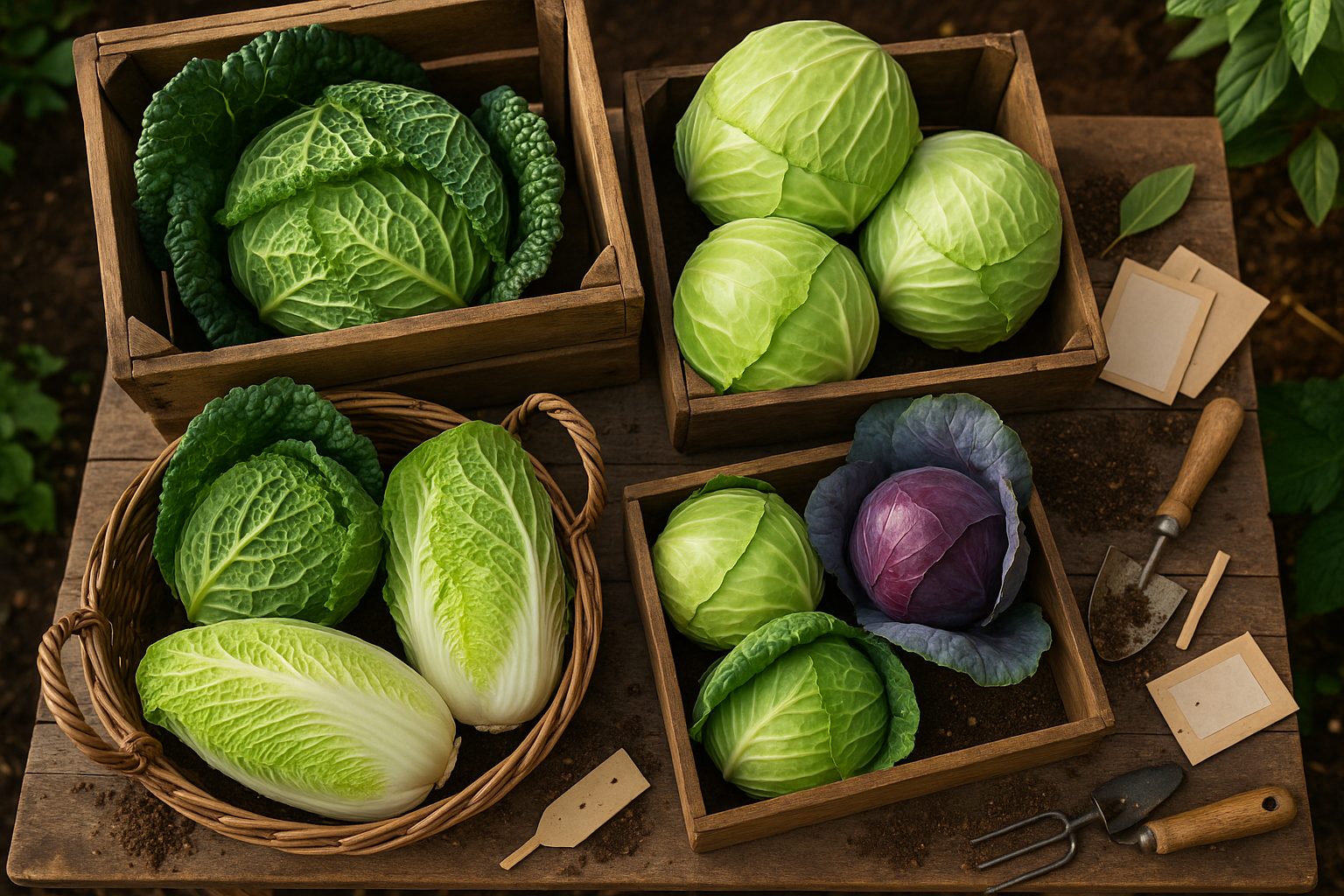
Growing cabbage indoors has become a popular option for urban gardeners and anyone with limited outdoor space. As indoor gardening gains momentum, more people are finding creative ways to grow fresh vegetables right inside their homes, no matter the season. This raises an interesting question: Can you grow cabbage indoors under lights? The answer is yes—with the right setup, this cool-weather crop can thrive indoors. In this post, we’ll cover everything you need to know to successfully grow cabbage indoors, including choosing the right lights, creating the ideal environment, selecting suitable containers, and managing daily care. You’ll find practical tips to maximize growth, avoid common mistakes, and harvest crisp, healthy cabbage heads without needing a backyard. Whether you’re a beginner after easy wins or an experienced gardener looking for new challenges, our guide provides the essentials to help you succeed.
Benefits of Growing Cabbage Indoors
Growing cabbage indoors offers a range of practical and rewarding benefits, making it an excellent choice for anyone interested in home gardening—especially urban dwellers with limited or no outdoor space. One of the main advantages is the ability to enjoy fresh cabbage year-round, regardless of weather changes or seasons. By using grow lights and maintaining a controlled environment, you can avoid common outdoor challenges like unexpected frosts, heatwaves, or heavy rains that often affect harvest timing and quality.
Indoor growing also provides better pest and disease management. You can keep pests like cabbage worms, aphids, and slugs at bay using physical barriers such as fine mesh or simply by sealing windows and doors. This reduces the need for chemical pesticides, resulting in healthier and safer vegetables for your table.
For urban gardeners, apartment dwellers, or anyone without access to a backyard, growing cabbage indoors makes efficient use of available space. A sunny windowsill or a dedicated shelf with LED grow lights is often all you need, making indoor gardening both compact and scalable. Another big plus is the proximity to your produce—you can harvest crisp, leafy cabbage just steps from your kitchen, ensuring maximum freshness and flavor for salads, stir-fries, or homemade coleslaw.
Lastly, indoor gardening is a great educational tool. Families can observe the entire cabbage life cycle up close, helping both children and adults understand where their food comes from and fostering a lasting appreciation for healthy, homegrown vegetables.
Lighting Essentials for Indoor Cabbage
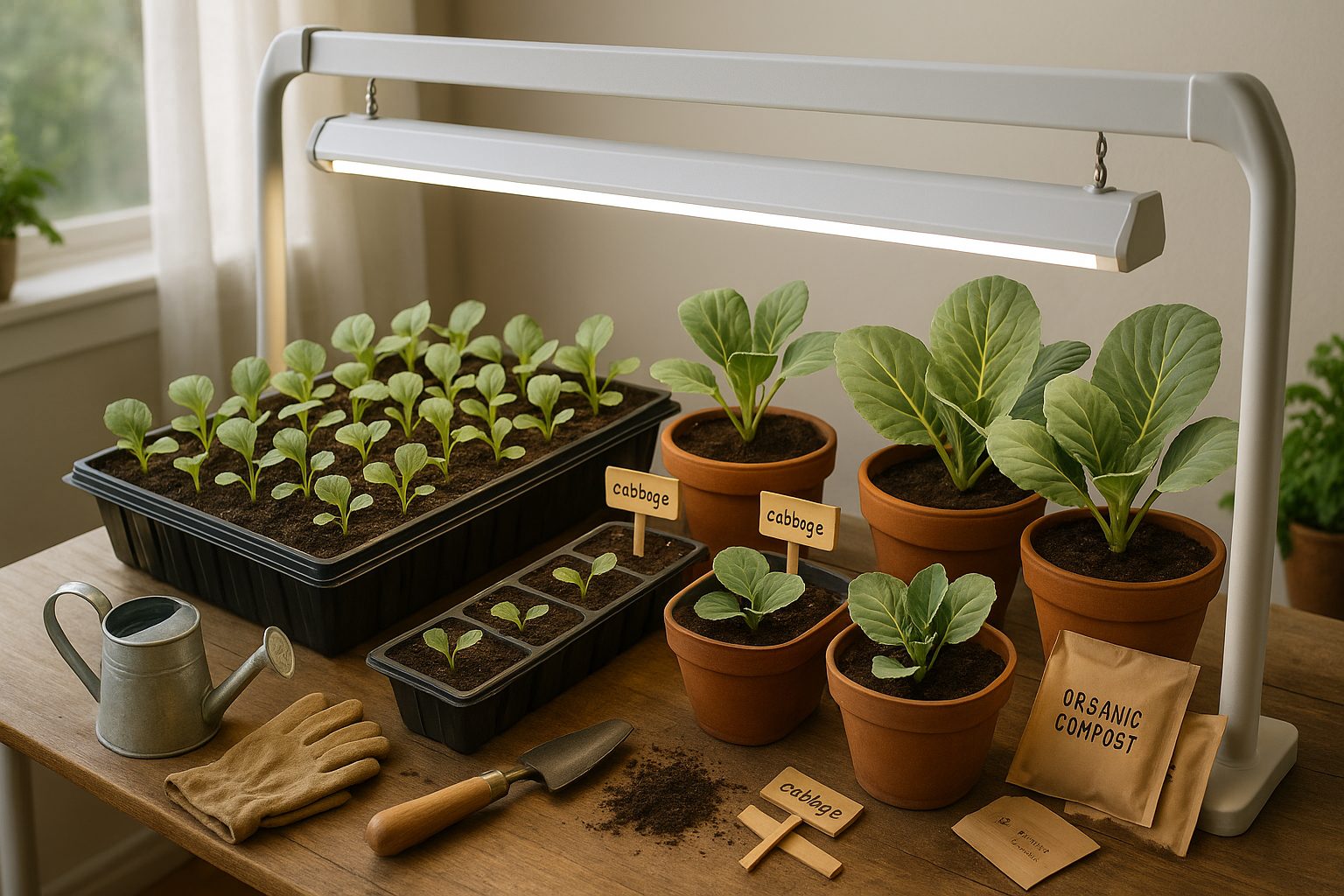
Growing cabbage indoors demands careful attention to lighting because cabbage is a cool-weather, full-sun crop that thrives with bright, consistent light. Ideally, it requires about 14–16 hours of high-intensity light daily to develop strong, firm heads and deep green leaves. Standard household lighting won’t cut it—dedicated grow lights provide the spectrum and intensity needed for healthy growth.
Among the best options for growing cabbage indoors are LED grow lights. They offer a full spectrum tailored for photosynthesis, use less electricity, produce less heat, and last much longer than traditional incandescent or fluorescent bulbs. Fluorescent tubes, especially T5s, are a budget-friendly alternative that works well for leafy seedlings, but they often need to be placed closer to the plants and may lack the power for larger, mature cabbage heads. High-Intensity Discharge (HID) lamps, like metal halide or HPS, deliver intense light but generate more heat, making them less practical for small indoor spaces.
For optimal results, keep your lights about 6 to 12 inches above the cabbage seedlings, adjusting the height as the plants grow. Use adjustable or multiple fixtures and rotate trays if needed to ensure even light coverage. Uneven lighting can cause the cabbage to stretch toward the source, resulting in leggy, weak stems.
Be mindful of heat—especially when using non-LED lights—by monitoring leaf temperature and ensuring good airflow with a fan to prevent heat buildup, which can cause leaf wilting or “light burn” (crispy, pale patches). If you detect overheating, increase the distance between the lights and plants or reduce the lighting duration to cool things down.
Regularly rotate pots or trays to provide uniform light exposure, encouraging symmetrical cabbage head formation. With these lighting essentials in place, your indoor cabbage can thrive year-round—even during the darkest months.
Setting Up Your Indoor Cabbage Garden
When it comes to growing cabbage indoors, choosing the right container and soil is essential for strong, healthy plants. Opt for sturdy containers that are at least 12–16 inches deep and wide to give roots plenty of room to grow, since cabbage develops a large root ball and a big head above ground. If space allows, 5-gallon buckets or roomy grow bags with good drainage holes work well, as soggy roots can harm cabbage. Use a high-quality potting mix rich in organic matter—like compost or peat moss—and mix in a slow-release vegetable fertilizer to provide steady nutrition throughout the growth cycle.
Cabbage needs ample space to thrive, so plan on one plant per container or, if using a larger planter, space heads at least 12–18 inches apart. The soil depth should be at least 12 inches to support strong roots, which helps with stability and nutrient uptake.
Temperature, humidity, and airflow are key factors for successfully growing cabbage indoors. Place your garden near a sunny window or under full-spectrum LED grow lights set to simulate 12–14 hours of daylight. Keep daytime temperatures between 60–70°F (15–21°C) and avoid big temperature swings at night. Cabbage prefers cool, stable conditions, so don’t put containers too close to heat sources or in drafty, cold areas. Keep humidity around 40–60%; if your air is dry, a small humidifier or regular misting can help. Good airflow prevents mold and mildew, so a small oscillating fan set on low a few feet away will keep the air circulating without harming tender seedlings.
For ongoing care, use a moisture meter to avoid over- or under-watering, since cabbage dislikes both extremes. Plant labels help you keep track of varieties and schedules. A timer for your grow lights ensures consistent light exposure, and a small, easy-to-clean spray bottle is handy for misting leaves and deterring pests like aphids. Regularly check for yellowing leaves or stunted growth, adjusting light or fertilizer as needed. With the right setup, growing cabbage indoors is surprisingly manageable—and you’ll enjoy crisp, delicious heads year-round.
Step-by-Step: How to Grow Cabbage Indoors
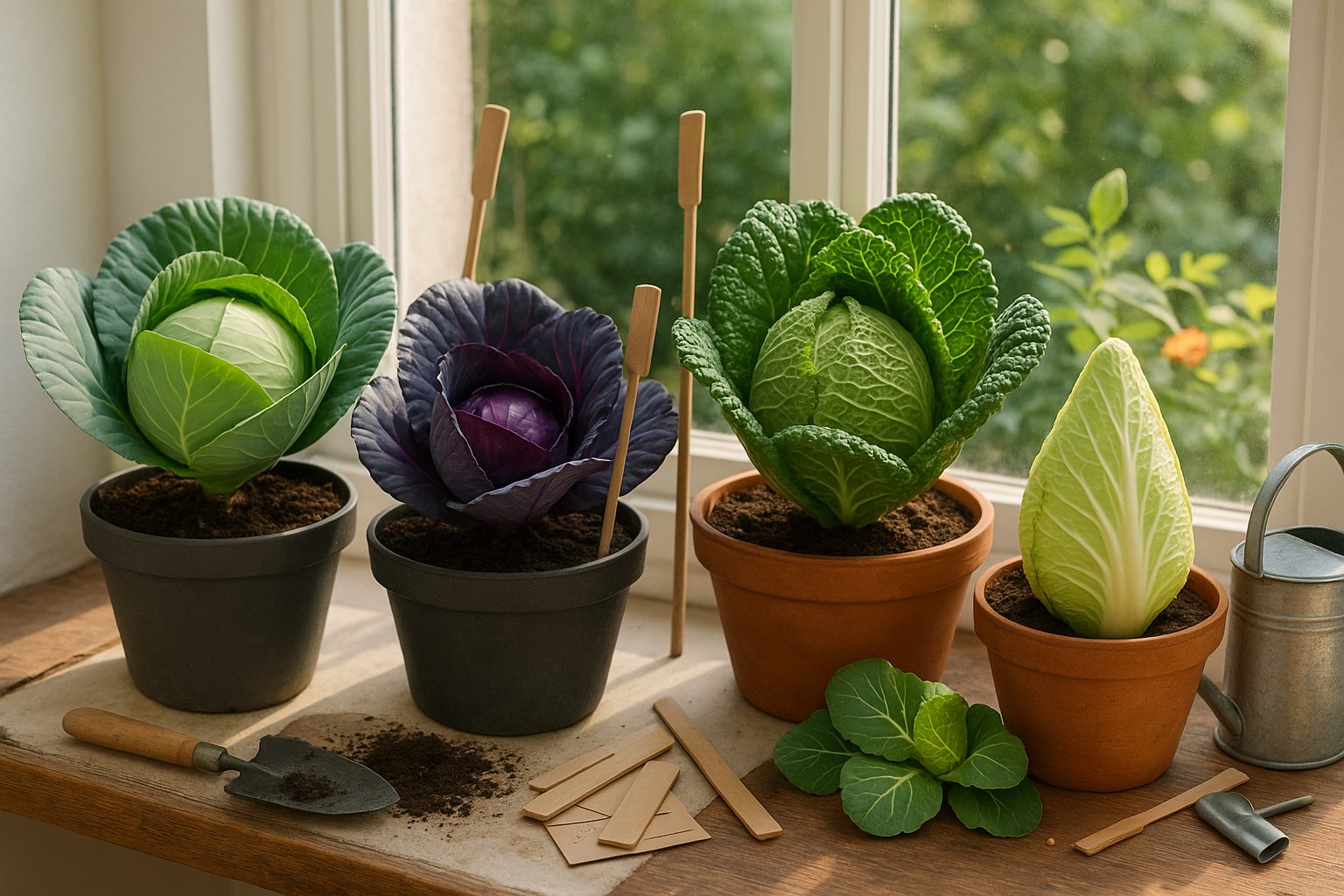
Growing cabbage indoors starts with planting seeds in trays or small pots filled with high-quality seed-starting mix. Sow the seeds about a quarter-inch deep and gently mist the soil to keep it consistently moist—but never soggy. Place your seed trays under strong LED grow lights set 2-4 inches above the soil, running them for 14-16 hours a day to mimic natural sunlight.
Once the seeds sprout (usually within 5-10 days), thin them out, leaving the healthiest seedlings about 2-3 inches apart to prevent overcrowding. When seedlings develop two or three true leaves and reach 2-3 inches tall, transplant them into larger containers at least 8-10 inches deep per plant. Use a rich, well-draining potting mix and ensure containers have drainage holes to avoid root rot.
Water your cabbage regularly, aiming for even moisture throughout the soil, allowing the top inch to dry slightly between waterings. Avoid overwatering to prevent mold or fungus, and improve air circulation by using a small fan nearby. Also, be sure not to let water sit in saucers.
After seedlings are established, fertilize weekly with a balanced liquid fertilizer diluted to half strength. Watch for signs of nutrient burn, like browning leaf edges. If plants become leggy, it usually means they need more light—either increase the light intensity or lower the fixture closer to the leaves.
Maintain a temperature between 60-70°F for optimal growth. Regularly check leaves for pale color or purple veins, as these can indicate nutrient deficiencies. In that case, consider a gentle boost with fish emulsion or a vegetable-specific fertilizer.
Practicing good hygiene by cleaning tools and promptly removing dead leaves helps keep pests and diseases away. With consistent care and monitoring, growing cabbage indoors can produce robust, healthy heads ready to harvest in just a few months.
Troubleshooting and Common Challenges
Growing cabbage indoors comes with its own set of challenges. Being aware of common issues can help you address problems before they get out of control. One frequent problem is improper lighting—cabbage needs at least 12-16 hours of strong, full-spectrum light each day. If your plants appear leggy or have pale, spindly stems, it often means the light is too weak or too far away. Adjust your grow lights so they sit just a few inches above the plants, and use a timer for consistent lighting.
Pest problems are less common indoors but can still occur. Watch out for aphids, fungus gnats, or tiny caterpillars. If you notice sticky residue, holes in leaves, or small bugs, rinse your plants gently with a jet of water or use insecticidal soap to keep pests under control.
Nutrient deficiencies can also cause trouble. Yellowing leaves or slow growth often indicate a lack of nitrogen or magnesium. Use a balanced liquid fertilizer every two weeks, but avoid over-fertilizing, as this can burn the roots and stunt cabbage head development.
Poor air circulation can lead to fungal diseases. Keep a small fan running near your plants to ensure good airflow. If your cabbage fails to form tight heads or remains stunted despite your adjustments, it might be time to start over with fresh soil and seeds or consider hardening off your plants and moving them outdoors, especially if the weather permits.
Sometimes, despite your best efforts, cabbage just prefers the unpredictability of nature over a controlled indoor environment!
Harvesting and Using Indoor-Grown Cabbage
Harvesting cabbage when growing cabbage indoors is all about timing and careful observation. The main sign your cabbage is ready to harvest is a firm, well-formed head. Gently squeeze the cabbage—if it feels solid and is about the size of a softball or larger, it’s a good indication that it’s mature. You might also notice the outer leaves starting to peel back slightly from the tight head, which is another clue it’s time to harvest.
Indoor-grown cabbages may be a bit smaller than those grown in the garden, but they’re just as flavorful. To harvest in small spaces, use a clean, sharp knife or sturdy kitchen shears. Hold the cabbage head with one hand and cut the base stem a few inches above the soil, taking care not to disturb nearby plants if you’re growing multiple cabbages in the same container. After harvesting, remove any tough or damaged outer leaves.
Fresh cabbage grown indoors is a versatile kitchen ingredient. Try chopping it raw for a crisp slaw, tossing it into stir-fries, or adding shredded leaves to soups and spring rolls. Roasting chunks with olive oil or fermenting your own sauerkraut are also simple and delicious ways to enjoy the fruits of your indoor gardening efforts.
Conclusion
Growing cabbage indoors under lights is not only possible but also rewarding when you follow the right steps—choose a suitable variety, use quality LED or fluorescent lights, maintain steady moisture, and provide enough space for the heads to form. With a little attention and patience, you can enjoy crispy, homegrown cabbage year-round, no matter the weather outside. Don’t hesitate to experiment with different setups or try adding a few companion herbs to your indoor garden. If you have questions or want to share your own growing experiences, we’d love to hear from you in the comments below!