What is Companion Planting and Why Does it Matter for Arugula?
If you’re wondering which crops to avoid planting near arugula, you’re already thinking like a savvy gardener. The concept of companion planting—strategically grouping certain plants together for mutual benefit—has been around for centuries and remains a favorite practice among modern growers. Early farmers and indigenous communities noticed that some plant pairings help each other thrive, while others compete or attract pests. These lessons, passed down through generations, have become crucial knowledge, especially for those growing herbs and leafy greens like arugula.
Companion planting matters for arugula for several reasons. First, it helps deter common pests like flea beetles and aphids without relying solely on chemicals. For example, certain herbs release scents that mask arugula’s aroma, making it less attractive to unwanted bugs. Second, some companion plants—think chives or nasturtiums—offer shelter and shade, helping arugula seedlings stay cool and thrive during hot spells. Third, careful plant partnerships can even improve the soil, with legumes like peas or beans enriching nitrogen levels that arugula loves.
The benefits go beyond healthy leaves, too. Enhanced flavors are a real bonus: planting arugula alongside basil or dill, for instance, can subtly improve its taste while boosting your garden’s harvest. This approach also allows you to maximize limited gardening space—a big plus for anyone with a small backyard or urban balcony. Ultimately, understanding what to plant—and what to avoid planting near arugula—sets you up for a more productive, resilient, and delicious garden. By tapping into companion planting’s long, proven history, you’ll help your arugula and its garden friends flourish together.
Top Benefits of Choosing the Right Neighbors for Arugula
Selecting the right neighbors for your arugula can make a world of difference in your garden, offering several valuable benefits. Companion plants like radishes, lettuce, and carrots not only deter common pests such as aphids and flea beetles but also reduce the need for chemical controls, keeping your arugula healthier with less effort.
By interplanting these compatible crops, you can boost your overall yields, as they naturally shade the soil to retain moisture and limit weed growth, making your gardening space more efficient.
Some neighbors, like basil or mint, may even subtly enhance arugula’s unique flavor by improving soil nutrients and acting as aromatic pest repellents. Additionally, legumes such as beans can fix nitrogen in the soil, enriching it for your leafy greens without synthetic fertilizers.
For example, pairing arugula beneath taller plants like tomatoes provides light shade in summer, helping to prevent bolting and yielding crisper, tastier leaves.
Ultimately, thoughtful plant pairings lead to a more resilient, productive, and flavorful harvest while saving you time and resources—making every square foot of your garden count.
Best Companion Plants to Grow with Arugula
Pairing arugula with the right companion plants can make your garden more productive and resilient while naturally reducing pests. Here are some top companions to consider:
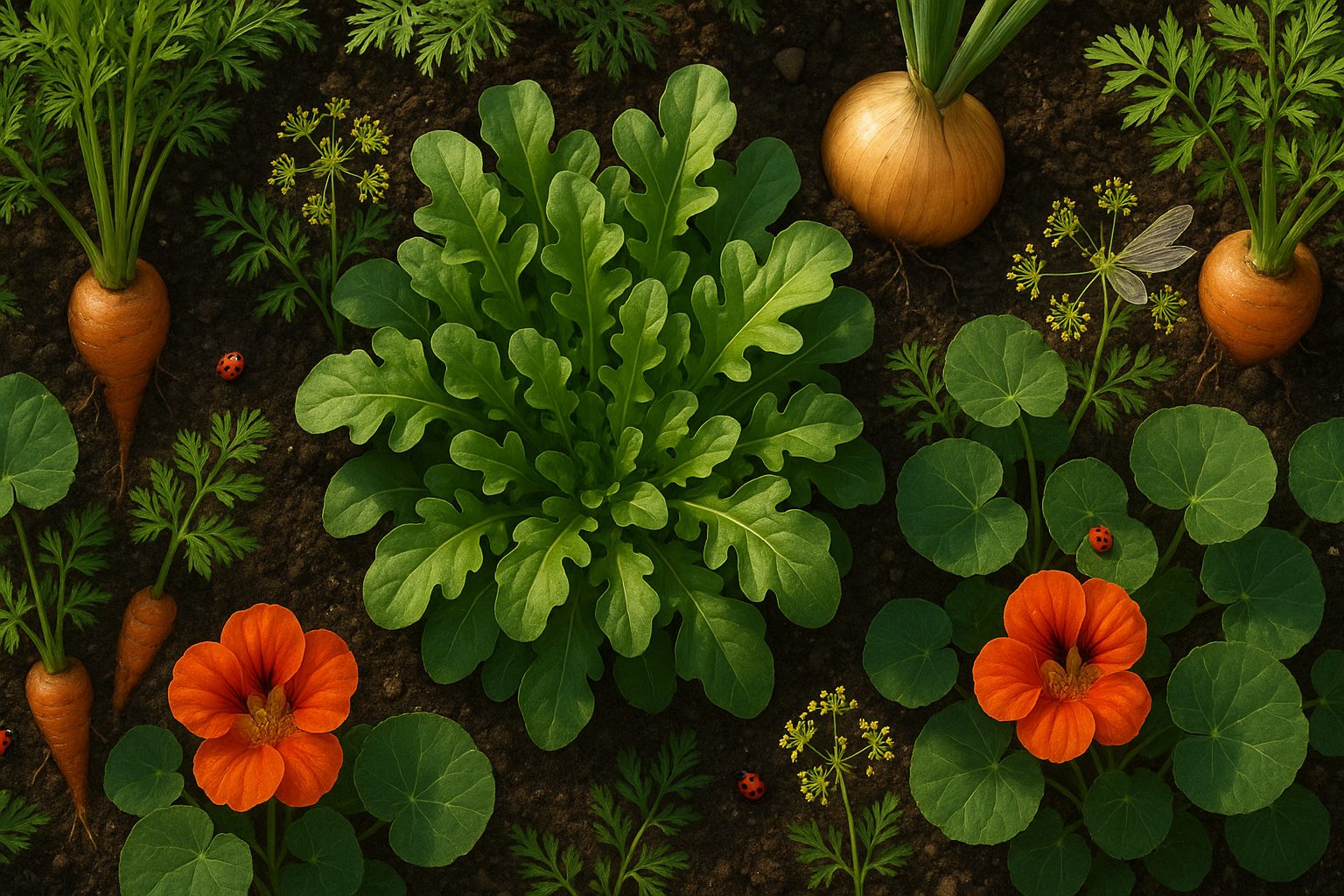
- Carrots: Their deep roots help break up the soil beneath arugula, improving air and water movement. Meanwhile, arugula’s leafy shade keeps the carrot tops cool as they grow.
- Beans: As nitrogen-fixers, beans enrich the soil and boost leafy green growth for arugula. Plant them in alternating rows with about 6–8 inches between each plant for a powerful pairing.
- Onions: Their strong scent helps deter common arugula pests like aphids and flea beetles. Tuck onion sets along the edges of your arugula rows for maximum protection without crowding.
- Dill: Attracts beneficial insects such as lacewings and ladybugs, natural enemies of pests. Interplant dill and arugula every couple of feet to create a natural pest barrier.
- Lettuce: Both lettuce and arugula are fast-growing, shallow-rooted greens which can be sown closely together. Keep about 6 inches of spacing for good airflow and easy harvesting.
- Aromatic herbs (mint and rosemary): These add extra pest-repelling benefits. Keep mint contained in pots to prevent it from spreading into arugula’s space.
- Nasturtium: A classic companion that draws aphids and other insects away with its bright flowers, acting as a living trap crop. Plant nasturtiums about a foot from your arugula beds to ensure both thrive.
Combining these companion plants not only helps manage pests and boost arugula’s health but also maximizes your garden’s yield in a small space. Just remember to leave enough room between clumps for easy access and to prevent disease caused by excess moisture. Consider rotating these combinations each season to keep your soil healthy and your arugula flourishing year after year.
Plants to Avoid Planting Near Arugula
When planning your garden, it’s important to know which plants can cause trouble for your arugula. For starters, avoid planting other brassicas like broccoli, cauliflower, cabbage, or kale near your arugula. Although it might seem convenient to group similar crops, they end up competing fiercely for the same nutrients in the soil and can attract the same pests—like cabbage worms and flea beetles—which could lead to a bigger infestation that targets all your brassicas at once.
Potatoes are another one to steer clear of, since they can shade out arugula and compete for valuable water and soil nutrients, stunting your greens’ growth. Some herbs, particularly dill and fennel, can also be problematic. These aromatic plants release natural chemicals into the soil that may inhibit arugula’s development, a phenomenon known as allelopathy.
One common mistake new gardeners make is packing these crops together in tight garden beds, hoping for lush productivity, only to end up with stunted arugula and a pest-ridden patch. Instead, consider pairing arugula with companions like carrots, onions, or lettuce, which don’t draw the same pests and compete less aggressively for nutrients.
By spacing out brassicas and choosing the right neighbors, you’ll give your arugula a much better shot at thriving all season long.
Simple Pest Management Using Companion Plants
Arugula is a tasty leafy green, but it often attracts pests like aphids and flea beetles, which can quickly damage young leaves before you get to harvest them. Instead of reaching for chemical sprays, companion planting offers an organic, budget-friendly solution.
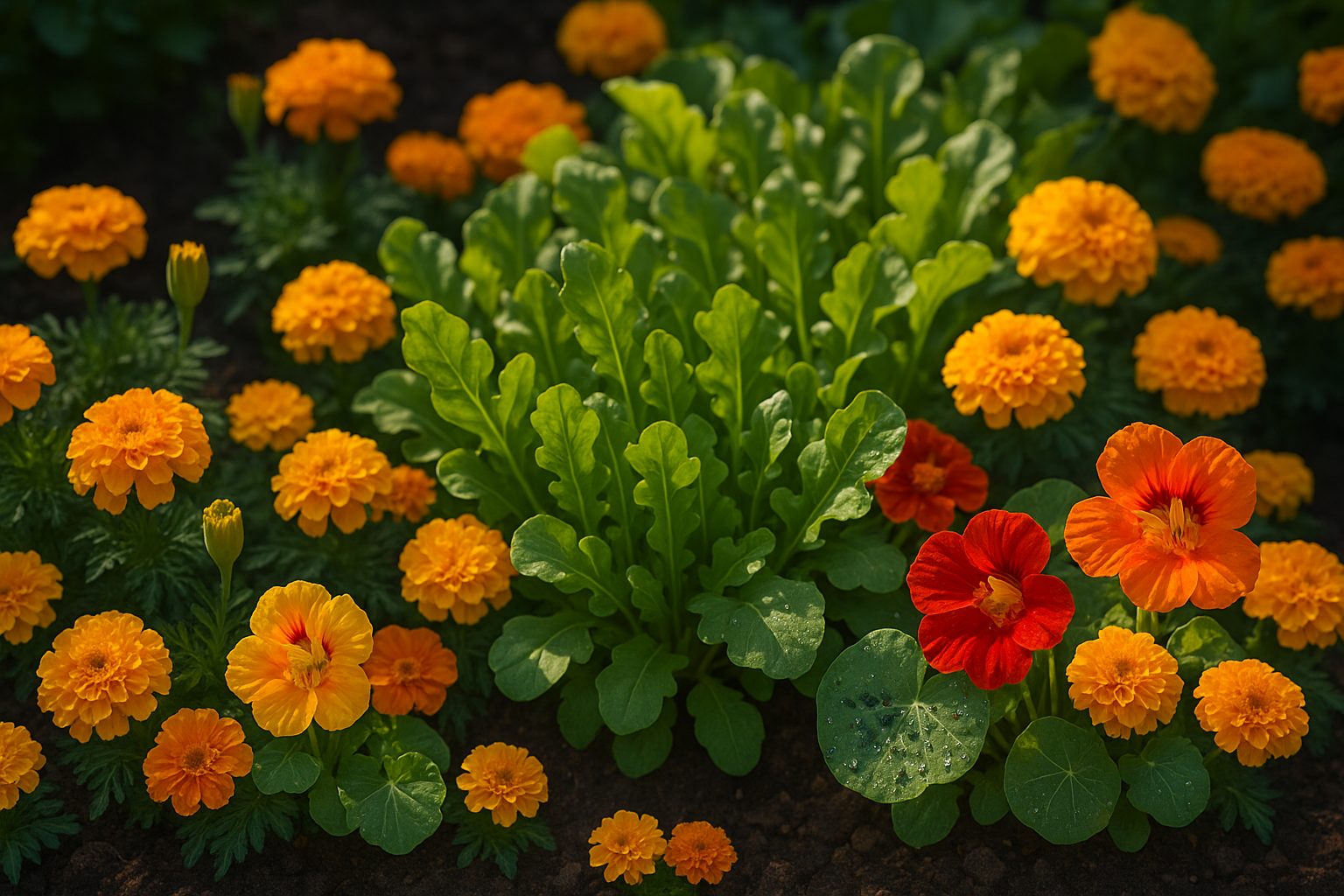
Marigolds, for example, release compounds that naturally repel aphids—try planting a border of marigolds around your arugula bed or tucking a few into the rows. Nasturtiums are another fantastic companion; they lure aphids and flea beetles away from your arugula, essentially acting as a “trap crop.” For best results, plant nasturtiums about a foot or two away—close enough to draw pests but not so close that they can easily hop over to your arugula.
Other good companions include garlic and chives, whose strong scent confuses pests searching for their favorite greens. Remember to rotate your plantings each season and avoid overcrowding, as good airflow keeps plants healthier and less susceptible to infestations.
By pairing arugula with these protective partners and maintaining a balanced, diverse garden environment, you’ll keep your salad greens thriving without relying on harsh chemicals, supporting both your health and that of local pollinators.
Tips for Companion Planting Success with Arugula
Companion planting with arugula is a smart way to boost your garden’s health and harvest, but a little planning goes a long way. To start, pick a sunny garden bed with rich, well-draining soil—arugula loves at least six hours of sunlight per day. Before planting, work in compost to improve texture and fertility.
When arranging your garden bed, avoid crowding: space arugula about 6 inches apart, and pair it with beginner-friendly companions like radishes, lettuce, or carrots. These neighbors don’t compete aggressively for nutrients and help maximize your growing area.
Practice crop rotation by moving arugula to a new spot each season, which keeps soil-borne diseases at bay and disrupts pest cycles. To keep soil consistently moist, use mulch—grass clippings or straw help retain water and cool roots. Water deeply but avoid constant wetness to prevent rot.
Succession planting is a trick for a steady supply: sow a new row of arugula seeds every two weeks during the growing season. You’ll have fresh leaves on hand for months!
While arugula enjoys the company of herbs like dill or chives that may deter pests, avoid planting it near brassica family members (broccoli, cabbage, kale) to prevent overloading the soil with similar nutrients.
With these simple steps and pairings, even new gardeners can enjoy a thriving, low-maintenance arugula patch brimming with flavor—and fewer pests.
Final Thoughts & Resources for Further Learning
Companion planting with arugula offers natural ways to boost its growth, repel pests, and make your garden more productive. Don’t be afraid to try out different planting combinations—what works best can vary depending on your climate and space. Stay curious and observe how your arugula responds to different companions over the seasons.
If you want to dive deeper, trusted sources like the Old Farmer’s Almanac, local extension services, and university gardening websites offer reliable, research-backed advice on companion planting and caring for arugula. With a little experimentation and learning, you’ll enjoy healthier, tastier greens all season long.