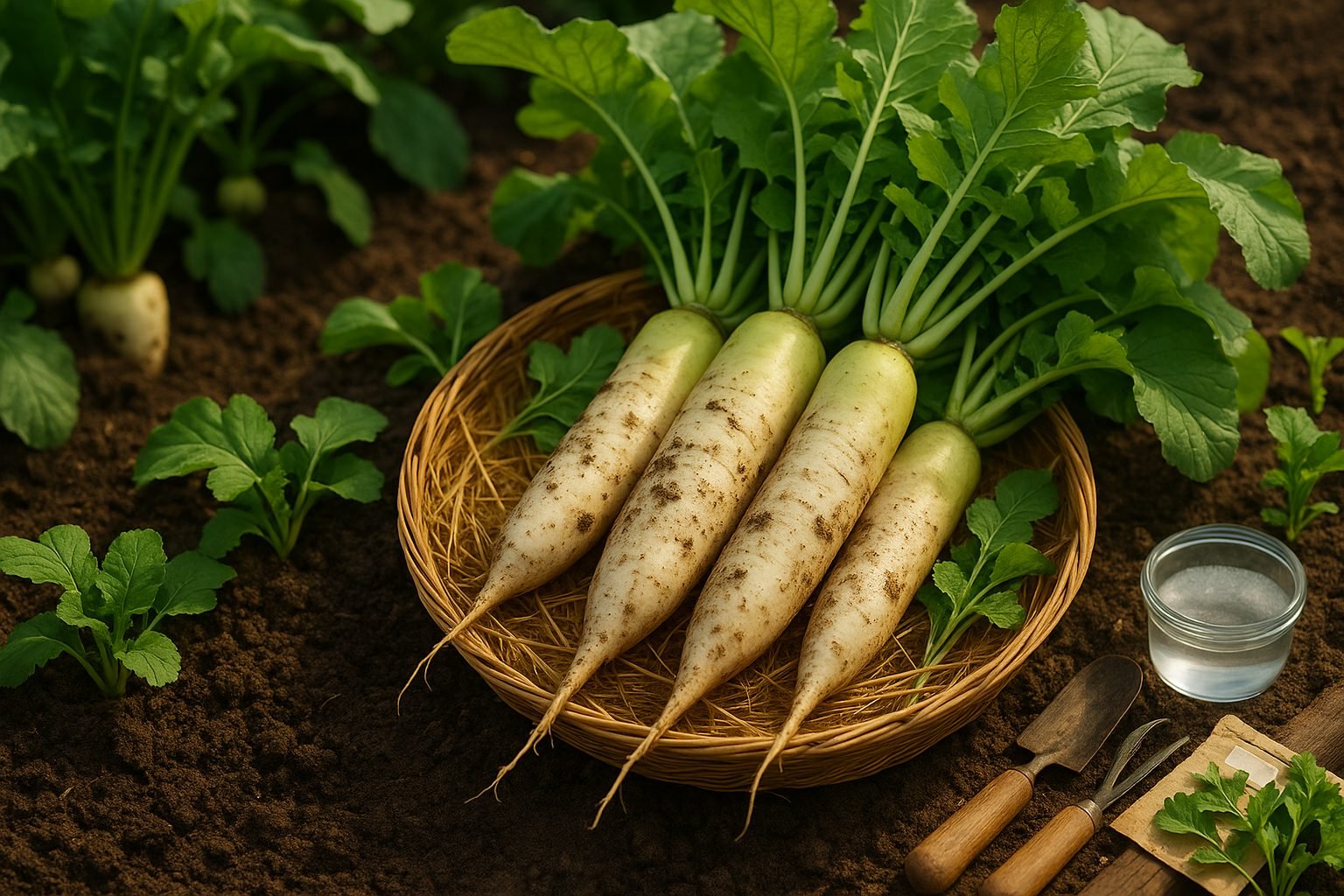
Introduction to Daikon Radish (Raphanus sativus var. longipinnatus)
If you’ve ever wanted to grow daikon radish at home, you’re not alone—this hearty root vegetable, scientifically known as Raphanus sativus var. longipinnatus, is quickly gaining popularity in backyard gardens around the world. Daikon radish stands out with its elongated, crisp white roots and subtly peppery flavor. Botanically, it belongs to the Brassicaceae family, which also includes cabbage, broccoli, and kale, making it a relative of some of the most nutritious veggies on your plate.
Originally cultivated in East Asia, daikon has long been a staple in culinary traditions throughout Japan, China, and Korea. You’ll find it pickled in ban chan, julienned into fresh salads, stir-fried, simmered in comforting soups, or even grated and served as a refreshing garnish. Its versatility in recipes and mild taste have helped daikon become a kitchen essential across continents.
More recently, home gardeners have turned their attention to daikon radish thanks to its reputation as an easy-to-grow, fast-maturing crop with impressive health benefits. Daikon is rich in vitamin C, fiber, and beneficial enzymes that aid digestion, making it an excellent addition to a balanced diet—whether sliced raw, braised, or fermented. Plus, daikon’s deep-growing roots can help break up compacted soil, offering dual benefits for your garden beds.
With its culinary, nutritional, and soil-enhancing qualities, daikon radish is a rewarding choice for gardeners looking to expand their harvest with something both traditional and trending.
Choosing Daikon Radishes for Your Garden
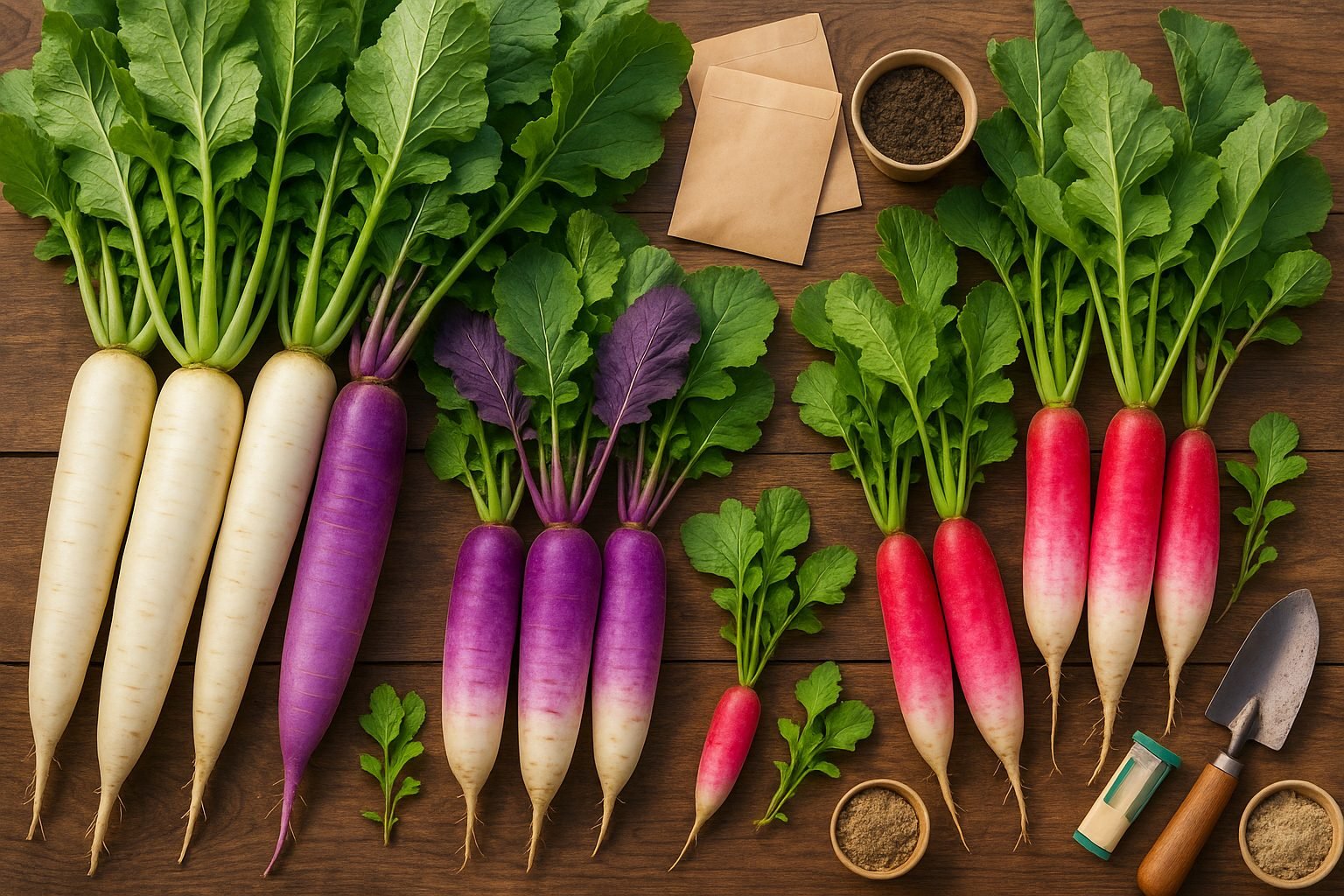
When selecting daikon radishes for your garden, it’s helpful to know that varieties come in a surprising range of shapes, colors, and growth habits, each offering unique benefits.
Popular Varieties
- Minowase: The classic choice, known for its long, slender roots—some reaching up to 2 feet—ideal for deep, loose soils.
- KN-Bravo: Stands out with striking purple skin and flesh, offering a mild, crisp flavor and higher anthocyanin content; great for salads and resistant to some common root diseases.
- Red Cloud and Watermelon (Roseheart): Perfect for smaller spaces or container gardening. Both produce shorter, plumper roots with pink and red interiors, and a slightly sweeter flavor, making them great for fresh eating or pickling.
- Miyashige: Prized for stout, uniform roots and resistance to bolting, suitable for early spring or fall planting.
- Tokinashi: Offers a robust, spicy kick with pure white skin and consistently mild heat, adding versatility to Asian-inspired dishes.
- Alpine: Excellent for storage, remaining crisp and flavorful for weeks in the refrigerator thanks to its dense texture and thick skin.
Tips for Growing
Choose varieties that match your local climate and soil conditions. Heat-tolerant or bolt-resistant types perform better in warmer regions, while quick-maturing varieties like April Cross thrive in cooler, shorter seasons.
Always check seed packets for days to maturity and disease resistance information—healthier plants mean less work and more delicious, beautiful vegetables at harvest.
Planting Daikon Radish
If you’re looking to grow daikon radish, timing and location are key to a great harvest. Daikon does best when planted in cool weather, making early spring or late summer ideal in most regions. Aim to sow seeds about 2-4 weeks before your last expected frost for a spring crop, or in late summer for a fall crop—especially if you live in areas where summer heats up quickly.
These radishes hate intense heat, so avoid mid-summer plantings unless you’re in a northern climate with cooler summers. When you’re ready to plant, choose a site that receives full sun—at least six hours daily—as daikon roots grow larger and sweeter with plenty of light.
The soil should be loose, well-draining, and free from stones; compacted or rocky soil can lead to forked or stubby radishes. Daikon loves rich, fertile soil with a pH between 5.8 and 6.8, so incorporate compost or well-rotted manure before planting. If possible, test your soil pH—lime can be added to raise low pH, while sulfur helps lower it.
Planting Tips
- Sow seeds directly in the garden about half an inch deep and one inch apart in rows spaced 12–18 inches apart to encourage long, straight roots.
- After seedlings emerge (usually within a week), thin them to about 4–6 inches apart. This might seem ruthless, but it prevents crowded roots and gives each plant space to thrive.
- Keep the bed evenly moist, but not soggy, and mulch lightly to retain moisture and keep weeds at bay.
- For best results, avoid planting daikon where other brassicas have recently grown. Crop rotation reduces disease risks.
With attention to timing, spacing, and soil preparation, even beginner gardeners can enjoy crisp, flavorful daikon right from their own backyard.
Essential Care
Proper care is key to a thriving garden, and that starts with understanding how watering needs change as your plants grow. Right after planting seeds or seedlings, keep the soil consistently moist but not soggy to encourage strong root development—check daily during hot or windy weather, as young plants dry out quickly.
Once established, most veggies and flowers need about one inch of water per week through rainfall or irrigation; watering deeply once or twice a week is better than shallow, frequent sprays.
When it comes to fertilizing, timing and product matter. For most gardens, a balanced, all-purpose fertilizer (like 10-10-10) applied when planting is a good start. As plants mature, leafy vegetables benefit from extra nitrogen, while fruiting plants—think tomatoes or peppers—appreciate a phosphorus boost just as buds appear. Always follow label directions to avoid over-fertilizing, which can harm plants and the environment. A typical rate is one to two pounds of granular fertilizer per 100 square feet, or use a water-soluble option every few weeks.
Don’t skip regular maintenance for a healthy, tidy garden. Thinning crowded seedlings ensures proper airflow and gives remaining plants room to grow; simply snip weaker sprouts at the soil line. Stay ahead of weeds, which compete for water and nutrients, by hand-pulling or hoeing often—mulching with straw, leaves, or compost also helps suppress weeds and retain soil moisture. Keep an eye out for signs of pests or disease so you can address issues early.
With these essential care steps, you’ll set your garden up for a productive, rewarding season.
Growing Daikon Radish: Pest and Disease Management
Growing daikon radish can be incredibly rewarding, but these crisp, white roots are susceptible to a variety of pests and diseases. One of the most common pests is the flea beetle, which leaves tiny holes in the foliage and can stunt growth. Aphids and root maggots also cause problems; aphids suck sap and spread disease, while maggots tunnel into the roots, making them inedible.
Fungal diseases like downy mildew and clubroot can strike as well, especially in cool, damp conditions, causing leaf yellowing and distorted roots.
Natural Control Methods
To manage these issues naturally, consider the following:
- Use floating row covers to keep beetles away.
- Encourage beneficial insects like ladybugs to control aphid populations.
- Apply diatomaceous earth around your plants to deter root maggots and flea beetles without chemicals.
- Ensure good air circulation and avoid overhead watering to keep leaves dry and reduce fungal problems.
Chemical Options and Precautions
If infestations become severe, you can use chemical treatments such as insecticidal soap for aphids or permethrin-based sprays for beetles. Always follow label instructions carefully and consider the impact on pollinators and soil health.
Prevention Tips
Prevention is key to maintaining healthy daikon radishes. Try these strategies:
- Rotate crops each year to disrupt disease cycles.
- Space plants properly to improve air flow.
- Amend soil with compost to improve drainage and plant resilience.
- Regularly inspect the undersides of leaves and root zones for early signs of trouble.
Catching pests and diseases early makes management much easier. By combining smart gardening practices with prompt action, gardeners can enjoy healthy daikon radishes all season long.
When and How to Harvest Daikon Radish
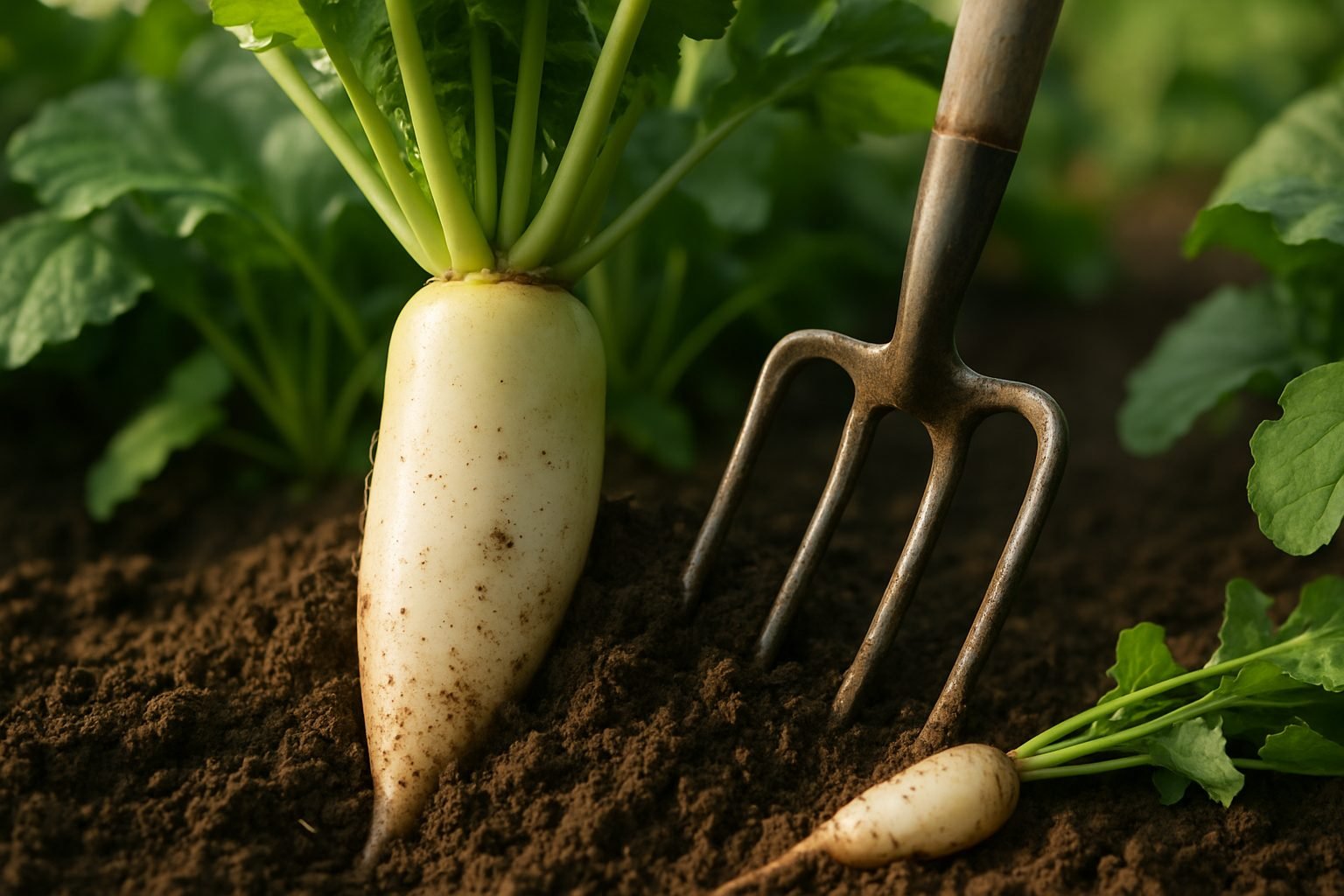
Knowing when to harvest daikon radish is key to enjoying its crisp texture and mild flavor. Look for radishes that are around 8 to 14 inches long and about 2 inches in diameter—too small, and they’re underdeveloped; too large, and they can turn woody. The leaves should be vibrant and standing tall.
Harvesting Tips
Start by loosening the soil around each radish using a fork or hand tool to avoid snapping the root. Gently pull the radish straight up, shaking off loose dirt. After harvesting, trim the greens to about half an inch above the root to prevent moisture loss and prolong freshness.
Cleaning and Curing
Rinse off lingering soil with cool water, but avoid scrubbing too hard as their thin skin can bruise easily. If you have several radishes, let them air dry in a single layer in a cool, shaded spot for a few hours—this simple curing step helps heal tiny scrapes and reduces the risk of rot.
Storage Methods
- Short-term storage: Wrap daikon radishes in a damp paper towel and place them in a perforated plastic bag in the refrigerator’s crisper drawer, where they’ll stay crisp for up to two weeks.
- Long-term storage: Pack unwashed radishes in damp sand or sawdust in a cool cellar or garage, keeping them separated to prevent rot.
- Pickling: Slice daikon and pickle it using vinegar, sugar, and salt for a classic, tangy side dish that lasts months in the fridge.
Whichever storage method you choose, keep daikon away from ethylene-producing fruits like apples to prevent softening. With the right technique, you can enjoy homegrown daikon long after the harvest is over.
Discover the Versatility of Daikon
Daikon, a crisp white radish native to East Asia, is incredibly versatile in both traditional and modern kitchens. In Japanese cuisine, daikon appears as refreshing pickles (takuan), finely grated alongside sashimi, or simmered in comforting dishes like oden.
Korean cooks use it for kimchi and tangy soups, while Chinese stir-fries and braises often feature daikon for its subtle sweetness and tender bite. Modern cooks have embraced daikon for raw salads, crunchy slaws, and even as a low-carb alternative to noodles when spiralized.
Health Benefits of Daikon
Beyond its culinary flexibility, daikon is loaded with vitamin C, potassium, and digestive enzymes that support immune health, hydration, and gut function. Its fiber helps balance blood sugar and keeps you feeling full without extra calories.
Easy Ways to Add Daikon to Your Routine
Here are some simple ideas to include daikon in your meals:
- Slice thin and toss with lemon and sesame for a quick salad.
- Dice into soups and stews for a mild, nutritious boost.
- Swap out crackers for daikon rounds as a vessel for hummus or tuna salad.
- Add a chunk of peeled daikon to smoothies for a subtle peppery note and extra fiber.
- Roast daikon cubes with olive oil and herbs—a surprisingly light alternative to potatoes.
With its subtle flavor and impressive health profile, daikon makes a fresh addition to almost any meal. Why not experiment and see where it shines in your own kitchen?