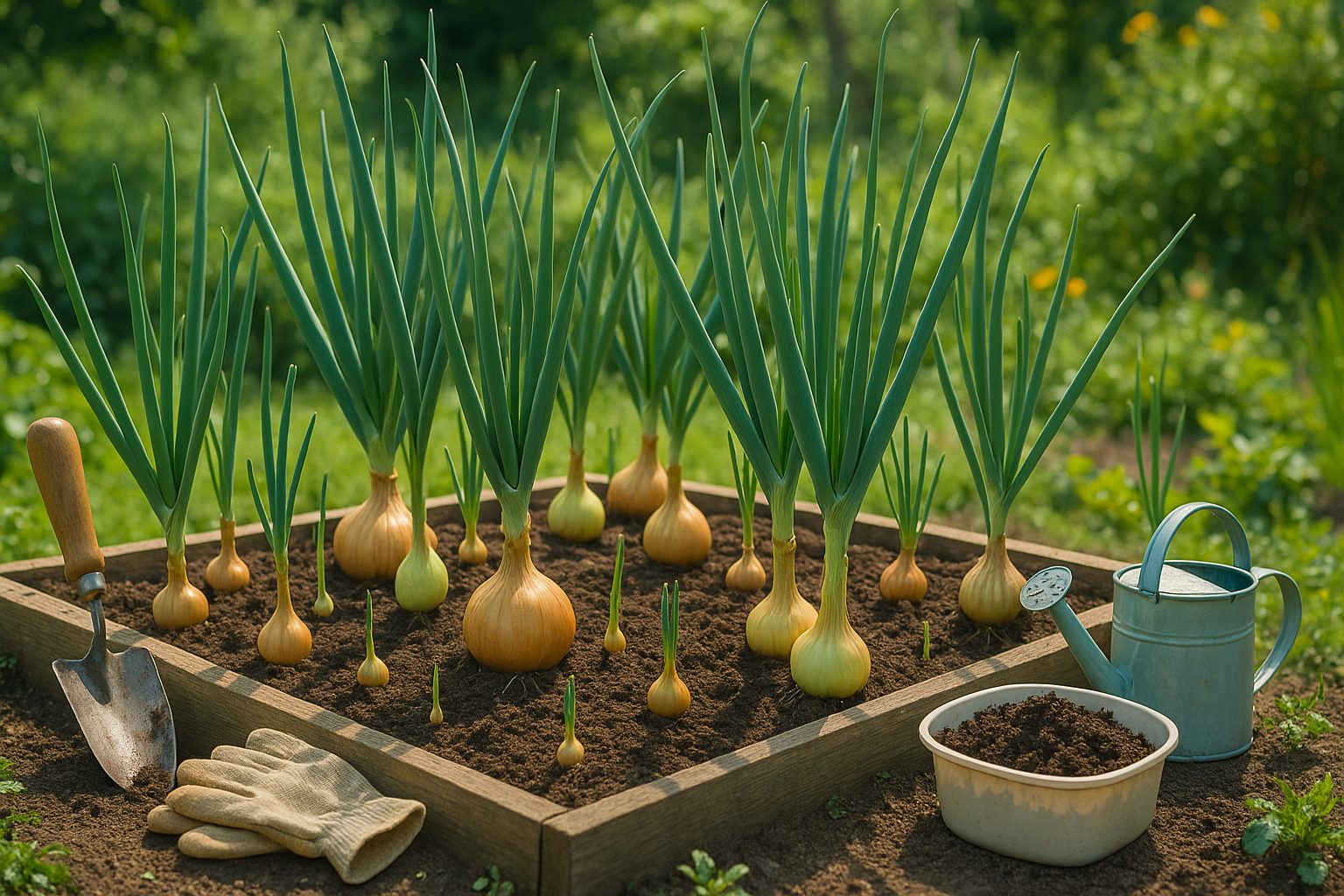
Introduction to Growing Onions
Growing onions with kids is a rewarding adventure that’s perfect for families and home gardeners alike. Onions are ideal because they’re easy to grow, don’t require much space, and show real results quickly—a huge bonus when kids are involved. Plus, you’ll use them in countless dishes, making them a cost-effective staple in your kitchen.
There are a few simple ways to get started:
- Plant onions from seeds for a full-season experience.
- Use sets (little baby bulbs) for faster harvests.
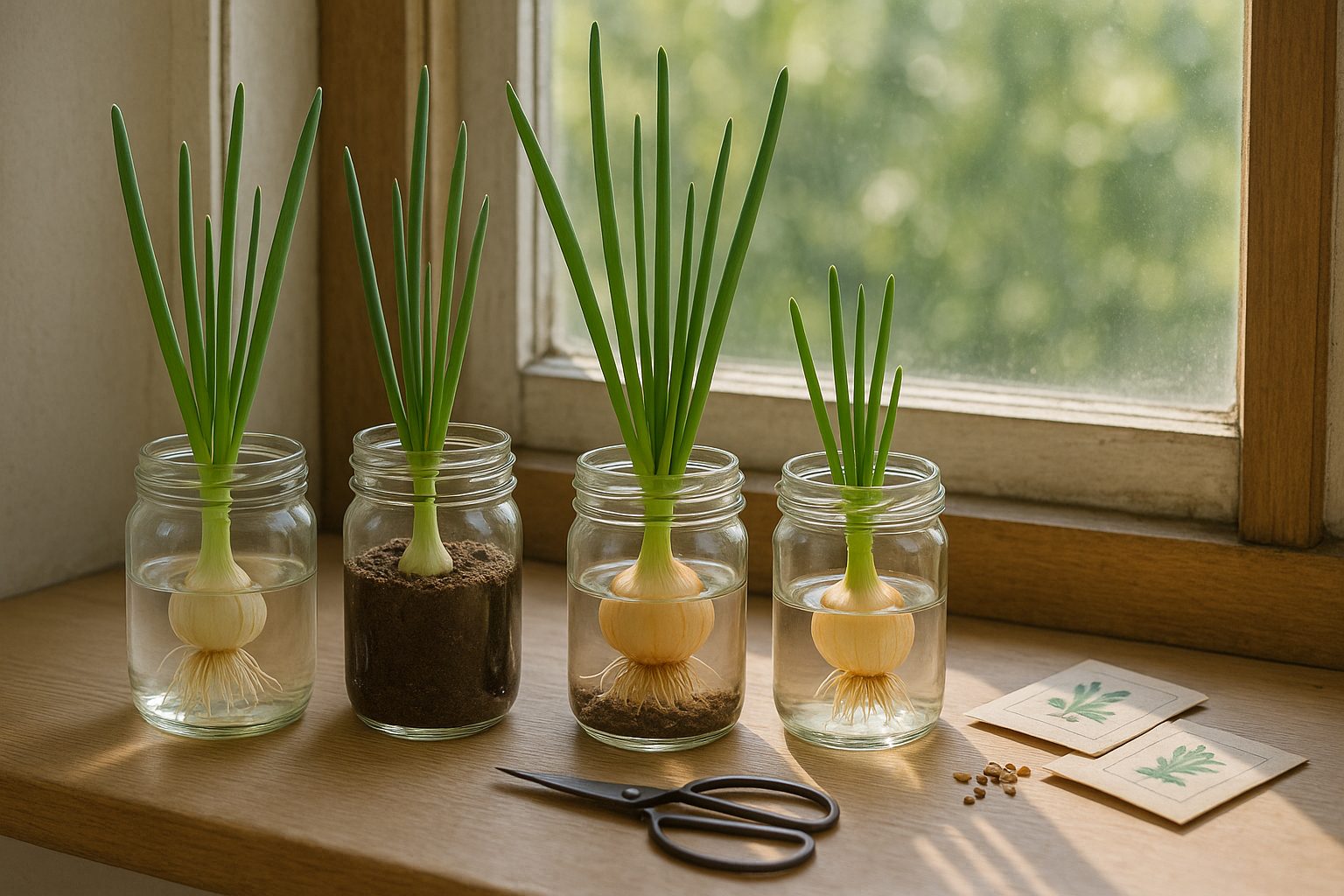
- Regrow kitchen scraps on a sunny windowsill for instant fun.
From planting to harvesting, the whole process can take just a few weeks up to a few months, depending on the method you choose and how big you want your onions to get. With only basic care and regular watering, even young children can enjoy the satisfaction of growing their own food.
Choosing Onion Varieties and Supplies
When starting your onion garden, consider which onion types suit your kitchen best. Yellow onions are kitchen staples with a robust flavor that’s ideal for soups and roasts. Red onions offer vibrant color and a milder taste, perfect for salads and salsas. White onions have a crisp bite and are great for Mexican dishes, while sweet onions (like Vidalia) shine when raw in sandwiches and burgers. Scallions, or green onions, bring a fresh, mild flavor to stir-fries and garnishes.
For planting, beginners often prefer onion sets—small bulbs that are easy to handle and quick to grow. Seeds are more affordable and offer variety but take longer and require more care, making them a better fit for experienced gardeners. Transplants (young seedlings) offer a balance of convenience and variety.
Gather nutrient-rich, well-draining soil, sturdy containers or garden beds, and basic tools like trowels and gloves before you begin.
How to Start Onions: Planting Steps
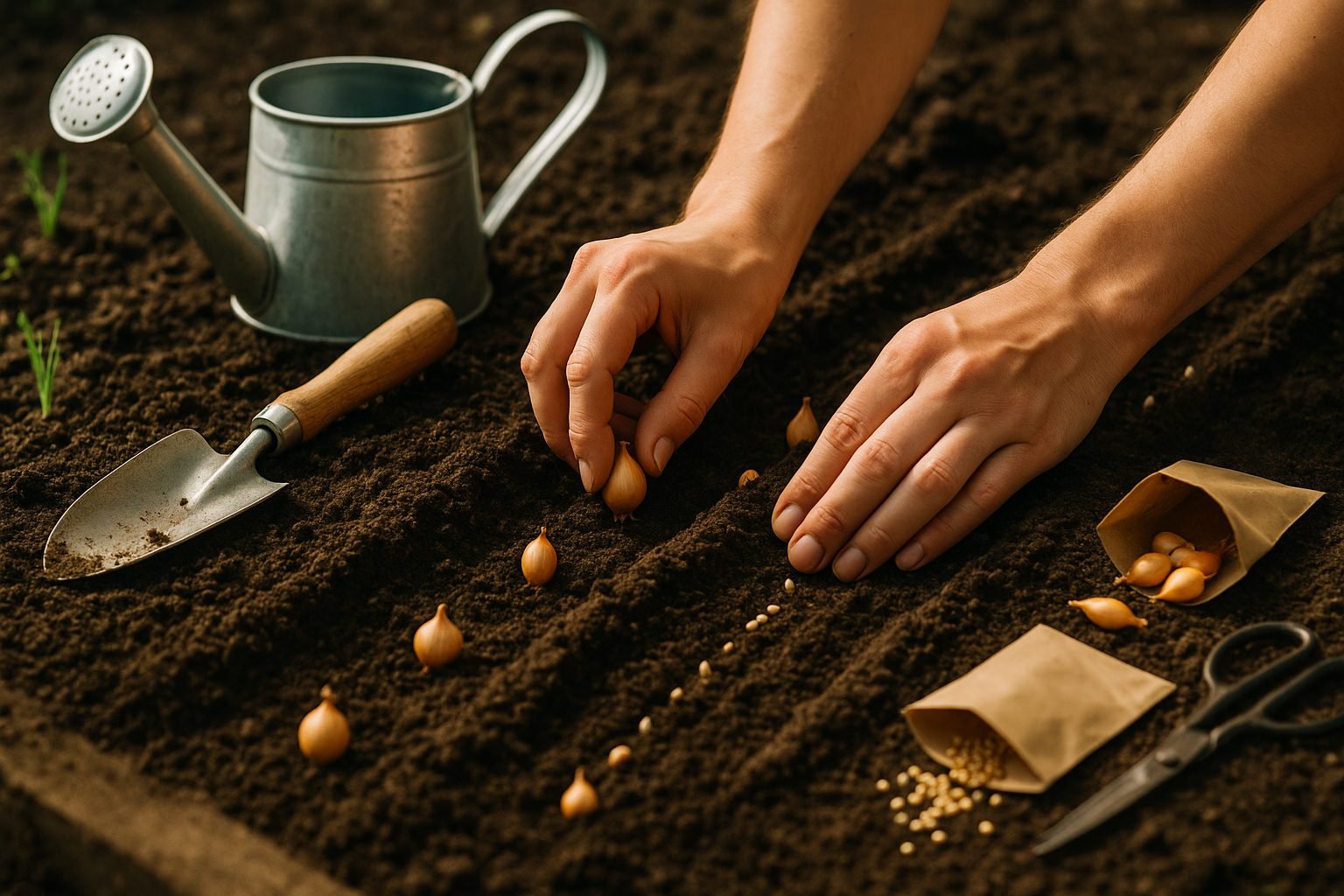
To start onions successfully, begin by preparing your soil or container—choose a spot with loose, well-draining soil, and mix in compost or all-purpose fertilizer to add essential nutrients.
For planting seeds, sow them about ¼ inch deep and 2 inches apart in rows spaced at least 12 inches apart. Gently firm the soil over the seeds and water thoroughly.
Onion sets (small bulbs) are easier for beginners: push each set into the soil so the tip just peeks above the surface, space them 3 to 4 inches apart, and keep rows 12 inches apart.
If you want to regrow from kitchen scraps, place the root end of an onion in moist soil, leaving the top exposed, and space them out as you would with sets.
After planting, water well to encourage root growth, but avoid making the soil soggy.
Caring for Onion Plants
Onion plants thrive with consistent care, starting with regular watering—aim to keep the soil evenly moist but never soggy, especially during dry spells. Fertilize lightly every 3-4 weeks with a balanced, nitrogen-rich fertilizer to promote healthy growth, but reduce feeding as bulbs start to swell to avoid overly lush tops.
For weed control, gently hand-pull weeds or use mulch around the onions, being careful not to disturb their shallow roots. Onions need full sun for at least 6-8 hours a day and prefer cooler weather, growing best in temperatures between 13-25°C (55-75°F).
Watch for pests like onion maggots and thrips; using floating row covers and practicing crop rotation can help prevent infestations. Fungal diseases such as downy mildew are also common—plant in well-drained soil and avoid overhead watering to keep foliage dry.
Harvesting and Storing Onions
Knowing when to harvest onions is crucial for both flavor and storage. Onions are ready to be harvested when their tops begin to yellow and fall over, usually in late summer, and the bulbs are big and well-rounded.
Gently lift onions from the soil with a fork or by hand, being careful not to bruise them. Lay them out in a single layer on a dry, airy surface—such as a garage floor or porch—so they can cure for two to three weeks. This curing process allows their outer skins to toughen, which is essential for long-term storage.
Once the necks are completely dry, trim the tops and roots, then store onions in a cool, dry, well-ventilated space. Mesh bags or crates work well for this purpose. Use green onions fresh, as they don’t store for long.
For seed saving, select healthy onions, let them flower, and collect the seeds once the heads have dried out.