Introduction
Getting the most out of your garden starts with the right approach, and when it comes to onions, homemade onion fertilizer can make all the difference. Onions are hungry plants—without consistent and balanced nutrition, they often produce small, weak bulbs and struggle to store well. Fertilization is essential for supporting lush foliage (which directly feeds bulb growth), improving disease resistance, and ultimately maximizing your harvest.
Many home gardeners find themselves torn between choosing a convenient commercial fertilizer or crafting an organic option from kitchen scraps and garden waste. Store-bought solutions can be fast and easy, but DIY blends give you control over exactly what goes into your soil—free from unnecessary chemicals while keeping costs down.
If you want to try a homemade onion fertilizer, the process is simpler than you might think. Compost tea, crushed eggshells, diluted fish emulsion, and even banana peels can provide onions with vital nutrients like nitrogen, phosphorus, and potassium. Mix these ingredients properly, apply them at key growth stages, and monitor your plants for signs of stress or deficiency.
Whether you’re nurturing a small raised bed or a full backyard patch, knowing how to feed your onions the right way can result in bigger bulbs and tastier dishes all season long.
Understanding Onion Nutrient Needs
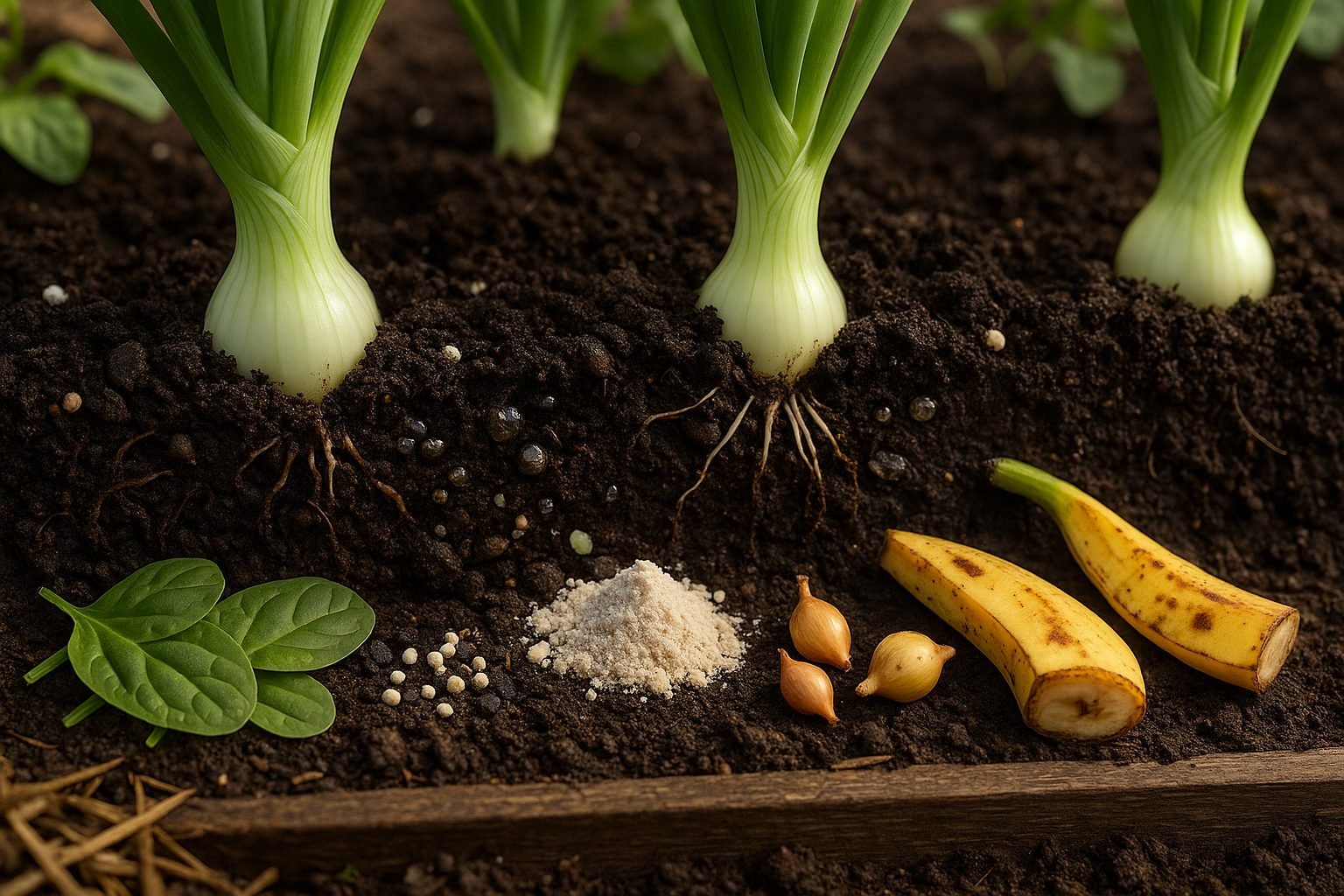
Onions are heavy feeders that rely on a precise balance of key nutrients to grow large, healthy bulbs with rich flavor. Nitrogen is essential for vigorous leaf growth, which fuels bulb development because onions produce their bulbs from the energy stored in their green tops. If onion leaves turn pale or grow slowly, it often means a nitrogen shortage.
Phosphorus plays a critical role in early root development and helps bulbs mature smoothly; stunted roots or delayed bulb formation can signal phosphorus deficiency. Potassium supports overall plant health by regulating water movement and helping onions resist disease, while also improving bulb size and shelf life. Watch for signs like scorched leaf tips or poor growth if potassium is lacking.
Sulfur is somewhat unique to onions; they need it to produce the distinctive flavors and aromas that make their bulbs sharp and savory. Without enough sulfur, onions taste bland and develop yellowing of the leaves.
To keep onions happy, gardeners can apply balanced fertilizers and add compost rich in these nutrients, or use specialty onion fertilizers available at garden centers. Regularly checking plants for pale leaves, poor growth, or oddly flavored bulbs can help you spot problems early and adjust your feeding routine for a thriving, flavorful onion crop.
Organic Fertilizers for Onions: Eco-Friendly Choices
When growing onions, using organic fertilizers like compost, well-rotted manure, fish emulsion, and bone meal offers a natural boost without harming the environment. Compost is a favorite among gardeners because it’s easy to make at home from kitchen scraps and adds rich organic matter to the soil. Manure, especially when aged, delivers a strong dose of nitrogen and helps onions grow big and healthy. Fish emulsion, available at garden centers, provides a quick-release source of nutrients and is especially effective during the early stages of onion growth. Bone meal, high in phosphorus, supports robust root and bulb development for bigger harvests.
For homemade options, onion peel tea is a clever way to recycle kitchen waste: simply soak clean onion skins in water for a few days, strain, and use the liquid to water onion beds—this fortifies plants with micronutrients. Likewise, vegetable compost tea can be made by steeping veggie scraps in water for up to a week, stirring daily, then diluting before pouring it onto garden soil.
Organic fertilizers feed both your onions and the beneficial microbes in soil, improving structure and long-term fertility. However, they often work more slowly and may require regular application to deliver steady nutrients. In contrast, synthetic fertilizers provide fast-acting results but can contribute to soil degradation and harm the local ecosystem if overused.
While organic options might demand a little more patience and effort, their long-term benefits—healthier crops, safer food, and improved soil—make them a smart, sustainable choice for onion growers. For best results, experiment with a mix of organic fertilizers, paying attention to your soil’s needs and the stage of onion growth.
Choosing and Using Chemical Fertilizers for Onions
When growing onions, selecting the right synthetic fertilizers can make a big difference in bulb size and overall plant health. Calcium nitrate is a top choice because onions need plenty of nitrogen, especially in the early stages. Apply about 1/2 cup per 10 feet of row once shoots are several inches tall, then side-dress this amount every three weeks until bulbs start to form.
For balanced growth, choose a granular N-P-K fertilizer blend like 10-10-10 or 12-12-17 and apply it according to package directions—typically, 1 to 2 pounds per 100 square feet at planting, worked into the top few inches of soil. Always water after applying to move nutrients into the root zone.
As onions begin bulbing, reduce nitrogen applications to encourage proper development rather than excessive leaf growth, switching to a fertilizer lower in nitrogen if necessary. Avoid common mistakes like over-fertilizing, which can stunt bulbs or cause rot; yellowing tips or limp plants are warning signs. Never apply fertilizer directly onto seedlings or against onion bulbs, as this can burn them.
A simple tip: split your total fertilizer amount into smaller, regular doses instead of one big application. This helps prevent nutrient overload and supports steady growth. Regular weeding and soil testing will further ensure your onions get only what they need—and nothing more—resulting in healthy, flavorful bulbs.
How and When to Fertilize Onions for Maximum Yield
Getting the fertilizer timing right is key to growing big, healthy onions. Start by mixing a balanced granular fertilizer into your soil at planting time—look for a blend like 10-10-10—and work it four to six inches deep.
About three to four weeks after your onions sprout, side-dress with a nitrogen-rich fertilizer for an early boost. Continue feeding every two to three weeks throughout the growing season, switching from granular to a diluted liquid fertilizer as your plants start bulbing, since liquids are absorbed quickly.
Always fertilize just before watering so nutrients soak straight into the root zone—this is especially important during dry spells or if you use drip irrigation.
Container-grown onions need a gentler touch; their roots are confined, so use half-strength liquid fertilizer every 10–14 days. Be extra careful not to overwater or overfeed, as this can cause root burn and rot.
Pay attention to the weather—rainy periods may wash nutrients away, so you’ll need to supplement more frequently, while hot, dry spells can cause fertilizer salts to build up. Watch your onion leaves: pale color or slow growth often signals the need for another feeding.
By keeping a flexible fertilizing schedule that’s responsive to rain, heat, and your soil type, you can boost your onion yield whether you’re gardening in a backyard bed or a patio pot.
DIY Onion Peel Fertilizer: Simple Steps for Home Gardeners
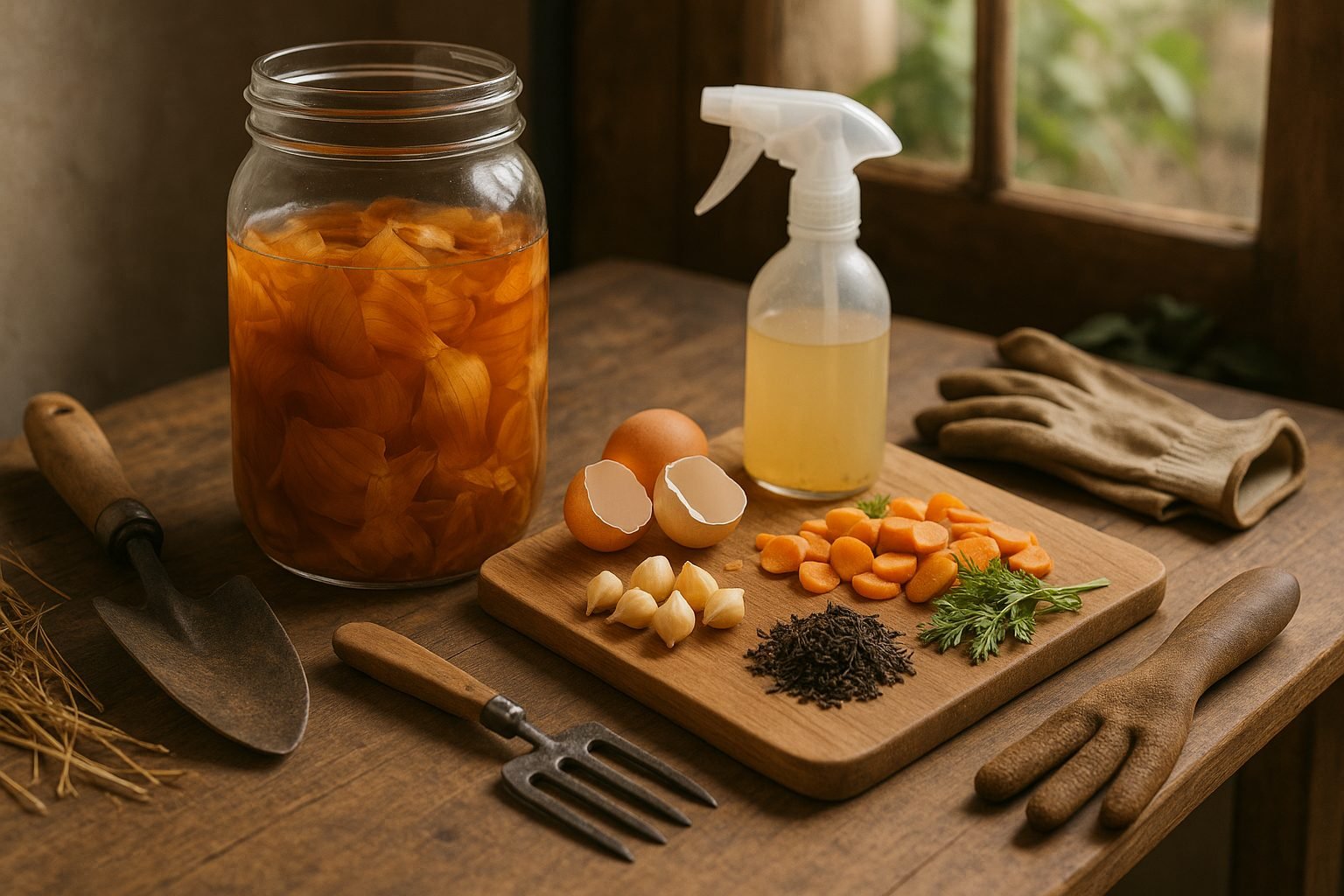
Making your own onion peel fertilizer at home is an easy, eco-friendly way to boost your garden’s health. Start by collecting onion peels—a week’s worth is usually enough for home gardens. Rinse them to remove dirt and pesticides, then place the peels in a large jar or bowl. Cover with water and let them soak for two or three days; you’ll notice the water turning a light brown, which means it’s absorbing nutrients.
Strain out the peels (these can go straight to your compost), and you’re left with a nutrient-rich liquid. For added benefits, try blending your onion peels with other kitchen scraps like carrot tops, eggshells, or used tea leaves before soaking. This increases the range of nutrients in your fertilizer, supporting robust root systems and leafy growth.
When you’re ready to use the onion peel fertilizer, dilute it with water in a 1:4 ratio to avoid overwhelming your plants. The best time to apply the solution is early in the morning or late afternoon, about once a week during the growing season. Carefully pour it around the base of your onion beds, avoiding direct contact with the leaves to prevent burning.
As a bonus, adding the leftover peels to your compost pile helps build long-term soil health. This simple DIY approach recycles kitchen waste and provides your onions with the minerals they need for bigger bulbs and stronger growth.
Where to Buy Onion Fertilizers & What to Look For
When shopping for onion fertilizers, you have plenty of options—both online and locally. Trusted retailers like Home Depot, Lowe’s, and local garden centers often carry quality synthetic and organic fertilizers formulated for bulbs and vegetables.
For organic options, look for brands like Espoma or Dr. Earth, both of which are available at major stores and online at places like Amazon or Gardener’s Supply Company.
When browsing, always check the label for the N-P-K ratio (nitrogen, phosphorus, potassium) and make sure it’s tailored to bulbs—something like 10-20-10 is often ideal for onions. Also, pay attention to additional nutrients that could benefit your local soil, such as sulfur for clay or magnesium for sandy soils.
If you live in a hot climate, slow-release fertilizers can keep nutrients available longer, while in cooler areas, quick-release formulas may work best.
Sustainability counts too—opt for brands with organic certifications or those using responsibly sourced materials, which are better not only for your onions but also for the environment.
Supporting local nurseries can also be a smart move; staff often know what works best in your area and can recommend responsible brands suited to your specific climate and soil.
Conclusion: Growing Healthy Onions Starts with the Right Fertilizer
Growing healthy onions truly depends on using the right fertilizer tailored to your soil and garden conditions. By observing your onions’ growth and adjusting your fertilization routine as needed, you can boost yields and avoid common issues like stunted bulbs or yellowing leaves.
Don’t be afraid to experiment with different blends or organic options—every garden responds differently, so careful monitoring is key. If you’re unsure where to start or want to share what’s worked in your onion patch, we’d love to hear from you!
Share your questions or experiences in the comments to help fellow gardeners thrive.