Introduction to Kale
Cooking with kale isn’t just a trend—it’s a delicious way to harness the powerhouse nutrition of this leafy green. Kale is celebrated for its versatility, adding vibrant color and texture to salads, sautés, soups, and even smoothies. More than just a pretty leaf, kale packs impressive health benefits into every bite. It’s loaded with antioxidants that help fight cell damage and inflammation, while its stellar lineup of vitamins—like A, C, and K—supports immunity and bone health.
Kale is also rich in minerals such as potassium, calcium, and magnesium, all crucial for energy, muscle function, and overall wellness. Perhaps most notably, kale boasts high fiber content, which aids digestion and promotes fullness, making it a smart choice for weight management.
Just one cup of raw kale contains about 33 calories, nearly 3 grams of protein, and enough vitamin C to boost your immune system. These nutritional perks are part of why cooking with kale has become so popular among health-conscious cooks and home gardeners.
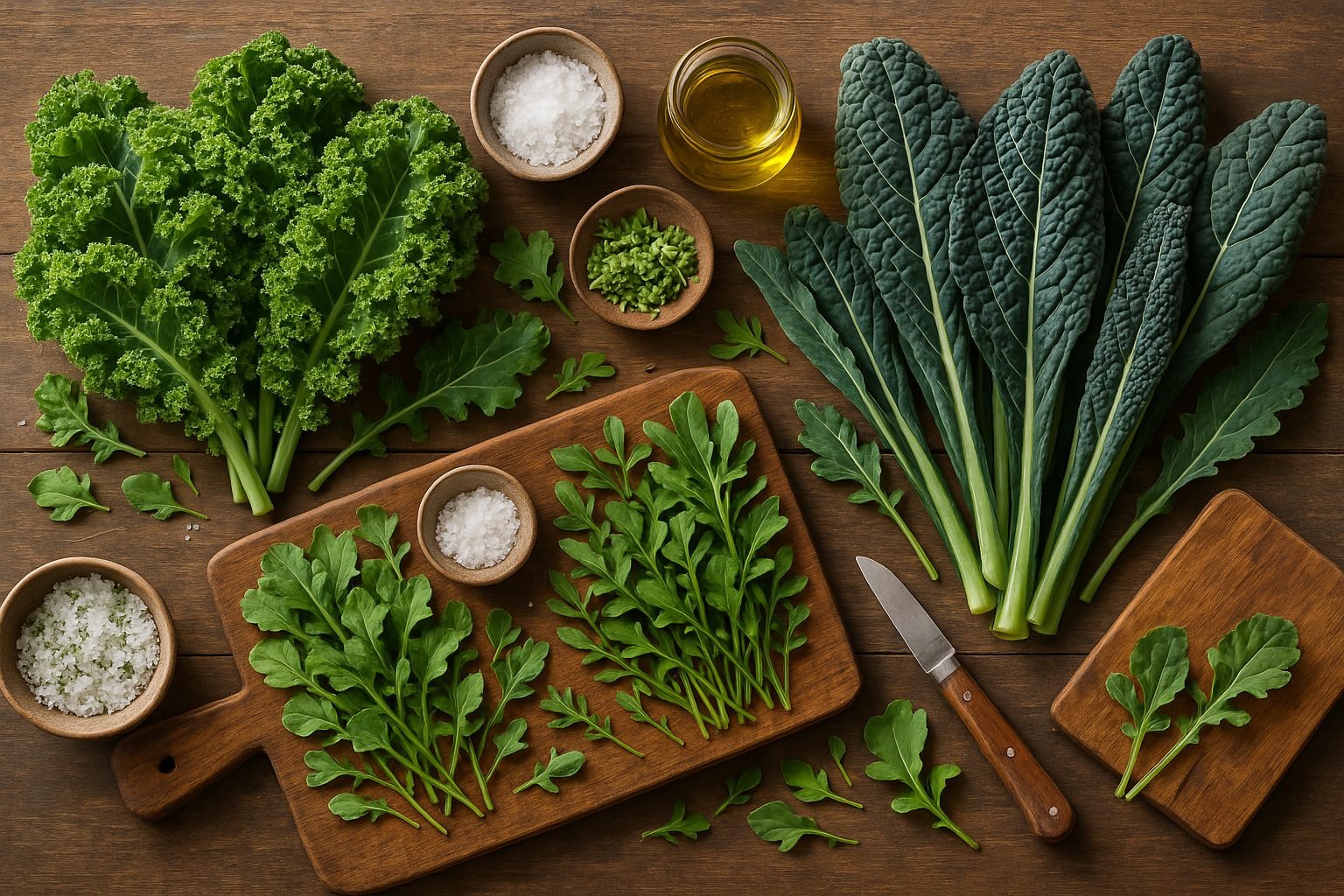
Not all kale is the same, either:
- Curly kale is the most familiar, with ruffled edges and a peppy, slightly bitter flavor;
- Lacinato (or dinosaur kale) features long, dark leaves with a finer texture that’s perfect for sautés;
- Baby kale offers a milder taste, ideal for tossing raw into salads.
With these options, there’s a kale variety for every recipe and palate. As you explore the world of cooking with fresh garden kale, you’ll discover just how easy it is to boost both the nutrition and flavor of your meals.
Preparing Kale for Cooking
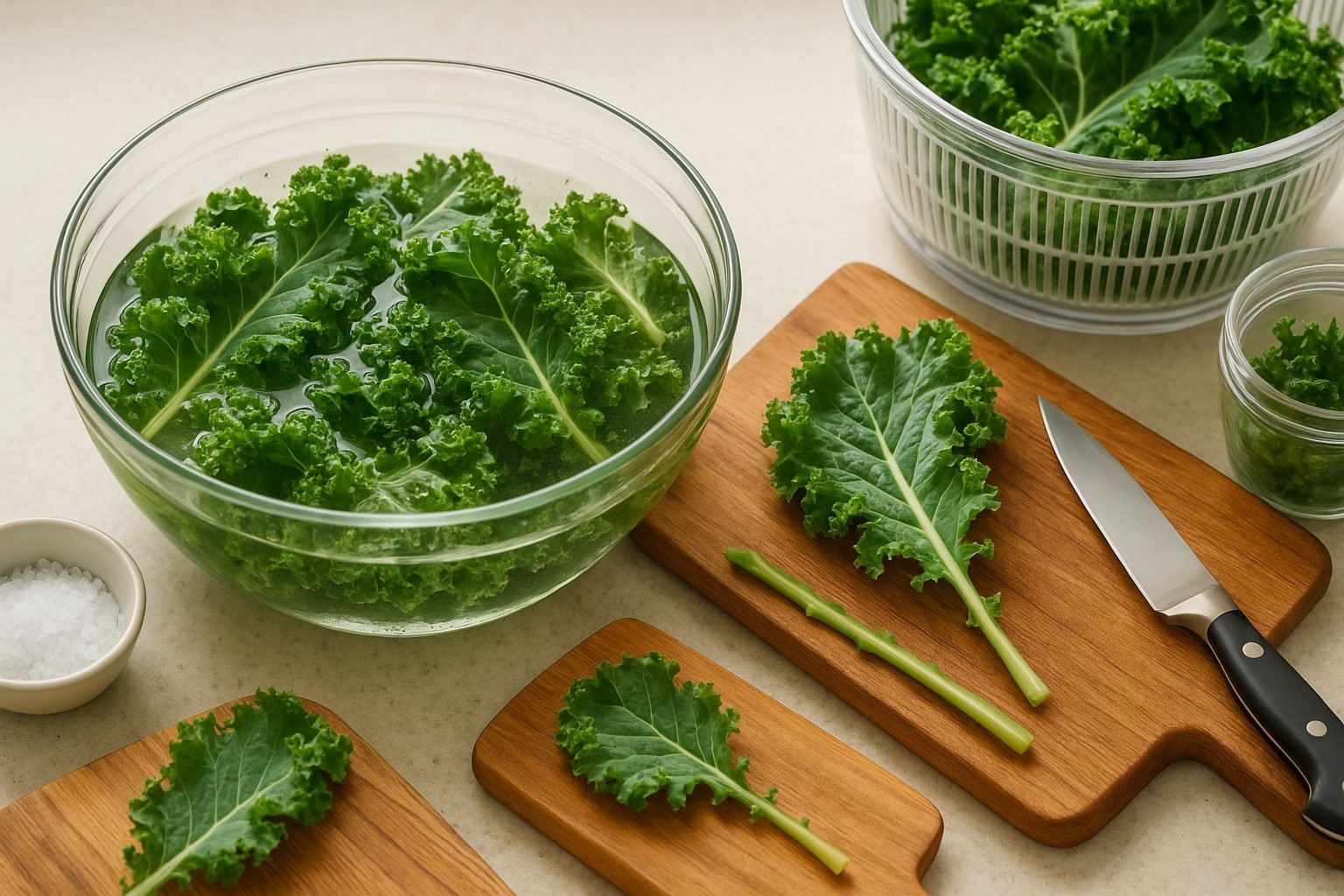
Before you start cooking, it’s essential to clean kale thoroughly since its curly leaves often trap dirt and grit. Rinse each leaf under cold running water, using your fingers to separate the ruffles and dislodge debris. For extra peace of mind, soak the leaves in a bowl of cold water for a few minutes, then lift them out and pat them dry with a clean towel or use a salad spinner.
Next, de-stem the kale by folding each leaf in half along the stem and slicing the tough center stalk away with a knife; you can also grip the stem and pull the leafy part off.
When it comes to chopping, tailor your technique to the dish:
- For salads, slice the leaves into thin ribbons so they’re easier to chew (stack a few leaves, roll them up, and cut crosswise for fast shredding).
- For sautés, cut into bite-sized pieces so they wilt evenly in the pan.
- For kale chips, tear the cleaned leaves into larger chunks, as they’ll shrink when baked.
To mellow kale’s signature bitterness, try massaging raw kale with a pinch of salt and a drizzle of olive oil for a minute or two—this breaks down tough fibers and makes salads more tender. Alternatively, blanch kale briefly in boiling water (about 30 seconds), then plunge into ice water to preserve its color and remove excess bite, a great prep for sautéing or freezing.
For storage, wrap unwashed kale in a dry paper towel, place it in a perforated plastic bag or the produce drawer, and keep it in the fridge; this way, fresh kale can last about a week without wilting, staying crisp and flavorful for all your recipes.
Popular Ways to Cook Kale
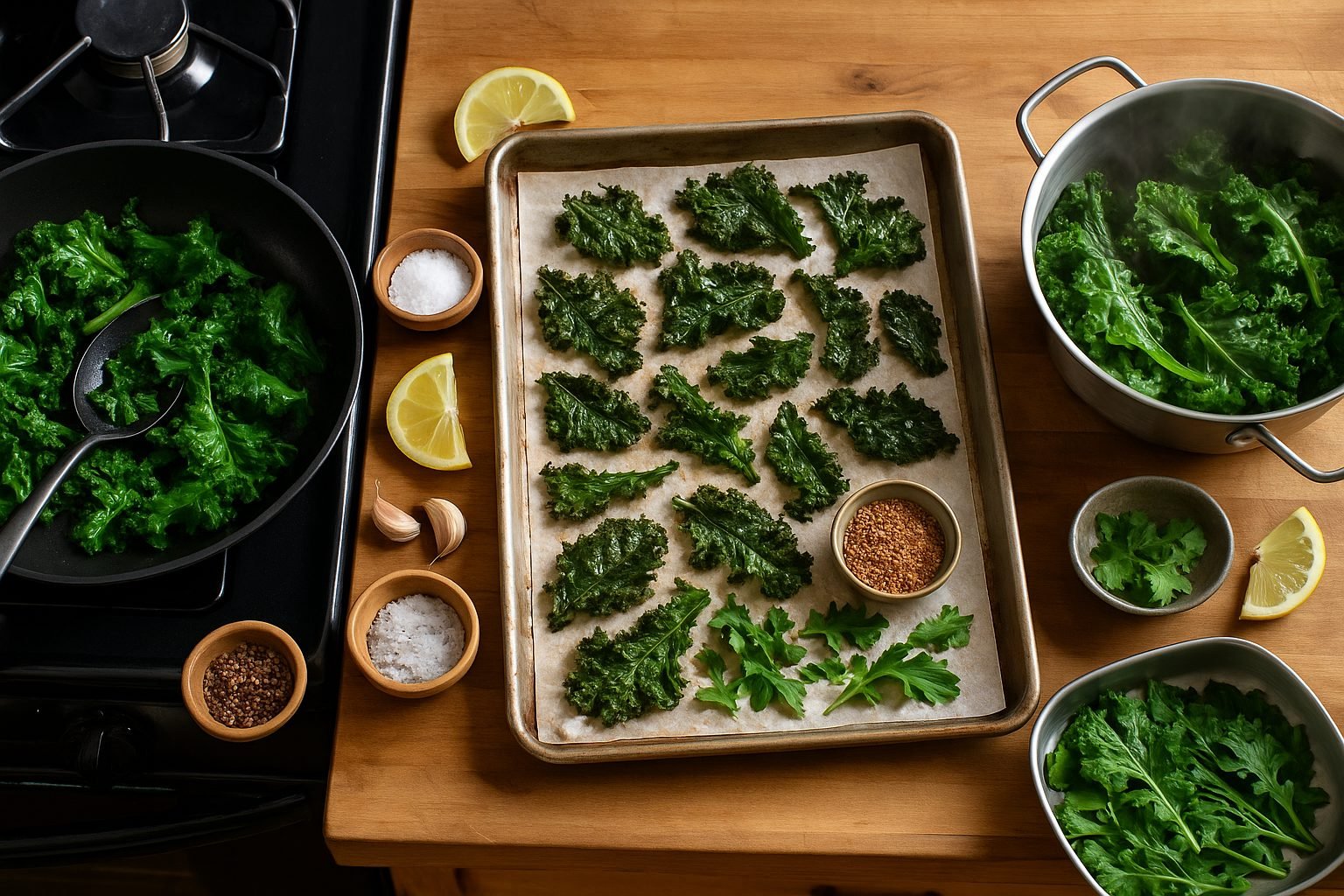
Kale’s versatility shines in the kitchen, with several popular cooking methods bringing out its best flavors and textures.
Sautéing
Sautéing is a quick go-to: add chopped kale to a pan with a little olive oil, garlic, and salt, and cook over medium heat for about 5 minutes until the leaves wilt and turn vibrant green—perfect for stir-fries, breakfast scrambles, or quick pasta tosses.
Steaming
For a softer, milder result, try steaming: place kale in a steamer basket over simmering water for 4-6 minutes. Steamed kale works well as a healthy side or tucked into grain bowls.
Roasting
If you love crispy textures, roasting is the answer. Spread torn kale leaves on a baking sheet, drizzle with oil and a sprinkle of salt, and bake at 350°F for 10-15 minutes, flipping halfway. Roasted kale chips make a great snack or crunchy salad topping—just remember to space leaves apart so they crisp up rather than steam.
Braising
Braising brings a deep, savory flavor by simmering kale in broth with aromatics for 20-30 minutes until tender and silky; it’s excellent in hearty stews or served alongside roasted meats.
Tips for Cooking Kale
- Remove tough stems before cooking.
- Avoid overcrowding pans to ensure even heat and better texture.
- Try adding a splash of lemon juice or a pinch of chili flakes to enhance flavor.
With just a few tweaks, kale can adapt to any dish, from cozy soups to crisp power salads.
Kale in Recipes: Salads, Soups & More
Kale is a true kitchen multitasker, bringing color, crunch, and nutrition to a variety of recipes. For fresh salads, simply chop or tear kale leaves and toss them with a splash of olive oil and a pinch of salt. Then, massage the leaves with your hands for a minute or two—this trick softens the texture and reduces bitterness, making raw kale super palatable.
Try mixing kale with juicy oranges, tangy goat cheese, and toasted almonds for a vibrant salad, or pile it onto a hearty grain bowl with quinoa, chickpeas, and a zesty lemon-tahini dressing.
In cooked dishes, kale stands up beautifully in soups, stews, and pastas. Stir chopped leaves into a pot of minestrone or a creamy white bean stew in the last 10 minutes of cooking, or wilt kale into skillet pasta with lots of garlic, chili flakes, and a sprinkle of Parmesan.
For easy weeknight stir-fries, toss shredded kale into the pan alongside tofu or chicken, letting it pair with soy sauce, sesame seeds, and ginger for bold flavor.
Don’t overlook kale at breakfast: sauté it with eggs in a frittata or scramble, or add a handful to a green smoothie with banana, pineapple, and almond butter for a morning nutrient boost.
For an irresistible snack, make crispy kale chips by tossing leaves with olive oil, sea salt, a pinch of smoked paprika, and baking until crunchy—kids and grown-ups alike will love them.
Throughout, kale’s slightly earthy flavor shines brightest with smart pairings like citrus (think lemon or orange zest), toasted seeds and nuts, garlic, Parmesan cheese, dried cranberries, or a drizzle of tangy vinaigrette.
With a few hacks and tasty combinations, you’ll find kale isn’t just a health food trend—it’s a truly versatile ingredient that belongs in every kitchen.
Kale for Special Diets: Keto, Vegan, and Beyond
Kale is a versatile superfood that fits smoothly into many special diets, making it an easy choice for anyone looking to eat healthier. For keto followers, kale’s low carbohydrate count makes it ideal for salads, crisps, or sautéed side dishes, especially when paired with high-fat keto-friendly additions like avocado or eggs.
Vegans can toss kale into grain bowls or smoothies, or make kale chips with olive oil for a satisfying crunch—and for a protein boost, consider topping with roasted chickpeas or cubes of baked tofu. Kale is naturally gluten-free, making it safe for those with gluten sensitivities; it works well in gluten-free soups, stir-fries, or salads loaded with beans or grilled chicken for added protein if meat is preferred.
For meal prep, wash, dry, and chop kale in advance—store it in an airtight container with a paper towel to absorb moisture, keeping it fresh for up to a week. Individually portioned kale salads or kale-based snack packs are perfect for grab-and-go workouts or quick lunches.
With its adaptability for keto, vegan, or gluten-free lifestyles—and simple storage—it’s clear why kale is a favorite for healthy meal planning and snacking.
Kale Cooking Mistakes to Avoid
Many people shy away from cooking kale because it can easily turn bitter or rubbery if handled incorrectly. One common mistake is overcooking—kale only needs a few minutes in a hot pan to become tender; letting it cook too long breaks down the fibers too much, leaving you with limp, unappetizing greens.
On the other hand, under-seasoning makes kale taste bland, so don’t be afraid to add salt, garlic, lemon juice, or even a splash of vinegar to brighten up the flavor.
Another pitfall is using the tough stems whole—these can be fibrous and chewy. It’s best to strip the leafy parts from the stems, then either discard the stems or chop and sauté them separately for a little longer than the leaves.
To keep kale’s vibrant green color and pleasant texture, try blanching it briefly in boiling water, then plunging it into ice water before sautéing or adding to salads.
If you find your kale tastes bitter, a dash of acid like lemon juice or vinegar at the end of cooking can help balance the flavors.
Massaging raw kale with olive oil and salt before serving softens the leaves and cuts bitterness, making for a more enjoyable bite.
Conclusion: Making Kale Part of Your Daily Cooking
Making kale a staple in your daily cooking is easier—and tastier—than you might think. With curly, lacinato, and red Russian kale available at most markets, you can experiment with different varieties to discover your favorite flavors and textures.
Try tossing chopped kale into morning omelets, blending it into smoothies for a hidden nutrient boost, or massaging it with olive oil for a quick salad. When you want something warm, sauté kale with garlic or add it to soups, stir-fries, or pasta dishes for a hearty green addition. You can even bake kale into crispy chips as a healthy snack.
The key is to keep things simple and flexible—kale works well raw or cooked, mixed in or as the main event.
Have some tips or a go-to kale recipe you love? Share your ideas in the comments and help inspire more ways to get this super green onto everyone’s plate.