Introduction
Knowing exactly how many broccoli plants you can fit per square foot is key to a healthy, productive harvest—especially if you’re working with limited space or a dedicated square foot garden. Proper spacing isn’t just about squeezing more plants into your plot; it’s essential to ensure each broccoli plant gets enough sunlight, airflow, and nutrients.
This directly affects your yield, as overcrowding can lead to stunted growth, higher disease risk, and smaller heads. For gardeners looking to maximize every inch, understanding the optimal density for broccoli is the difference between a bountiful harvest and a disappointing one.
In this article, we’ll explore how many broccoli plants you can grow per square foot, discuss the ideal spacing for robust heads, and offer practical planting tips for success. Plus, you’ll get straightforward advice on plant care—from watering schedules to pest control. By the end, you’ll know how to make the most of your garden, enjoying all the space-saving benefits that square foot gardening has to offer.
Square Foot Gardening Basics for Cucumbers
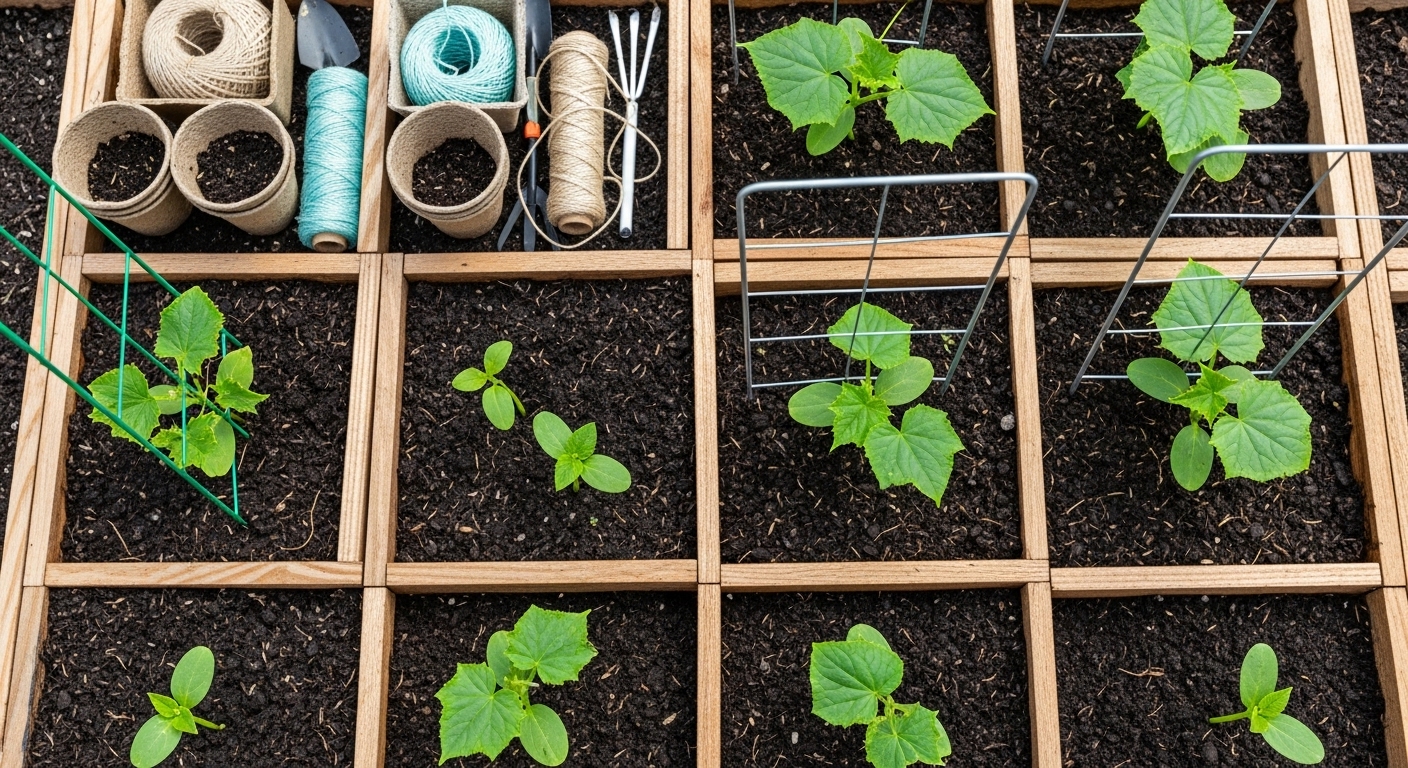
Square foot gardening is a space-saving method that divides your garden bed into manageable 1-foot squares, making it easy to plan and track your planting. This approach is especially effective for cucumbers, as it allows you to maximize your harvest in a compact area while keeping plants healthy.
By arranging cucumbers in dedicated squares—usually two plants per square—you give them ample space to grow, reduce crowding, and make it easier to spot pests or diseases early. For beginners, this method takes the guesswork out of plant spacing and care, making gardening feel less overwhelming; experienced gardeners love how it simplifies crop rotation and companion planting.
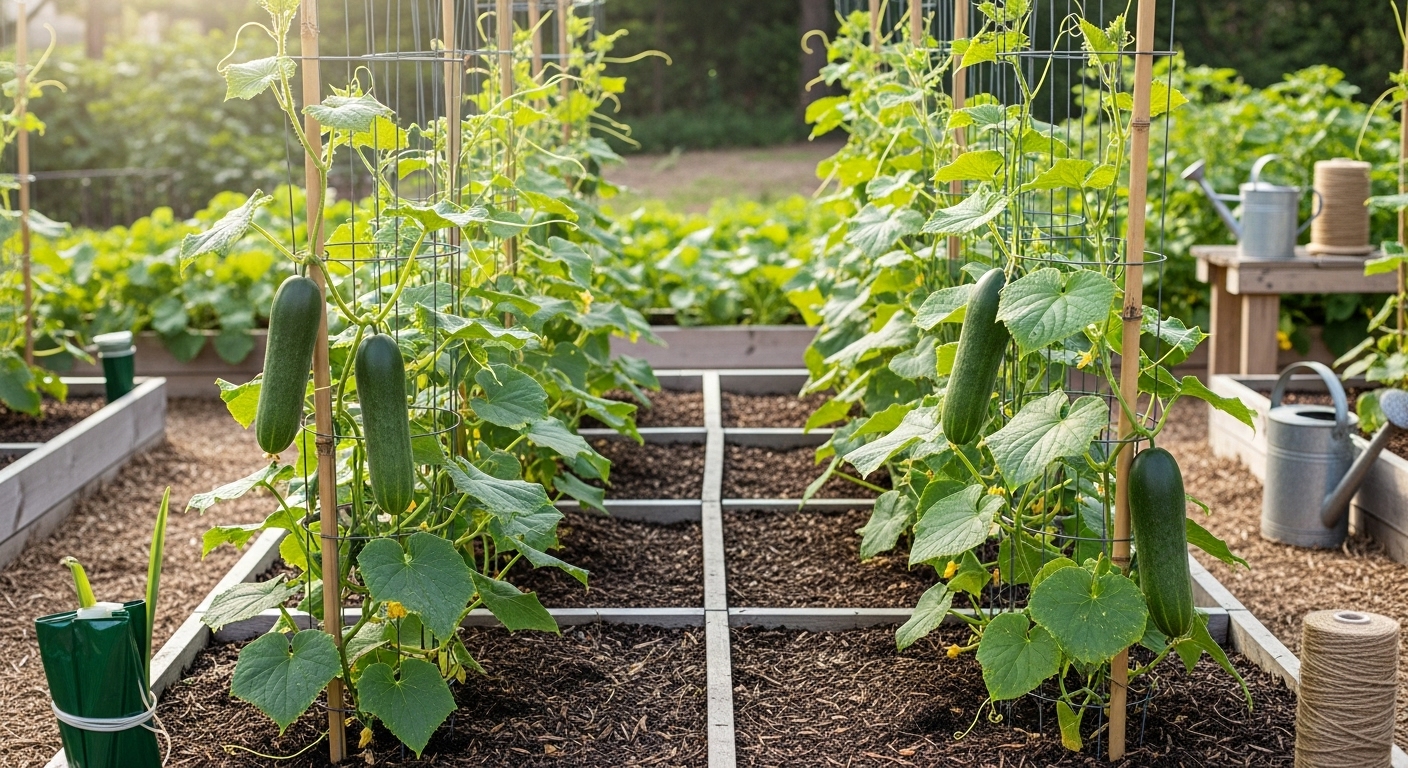
Cucumbers thrive in square foot gardens because their vining habit can be trained vertically on a trellis fitted along the edge of a bed, leaving the footpaths clear and improving airflow around the plants. This setup also makes harvesting easier, as cucumbers hang off the ground and are more visible—you’ll spend less time searching under foliage and more time picking crisp, clean fruit.
Watering and feeding are straightforward too: you can tailor care to each square, ensuring cucumbers get exactly what they need.
Real-World Tip
Use a trellis or cage so your cucumber vines climb instead of sprawl, helping you grow more in less space. Whether you’re starting your first cucumber crop or optimizing a seasoned garden, organizing by square foot is a smart way to get healthier plants and bigger yields with less fuss.
How Many Cucumber Plants per Square Foot?
When planning your cucumber patch, spacing is key to healthy, productive plants. For bush cucumber varieties, you can generally plant one per square foot, making them well-suited for small gardens or square-foot gardening setups. These plants stay compact, so they don’t sprawl far beyond their allotted space.
Vining cucumbers, on the other hand, need more room—plan for one plant every two square feet if you use a trellis, as these varieties grow long vines that climb and spread. The spacing matters because cucumbers are heavy feeders, needing enough soil nutrients and moisture for fruit production. Proper spacing also prevents plants from competing with each other. Good airflow between plants helps keep leaves dry, reducing the risk of diseases like powdery mildew.
Overcrowding your cucumbers can lead to stunted growth, fewer fruits, and more disease problems, so it’s worth resisting the urge to pack them in too tightly.
Quick-Reference Spacing Guide for Common Cucumber Types:
- Bush cucumbers: 1 plant per square foot
- Vining (trellised): 1 plant per 2 square feet
- Vining (ground-spread): 1 plant per 3–4 square feet
If your space allows, giving vining types at least two feet between plants—even when trellised—makes maintenance and harvesting easier too. Remember, it’s better to have a few healthy, productive cucumber plants than a dense patch of struggling ones. Starting with the right spacing sets you up for a successful, tasty harvest all season long.
Trellising Cucumbers: Why and How
Trellising cucumbers is a game-changer for gardeners working with limited space, especially in small or square-foot gardens. By training cucumber vines to grow vertically, you free up precious ground area, allowing you to plant more in the same space and reducing the chance of disease by improving airflow around the plants. This not only helps your cucumbers stay healthy but also makes them easier to spot and harvest—no need to search for hidden fruit under the leaves!
A simple trellis can be made with materials like bamboo stakes, wire mesh, or even lightweight wooden frames. In a square-foot garden, a sturdy A-frame or vertical grid positioned along the north edge of a bed works well, providing support without shading other crops.
For most varieties, place your trellis at the back of your raised bed and plant seeds or seedlings about 6 inches apart in a single row right at the base. This close spacing is possible because trellised cucumbers grow upwards instead of sprawling sideways, allowing you to grow one healthy, productive plant per square foot.
As the vines climb, loosely tie them to the trellis with soft garden twine, and pinch back side shoots if space is tight. Trellising makes the most of every inch, turning a tiny plot into a powerhouse of crisp, homegrown cucumbers.
Planting Tips: Seeds, Spacing, and Thinning

When planting cucumbers, start by placing 2-3 seeds per hole at a depth of about ½ inch if sowing directly outdoors after your last expected frost. If you’re starting seeds indoors to get a jump on the season, plant them 3-4 weeks before your region’s average last frost date, using biodegradable pots for easy transplanting.
Once your outdoor soil consistently reaches at least 60°F (16°C), it’s safe to move seedlings outside or sow seeds directly. As the seedlings grow and reach about 2-3 inches tall, thin them so only the strongest plant remains in each spot. This might feel counterintuitive, but thinning helps each plant get enough space, water, and nutrients for optimal health—overcrowding leads to poor airflow and lower yields.
Spacing Guidelines
- For bush cucumber varieties, aim for 18-24 inches between plants.
- For vining types, provide 36-48 inches between plants.
- Space rows about 4-5 feet apart to give sprawling vines enough room.
How Many to Plant
On average, each cucumber plant produces 10-15 fruits during its growing season. Plan on 2-3 plants per person if you’re growing for fresh eating, and more if you’re interested in making pickles or sharing with neighbors.
Protecting Your Crop
Remember to keep an eye on the forecast and protect young seedlings from late frosts with row covers or cloches—this can save your crop during unpredictable spring weather. With consistent moisture and the right spacing, you’ll enjoy healthy, productive cucumber plants all summer long.
Watering and Caring for Your Cucumber Plants
Cucumber plants thrive when their soil stays evenly moist, so aim to water them about one inch per week. However, hot weather or sandy soil may require even more. Each cucumber plant typically needs about one to two gallons of water weekly, ideally applied directly at the base to prevent wetting the leaves, which can invite disease.
When growing cucumbers close together, good airflow becomes essential. Space the plants as much as your patch allows, regularly prune side shoots and lower leaves, and consider trellising to elevate the vines. Mulching around the base helps conserve moisture and reduce weed competition.
In crowded beds, powdery mildew and downy mildew are common fungal diseases that spread quickly in damp, still air. Regularly inspect leaves for yellow spots or fuzzy growth.
Aphids and cucumber beetles are the most frequent pests. You can deter them by checking under leaves for eggs and handpicking beetles early in the morning when they’re sluggish. Try companion planting with marigolds or nasturtiums to help repel pests naturally.
If you notice wilted vines or deformed fruit, act quickly. Removing affected leaves and using insecticidal soap can stop minor problems from becoming major.
Lastly, avoid overhead watering, which splashes soil and potential pathogens onto leaves. Make it a habit to water in the morning to give plants time to dry out before evening.
By monitoring moisture levels, keeping an eye out for pests, and fostering healthy airflow, even a dense patch of cucumbers can stay productive and disease-free all season.
Cucumber Nutrition and Enjoyment
Cucumbers are more than just a crunchy, refreshing snack—they’re a powerhouse of hydration and nutrients with very few calories. Packed with vitamins K and C, potassium, and antioxidants, cucumbers help keep your body cool, your skin healthy, and your immune system strong.
Their high water content makes them excellent for staying hydrated, especially on hot summer days or after exercise. If you have a garden, there’s nothing quite like picking a cucumber straight from the vine and tasting the crispness that store-bought just can’t match.
Even if space is tight, cucumbers can thrive in containers or small raised beds with a bit of sun and regular watering. Whether you slice them into salads, add them to sandwiches, or infuse your water for an extra burst of flavor, fresh homegrown cucumbers bring satisfaction and nutrition to every bite.
Plus, growing your own means you control what goes on your plants—no unnecessary chemicals—making each harvest a little healthier and a lot more rewarding. Don’t let limited space or gardening experience stop you; a small patch or a few pots are all you need to enjoy the taste and health benefits of homegrown cucumbers all season long.