How to Grow Broccoli
Curious about broccoli growing time and wondering how long it really takes to bring those tasty green florets from seed to table? You’re not alone. For many first-time gardeners, broccoli’s growth timeline can feel mysterious, but it’s actually straightforward once you know what to expect.
Typically, broccoli takes about 60 to 100 days from sowing to harvest, depending on the variety and growing conditions. In this guide, you’ll discover proven tips for every stage of the process—from choosing the right seeds to knowing exactly when your broccoli heads are ready to cut—so that even beginner gardeners can enjoy a bountiful, healthy crop.
Choosing the Right Broccoli Variety and When to Plant
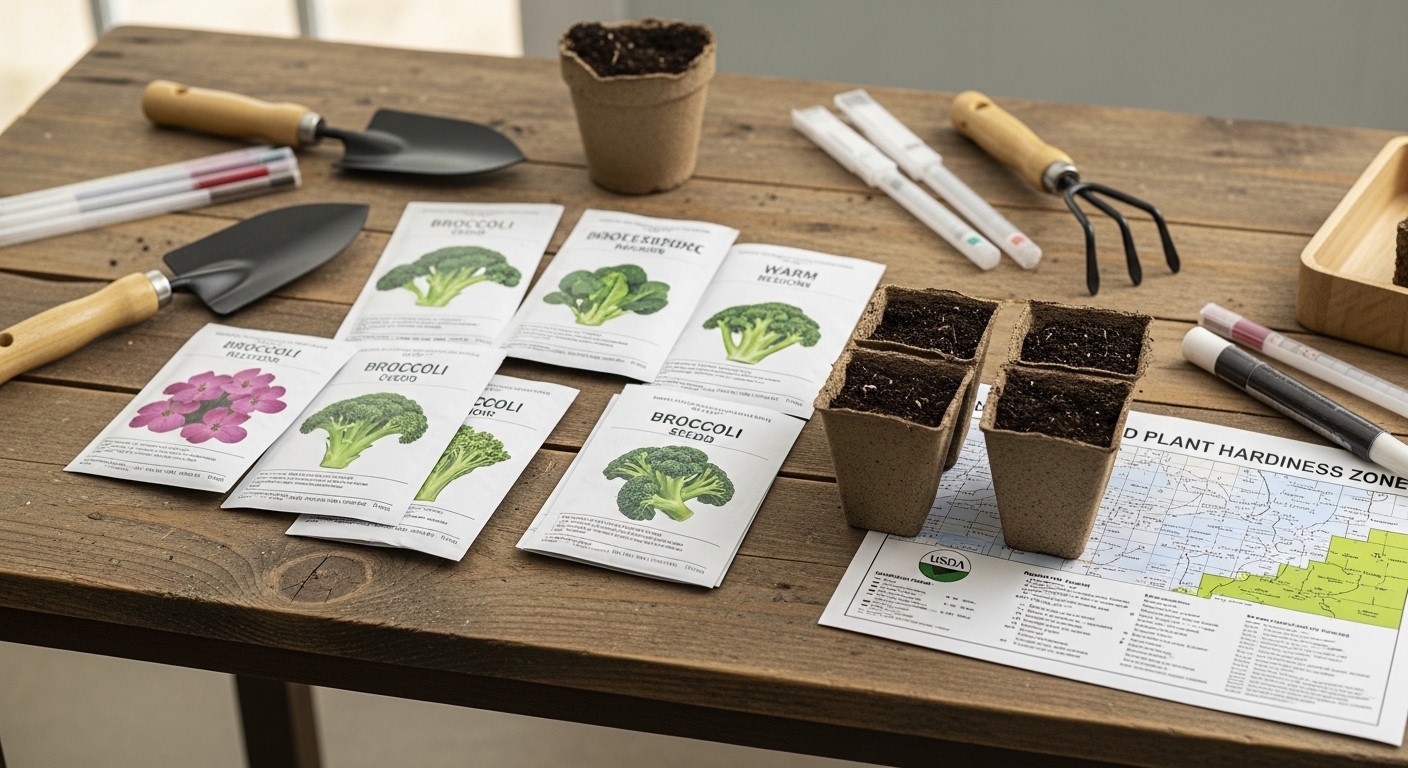
Selecting the right broccoli variety can make a big difference in your harvest, especially since climate and season play crucial roles in plant success. If you live in a cooler northern region, try varieties like Waltham 29 or Calabrese, both known for their cold tolerance and reliability in unpredictable spring or fall temperatures. Gardeners in warmer southern climates might favor heat-resistant options like Green Magic or Packman, which mature quickly and resist early bolting.
Generally, broccoli thrives best in temperatures between 60°F and 70°F, so timing your planting to avoid extreme weather is key. In most zones, broccoli grows well if you start seeds indoors 6 to 8 weeks before your last expected frost date for spring harvests, or 85 to 100 days before your first fall frost for late-season crops.
Use tools like the USDA Plant Hardiness Zone Map or handy phone apps to look up your area’s average frost dates—these serve as vital guides for when to transplant seeds outdoors. Local garden centers and cooperative extensions can also advise on the varieties proven to perform well in your microclimate.
Remember, a little planning goes a long way: starting seeds at the right time will mean bigger heads, fewer pests, and that rewarding harvest you’re hoping for.
Selecting the Best Location and Preparing the Soil
Choosing the right spot for your garden is key to healthy, productive plants. Start by observing how much sunlight your space gets throughout the day—most veggies and flowers thrive in full sun, which means at least six hours of direct sunlight daily. Some leafy greens and herbs can tolerate partial shade, but root crops and fruiting plants like tomatoes or peppers need the sunniest spot you’ve got.
Once you’ve settled on a location, test your soil’s drainage by digging a small hole, filling it with water, and seeing how quickly it drains; soggy soil can suffocate roots, while overly sandy soil lets water slip away too fast. Aim for soil that feels crumbly and rich—not too sticky, not too dusty. Test your soil’s pH with a kit from a garden center (most plants prefer slightly acidic to neutral soil, around 6.0–7.0 pH), and assess fertility by looking for earthworms or dark, loamy earth.
For garden beds, loosen the soil at least 8–12 inches deep and mix in organic matter like compost, aged manure, or leaf mold to boost nutrients and improve texture. For containers, choose a high-quality potting mix rather than plain garden soil, and consider adding slow-release fertilizer.
Don’t skimp on compost—it’s like superfood for your plants, enhancing water retention in sandy spots and improving drainage in clay-heavy areas. Dedicate a bit of extra time to this prep work; healthy soil is an investment that pays off all season long with stronger, happier plants.
Starting Broccoli: Seeds, Transplants, and Initial Care
When deciding how to start growing broccoli, you have a few options: sowing seeds indoors, sowing directly into the garden, or buying young plants (transplants). Starting seeds indoors gives you a jump on the season, protects seedlings from pests, and lets you control growing conditions, but it requires more supplies and space. Direct sowing is simple and less expensive but relies on ideal outdoor temperatures and can result in uneven germination. Transplants from a nursery are the easiest for beginners—just plant and go—but they’re costlier and offer fewer variety choices.
Starting Seeds Indoors
If you start from seed indoors, use a seed tray or small pots filled with seed-starting mix. Sow seeds about ¼ inch deep, keeping the soil consistently moist but not soggy. Place trays in a sunny window or under grow lights for at least 14 hours daily. Once seedlings have two sets of true leaves, thin out the weakest, giving each remaining plant room to grow. Before moving any seedlings outdoors, harden them off by gradually exposing them to outdoor conditions over a week to reduce transplant shock.
Planting in the Garden or Containers
For planting in a garden, choose a sunny, well-drained spot. Space seeds or transplants 18–24 inches apart in rows about 2 feet apart, and plant slightly deeper than in pots. For containers, pick a pot at least 12 inches wide and deep, fill it with rich potting mix, and follow the same spacing guidelines.
Watering and Mulching
Water after planting and keep the soil moist but not waterlogged—broccoli likes steady moisture, especially as the roots get established. Mulch around plants to retain water and reduce weeds.
Pest Management and Fertilizing
Watch for early signs of pests like aphids or caterpillars and hand-remove them as you spot them. In the beginning, fertilize young broccoli with a balanced, gentle fertilizer once they have a few true leaves.
Whether you’re growing in the ground or in containers, keeping broccoli consistently watered, in bright light, and protected from harsh winds will set you up for a successful harvest.
Broccoli Growth Stages and Ongoing Plant Care
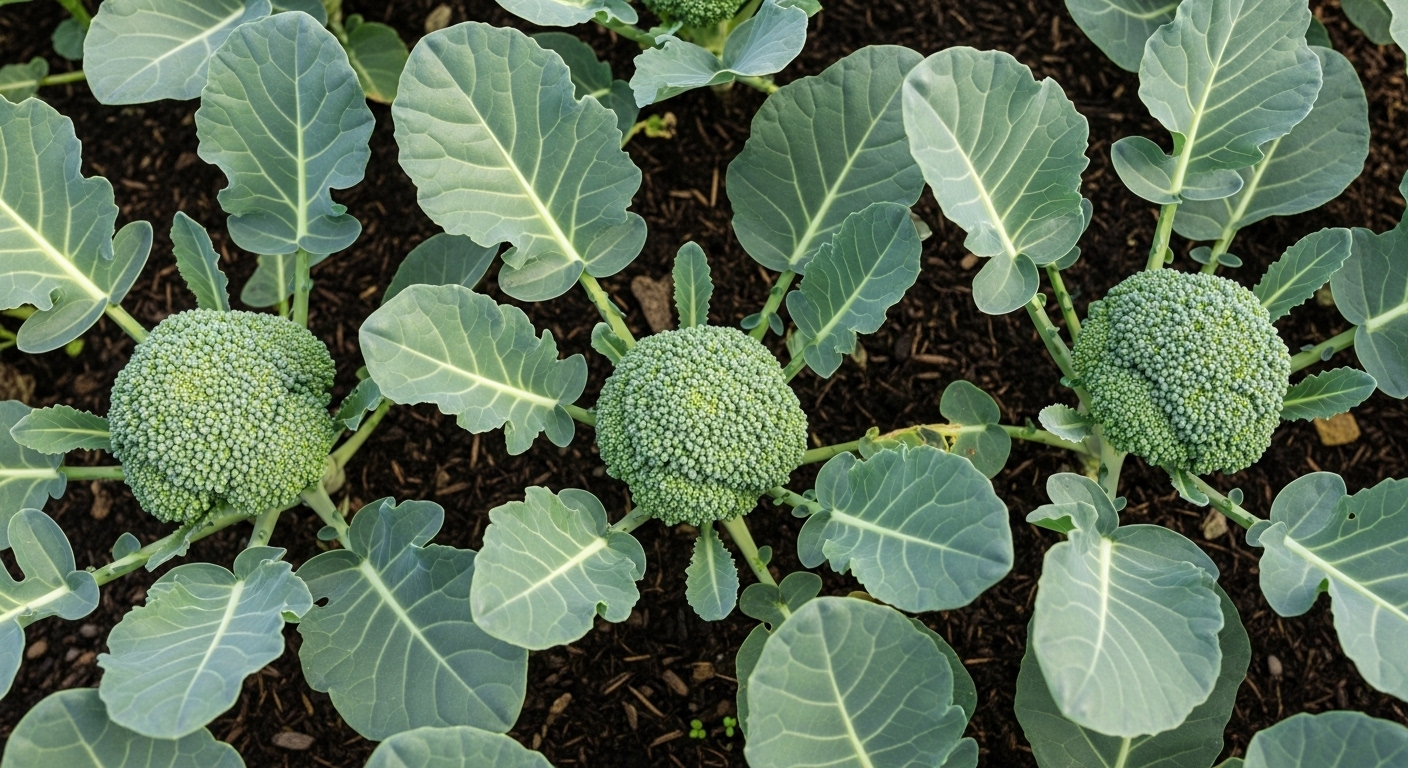
Broccoli’s journey from seed to harvest goes through four main stages: germination, seedling, vegetative growth, and heading.
During germination, seeds sprout in about 5-10 days when kept moist and warm. Once seedlings emerge, they require gentle watering and protection from harsh weather.
As the plant enters its vegetative stage, it grows large, leafy greens—this is when broccoli needs the most water (about 1-1.5 inches per week) and benefits from a layer of mulch to conserve moisture and suppress weeds.
When the central head starts to form, fertilize lightly with a balanced, nitrogen-rich fertilizer, but avoid overfeeding, as this can cause excess leaf growth instead of heads.
One common mistake is inconsistent watering, which can lead to poor head development or cause the plant to bolt early—keep soil evenly moist, but never soggy. Failing to mulch is another problem, as bare soil dries quickly and invites weeds.
It’s also important not to overcrowd plants; broccoli needs space (18-24 inches apart) and airflow to reduce the risk of disease.
For ongoing plant health, rotate crops each season to prevent soil-borne pests.
Companion Planting
Companion planting is a powerful way to boost broccoli’s growth:
- Pair it with aromatic herbs like dill or sage to repel pests.
- Grow alongside onions, beets, or potatoes for mutual benefit.
- Avoid planting broccoli near tomatoes, strawberries, or pole beans, which can compete for nutrients.
With thoughtful care and the right neighbors, your broccoli patch will thrive through every stage, from seed to delicious homegrown harvest.
Dealing With Common Pests, Diseases, and Growing Problems
Growing broccoli can sometimes feel like an uphill battle thanks to persistent pests, frustrating diseases, and a handful of growing quirks. Some of the most common insect pests you might spot are cabbage worms, aphids, and flea beetles. Cabbage worms chew ragged holes in leaves and leave behind greenish droppings, while aphids cluster on tender stems, excreting sticky honeydew that can encourage mold. Flea beetles create tiny round holes, making leaves look like they’ve been hit with a mini shotgun.
Diseases are another headache—watch for downy mildew (yellow patches that turn brown and fuzzy on leaf undersides), clubroot (wilting and swollen roots), and black rot (yellowing leaves with V-shaped lesions). On top of that, broccoli plants sometimes struggle with physiological issues like bolting (when they suddenly send up flower stalks in heat), yellowing leaves from nitrogen deficiency or inconsistent watering, and poor head formation if temperatures swing or plants are crowded.
Prevention and Organic Solutions
To outsmart these challenges without harsh chemicals, prevention and prompt action work best.
Pest Control
- Use lightweight row covers right after planting to form a physical barrier that keeps moths and beetles from laying eggs.
- Check the undersides of leaves regularly—handpick caterpillars or squish aphid colonies.
- Encourage beneficial insects like ladybugs by planting nearby flowers such as dill or yarrow.
Disease Prevention
- Rotate your crops every year so broccoli isn’t planted in the same spot more than once every three years. This helps reduce lingering pathogens in the soil.
- Avoid overhead watering, as wet foliage encourages disease—use a soaker hose to target the soil instead.
Plant Care
- If leaf yellowing appears, side-dress with compost or organic fertilizer to fix nutrient gaps.
- Space your plants well and mulch with straw to keep the soil cool and moisture steady, helping to prevent bolting and poor head development.
With these organic techniques, you’ll give your broccoli its best shot at a healthy, productive season.
Harvesting Broccoli and Maximizing Your Yield
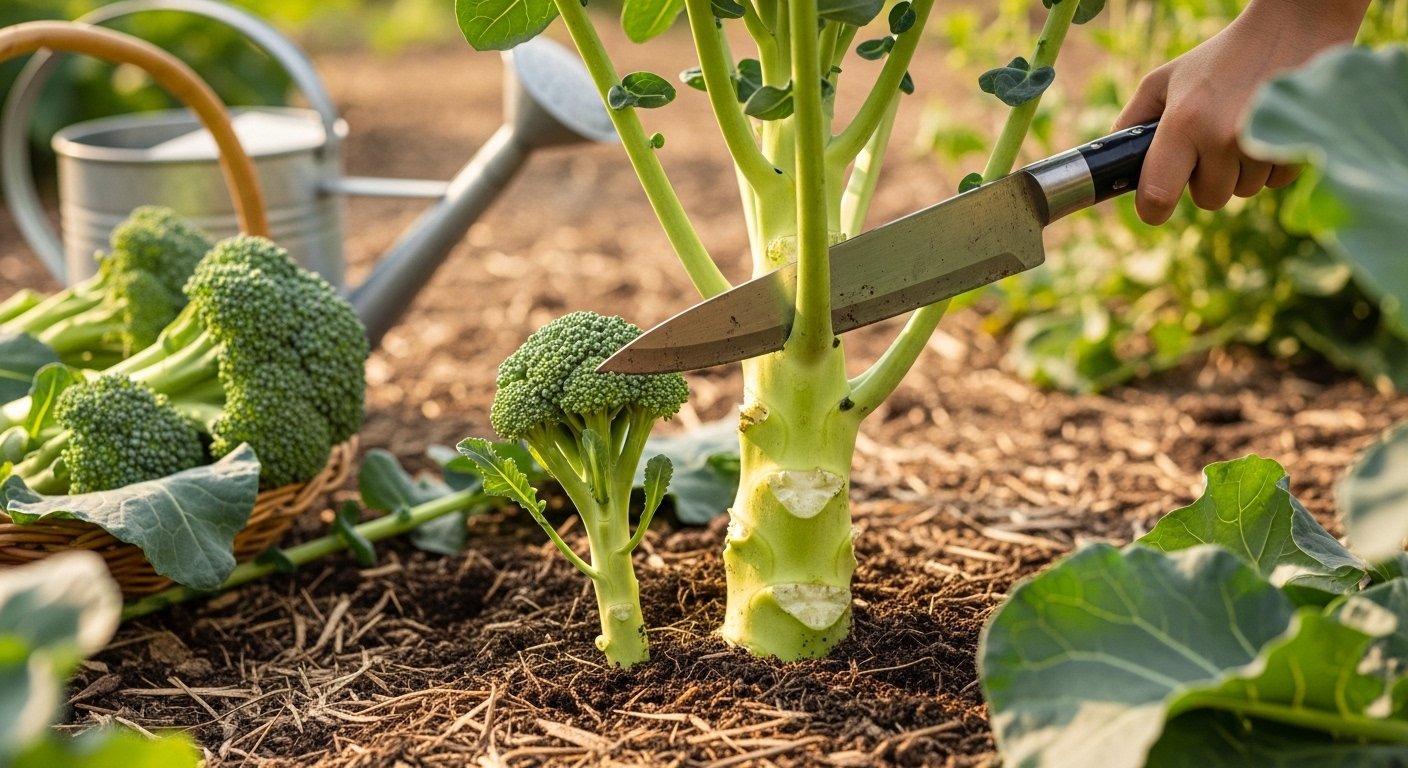
Knowing exactly when to harvest broccoli can make a big difference in both taste and yield. Broccoli heads are ready when they reach a full, deep green color and are firm, with tightly clustered buds that haven’t started to flower or turn yellow—typically when the central head is 4 to 7 inches across. Avoid waiting too long, as loosening buds or small yellow flowers indicate over-maturity and a drop in flavor and texture.
Use a sharp knife to cut the central head at an angle, 5 to 8 inches below the head, to avoid damaging the plant and to leave enough stem for side shoots to grow. After the main head is harvested, continue watering and feeding your broccoli; most varieties will produce smaller side shoots along the stem.
These shoots can be harvested once they’re about 1 to 2 inches across, giving you a second (or even third) flush of mini-harvests for weeks to come. To stretch your broccoli season even further, stagger your planting or try succession planting every couple of weeks in early spring or late summer.
After cutting, refrigerate broccoli right away to keep it crisp and fresh, as it’s highly perishable. With these methods, not only can you catch your broccoli at its prime, but you can also turn one plant into a surprising bounty over the growing season.
Pro Tips for Successful Broccoli Growing
For gardeners ready to level up their broccoli game, a few expert techniques can make all the difference in yield and flavor. First, focus on soil quality—broccoli thrives in soil rich with compost and organic matter, so spend time amending your beds before planting.
To encourage bigger, sweeter heads, maintain consistent moisture and mulch well to keep the roots cool, especially during heat waves. When it comes to spacing, resist the urge to crowd your plants; give each broccoli at least 18 inches of space to allow for optimal air circulation and head development.
For a continuous harvest, try succession planting: start new seedlings every 2-3 weeks so you can enjoy fresh broccoli all season rather than a single big crop. Keep a close eye on pests like cabbage worms and aphids—floating row covers or regular hand-picking can help protect your plants without harsh chemicals.
Monitoring plant health is key; yellow leaves or stunted growth might signal a need for more nitrogen or better drainage. For beginners, remember the basics still apply: choose a sunny spot, water regularly, and harvest heads while they’re tight and firm before florets begin to separate.
With a bit of extra attention, even first-time gardeners can grow impressive, delicious broccoli right at home—so don’t be afraid to dig in and plant your first seeds this season!