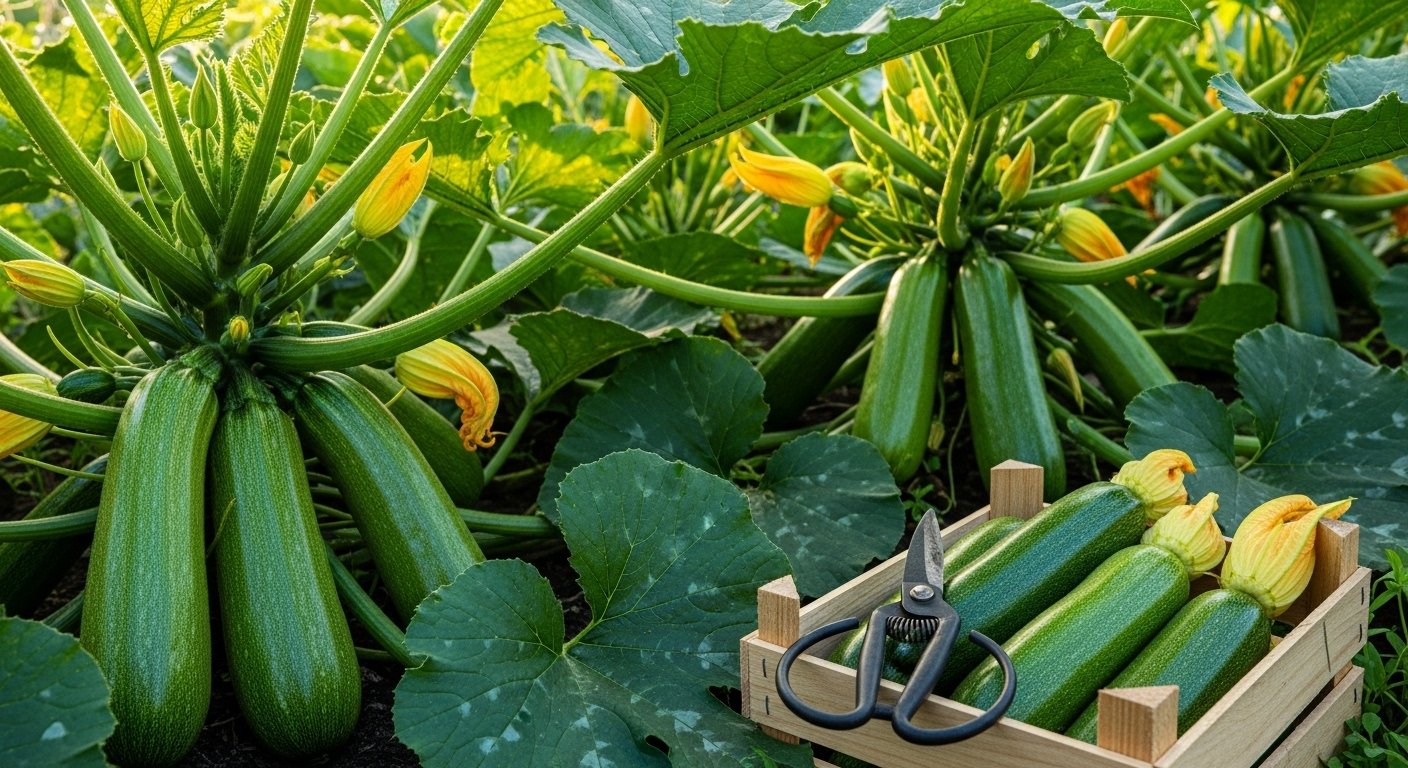
When to Harvest Zucchini
Learning how to harvest zucchini is key to enjoying crisp, flavorful vegetables while keeping your plant healthy for future picking. Zucchinis are at their peak when they reach about 6 to 8 inches long—smaller fruits are tender and tasty, while larger ones can develop tough skins and extra-large seeds.
Check that the skin is a rich green (or golden, depending on the variety), glossy, and slightly firm to the touch. If you squeeze gently and the zucchini feels dense but not rock-hard, it’s just right. Overgrown zucchinis start to feel spongy, lose their sheen, and the skin may begin looking dull or even streaky.
During the peak growing season—often midsummer when the plants are producing abundantly—it’s best to inspect your zucchini every day or two. Zucchinis can grow incredibly fast, sometimes doubling in size overnight.
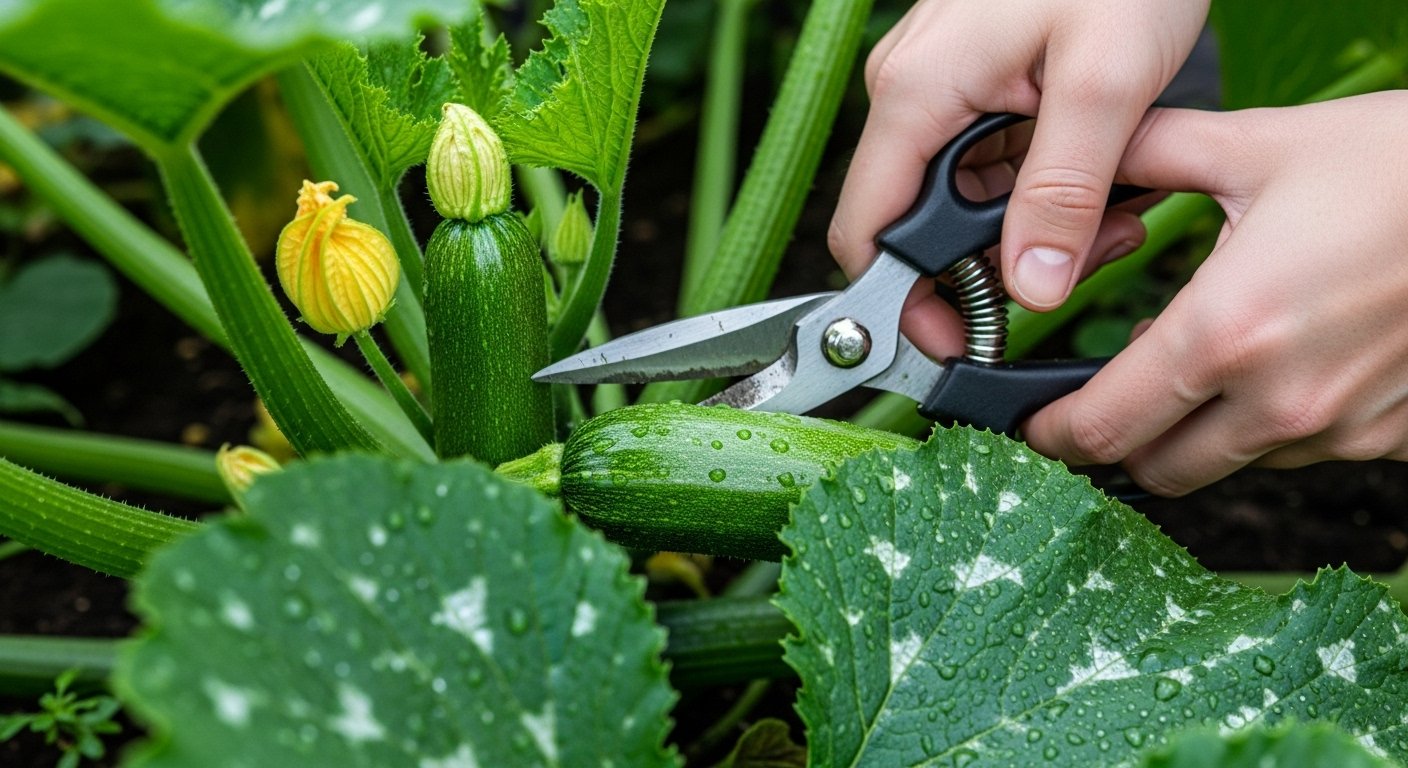
Bringing a sharp knife or garden shears to cleanly snip the fruit from the stem helps prevent accidental tearing, which can stress or damage the plant. Checking your plants frequently ensures you’ll catch each zucchini at its prime, keeping both your harvest and your plant’s vigor at their best.
This timely approach not only delivers the best-tasting vegetables but also encourages the plant to continue producing throughout the season.
How Many Zucchini Per Plant Can You Expect?
The average zucchini plant is famously productive, often producing between 5 to 10 pounds of fruit over a typical growing season. Each plant can yield anywhere from 6 to 10 individual zucchinis under normal garden conditions. Certain high-yield varieties, like Black Beauty or Golden Zucchini, may produce even more if properly cared for.
Several factors directly impact your zucchini harvest:
- Plant variety: Compact bush types generally produce less than sprawling vining types.
- Consistent care: Water deeply but infrequently to avoid root rot, provide full sunlight (at least 6–8 hours a day), and fertilize with a balanced, slow-release product.
- Soil management: Mulching helps retain moisture and prevents disease.
- Weather conditions: Zucchinis thrive best in warm, steady temperatures and may struggle with poor fruit set during bouts of cold or extreme heat.
To maximize productivity, harvest zucchinis when they’re about 6 to 8 inches long. Picking regularly encourages more fruiting and prevents plants from focusing energy on oversized, seedy fruits. Also, consider planting pollinator-friendly flowers nearby to attract bees, which are essential for zucchini pollination.
With proper attention and some garden know-how, it’s not uncommon for a single healthy plant to keep your kitchen stocked all season long.
How to Harvest Zucchini Correctly
Harvesting zucchini at the right time and with the right technique ensures a continuous and healthy crop. First, inspect the plants daily starting about 45 to 55 days after planting, since zucchinis grow quickly and can become oversized and tough if left too long.
The best size to pick is when the fruit is about 6 to 8 inches long—smaller zucchinis are more tender and flavorful. Harvest in the morning, if possible, when the plants are hydrated and temperatures are cooler; this reduces plant stress and helps maintain the fruit’s freshness.
Use a sharp knife or sturdy garden shears to cut the zucchini cleanly from the vine, leaving about an inch of stem attached. Avoid twisting or pulling, which can damage the main plant or neighboring fruit. Be gentle around the prickly leaves and stems by wearing gloves or using the tool to gently move aside foliage.
Always check under the large leaves where zucchinis love to hide—missing mature fruit can signal the plant to slow production. After each harvest, clean your tools with rubbing alcohol to prevent the spread of disease.
Remember, the more often you pick, the more your plant will produce, so try to harvest at least every other day during peak season. If you spot any bruised or overly large zucchinis, remove them to redirect the plant’s energy to newer fruit. Following these steps keeps your zucchini plant healthy and productive all summer long.
Harvesting Zucchini Flowers
When it comes to harvesting zucchini flowers, knowing the difference between male and female flowers is key. Male zucchini flowers typically have long, thin stems and a single stamen in the center, while female flowers are attached directly to the swelling ovary, resembling a tiny zucchini at the base, and have a multi-lobed stigma in the middle.
Female flowers are the ones that develop into zucchinis, so for a good crop, always leave most female flowers on the plant. The best time to harvest is in the early morning when flowers are open and fresh—simply snip them at the base with scissors or pinch them off gently.
Prioritize picking more male flowers (which don’t produce fruit but provide pollen) and leave a few for pollinators to ensure successful zucchini growth.
In the kitchen, zucchini flowers are a seasonal delicacy; gently rinse them to remove any bugs, and try them stuffed with ricotta cheese and fresh herbs, then lightly battered and fried until crisp. They’re also delicious torn into salads, stirred into risotto, or used to top homemade pizza.
Handle the delicate petals with care to keep them intact, and use them soon after picking for the freshest flavor. With this mindful approach, you can enjoy the best of your zucchini patch—the blossoms and the fruits—without sacrificing one for the other.
How to Store Zucchini for Freshness
To keep your zucchini fresh and crisp, store whole, unwashed zucchini in the refrigerator’s crisper drawer. Place them in a perforated plastic or paper bag, which helps maintain airflow and prevents excess moisture from building up—a key factor in avoiding premature spoilage. Ideally, use them within a week.
Once you’ve cut into a zucchini or have leftover pieces, wrap the cut portions tightly in plastic wrap or place them in an airtight container before refrigerating. This helps lock in moisture and keeps the flesh from drying out. Try to use cut or sliced zucchini within three to four days for the best texture and flavor.
If you have more zucchini than you can use, freeze it by blanching slices in boiling water for a couple of minutes. Then, dry them thoroughly and store in freezer bags—this method works well for soups, stews, or sautés later on.
Keep an eye out for mushy spots, wrinkled skin, or areas of mold, which are clear indicators that zucchini is past its prime. Also, if the flesh feels slimy or smells sour, it’s best to compost it rather than risk unpleasant flavors in your meals.
With these easy storage tips, you can enjoy your zucchini at peak freshness and cut down on food waste in your kitchen.
Freezing Zucchini: Step-by-Step Guide
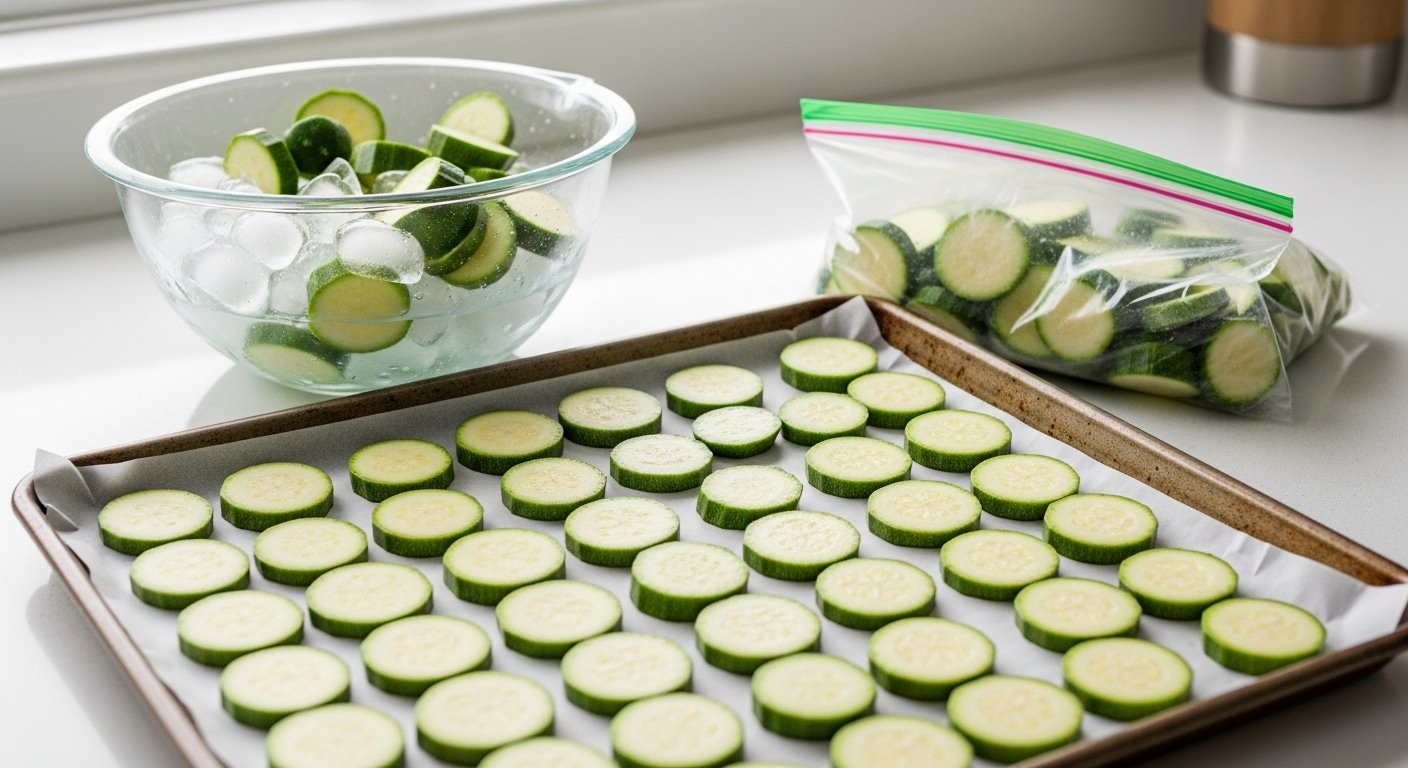
Freezing zucchini is a simple way to enjoy its fresh flavor year-round, but a few key steps will help preserve its best qualities.
Begin by thoroughly washing your zucchini under cool water to remove any dirt or residue. Trim off the ends, then cut the zucchini into your preferred shape—round slices work well for adding to casseroles, while diced pieces are handy for soups or stir-fries.
Blanching is essential to lock in color and texture: boil the zucchini pieces for about 1-2 minutes, then immediately transfer them to an ice bath to stop the cooking process. Once cooled, drain the zucchini well and pat it dry to avoid icy clumps later on.
For storage, spread the pieces in a single layer on a baking sheet and freeze them for a couple of hours—this keeps them from sticking together. Then, transfer the frozen zucchini to airtight freezer bags or containers, removing as much air as possible to prevent freezer burn. Clearly label each bag with the date so you can keep track of how long it’s been stored—frozen zucchini is best when used within 10 to 12 months.
When you’re ready to use your zucchini, remember that the texture will be softer after freezing, making it ideal for cooked dishes like soups, stews, smoothies, breads, and frittatas. Avoid using thawed zucchini in raw salads, as it may be too watery, but it’s perfect for recipes where a softer texture works.
Getting the Most from Your Zucchini Crop
To get the most from your zucchini crop, be sure to water consistently at the base of the plants—aim for about an inch a week—and mulch to keep the soil moist and weeds at bay. Regularly check for pests like squash bugs and powdery mildew; catching these early makes control much easier.
Harvest zucchinis when they’re small to medium-sized (about 6-8 inches long) for the best flavor and to encourage the plants to produce more. Rotate where you plant zucchini each year to prevent disease buildup in the soil.
If you find yourself with a bumper crop, don’t let any go to waste! Zucchini is incredibly versatile:
- Slice it for stir-fries
- Shred it into breads and muffins
- Spiralize it for a fresh pasta alternative
- Grill thick rounds as a tasty side
You can even freeze grated zucchini in portions for use in recipes all year long. Stay on top of plant health by walking your garden every few days to spot any issues early, and don’t hesitate to ask for advice from local gardeners, extension services, or online gardening groups. Sometimes, a quick tip from an experienced grower can make all the difference in your harvest.