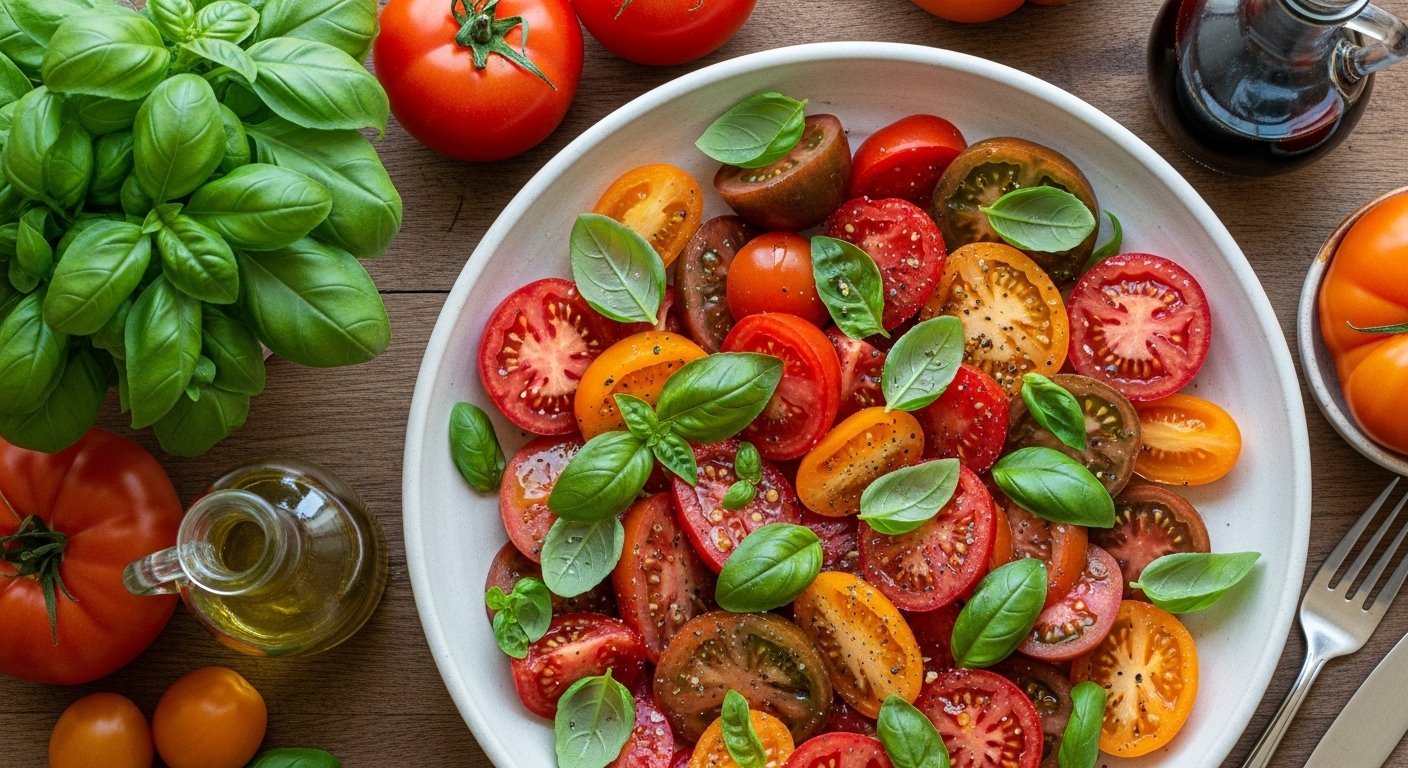
Introduction to Tomato Basil Salad
Tomatoes with basil are a classic combination celebrated around the world, but nowhere is this duo more admired than in a refreshing tomato basil salad. Known for its vibrant color, simple preparation, and irresistible taste, this salad shines as a staple of Mediterranean and Italian cuisine.
Its appeal lies in the contrast of juicy, ripe tomatoes and the aromatic punch of fresh basil, all brought together with a light drizzle of olive oil and perhaps a touch of mozzarella or balsamic glaze. Whether you’re enjoying a backyard barbecue or preparing a quick weekday lunch, tomato basil salad delivers a burst of flavor that tastes like summer in every bite.
In this post, you’ll discover the key ingredients needed for an authentic salad, practical tips for choosing the best produce, step-by-step guidance on how to prepare it, creative variations to suit different tastes, and smart advice on how to store leftovers so every bite stays fresh.
Let’s dive into this easy, versatile recipe that’s perfect for both beginners and seasoned home cooks looking to elevate their salad game.
Essential Ingredients for the Perfect Tomato Basil Salad
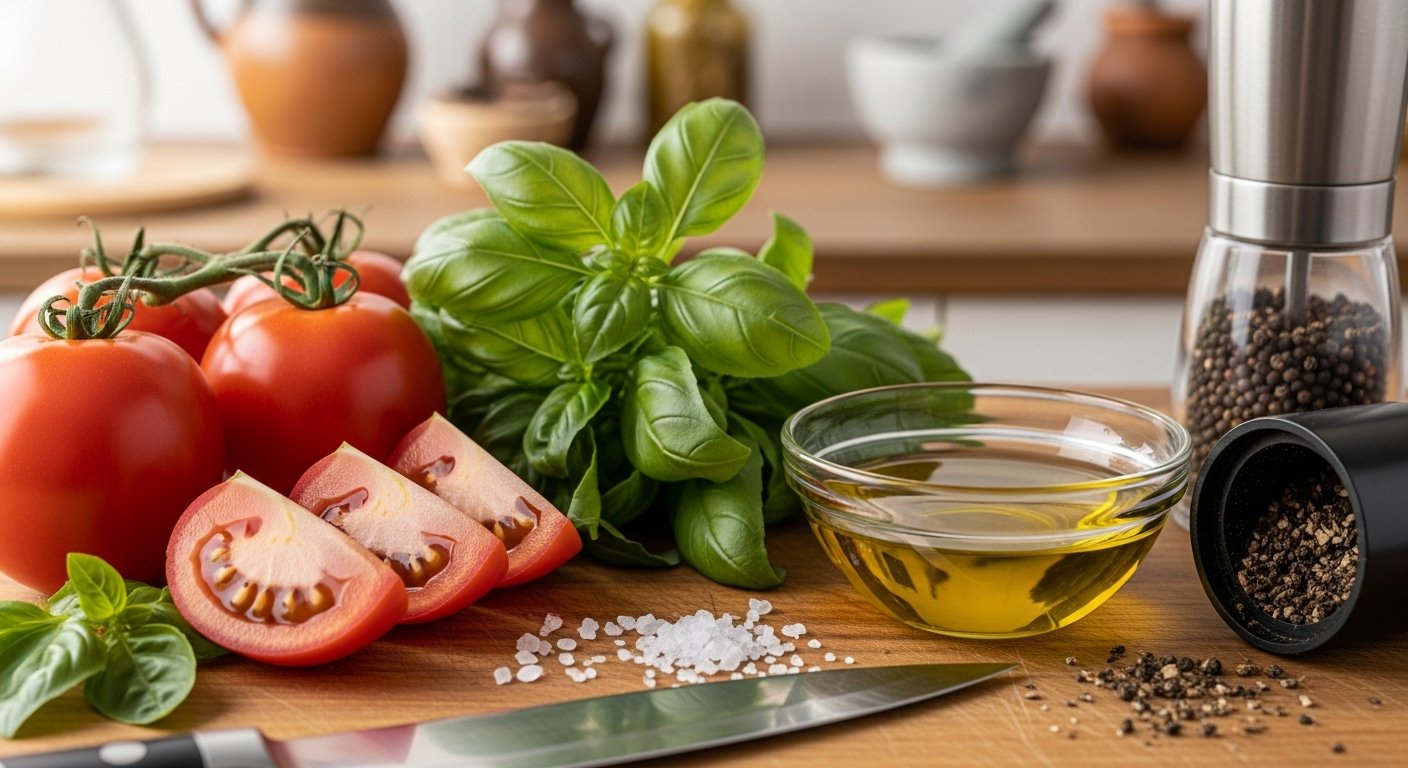
Creating the perfect tomato basil salad starts with a handful of classic ingredients: ripe tomatoes, fresh basil leaves, extra-virgin olive oil, salt, and freshly cracked black pepper. The key to flavor is choosing the best produce you can find—look for tomatoes that feel heavy for their size, have a vibrant color, and yield slightly when pressed gently.
Homegrown or farmer’s market tomatoes usually offer the sweetest, juiciest flavor, making your salad stand out. For basil, opt for leaves that are bright green and free from dark spots or wilting; fresh basil is intensely aromatic and lifts the whole dish. Drizzle with a quality olive oil for rich, fruity notes and season simply with salt and pepper to bring everything together.
If you’d like to add a twist or make it a bit heartier, toss in slices of creamy mozzarella, thin slices of red onion for a mild bite, or finish with a drizzle of balsamic glaze for a sweet-tangy kick. These extras are beloved in many kitchens and help customize the salad to suit your preferences.
Remember, less is often more—let the fresh ingredients shine for the most refreshing, vibrant salad experience.
Choosing the Right Tomatoes
When making a fresh tomato salad, choosing the right type of tomato can make all the difference in taste and texture. Heirloom tomatoes are a top choice for many because of their vivid colors, tangy-sweet flavor, and juicy, tender flesh—perfect for salads that shine with minimal seasoning.
Cherry and grape tomatoes, on the other hand, offer bite-sized bursts of sweetness and a firm snap, making them great for adding color and crunch. Roma tomatoes are meatier and less juicy, so they’re ideal when you want less liquid in your salad or plan to add juicy dressings.
For the best results, select tomatoes that feel heavy for their size and give slightly to gentle pressure; the skin should be vibrant and free of major blemishes. If you’re shopping at a local market, don’t be afraid to ask for a sample or lean in to breathe in their earthy, herbal scent—a ripe tomato smells distinctly fresh.
Mixing different varieties not only brings complex flavors to your salad but also creates an eye-catching plate. Remember, the freshest, most flavorful tomatoes are usually those grown close to home and in season, so keep an eye out for local produce.
Easy Steps to Make Tomato Basil Salad
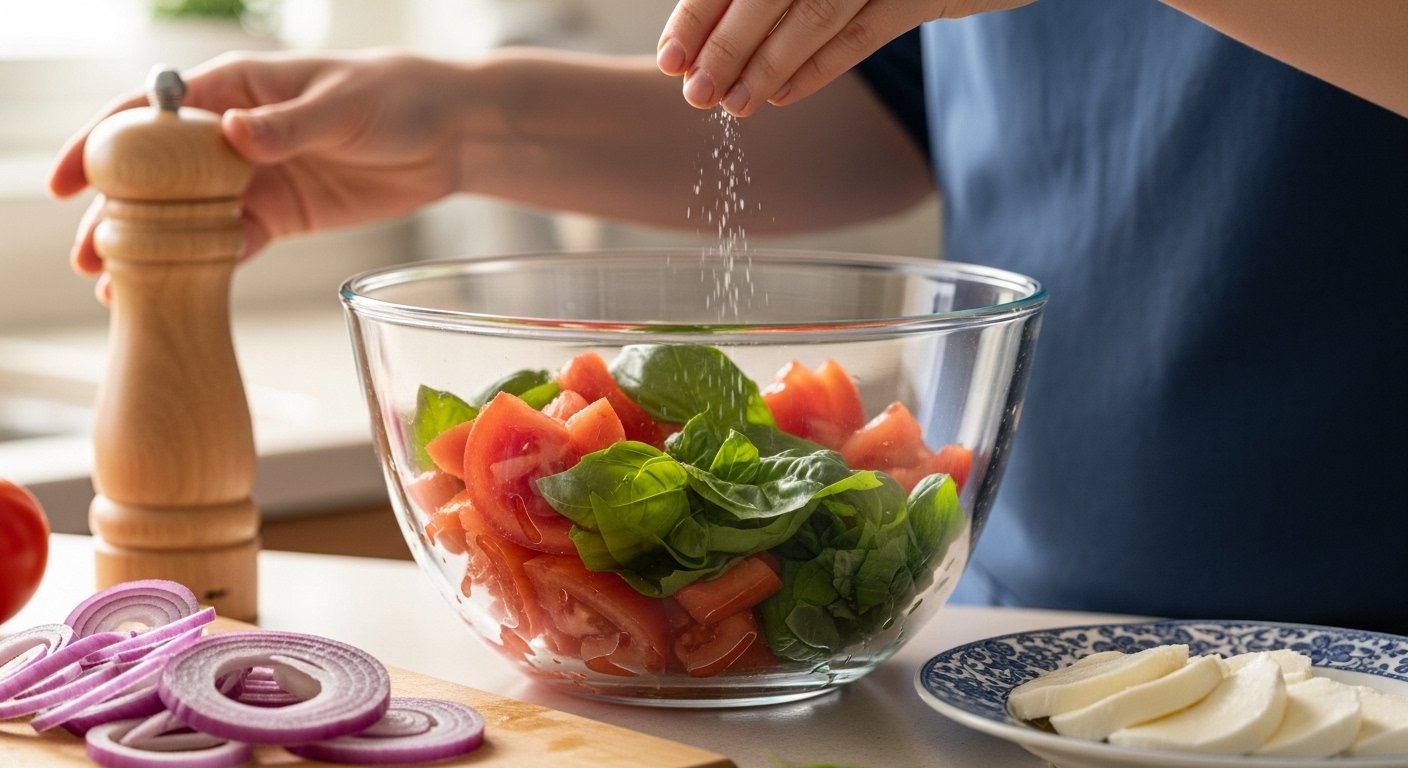
To make a fresh tomato basil salad, start by choosing ripe, firm tomatoes—cherry or heirloom work best for maximum flavor. Wash the tomatoes and slice them into bite-size pieces using a sharp knife; avoid crushing them to keep the juices inside.
Next, grab a handful of fresh basil leaves, rinse them gently, and pat dry. Instead of chopping with a knife, tear the basil leaves by hand—this helps release their aroma and prevents bruising.
In a large bowl, combine your tomatoes and basil with thinly sliced red onion if you like a bit of sharpness. Drizzle with good-quality olive oil, a splash of balsamic vinegar, salt, and freshly ground black pepper.
Toss everything gently with your hands or a spoon, just until the ingredients are coated—overmixing can make the salad watery. Let the salad rest at room temperature for about 10–15 minutes to help the flavors meld, but don’t let it sit too long or the tomatoes will get soggy.
Serve right away for the freshest taste, and try adding bits of mozzarella or a sprinkle of pine nuts if you want extra flair. This simple timing and gentle handling keep your salad vibrant and delicious every time.
“`html
Expert Tips and Creative Variations
Elevate your salad game by choosing a robust, high-quality extra virgin olive oil—its fruity brightness can truly transform the simplest greens. Experiment with specialty vinegars like aged balsamic for sweetness, tangy apple cider for zip, or sherry vinegar for a nutty depth.
Don’t be afraid to play with your seasonings: a sprinkle of flaky sea salt, freshly cracked black pepper, or smoked paprika can make all the difference. For creative twists, toss in crumbled feta, creamy goat cheese, or shaved parmesan if you love cheese, or swap in toasted nuts and seeds for crunch and richness.
Croutons are classic, but for gluten-free diets, try roasted chickpeas or chopped roasted veggies like sweet potato instead. Avocado slices lend buttery texture perfect for keto-friendly options, while fresh herbs like basil, mint, or dill instantly brighten up any mix.
If you’re vegan, opt for plant-based cheeses or sprinkle nutritional yeast for a cheesy note, and stick with simple vinaigrettes free of honey. Mixing and matching textures—like crisp cucumbers with juicy tomatoes, or adding pickled onions for zing—keeps salads exciting.
Remember, the best salads are personal, so don’t hesitate to try seasonal fruits, leftover grains, or whatever’s in your fridge. Ultimately, creativity is your best kitchen tool; the only rule is to taste as you go and trust your palate.
“`
Serving Suggestions & Pairings
Tomato basil salad shines as a vibrant starter or side dish, pairing beautifully with grilled meats like chicken or steak, or light pastas such as aglio e olio. For a classic match, serve it alongside crusty bread—think baguette or ciabatta—to soak up the juicy dressing.
Wine-wise, crisp whites like Sauvignon Blanc or Pinot Grigio highlight the freshness of the tomatoes, while a light-bodied red such as Pinot Noir complements basil’s delicate flavor.
Presentation matters: layer thick tomato slices with fresh mozzarella and basil leaves in a circular pattern, then drizzle with olive oil for an elegant look at dinner parties. For casual meals, toss cherry tomatoes and torn basil in a rustic bowl for easy family sharing.
Tomato basil salad is especially fitting for summer barbecues, brunches, holiday potlucks, or anytime you want to showcase garden produce at its peak.
Storing Leftovers and Keeping Salad Fresh
To keep your leftover salad crisp and tasty, store it in an airtight container in the fridge as soon as possible. For salads with delicate greens or juicy ingredients like tomatoes and cucumbers, consider storing those components separately if you can—combining them right before eating helps prevent sogginess.
Most mixed salads last about one to two days when properly refrigerated, but keep an eye out for wilted leaves or excess moisture, which can signal it’s time to toss it.
If your salad has begun to wilt, try giving it a quick revive: lay the greens on a paper towel to absorb extra water, then toss them in a bowl with a splash of cold water for a few minutes before draining.
Avoid overdressing the salad before storing, as excess dressing can lead to mushiness; instead, add dressing just before serving for the freshest taste and texture.
Conclusion & Quick FAQ
In summary, making a delicious and versatile salad starts with using the freshest ingredients, keeping the prep simple, and getting creative with what you have on hand.
You can easily make most salads ahead of time—just store the dressing separately and toss it right before serving to keep everything crisp.
Feel free to mix in extras like chickpeas, grilled chicken, nuts, or feta for added protein and flavor.
When choosing oils, extra-virgin olive oil is a classic choice, but avocado oil also works great if you prefer a milder taste.
With these basics, creating a fresh, satisfying salad is quick and easy.