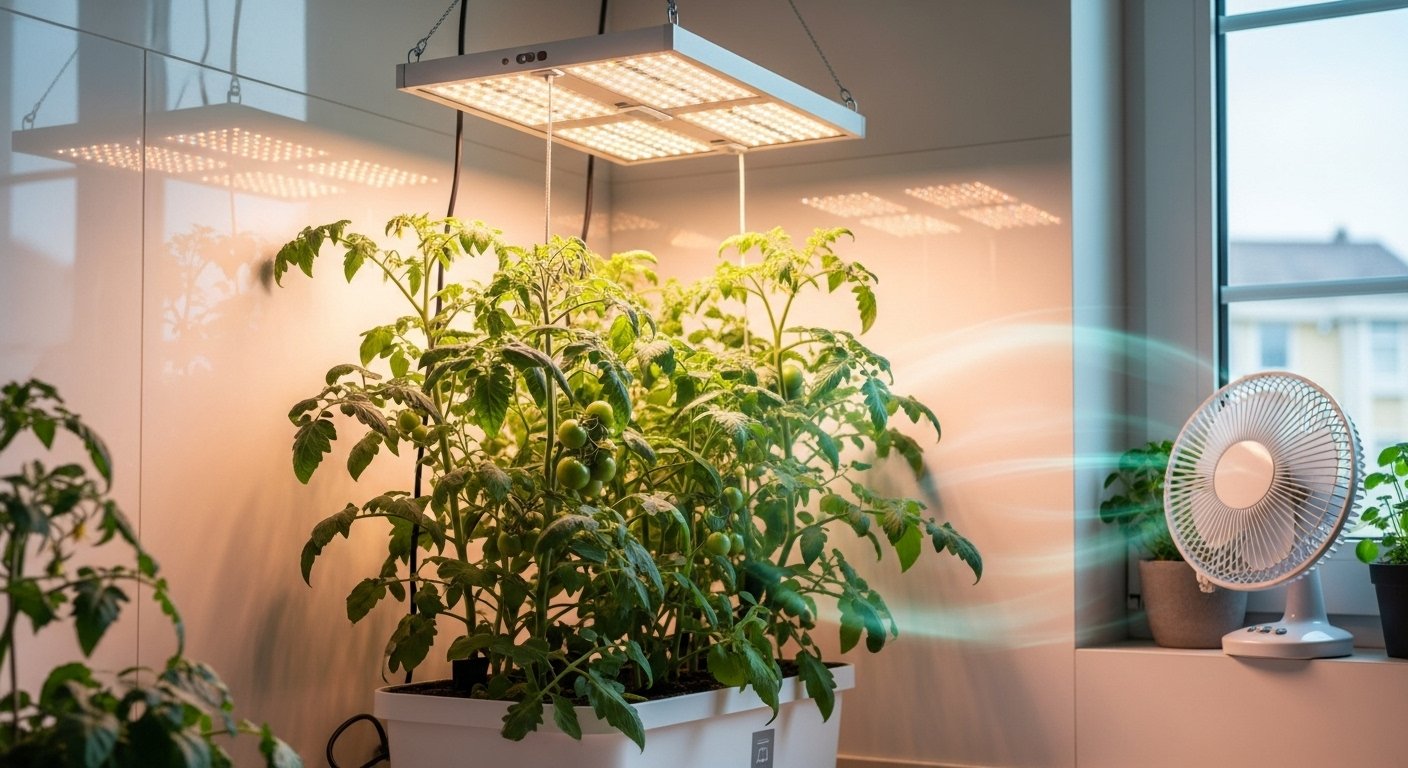
Introduction to Grow Lights for Tomatoes
If you’re dreaming of fresh, homegrown tomatoes but don’t have access to a sunny garden, finding the right grow lights for tomatoes can make all the difference. Tomatoes need plenty of bright, consistent light to thrive, but most indoor spaces simply can’t provide the intense sunlight these fruiting plants crave—especially during short winter days or in apartments with limited window access.
Without adequate light, indoor tomatoes often grow leggy, produce few flowers, and yield disappointing fruit. That’s where specialized grow lights come to the rescue, simulating the full spectrum of sunlight needed for robust growth and juicy harvests, right on your countertop or in a cozy corner.
In this post, we’ll break down the different types of grow lights for tomatoes, including LEDs, fluorescent, and HID options, so you can see which might be best for your setup. You’ll also learn about the distinct benefits of using artificial lighting, from faster seedling development to producing more flavorful tomatoes.
Plus, we’ll share practical tips on light placement, timing, and energy efficiency to ensure you get the healthiest plants and the tastiest indoor tomatoes, no matter the season.
Types of Grow Lights for Tomatoes
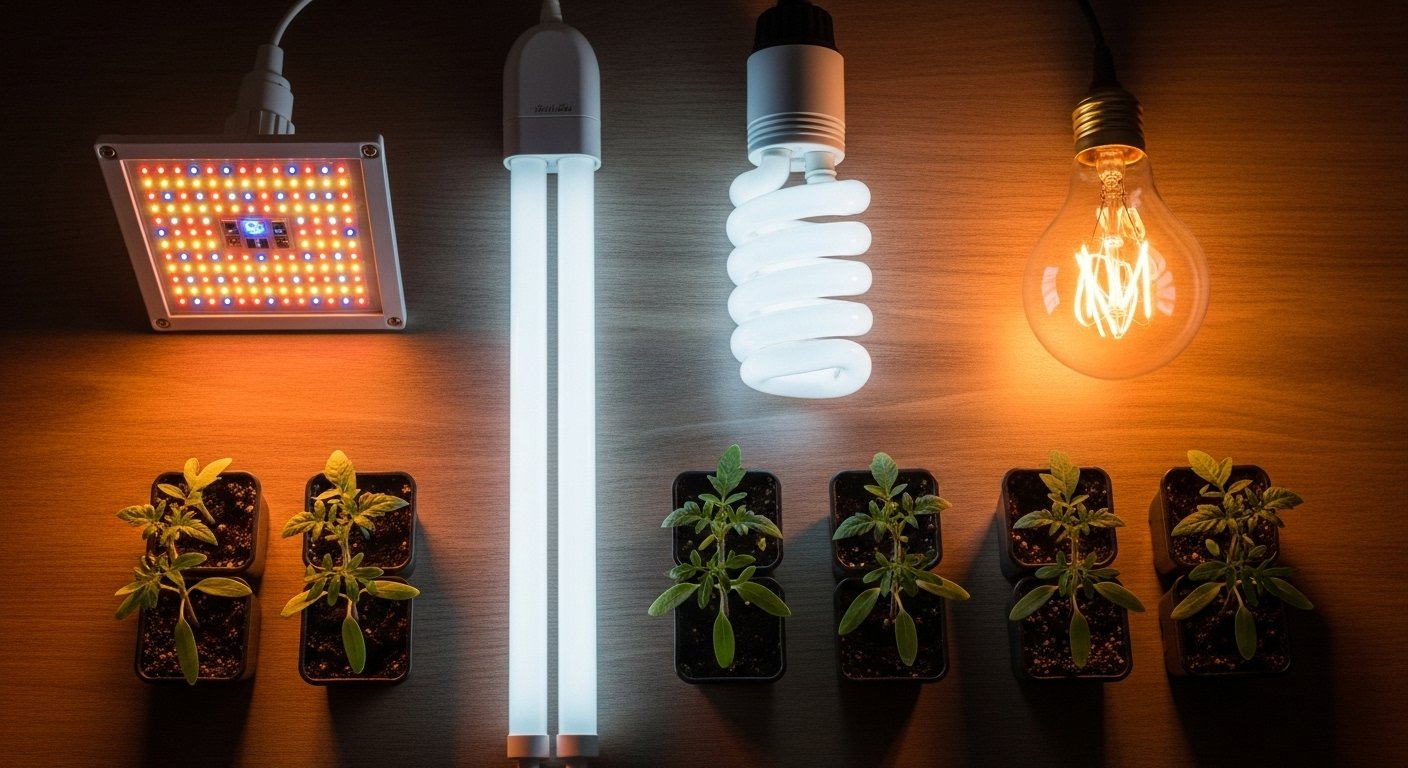
When it comes to growing tomatoes indoors, choosing the right grow light can make a big difference in both the health of your plants and the yield you’ll get.
Incandescent bulbs are the cheapest and most widely available, but they use a lot of electricity and produce too much heat, which can actually burn tomato leaves if placed too close. They also lack the balanced light spectrum tomatoes need to thrive, so your plants may become leggy and produce fewer fruits.
Fluorescent lights, such as T5 or compact fluorescent lamps (CFLs), are more energy-efficient than incandescents and produce less heat, making them a better choice for seedlings and smaller tomato plants. They’re especially beneficial if you’re starting seeds or growing smaller varieties, but standard fluorescent tubes might not provide enough intensity for full-sized, fruiting tomato plants unless you use high-output versions.
In contrast, LED grow lights have quickly become the top choice for tomato enthusiasts. LEDs are highly energy-efficient, stay cool even after hours of use, and can be tailored to provide the exact red and blue light wavelengths that tomatoes love for both growth and fruiting. While the upfront cost is usually higher, LEDs last much longer—often 50,000 hours or more—and the lower energy bills can offset the initial investment over time. Their slim design also makes them easy to fit into tight spaces like shelves or grow tents.
For these reasons—efficiency, customizability, low heat, and long lifespan—LEDs are now the gold standard for indoor tomato growers. If you’re looking for healthy, robust plants with lots of fruit and lower long-term costs, LEDs are almost always worth it.
Choosing the Best Grow Light
When choosing the best grow light for your tomatoes, it’s important to pay attention to a few essential features that directly affect plant health and yields.
First, consider the light spectrum. Tomato plants need both blue light (for leafy growth) and red light (for flowering and fruiting), so look for full-spectrum LEDs or fluorescent lights that cover all stages of growth.
Next, assess wattage: lights ranging from 40 to 100 watts are usually sufficient for small home setups, but you’ll need higher wattage if you’re growing multiple or larger plants.
Coverage area also matters; make sure the light can spread evenly across your entire tomato patch, ideally providing at least 30-50 watts per square foot.
Most indoor gardeners find that LED panels or high-output T5 fluorescent fixtures work well for tomatoes, as these distribute light efficiently and produce less heat than older options like HID or incandescent lamps.
Adjustability is another key feature—lights with adjustable height or dimming functions let you fine-tune intensity as your tomato plants grow taller or bushier.
To match light strength to your crop, start by planning for one strong fixture per two to four tomato plants, placing it 12-24 inches above the tallest foliage and adjusting as the plants grow.
If leaves seem pale or leggy, it may be a sign your light is too weak or too far away, so don’t be afraid to experiment with distance and brightness.
When in doubt, err on the side of more light during fruiting, but always check your setup for overheating, as tomatoes thrive best with consistent, moderate warmth and bright, balanced light.
Light Schedules and Tomato Plant Needs
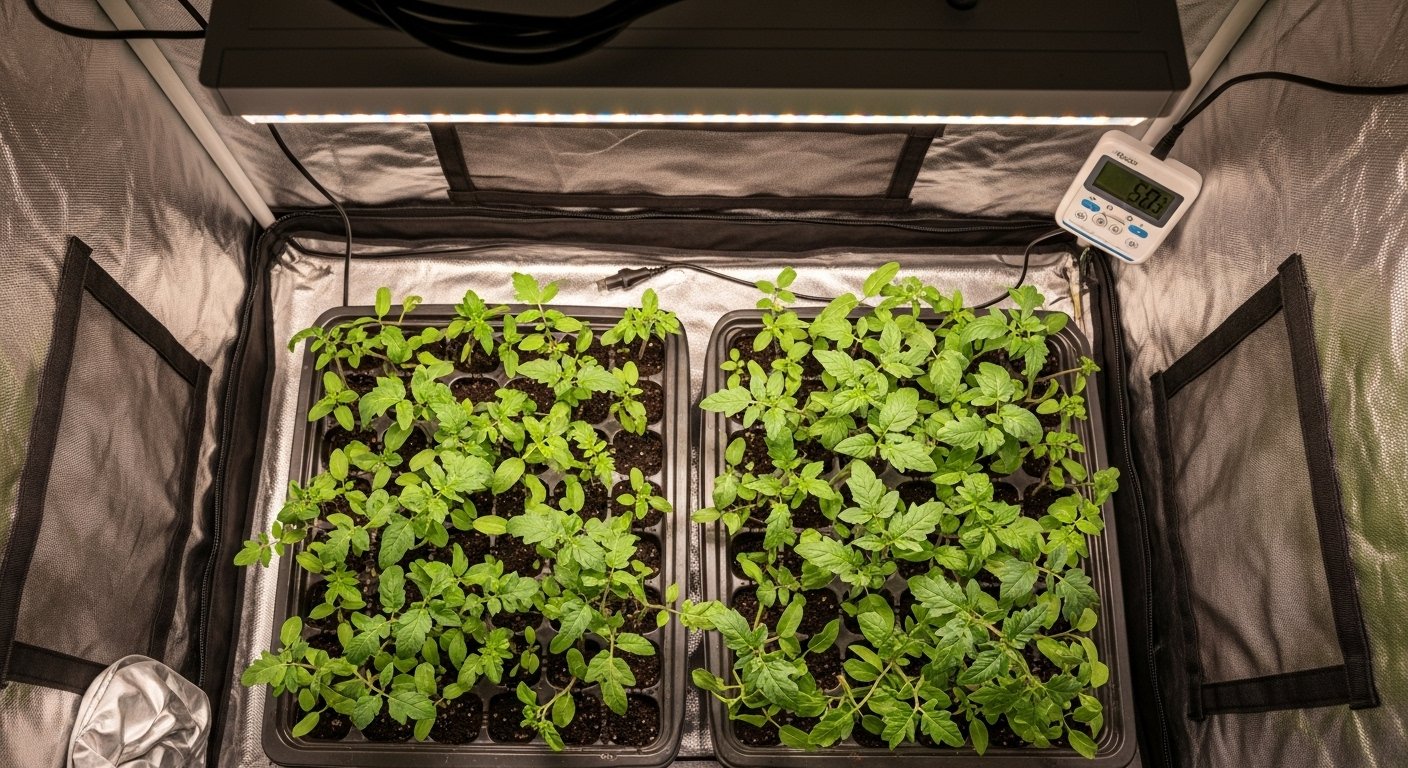
Tomato plants rely on a careful balance of light and darkness to grow strong and produce abundant fruit. Typically, tomato seedlings need 14-16 hours of bright, direct light each day to develop sturdy stems and lush leaves. Using grow lights set on a timer makes this easy to manage indoors.
However, it’s just as important to give them 8-10 hours of darkness each night—this rest period allows them to activate key growth hormones and avoid stress.
As tomato plants mature and begin to flower, you can reduce their light exposure slightly to around 12-14 hours per day, using natural sunlight or supplemental lights as needed.
One widespread mistake is leaving grow lights on all the time, thinking it will speed up growth. In reality, constant light interferes with their natural circadian rhythm, leading to weak, leggy plants and reduced fruiting.
To avoid this, invest in an inexpensive outlet timer to ensure consistent cycles and always place lights a few inches above the plant tops, adjusting as they grow.
Remember, striving for a routine that mimics natural daylight and darkness is the best way to nurture robust, productive tomato plants, whether starting seeds inside or helping mature plants thrive in less-than-ideal lighting conditions.
Supplementary Tips for Indoor Tomato Success
For indoor tomato growing, positioning your grow lights directly above your propagators or seed trays is crucial for healthy, compact seedlings. This setup mimics the top-down sunlight tomatoes thrive on and encourages sturdy, upward growth.
Maximize the effectiveness of your lights by lining nearby walls or the inside of a grow tent with reflective materials like aluminum foil, white poster board, or specialty reflective film. These surfaces help bounce extra light back onto your plants, reducing wasted energy and promoting even growth.
Keep your lights at the recommended distance from the seedlings—usually about 2 to 4 inches for LED lights and 4 to 6 inches for fluorescent tubes. As your plants grow taller, adjust the height of your lights every few days to maintain this optimal gap, preventing burning while still delivering enough energy.
Watch for warning signs: if your seedlings become tall and spindly (“leggy”), or if some areas grow faster than others, your light may be too far away or unevenly distributed. If needed, rotate the trays every few days and check for darker corners in your setup.
Sometimes, adding a small fan can help circulate air and strengthen stems. By staying attentive to these details, you’ll encourage vigorous, uniform tomato plants ready to thrive once transferred outdoors or moved to larger pots.
Potential Downsides and Lighting Safety
While grow lights make indoor gardening possible year-round, it’s important to be aware of some potential downsides and safety considerations. One common issue is heat generation—especially with high-intensity lights like HID or some older LEDs—which can raise room temperatures and cause heat stress in plants if not managed properly.
These lights may also increase your power bills, so it’s best to choose energy-efficient options and keep track of total wattage. The initial setup cost for quality fixtures can be steep, but the long-term yield often justifies the investment for dedicated growers.
Too much artificial light, or lights positioned too close to the foliage, can stress plants, leading to wilting, leaf burn, or inhibited growth.
Safety Tips
- Always use fixtures rated for indoor use and ensure good ventilation to dissipate heat.
- Plug lights into surge protectors and secure cords away from water sources.
- Follow the manufacturer’s instructions for mounting height and operation.
If your space gets some natural sunlight, consider using grow lights only to supplement on cloudy days or for plants that need extra light hours, which can reduce both costs and risks. Adding reflective surfaces like white walls or Mylar can also improve efficiency, letting you use fewer lights while still giving your plants what they need.
Conclusion & Next Steps
Choosing the right grow lights for your tomatoes comes down to understanding your space, the types of lights available, and what your plants need at each growth stage. LED and fluorescent lights are popular options, each offering unique benefits for indoor gardeners.
Remember to position your lights at the right distance—too close can burn the leaves, while too far can result in weak, leggy plants. Experiment with different setups, keeping an eye on your tomatoes’ color and overall health to see what works best.
Every indoor garden is different, so don’t be afraid to tweak your approach. Dive into further research or try a new lighting system to discover what helps your tomatoes thrive.