Determinate vs. Indeterminate Tomatoes
If you’ve ever browsed tomato seedlings or seed packets, you’ve probably noticed the phrases “determinate vs. indeterminate tomatoes” and wondered what they actually mean for your garden. Understanding this distinction is key for any home gardener hoping to boost their harvests and get the most out of their space.
Determinate Tomatoes
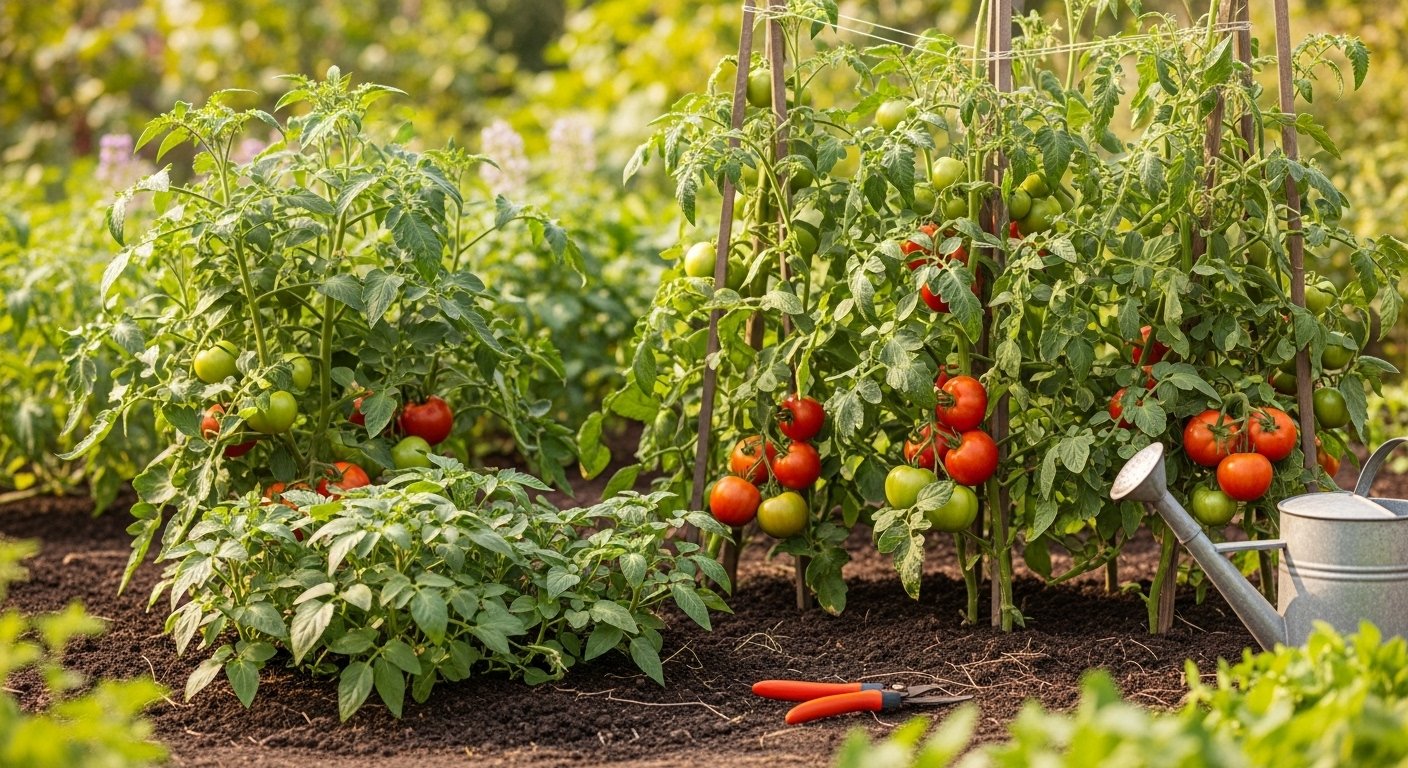
Determinate tomato plants, often called “bush tomatoes,” are bred to grow to a set height—usually around three to four feet—before stopping and putting all their energy into producing fruit. They tend to set all their tomatoes over a short period, making them great if you want a large batch for canning or sauce making.
Indeterminate Tomatoes
On the flip side, indeterminate tomato plants are known as “vining tomatoes.” Rather than stopping at a specific height, they keep growing taller and sprawling outward throughout the season—sometimes reaching heights over six feet with support. Indeterminate varieties produce fruit continuously, allowing for a steady harvest that lasts until the first frost. This makes them ideal for anyone who enjoys picking fresh tomatoes all summer long rather than harvesting all at once.
Additional Differences
The key differences don’t end there. Determinate tomatoes generally need less staking or trellising and suit container gardens or small spaces, while indeterminate types demand more support and real estate in your garden. Where determinate tomatoes offer predictability and convenience, indeterminate varieties offer abundance and longevity.
Why It Matters
Choosing between determinate and indeterminate tomatoes affects not just your planting routine but your harvest schedule and how you use your tomatoes. If you want a one-and-done crop, go with determinates. If you love salads and sandwiches all season, indeterminates are your best bet. Knowing “determinate vs. indeterminate tomatoes” can help you plan, plant, and savor your homegrown bounty with confidence.
How to Identify Determinate and Indeterminate Tomato Plants
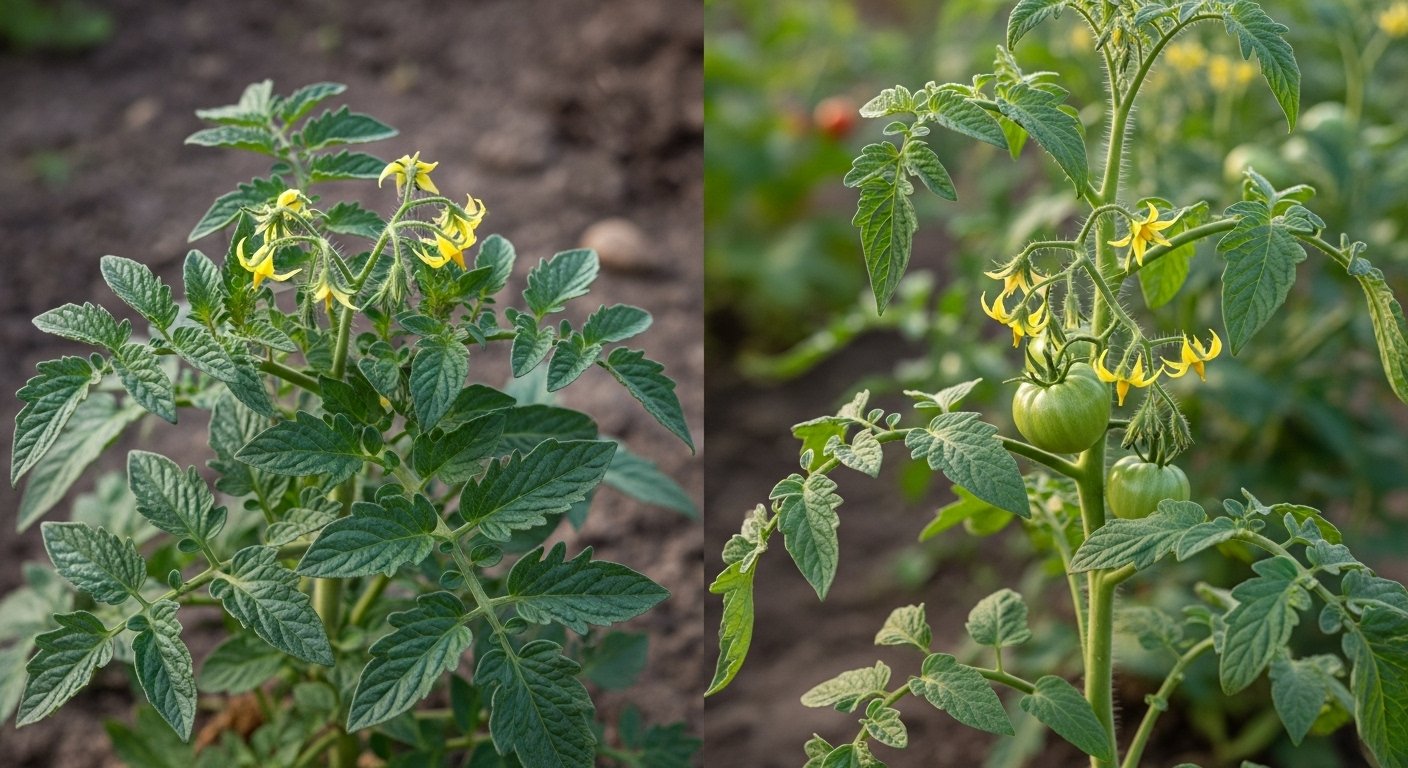
Identifying determinate and indeterminate tomato plants is easier when you know what to look for. Determinate tomatoes, often called “bush” types, typically grow to about 3-4 feet tall, forming a compact, bushy shape with stockier stems. Their leaves tend to be closer together, giving the plant a dense appearance. Flower clusters often form at the ends of branches, causing the plant to stop growing upward once fruit sets.
Indeterminate tomatoes, in contrast, are more vine-like, growing tall—often 6 feet or more—and will keep climbing and producing fruit all season if supported. Their leaves are spaced farther apart on the stem, resulting in a leggier look. Indeterminate varieties produce flower clusters along the sides of their stems instead of just at the tips, so they don’t stop growing after setting fruit.
For a quick ID, look at the tags on seedlings or observe their shape after a couple of weeks:
- Bushier plants with a fixed height are likely determinate.
- Sprawling, tall varieties that seem to never stop growing are indeterminate.
Another beginner trick: determinates ripen most of their fruit at once, while indeterminates produce tomatoes gradually throughout the summer. When in doubt, check reputable seed catalogs or ask local gardeners. With a little practice, you’ll easily spot which type your tomato plant is and be better prepared to support its needs in your garden.
Pros and Cons of Each Type
Determinate tomatoes, often called “bush” varieties, are prized for their compact size and predictable growth, making them a favorite for small gardens, patios, and container planting. One major advantage is their concentrated harvest period; all the fruit matures within a few weeks, which is fantastic if you want to can or preserve a large batch at once. Their smaller size means less staking and pruning are needed, simplifying maintenance for busy gardeners.
However, the downside is their limited yield—once the fruit sets and is harvested, the plant’s production stops, so you won’t get a summer-long supply.
Indeterminate tomatoes, on the other hand, grow as tall, sprawling vines and can offer fresh fruit throughout the season. Their continuous growth translates to a bigger overall yield, which is a clear plus for those wanting tomatoes for months.
Yet, this comes with added demands: you’ll need plenty of space and sturdy supports, such as cages or trellises, and regular pruning to encourage healthy growth and airflow. Indeterminate varieties are best suited for gardeners who can commit to ongoing care and have room to accommodate these vigorous plants.
In short, choose determinate types if you’re short on space or want easy maintenance, and go for indeterminate ones if you’re after a bountiful, season-long harvest and are prepared for a bit more gardening effort.
Choosing the Best Type for Your Garden
When choosing the best tomato type for your garden, start by assessing your available space and how you plan to grow. If you have a small patio or only room for a few containers, opt for compact determinate varieties like ‘Bush Early Girl’ or cherry tomatoes, which thrive in pots and deliver quick, reliable harvests.
Larger gardens or those with raised beds can support robust indeterminate tomatoes like ‘Beefsteak’ or ‘Brandywine.’ These grow tall, require staking, and produce fruit over a longer season—great for those wanting fresh tomatoes all summer.
Climate also matters: in cooler regions, early varieties such as ‘Stupice’ ripen faster, while in hot climates, heat-tolerant types like ‘Heatmaster’ perform better.
Think about your end use, too. If you love salads or want tasty snacks straight from the vine, sweet cherry or grape tomatoes are ideal. For canning, sauces, or salsas, look for meaty paste tomatoes like ‘Roma.’
Finally, match your choices to your preferences: do you prefer a steady trickle of fruit for fresh eating, or a big single harvest for preserving? By weighing these factors—space, climate, harvest timing, and your cooking plans—you’ll pick the tomato varieties most likely to thrive in your garden and meet your needs.
Caring for Determinate vs. Indeterminate Tomatoes
When growing tomatoes, it’s important to know whether your plants are determinate or indeterminate, as their care needs differ significantly.
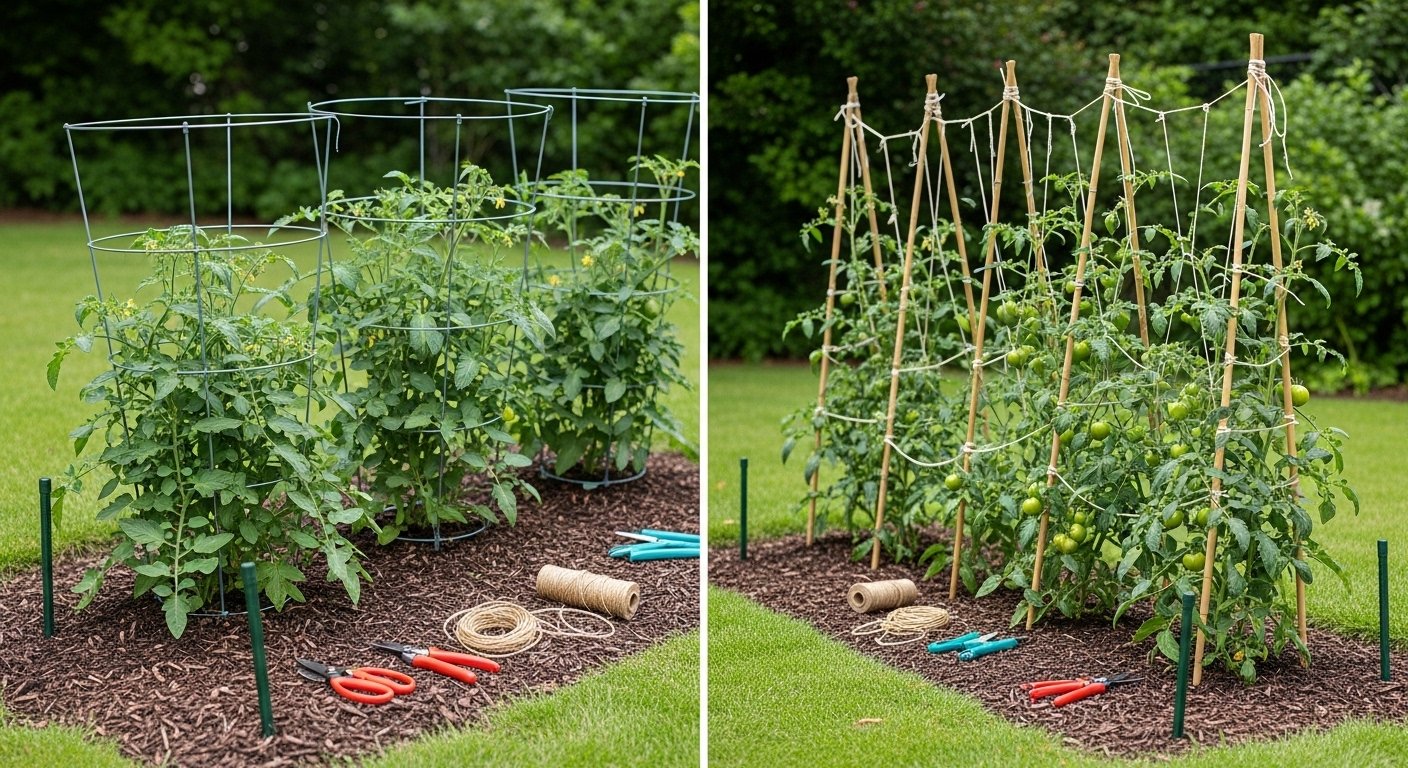
Determinate tomatoes, often called “bush” varieties, grow to a fixed size and produce all their fruit in a short period, making them ideal for small spaces or container gardens. When planting determinates, give them about 18–24 inches between plants for good airflow, and use basic tomato cages for support; heavy-duty staking isn’t usually necessary since these plants stay relatively compact. Pruning should be minimal to avoid reducing your harvest—just remove any dead or diseased leaves as needed.
Indeterminate tomatoes, on the other hand, keep growing and producing fruit all summer, sometimes topping 6 feet or more. For these, plan on providing sturdy stakes, tall cages, or even a trellis system so the long vines don’t collapse. When planting, allow more space—at least 24–36 inches between plants—to prevent overcrowding and improve disease resistance. Regular pruning is key for indeterminate types: pinch off suckers (new shoots between the stem and branch) to focus energy on fruit production and keep plants manageable.
Throughout the season, determinate tomatoes need consistent watering around flowering and fruit set, but once their big crop is harvested, you can clear the beds and rotate in a new crop. Indeterminate tomatoes demand ongoing attention—tie up new growth every week or two, prune consistently, and fertilize monthly to keep up with their relentless production.
Mulching around both types helps retain moisture and deter weeds. By tailoring your support, spacing, and maintenance routines, you’ll help each tomato type thrive and enjoy a longer, healthier harvest season.
Popular Varieties and Special Tomato Types
Tomato lovers have a wealth of varieties to choose from, each offering distinct benefits for gardeners and cooks. Determinate tomato varieties, such as ‘Roma,’ ‘Celebrity,’ and ‘Rutgers,’ grow into compact bushes and set all their fruit around the same time, making them perfect if you want a big harvest for canning or sauce-making.
Indeterminate types, like the ever-popular ‘Brandywine,’ ‘Cherokee Purple,’ and ‘Sungold,’ keep growing and producing new fruit throughout the season, ideal for fresh salads and snacking straight from the vine.
For those with limited garden space or container gardens, semi-determinate varieties, such as ‘Glacier’ or ‘Mountain Pride,’ provide a great middle ground—they’re more compact than indeterminates but produce over a longer period than strict determinates.
Unique and special types also deserve a mention: dwarf tomatoes like ‘Tiny Tim’ thrive indoors or on patios, while heirloom varieties including ‘Green Zebra’ or ‘Black Krim’ offer standout colors and flavors that go beyond the supermarket standard.
For extreme climates or disease-prone areas, hybrids like ‘Early Girl’ (fast to ripen) or ‘Juliet’ (disease-resistant) can provide more reliable harvests.
Consider cherry tomatoes for continuous snacking, paste types for cooking, or colorful heirlooms to elevate your summer salads—the right tomato variety can make all the difference depending on your gardening goals and kitchen needs.
Matching your choice to your space, local climate, and intended use ensures a bountiful, flavorful harvest you’ll enjoy all season long.
Quick Reference Table and Final Tips
Here’s a quick reference table to help you choose between determinate and indeterminate tomatoes:
| Trait | Determinate | Indeterminate |
|---|---|---|
| Growth Habit | Bushy, compact | Tall, vining |
| Height | 2–4 feet | 6 feet or more |
| Fruit Production | All at once (short window) | Throughout the season |
| Best For | Containers, small gardens | Large spaces, trellising |
| Pruning Needs | Minimal | Regular for airflow & fruit |
No matter which type you choose, a few harvest-boosting tips apply to both. Make sure your plants get at least six hours of sunlight daily, regularly check for ripe fruit before pests beat you to it, and water deeply but not too often to encourage strong root systems.
If space allows, try growing both types side-by-side; determinate varieties are great for quick, abundant harvests (perfect for sauces), while indeterminate plants will supply you with fresh tomatoes over a longer period. Don’t be afraid to experiment, as different garden layouts and climates may favor one type over the other. Recognizing the strengths of each ensures you enjoy a steady, flavorful tomato supply all summer long.