Introduction
If you’re looking to give your eggplants a healthy boost this season, understanding eggplant companion plants could make all the difference. Companion planting—the age-old practice of growing certain plants together—has proven especially useful when cultivating eggplants, helping gardeners like you unlock stronger growth, better yields, and resilient, pest-resistant crops.
Instead of tending to eggplants in isolation, pairing them with the right neighbors can deter pests like aphids and flea beetles, increase pollination, and even enrich the soil for thriving roots. For example, marigolds and basil don’t just add color and fragrance to your garden; they can help fend off unwelcome insects and improve your eggplant harvest. Maybe you want to steer clear of less-friendly companions like fennel, which can stunt growth.
Whether you’re working with raised beds or small backyard plots, strategic companion planting can maximize your space and simplify garden maintenance. In this post, you’ll discover which eggplant companion plants to choose, which ones to avoid, and how to lay out your garden for the best possible results. We’ll also delve into useful planting strategies, address common pitfalls, and share straightforward troubleshooting tips to help your eggplants truly thrive.
Stick around for practical advice rooted in real-world experience—you and your plants will be glad you did.
Best Companion Plants for Eggplants
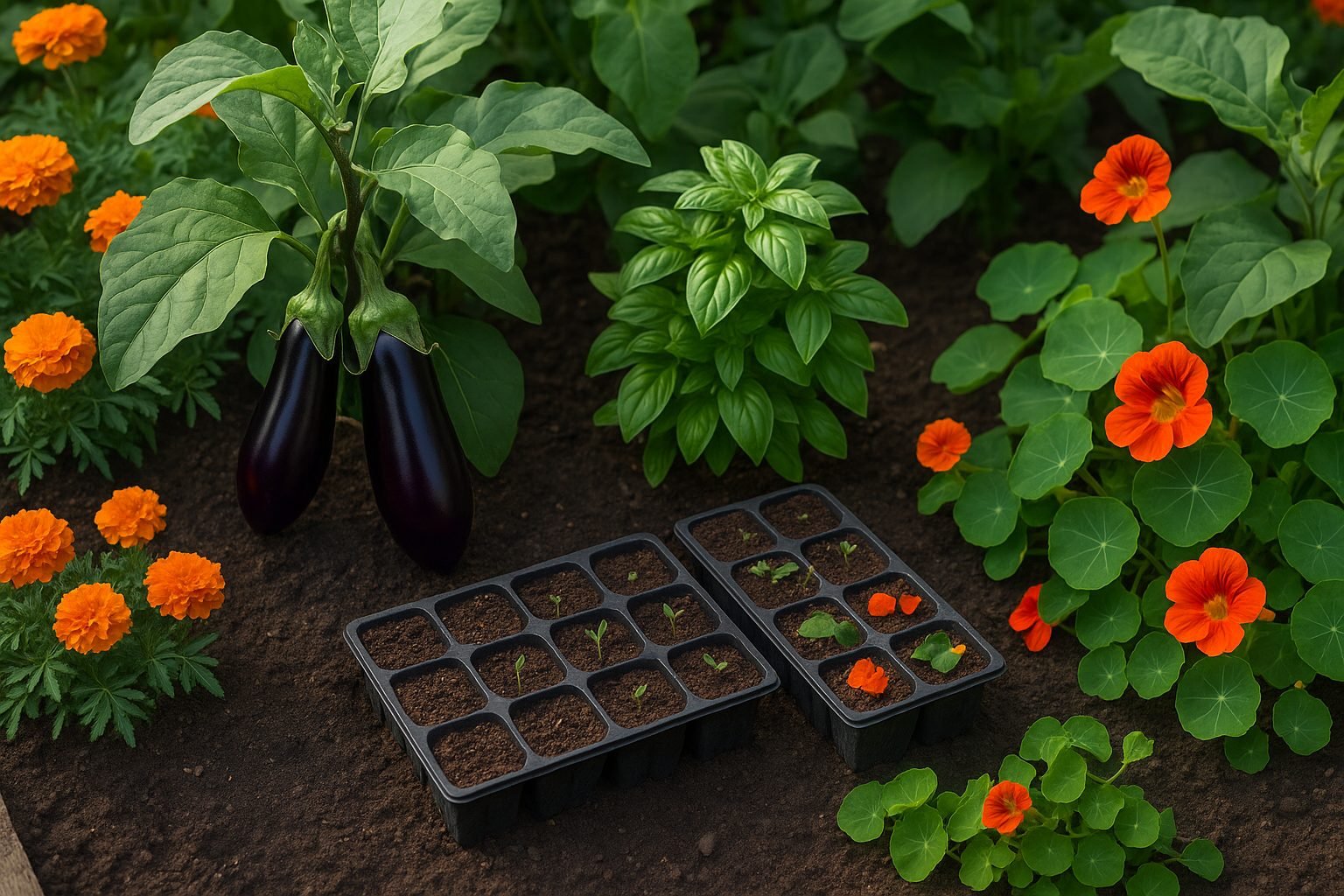
If you want your eggplants to thrive, choosing the right companion plants can make a big difference in your garden’s success. Marigolds are a top pick—these cheerful flowers emit a scent that naturally deters nematodes and aphids, two common eggplant pests. Basil is another great companion; its strong aroma helps repel flies and mosquitoes, and many gardeners claim basil can even improve the flavor of eggplants.
Beans, such as bush or pole varieties, enrich the soil with nitrogen through their root systems, helping feed hungry eggplants for a bigger crop. Nasturtiums attract aphids away from eggplants, acting like a “trap crop,” and their bright blossoms bring in pollinators. Spinach and lettuce are low-growing leafy vegetables that create a living mulch around eggplants, shading the soil to retain moisture and keep weeds down.
Peppers and eggplants are both members of the nightshade family and grow well together since they require similar growing conditions and can help shade soil, keeping roots cool during hot spells. Thyme not only has a pleasant scent but also attracts beneficial insects like parasitic wasps that control caterpillar populations. Calendula flowers can fight off harmful nematodes while drawing in pollinating bees, supporting your eggplants’ fruit set.
Tarragon is thought to deter a range of insect pests, and because it doesn’t compete aggressively for nutrients, it can be tucked in close to your eggplants. Finally, planting carrots nearby can help break up compacted soil with their deep roots, improving drainage and root development for your eggplants. Mixing these companions throughout your eggplant bed helps naturally protect your plants while using space efficiently—plus, you’ll enjoy a more vibrant and productive garden.
Plants to Avoid Planting with Eggplants
When planning your garden, it’s essential to know which plants don’t play nicely with eggplants. Beans, for example, are often touted as garden staples, but they can compete with eggplants for the same nutrients and space, leading to smaller harvests for both.
Fennel is another plant worth keeping at a distance—this herb releases chemicals into the soil through allelopathy, which can suppress the growth of eggplants and many other veggies nearby.
Potatoes pose a different threat; not only do they crowd eggplants underground and compete for water and nutrients, but both crops are vulnerable to similar pests and diseases, like the Colorado potato beetle, making it much easier for infestations to spiral out of control.
Avoid planting members of the brassica family—such as cabbage, broccoli, and Brussels sprouts—close to your eggplants as well, since they often compete for similar nutrients and can stunt each other’s development.
Lastly, high-aroma herbs such as dill or strong mint should be kept away, as they can actually inhibit pollinators or, in the case of vigorous mint, take over garden space rapidly.
A common mistake gardeners make is ignoring these incompatibilities and grouping everything together based on space rather than considering plant relationships. For the healthiest, most productive eggplants, always plan their companions with care, steering clear of these known troublemakers.
Flower and Herb Companions: Boosting Health and Repelling Pests
Pairing eggplants with the right flowers and herbs can make a big difference in your garden’s health and productivity. Marigolds are a top choice; their bright blooms not only add color but also help repel nematodes and aphids that might attack your eggplants. Nasturtiums work similarly, luring aphids away from your veggies and acting as a “trap crop.” Both of these flowers also attract pollinators like bees and butterflies, giving your eggplants a boost when it comes to fruit set—especially if you grow them outdoors.
For herbs, basil is a classic partner. Its distinct scent wards off common pests like thrips, flea beetles, and mosquitoes, and some gardeners say basil even improves the flavor and growth of eggplants when planted close together. Plant basil along rows or in small clumps near eggplants for the best effect.
Another great option is oregano, which attracts beneficial insects like lacewings and ladybugs that feed on aphids and other soft-bodied pests. Try planting oregano at the edges or borders of your eggplant beds so it can spread out as a living mulch.
Thyme and mint are also useful, emitting strong fragrances that confuse or repel insect pests; just keep mint in containers or confined areas since it can be invasive.
By combining flowers that draw in friendly insects with herbs that defend against pests, you not only protect your eggplants but also create a more vibrant and healthier garden space overall.
Vegetable Companions: Maximizing Space and Productivity
Interplanting compatible vegetables with eggplants is a smart way to boost garden productivity while making the most of your available space. Beans, for instance, are fantastic neighbors because they fix nitrogen in the soil, benefiting hungry crops like eggplants. Peppers also thrive alongside eggplants since they enjoy similar growing conditions—warm soil, plenty of sunlight, and consistent moisture—so they can easily share the same bed without competing for resources.
Herbs like basil or oregano not only help deter pests with their strong scents but can also enhance flavors when harvested together. Marigolds, though not vegetables, are a tried-and-true companion flower that repels pests and attracts pollinators, leading to more robust eggplant yields.
For effective interplanting, consider spacing your eggplants about 18 to 24 inches apart, then tuck in rows of bush beans or pepper plants in between, making sure each plant has enough room to access sunlight and airflow. Try planting low-growing herbs around the border to fill in gaps and help reduce weed pressure.
Raised beds and square-foot gardening methods make it easier to maximize these combinations—just remember to monitor for crowding and prune if needed, especially as eggplants can get bushy later in the season. Water all companion plants at the base to avoid leaf diseases, and regularly check for pests, as interplanting can sometimes attract as well as repel certain insects.
By mixing up your plantings thoughtfully, you’ll create a thriving, diverse garden that supports healthier plants and offers a greater harvest than monocropping alone.
Modern Raised Beds and Planting Plans for Eggplants
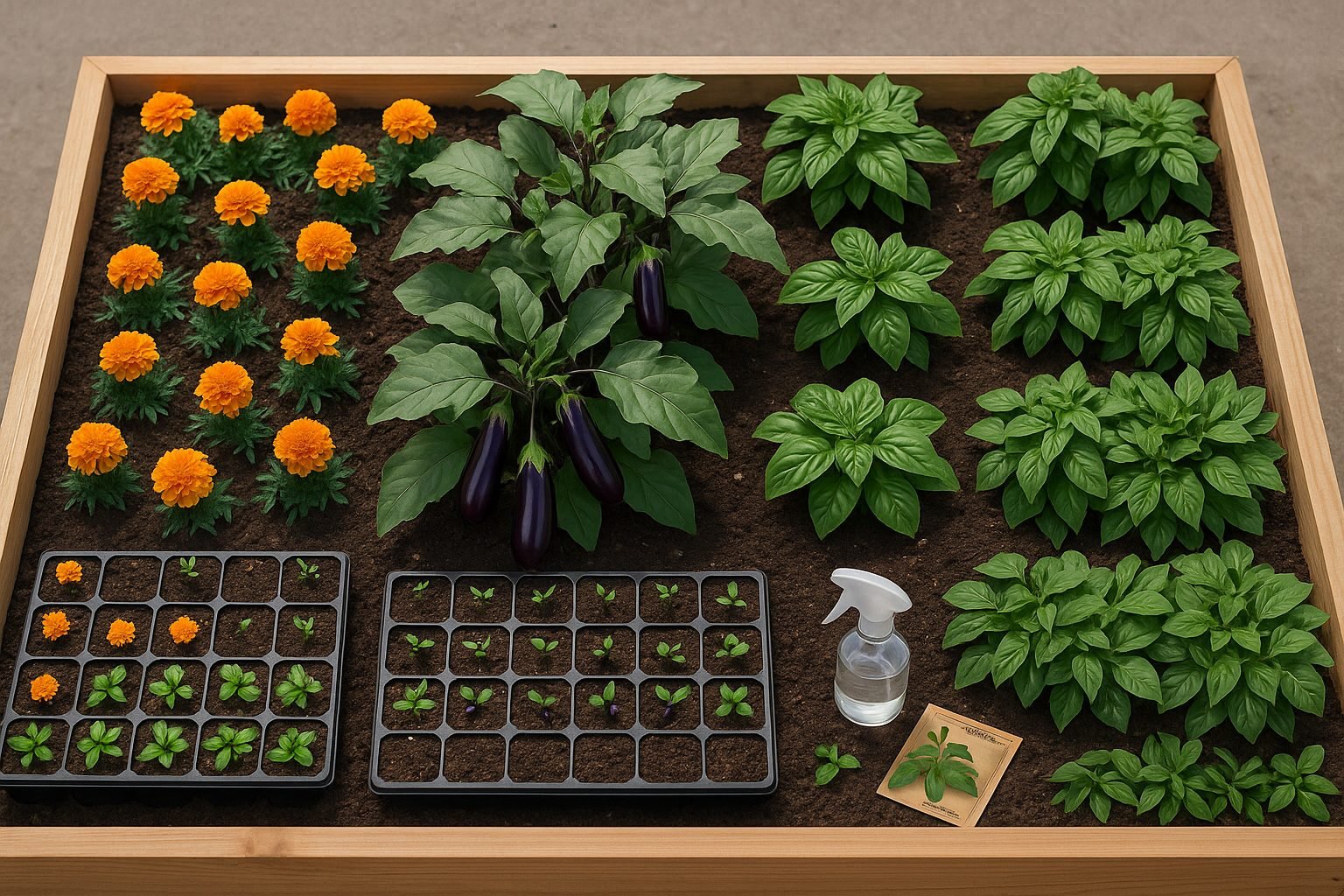
Raised beds are a game-changer for growing eggplants, especially when paired with carefully chosen companion plants. The elevated structure offers excellent drainage, preventing waterlogged roots—a common problem for eggplants in heavy soils. The loose, well-aerated soil encourages stronger root systems and healthier growth. Raised beds also give you more control over soil quality and fertility, both essential for a nutrient-loving crop like eggplant.
When it comes to companion planting, raised beds make it easy to organize space effectively. For a productive layout, consider grouping eggplants down the center of the bed, where they receive good air circulation and ample sunlight. Plant fast-growing herbs like basil or nasturtium along the edges—these not only attract pollinators and repel pests but also fill in quickly, making good use of otherwise open soil.
Beans or bush peas can be nestled between eggplant transplants early in the season; they fix nitrogen in the soil, supporting the heavy feeding needs of eggplants and are easily harvested before the eggplant canopy fills out. Marigolds are another fantastic choice for the bed’s borders, as their scent can deter nematodes and insect pests.
When planning your season, try succession planting by starting with lettuce or spinach alongside young eggplants, since these leafy greens will mature well before the heat-loving eggplants. Once harvested, replant these spaces with bush beans or a second wave of basil to keep the bed productive.
Remember to rotate eggplants each year with crops from different plant families, such as carrots, onions, or lettuce, to break up pest and disease cycles that often plague nightshades. This strategy not only preserves soil health but also makes the best use of your growing space, helping you maintain a thriving, efficient garden all season long.
Troubleshooting Common Eggplant Companion Planting Problems
Noticing your eggplants looking wilted, struggling to grow, or getting attacked by pests? You might be facing companion planting issues. Common signs include stunted growth, yellowing leaves, or holes in the foliage, which often point to poor plant pairings or competition for resources.
For example, planting eggplants too close to fennel or potatoes can hamper growth due to harmful root interactions or shared pest problems like the Colorado potato beetle. To fix layout issues, give each plant plenty of space and avoid cramming heavy feeders together. Eggplants do best when paired with bush beans or herbs like basil that offer pest protection without hogging nutrients.
If aphids or flea beetles crash your garden, try organic controls like neem oil sprays or introducing beneficial insects such as ladybugs. Rotate planting spots each season to prevent soil-borne diseases from building up.
Here’s a quick troubleshooting checklist:
- Check for yellow or stunted leaves to spot nutrient issues.
- Look for chewed or spotted leaves for pest signs.
- Observe which neighbors are closest and identify known incompatible plants.
- Adjust spacing—sometimes just moving a plant or two can help improve airflow and reduce stress.
- Apply organic mulch to control weeds and maintain soil moisture.
Regularly observe your eggplants and their companions, and don’t hesitate to rearrange your garden if something looks off—fine-tuning your layout and care routine can make all the difference for a healthy, thriving crop.
Harvesting, Storage, and Final Care Tips
Knowing when to harvest your eggplants is crucial for their flavor and texture. Pick eggplants when their skin is glossy and firm, generally before the seeds inside fully mature—overripe fruit turns dull and spongy. Use pruning shears or a sharp knife to cut the stem about an inch above the fruit, being careful not to damage the plant. Harvest regularly to encourage production, as leaving old fruit on the plant can stunt growth.
After harvesting, store eggplants in a cool, dry place; the refrigerator works if you plan to use them within a week, but wrapping them in paper towels or perforated bags helps prevent moisture buildup and decay. For longer storage, blanch, slice, and freeze them.
Companion Planting and Garden Care
To keep your garden thriving, pay attention to companion care:
- Marigolds deter pests.
- Beans and peas fix nitrogen in the soil, benefiting surrounding plants.
Remove any spent companions at season’s end and rotate planting locations to minimize disease. Consistently mulch and water both eggplants and companion plants, especially during dry spells.
In summary, successful eggplant harvests depend on timely picking, proper storage, and thoughtful companion planting. Choosing the right plant partners, like basil for pest control or beans for soil health, not only protects eggplants but also results in higher yields and a more resilient garden throughout the season.
FAQs: Eggplant Companion Planting
When companion planting with eggplant, how close should you plant other veggies? Ideally, keep companions about 12 to 18 inches from your eggplants to ensure enough airflow and space for healthy growth. This spacing helps prevent overcrowding and reduces the risk of fungal diseases.
Which plants help control pests naturally? Marigolds and nasturtiums are gardener favorites, as their scent deters common pests like aphids and whiteflies. Herbs such as basil and oregano not only enhance flavor but also repel spider mites and flea beetles that can damage eggplant leaves.
What should you avoid planting near eggplants? Steer clear of fennel and other nightshades like potatoes since they compete for similar nutrients and attract the same pests, which can make your eggplants more vulnerable.
Are there other veggies that work especially well together? Beans are a stellar choice because they supply natural nitrogen to the soil, giving your eggplants a helpful nutrient boost—just be sure they don’t climb directly onto the eggplants and shade them out.
With a little planning, you can mix and match companions to create a thriving, pest-resistant eggplant patch.