Introduction
If you want crisp, plentiful cucumbers from your garden, following the right cucumber fertilizer schedule is essential. Proper fertilization makes all the difference in a cucumber plant’s health, giving you lush vines and bountiful harvests rather than spindly stems or disappointing fruit.
Too little feeding can lead to stunted growth, pale leaves, and flowers that drop before producing any cucumbers. On the other hand, overdoing it can burn roots, reduce yields, or result in leafy plants with little fruit. To strike the perfect balance, gardeners need to understand which nutrients cucumbers require at each growth stage and when to apply them.
In this post, you’ll learn about the most important nutrients for cucumbers, when and how to fertilize for maximum results, and practical tips to avoid common feeding mistakes. Whether you’re new to vegetable gardening or looking to improve your results this season, we’ll walk you through a simple but effective cucumber fertilizer schedule so each stage of your plant’s growth supports healthy vines and impressive crops.
Get ready to grow more flavorful, high-yield cucumbers with less guesswork!
Understanding Cucumber Nutrient Needs
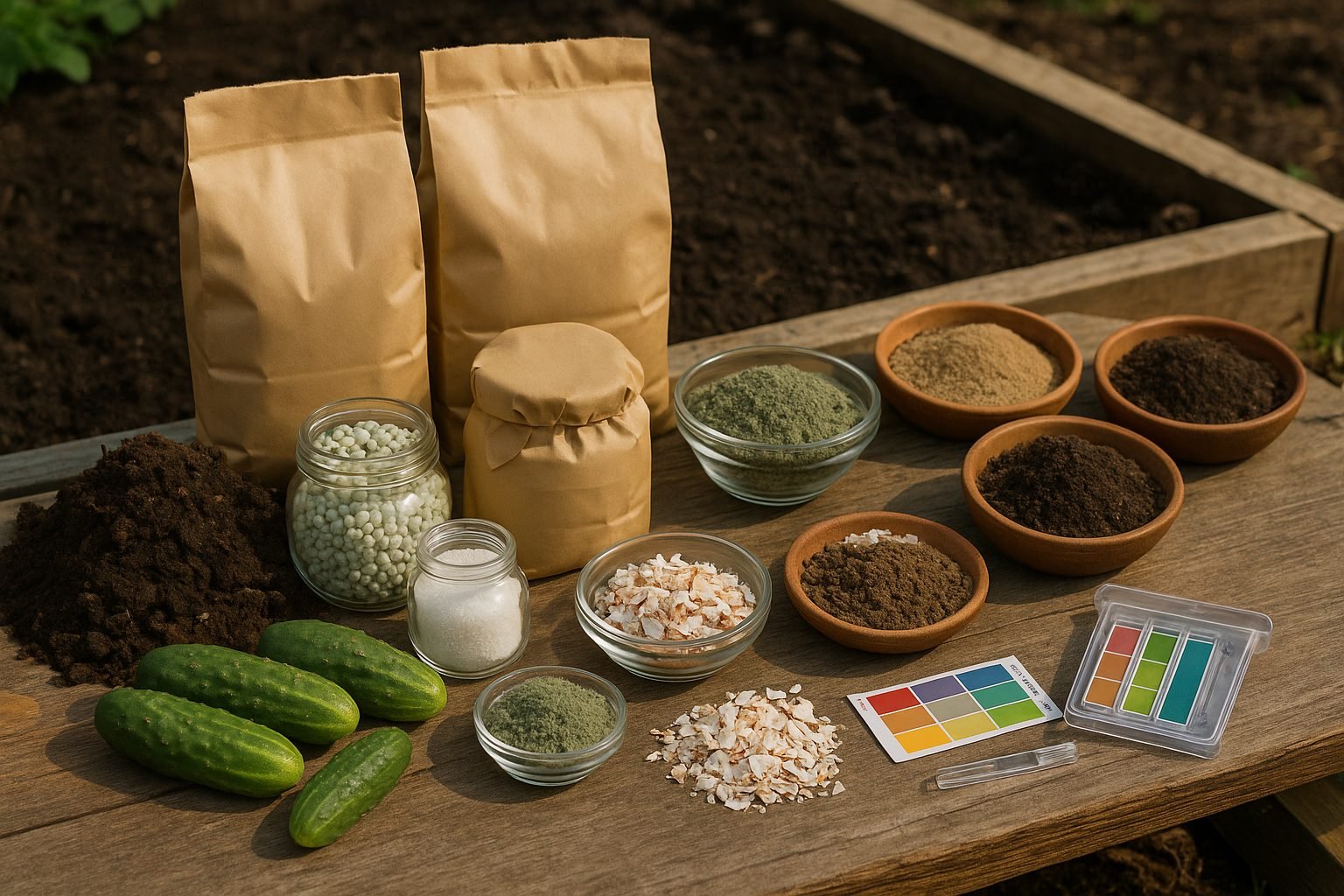
Cucumbers are vigorous growers and require a well-balanced supply of nutrients to thrive throughout the season. The three primary macronutrients—nitrogen, phosphorus, and potassium—each play distinct roles in cucumber development.
Nitrogen fuels leafy growth, ensuring the plant produces ample healthy foliage to support strong photosynthesis. Phosphorus is crucial for root development and flower formation, setting the stage for productive fruiting. Potassium, meanwhile, enhances disease resistance and is essential for fruit quality, helping cucumbers develop firm texture and appealing flavor.
In addition to these major nutrients, cucumbers benefit from secondary nutrients such as magnesium and calcium. Magnesium is key for chlorophyll production, giving leaves their deep green color and supporting overall plant vigor. Calcium helps maintain strong cell walls, reducing issues like blossom end rot. Boron, a micronutrient, aids in flower and fruit set, making it particularly important during the reproductive stage.
The type and composition of your soil directly affect how well these nutrients are delivered to cucumber roots. Sandy soils, while often easier to work with, tend to leach nutrients quickly, necessitating supplements or organic matter to boost retention. Heavy clay soils might hold onto nutrients but can impede drainage, potentially leading to root stress.
The ideal scenario for cucumbers is a loamy, well-draining soil rich in organic matter, which promotes steady nutrient availability. Regularly amending your soil with compost, monitoring pH (aim for 6.0 to 6.8), and conducting soil tests are practical steps that help ensure cucumbers get the nutrients they need throughout their growth cycle.
For home gardeners, observing leaf color and plant vigor provides good real-world cues; for example, yellowing leaves may signal nitrogen deficiency, while distorted new growth might indicate a lack of calcium or boron. Adjusting fertilizer programs based on these observations keeps cucumber plants productive and healthy.
When to Fertilize Cucumbers
Fertilizing cucumbers at the right times can make a big difference in the size and health of your harvest. Start by adding a balanced, slow-release fertilizer or compost to the soil when planting seeds or young transplants—this gives cucumber roots a nutrient boost for early growth.
As the plants develop, keep an eye out for rapid leaf expansion and flower buds forming. When you notice the first yellow blooms, it’s time for a second round of fertilizer, ideally one a bit higher in phosphorus and potassium to support strong flowering and fruit set.
Watch your plants for cues: if cucumber leaves turn pale green or growth seems sluggish, these are signs they’re hungry for nutrients. A third application is helpful once fruit starts appearing, ensuring steady growth and better flavor; use a lighter touch to avoid overfeeding.
For indoor cucumbers, fertilization timing is especially important since pots can run out of nutrients faster. Feed indoor plants a little more often with diluted liquid fertilizer—every two to three weeks works well—since watering flushes nutrients out quickly.
For outdoor gardens, stick to the bigger milestones: at planting, before flowering, and at fruiting. Remember, too much fertilizer can lead to lots of leaves at the expense of fruit, so always follow product directions and adjust based on what your cucumber plants are telling you.
Choosing the Best Fertilizer for Cucumbers
When it comes to feeding cucumber plants, both organic and synthetic fertilizers offer unique advantages and considerations. Organic fertilizers, like compost, well-rotted manure, or products such as Dr. Earth Organic Vegetable Fertilizer, enrich the soil with natural nutrients and improve long-term soil health—plus, they’re safer for pollinators and beneficial microbes. However, they can be slower to act and harder to control for precise nutrient balance.
Synthetic fertilizers, such as Miracle-Gro Water Soluble Vegetable Food, deliver nutrients faster and in exact NPK ratios, making them handy for quick corrections, but overuse can harm soil health and potentially burn young roots.
For vigorous cucumber growth early in the season, focus on balanced fertilizers (like a 10-10-10 or 5-5-5 NPK) to support both leafy development and root structure. As the plants start flowering and fruiting, shift to a formula higher in potassium (something like 5-10-10 or 3-4-6 NPK) to promote more blooms and better fruit set.
Organic DIY options, like mixing compost into planting holes or side-dressing with aged manure, can be highly effective and budget-friendly. For a quick homemade boost during fruiting, dissolve a tablespoon of Epsom salt in a gallon of water and use it as a foliar spray once every few weeks—cucumbers thrive on magnesium and sulfur during peak production.
Whichever route you choose, always follow package instructions or recommended DIY amounts, water after feeding, and observe your plants’ response: yellowing leaves or stunted growth often point to a nutrient gap. By combining the strengths of both organic and synthetic approaches and tailoring your feed to each growth stage, you’ll give your cucumbers the healthiest start and the most abundant harvest.
Step-by-Step Guide to Feeding Cucumbers
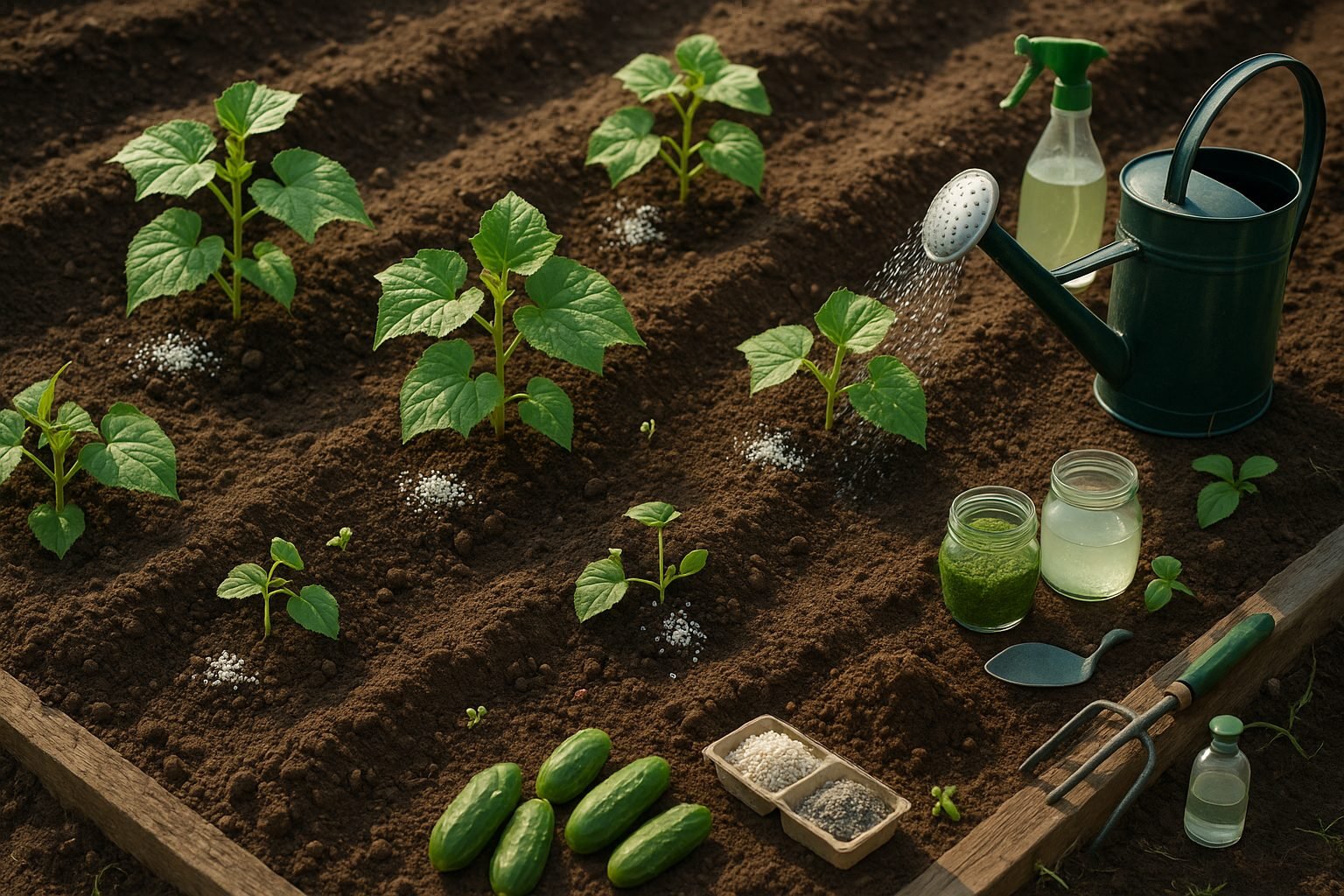
Start your cucumber feeding journey by preparing the soil before planting. Work in 2-3 inches of well-aged compost or rotted manure to enrich the ground, and check for good drainage since waterlogged roots struggle to absorb nutrients.
After forming your mounds or rows, add a balanced, slow-release fertilizer—something like 10-10-10—following label instructions to avoid excessive salts that can harm young roots.
Once seedlings reach 2-3 true leaves, side-dress them by sprinkling a small amount of granular fertilizer about 4 inches away from the stems. Then gently rake it in and water well.
As vines grow and start to flower, switch to a liquid feed high in potassium, such as a tomato fertilizer, every 2-3 weeks. Apply the solution directly to the soil around the base of the plants during cool, early morning hours to minimize evaporation.
For an extra boost, especially if you notice yellowing leaves, use a diluted liquid seaweed or fish emulsion as a foliar spray by misting the top and underside of the leaves—always do this on a calm, overcast day to reduce the risk of leaf burn.
Keep an eye out for signs of overfertilizing, such as leaf tip browning or wilting despite moist soil, and cut back if needed. Never pile fertilizer against the stems, as this can cause root burn and stunted growth.
By feeding cucumbers gradually and consistently rather than dumping large amounts at once, you’ll avoid nutrient shock and help your plants yield sweet, crisp fruits all season long.
Troubleshooting Common Cucumber Fertilizing Problems
Recognizing and addressing fertilizing problems in cucumbers can make a big difference in your garden’s yield. Signs of nutrient deficiencies include yellow leaves (often a sign of nitrogen shortage), weak or spindly vines (possibly due to potassium or phosphorus lack), and poor fruit development or misshapen cucumbers.
On the flip side, overfeeding can cause lush green leaves but limited fruit, leaf burn at the edges (from excess salts), or even sudden wilting. If you notice yellowing at the edges, try applying a balanced fertilizer and watering deeply to flush salts from the soil.
Weak vines can benefit from an organic side-dressing of compost or a diluted liquid fertilizer to boost growth without overwhelming the roots. For pale, stunted plants, a gentle application of a nitrogen-rich fertilizer (like fish emulsion) can help turn things around.
Always avoid the “more is better” mindset; over-applying nutrients can do more harm than good. Regularly observe your cucumber plants for subtle changes in color or vigor, and make soil testing a habit at the start of each growing season.
Simple soil test kits are affordable and can help you fine-tune your feeding schedule, preventing both underfeeding and overfeeding. Ultimately, paying attention to how your cucumbers respond and tailoring your care will lead to stronger plants and an abundant harvest.
Conclusion & Quick Fertilizing Tips
To ensure healthy, productive cucumber plants, start by preparing your soil with compost or a balanced, slow-release fertilizer before planting. Feed cucumbers with a nitrogen-rich fertilizer when plants develop their first true leaves to support leafy growth, then switch to a balanced or slightly phosphorus-heavy fertilizer once flowers and fruits appear. Water regularly, as cucumbers with inconsistent moisture may suffer nutrient imbalances.
Throughout the season, keep an eye out for yellowing leaves (which could signal nitrogen deficiency) or weak growth, and adjust fertilization accordingly. Here’s a handy checklist:
- Enrich soil before planting
- Apply nitrogen feed at early leaf stage
- Switch to a balanced fertilizer at flowering/fruiting
- Mulch to retain moisture and improve soil health
- Monitor leaves for signs of stress
- Avoid over-fertilizing, as excess nutrients can burn plants
Remember to water after fertilizing to help nutrients soak in. Every garden is a little different, so make it a habit to check your cucumbers each week for color, growth, and vigor. Adjust your routine as needed for the best results—healthy, delicious cucumbers are always worth the extra care!