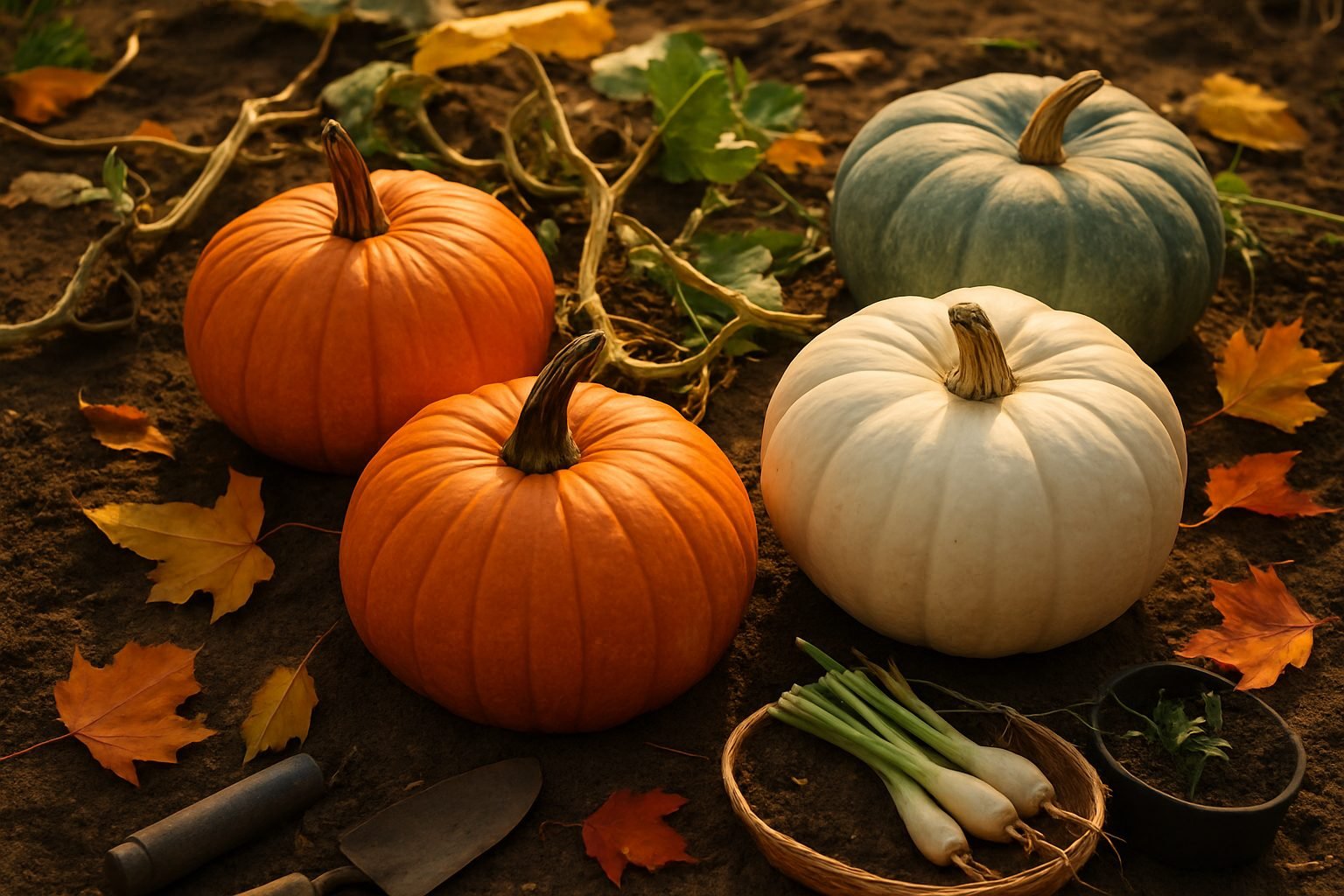
Harvesting Pumpkins
Knowing how to harvest pumpkins at just the right moment can mean the difference between a bountiful autumn display and disappointing, less durable fruits. The key indicators to watch for when harvesting pumpkins are a deep, uniform color—whether that’s the classic orange, pale white, or dusky green, depending on your variety—a hard outer skin that resists puncturing by a fingernail, and a stem that has turned dry and brown. These signs let you know your pumpkins have matured and are ready to leave the vine.
However, when exactly these cues appear depends on your region and climate. In northern areas with early frost, it’s wise to harvest before a hard freeze, even if pumpkins are just about mature; in warmer climates, you can wait until late September or October for optimal ripeness.
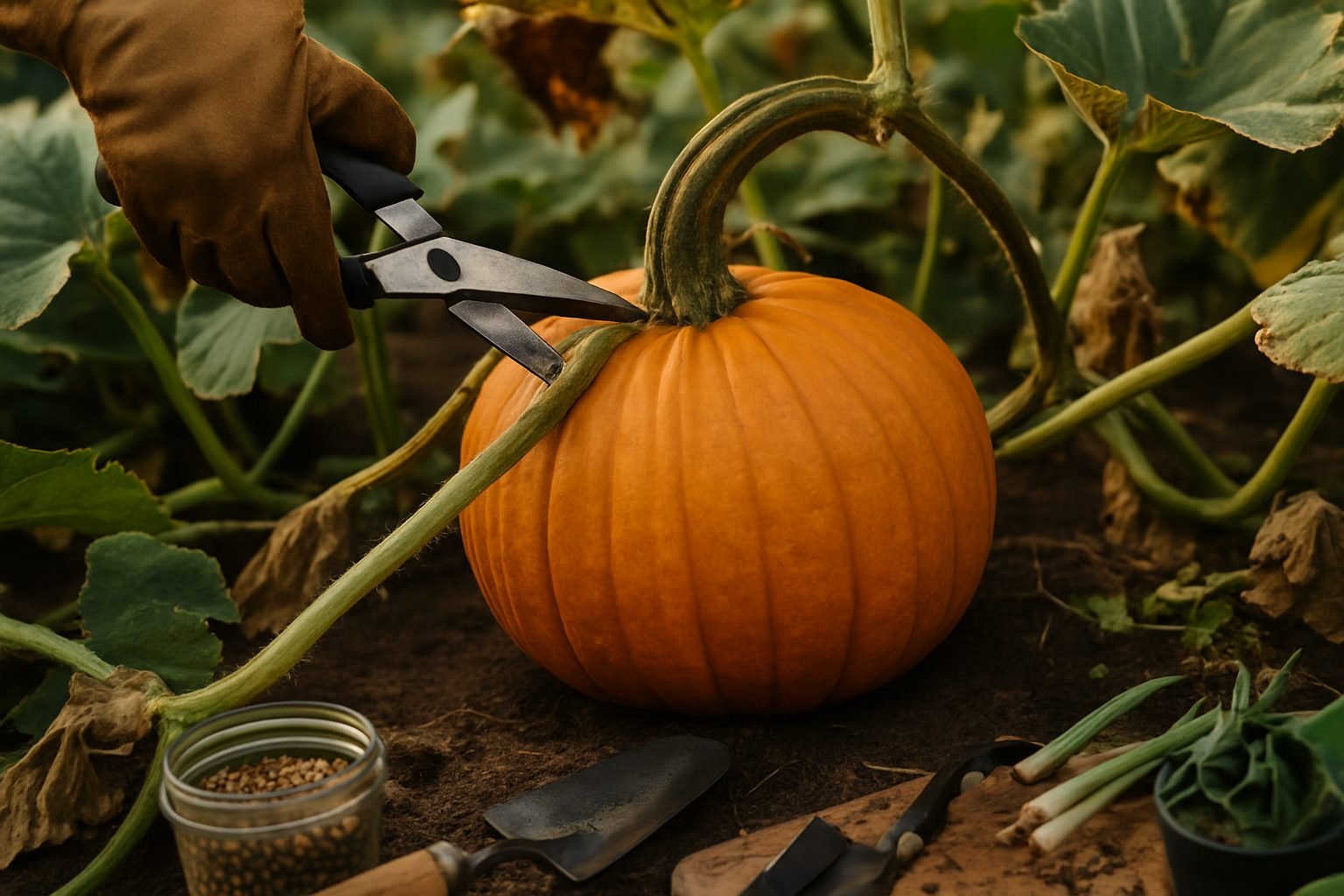
When you’re ready to harvest, use clean, sharp garden shears or a small pruning saw rather than twisting or pulling the fruit. Make the cut several inches above the pumpkin, leaving plenty of stem attached—this helps your pumpkins store longer and resist rot. Handle each pumpkin carefully; the rinds may be thick, but rough handling or dropping can cause bruises that invite decay.
If you plan to cure the pumpkins for storage, lay them in a dry, well-ventilated spot out of direct sunlight for a week or two. Remember, pumpkins still on the vine add décor to your garden as they finish ripening, but once they look ready, harvesting them promptly helps avoid damage from autumn weather, pests, or curious critters. With these tips, you’ll know exactly how to harvest pumpkins without second-guessing, enjoying a true taste—and sight—of fall.
How to Properly Store Pumpkins
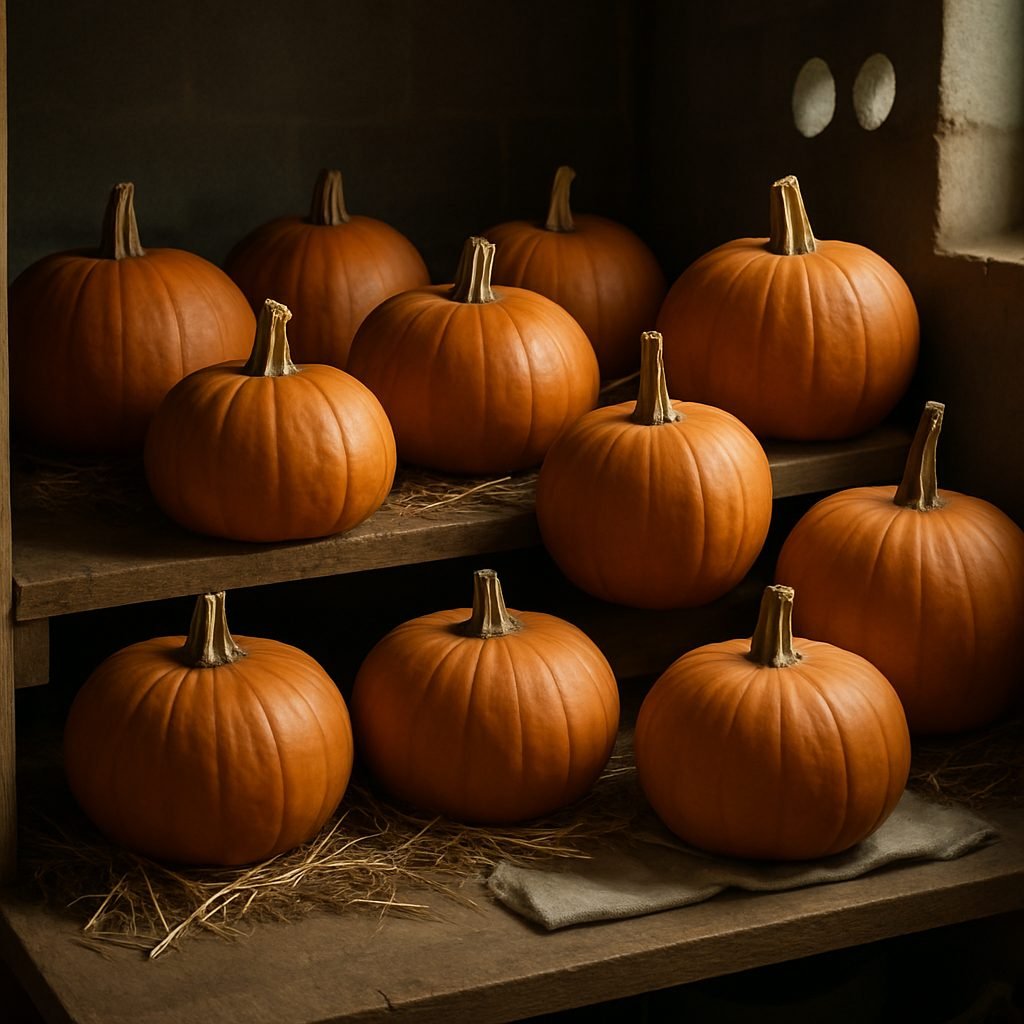
Properly storing pumpkins starts with the right environment—aim for a temperature range of 50 to 55°F (10 to 13°C) with a relative humidity of about 50 to 70%. Too much moisture can cause rot, while too little can make the pumpkins shrivel, so balance is key. It’s also important to keep pumpkins out of direct sunlight; a cool, dark area like a basement, cellar, or unheated closet works well.
Before storage, don’t skip the curing process. After harvesting, let pumpkins sit in a warm, dry place (around 80 to 85°F or 27 to 29°C) with good ventilation for about 10 days. This curing period hardens the skin and heals minor cuts, making them less vulnerable to rot and extending their shelf life.
Once the pumpkins are cured, clean off any dirt and store them in a single layer, making sure they don’t touch each other—this promotes airflow and reduces the risk of molds spreading. Place each pumpkin stem-side up, which helps keep them from rolling and bruising.
Lastly, check your pumpkins weekly for soft spots, mold, or signs of spoilage. Catching issues early lets you remove affected pumpkins, preventing rot from spreading to the rest. With the right care and regular inspections, your pumpkins can last for several months, giving you edible squash well into winter or healthy decorations for the holidays.
Ways to Preserve Pumpkins for the Long Term
When it comes to preserving pumpkins for the long term, there are several practical options like freezing, canning, drying, and even pickling.
Freezing is one of the easiest methods: simply peel and cut the pumpkin into chunks, steam or bake the pieces until tender, then puree and let it cool. Transfer the puree into freezer-safe bags or containers, label with the date, and store for up to a year—perfect for quickly adding to soups, breads, or smoothies later.
Drying is great for making healthy pumpkin snacks or powder for recipes. Start by slicing pumpkin thinly, then arrange the slices on dehydrator trays or baking sheets. Dry at 135°F (or the lowest oven setting) until crisp, and store the cooled slices in airtight jars. Dried pumpkin can be enjoyed as a snack or ground into a powder to add to oatmeal, pancakes, and even curries.
If you’re feeling adventurous, try canning pumpkin cubes (never puree for canning, as recommended by the USDA) in a pressure canner. You can also make tangy pickled pumpkin with your favorite pickling spices for salads and charcuterie boards.
However you choose to preserve your pumpkin, you’ll have plenty of options for cooking: frozen puree for velvety pies or muffins, dried slices in trail mix, or pickled cubes as a unique side. Having a stash of preserved pumpkin means seasonal flavor is always within reach, with minimal prep needed when inspiration strikes.
Pumpkin Growing & Care Essentials
Growing healthy, vibrant pumpkins starts with timing your planting right—wait until the last frost has passed and soil temperatures reach at least 65°F, as pumpkins need plenty of warmth to germinate. Prep your planting site by mixing in compost or well-rotted manure to enrich the soil, making sure it’s loose and drains well; pumpkins have deep roots and thrive in slightly acidic to neutral soil (pH 6.0–7.0).
When sowing seeds or transplanting seedlings, space them at least three feet apart so the vines can sprawl. Water deeply and regularly—about 1 to 2 inches per week—especially during fruit set, but avoid wetting the leaves to help prevent powdery mildew and other fungal diseases.
Fertilize with a balanced fertilizer at planting, then switch to one higher in potassium and phosphorus after flowers appear to boost fruiting. Keep an eye out for common pests like squash bugs and cucumber beetles; hand-pick them or use row covers for protection, and rotate crops yearly to reduce disease risks like bacterial wilt or downy mildew.
Proper pollination is critical for a robust pumpkin harvest—bees are the best helpers, so planting flowers nearby can attract them, or you can hand-pollinate by transferring pollen from male to female flowers with a small brush.
By focusing on these essentials, you’ll be well on your way to growing plump, healthy pumpkins perfect for carving or baking.
Frequently Asked Questions About Harvesting and Storing Pumpkins
One of the top questions about pumpkins is whether green pumpkins will ripen after being picked. The good news is that if your pumpkin has turned at least a bit orange and the vine is dying back, it can continue to ripen off the vine—just leave it in a warm, sunny spot for a week or two and rotate it occasionally.
Another common concern is pumpkin shelf life: if harvested at full maturity with the stem intact and cured in a dry, warm area for about 10 days, most varieties can last two to three months or even longer if kept in a cool, dark place.
Some people believe you should wash pumpkins before storage, but this can trap moisture and encourage rot; instead, gently wipe off dirt and only clean with a diluted bleach solution if you see signs of mold.
If you spot soft spots or shriveling during storage, remove those pumpkins right away to keep the rest healthy.
Finally, don’t be alarmed if your pumpkin’s skin looks dull after curing—this is usually just a sign that it’s well-sealed and ready for long-term storage.
With a little care and attention, you’ll keep your harvest looking bright and festive for months.