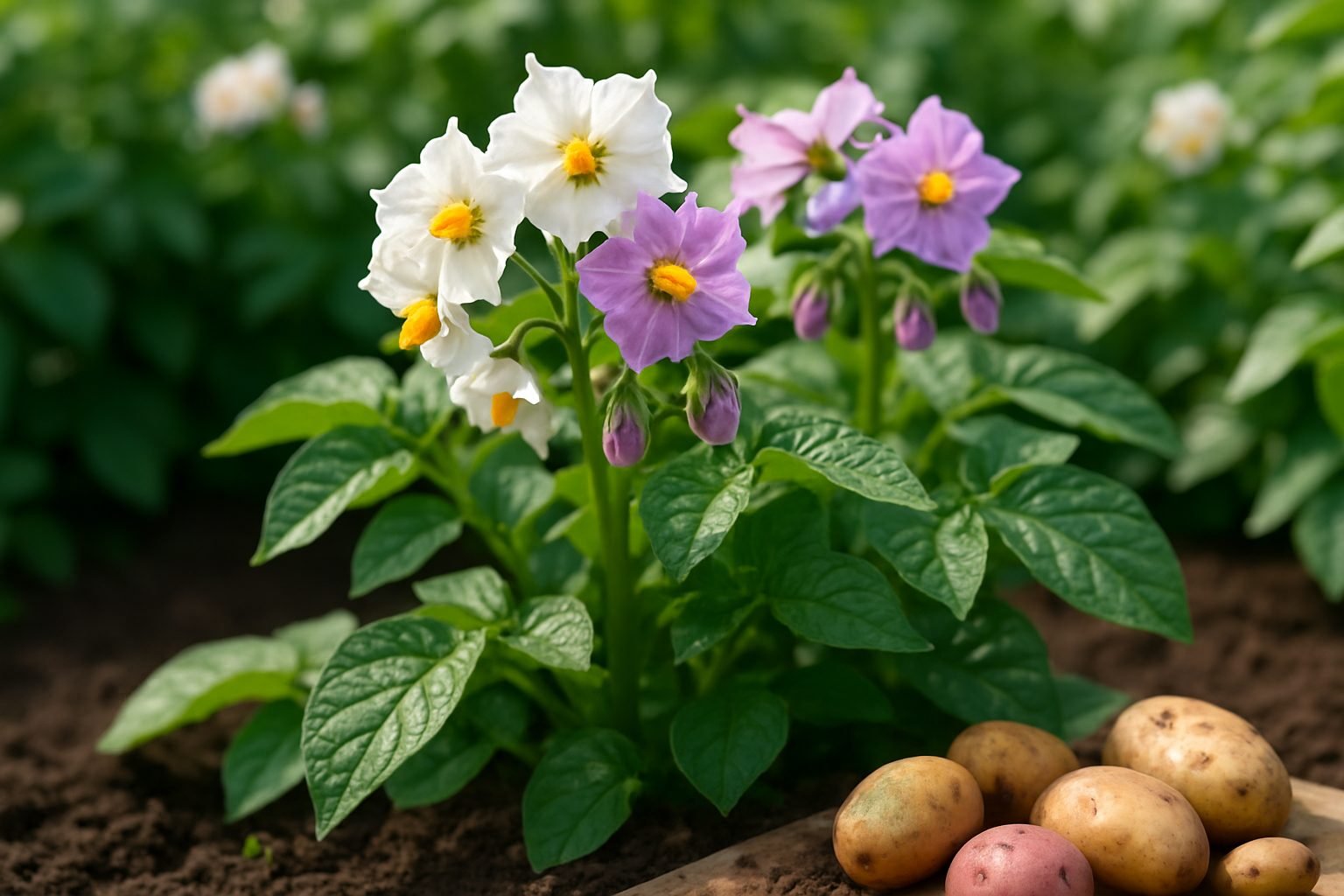
Understanding Why Potato Plants Flower
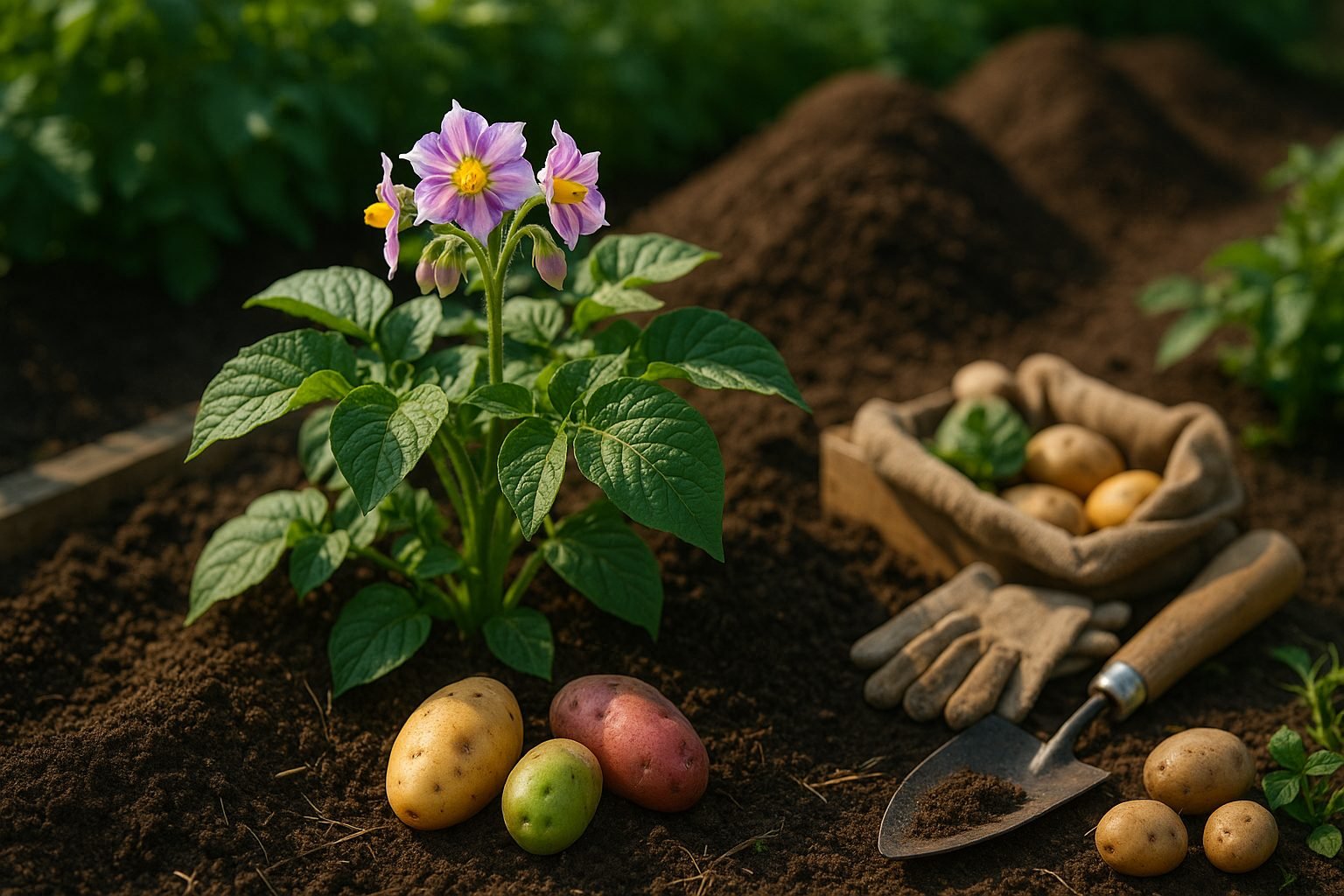
If you’ve ever noticed your garden’s potato plants sprouting delicate blooms, you might have wondered about the meaning behind potato flowers. These blossoms, which can be white, pink, purple, or blue with yellow centers, are more than just a pretty addition to your vegetable patch. Potato flowers signal an important phase in the plant’s natural growth cycle, indicating that the underground tubers are beginning to develop—but they’re not ready for harvest just yet.
Potato plants go through several growth stages: sprouting from seed or tuber, growing lush green foliage, producing flowers, and then setting tubers beneath the soil. Flowering typically happens mid-season, acting as a sign that the plant’s energy is shifting toward growing the potatoes underground.
However, a common misconception is that as soon as you see blooms, your potatoes are mature. In reality, these flowers simply mark the start of tuber formation; it usually takes several more weeks for the potatoes to reach full size and become harvest-ready. So, while potato flowers are a helpful indicator of healthy plant development, don’t rush to dig up your crop just because you spot a blossom or two. Letting the plants continue to grow after flowering ensures a bigger, better harvest.
Do Potato Flowers Affect the Potatoes We Eat?
Potato flowers may look pretty, but their main biological job is helping the plant reproduce through seeds, not growing more edible potatoes. When a potato plant flowers, it’s attempting sexual reproduction: the flowers attract pollinators like bees, which transfer pollen to fertilize the ovules, eventually producing tiny “true seeds” inside green, berry-like fruits.
However, most gardeners are surprised to learn that this whole flowering and seed development process isn’t necessary for the potatoes we eat. The tubers—those delicious underground storage organs—are actually produced through vegetative reproduction, not seeds.
Potatoes grow tubers on underground stems called stolons, and these form independently of whether pollination or flowering occurs. So, even if your potato plants never flower or aren’t visited by pollinators, you can still expect a healthy crop as long as the plants have the right growing conditions.
In commercial farming and most home gardens, potatoes are grown from seed potatoes (pieces of tuber), ensuring reliable results without worrying about flowers.
In short, while flowers play a vital role in maintaining genetic diversity for breeding new potato varieties, they’re not needed for a bountiful potato harvest in your backyard or farm.
Should You Remove Flowers from Potato Plants?
When your potato plants begin to flower, it’s a sign they’re entering a critical growth stage—tubers are forming beneath the soil. Many gardeners wonder whether they should remove these flowers.
Generally, you can leave the flowers on; flowering does not harm your potato yield, and the plant will continue producing energy for tuber growth. However, some old-school gardeners suggest pinching off flowers to prevent the plant from putting energy into seed production, believing this can slightly boost tuber size. There’s little scientific evidence supporting a major difference, so removing flowers is optional rather than essential.
Care Tips During Flowering
During flowering, focus on keeping the plants healthy:
- Water deeply and consistently, especially if rainfall is lacking, as potatoes need steady moisture to form large tubers.
- Check regularly for pests like potato beetles and aphids, which tend to appear around flowering time, and remove them by hand or use organic treatments if necessary.
- Weak, tall plants may benefit from gentle staking to prevent breakage in wind or rain.
- Continue to mound soil around the base of stems (a process called “hilling”) to protect developing potatoes from sunlight and support stronger, healthier plants.
With attentive care during this phase, you’ll set the stage for a bountiful harvest.
When to Harvest Potatoes
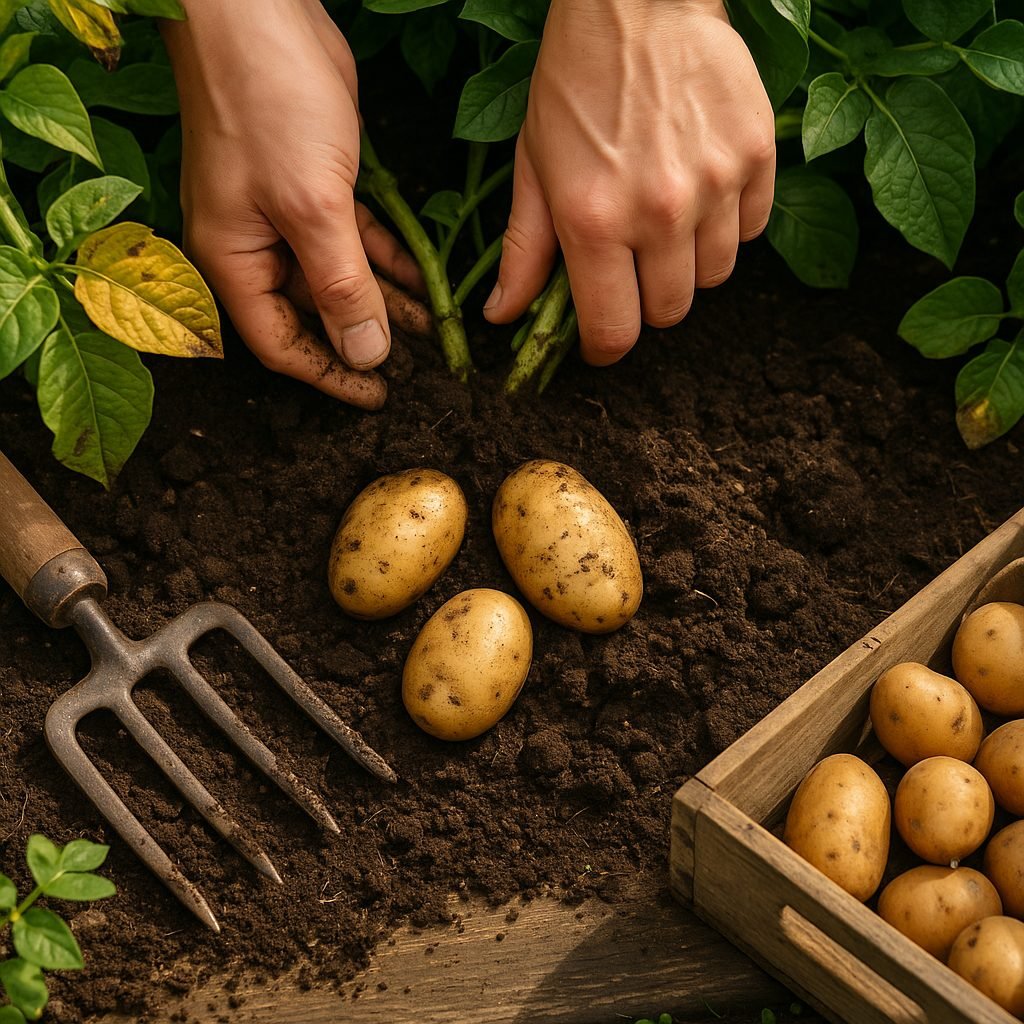
Understanding when to harvest potatoes starts with observing their flowering stage, but it’s important to remember that flowering isn’t a direct sign that tubers are fully mature. Flowering signals that the plant is forming potatoes underground, but these tubers still need time to grow.
For new potatoes, which are smaller and have delicate skins, you can usually start harvesting about two to three weeks after flowering begins. These “new crop” potatoes are often enjoyed early in the season for their tender texture.
Maincrop potatoes, which are grown for storage and full maturity, need more time; plan to wait about three to four weeks after the plant stops flowering. The clearest sign that maincrop potatoes are ready for harvest is when the foliage starts to yellow and die back naturally. At this stage, the potato skins will have toughened enough to handle storage and handling without damage.
If you’re unsure, gently dig around the base of one plant to check tuber size and skin firmness—if the skins don’t rub off easily and the potatoes are a good size, they’re ready.
In short, use flowering as a general milestone, and rely on the plant’s foliage and tuber maturity for precise harvest timing.
How to Encourage Healthy Potato Flowering
Potato flowering can be surprisingly sensitive to its surroundings, so it’s important to keep a close eye on common environmental challenges. Temperature plays a big role—too much heat or unexpected cold spells can disrupt or delay flowering. Ideally, potatoes flourish in moderate temperatures around 60 to 70°F (15–21°C).
In hot climates, provide shade during peak afternoon hours, while in cooler regions, consider using floating row covers to protect against chilly nights. Consistent moisture is also crucial; both drought and waterlogged soil can stress plants, leading to poor or absent flowering. Aim to water deeply but infrequently, letting the top inch of soil dry out between waterings.
Poor soil quality, particularly a lack of essential nutrients like phosphorus, can also stunt flowering. Use a balanced fertilizer and enrich the soil with compost before planting. Pests like aphids or Colorado potato beetles sap plant energy and can reduce or halt blooms—check leaves regularly and remove pests by hand or with safe insecticidal soap.
If your potatoes aren’t flowering as expected, quickly review these areas:
- Check soil moisture
- Inspect for pests
- Consider boosting feeding
With a little observation and timely adjustments, you can usually steer your plants back toward healthy flowering.
The Takeaway
Seeing your potato plants burst into bloom is a great sign—they’re thriving and right on track! Flowering is a completely normal part of the potato’s growth cycle and means your plants are healthy, not that it’s time to dig up your crop just yet.
Harvesting potatoes should be based on the maturity of the tubers and the condition of the foliage, not just the appearance of flowers. Instead of worrying about when flowers appear or fade, concentrate on providing consistent water, keeping weeds at bay, and watching for pests or signs of disease.
Healthy foliage and a well-kept bed will give your potatoes the best shot at a big, tasty harvest. As a real-world tip, try mulching around your potato plants to keep the soil cool and moist—this makes a noticeable difference in tuber growth and health.
So, while those pretty blooms signal progress, remember that patient, attentive care is what leads to a basket of perfect spuds at the end of the season.