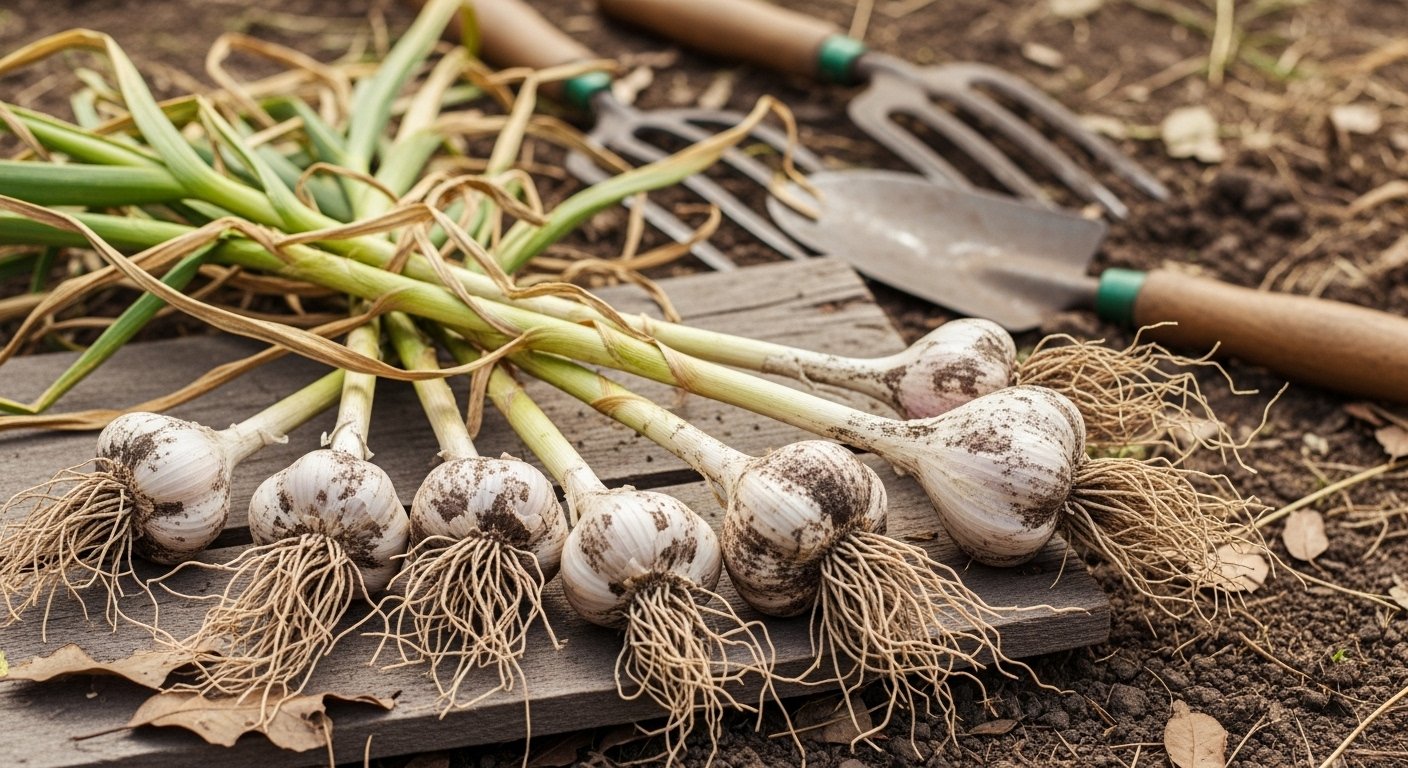
When Is Garlic Ready to Harvest?
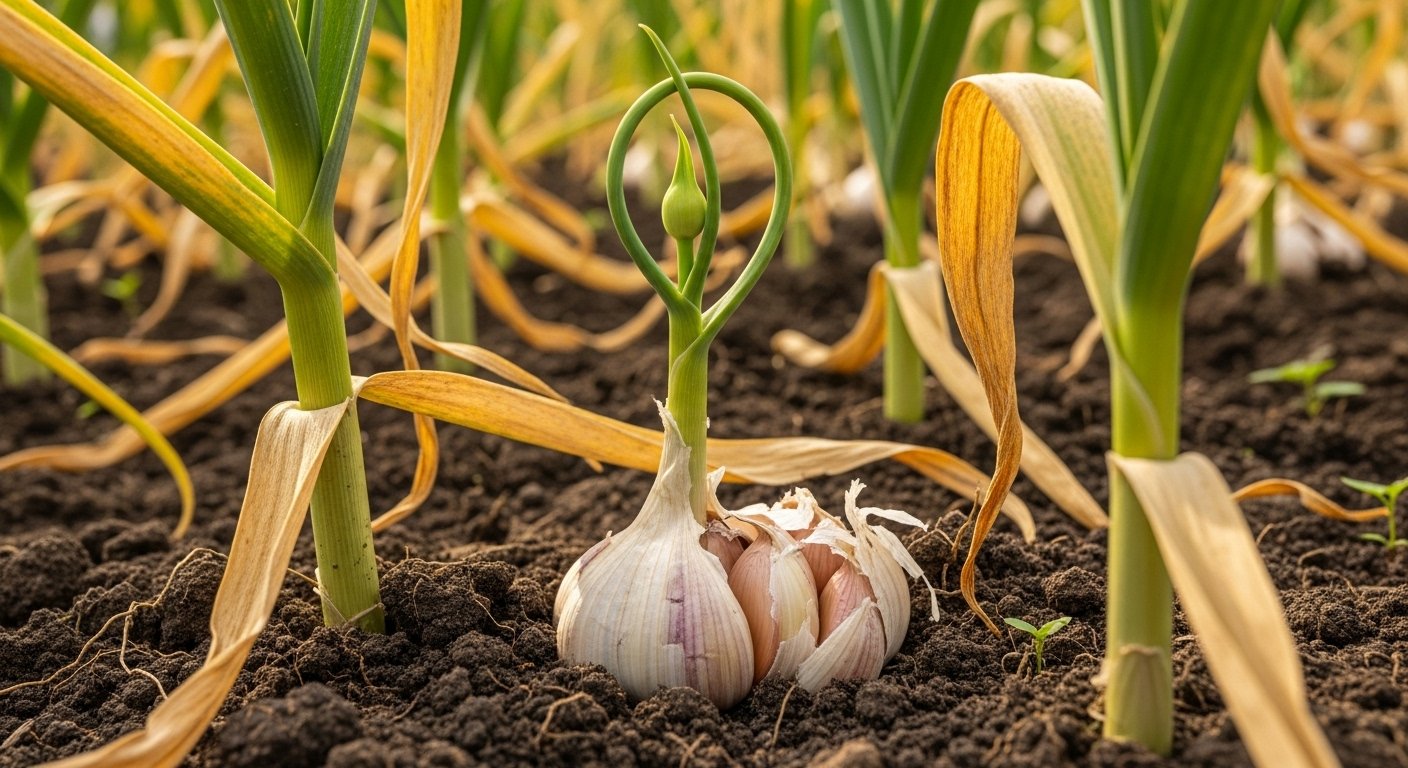
If you’re interested in saving garlic for replanting, knowing exactly when garlic is ready to harvest is key to success. Typically, garlic planted in the fall will be ready for harvest by mid-to-late summer, but the exact timing can vary depending on your local climate.
The most reliable sign that your garlic is mature is when about one-third to one-half of the leaves have turned yellow and started to die back—this usually occurs 7 to 9 months after planting. For softneck garlic varieties, you might notice the leaves collapsing and drying out slightly earlier than with hardneck types, which tend to mature a bit later and often send up a central flower stalk (scape) before their leaves fade.
To check if your garlic bulbs are truly ready without damaging your crop, gently loosen the soil around one or two plants and feel or lift a bulb—look for well-developed cloves and skin that is thick and papery. Avoid waiting until all the leaves are brown or the cloves begin to split, as this can compromise the storage life of the bulbs you’re saving for replanting.
With these tips, you’ll be able to confidently spot the signs of maturity and set yourself up for a successful garlic harvest next season.
How to Harvest Garlic Properly
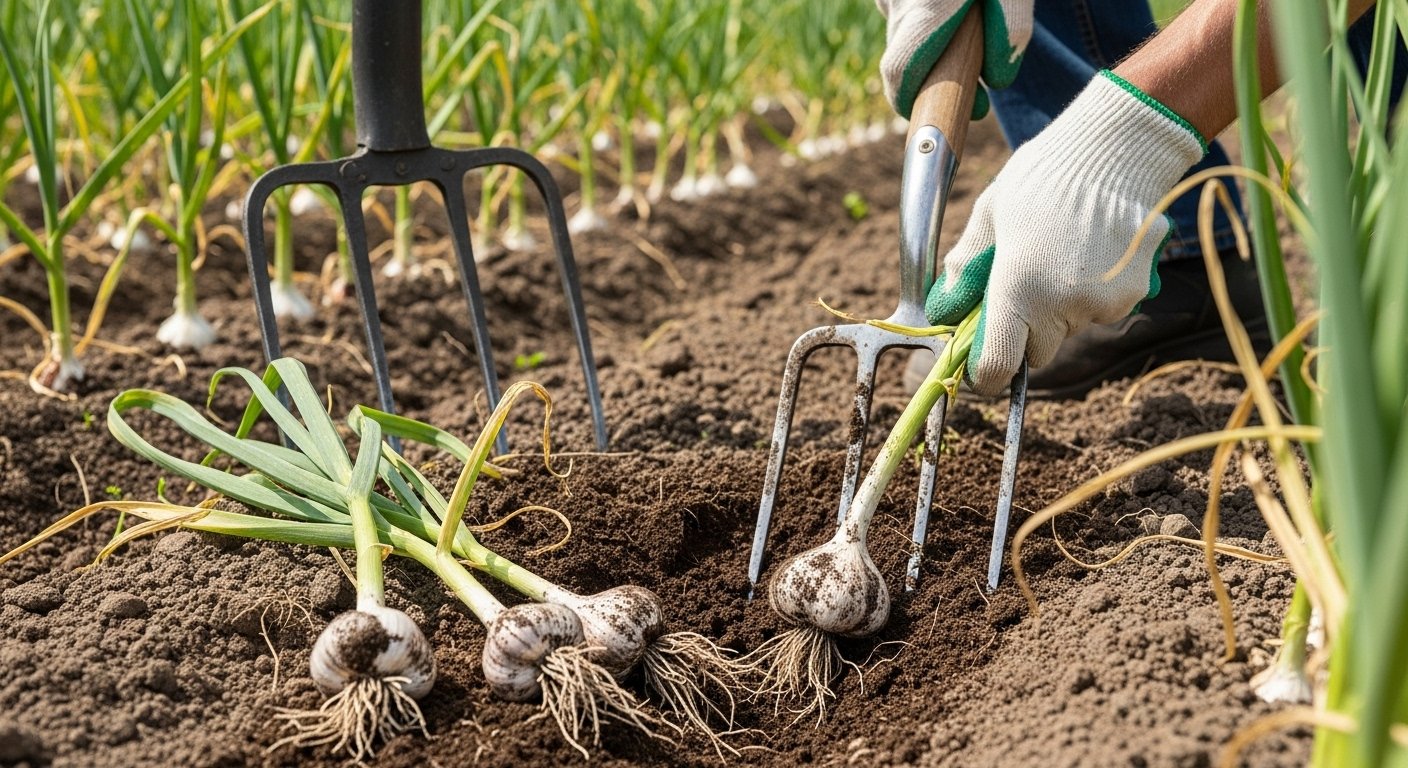
When it comes time to harvest garlic, timing is everything—look for lower leaves turning brown while the upper leaves remain green, usually in midsummer.
For small gardens, insert a garden fork or trowel about 4-6 inches from each bulb to gently loosen the soil; for larger plots, a broadfork is efficient for lifting multiple bulbs at once. Avoid the common mistake of yanking bulbs out by the stems, as this can separate the tops or damage the delicate skins—always lift from beneath.
Once unearthed, gently brush off excess dirt and avoid washing the bulbs, as moisture can cause molding during curing. Never harvest too early when cloves are still immature, or too late when bulbs start to split—both affect storage life and flavor.
Work on a dry day if possible to keep bulbs clean and reduce disease risk, and always use clean, sharp tools to prevent bruising. By following these methods, you’ll ensure your garlic is flavorful, intact, and ready for long-term storage.
Prepping and Curing Garlic for Storage
Curing garlic after harvest is crucial for extending its shelf life and enhancing its flavor. This process allows excess moisture to evaporate from the bulbs, helping to prevent mold, rot, and sprouting during storage.
After pulling garlic from the ground, gently brush off large clumps of soil, but avoid washing, as added moisture can lead to spoilage. Lay the bulbs out in a single layer or hang them in small bundles in a well-ventilated, dry, shady area. Garages, sheds, or covered porches work well since direct sunlight can cause bulbs to overheat and deteriorate.
Good airflow is key, so don’t crowd the bulbs. Aim for temperatures around 60-70°F with low humidity. Curing typically takes two to four weeks; you’ll know the garlic is ready when the outer skins are papery and the necks feel completely dry.
At this point, trim the roots and tops to about an inch above each bulb, then gently clean off any remaining dirt. Handle the bulbs carefully to avoid bruising, and store only firm, healthy ones for the months ahead.
Best Ways to Store Garlic for Longevity
To keep garlic fresh for as long as possible, focus on creating the right storage environment: cool, dry, and well-ventilated. Ideally, garlic prefers temperatures between 60-65°F (15-18°C) with moderate humidity—think of the conditions in a traditional root cellar.
Good air circulation is key; keep bulbs in mesh bags, woven baskets, or paper bags with holes to let moisture escape. A dark pantry is usually an excellent spot, as light encourages sprouting.
Never store garlic bulbs in the refrigerator, as this cold and damp environment can trigger early sprouting and mold growth. Likewise, avoid sealing garlic in plastic bags or airtight containers, which trap moisture and quickly lead to rot.
If you have whole, unpeeled bulbs, leave them intact until you’re ready to use them; breaking the head speeds up deterioration.
For long-term storage, consider braiding garlic stalks and hanging them in a cool, shaded area—some gardeners even hang them outdoors in dry climates.
By steering clear of moisture, light, and poor ventilation, you’ll maintain garlic’s flavor and texture for months, ensuring you always have fresh cloves on hand for your favorite recipes.
Saving Garlic Cloves for Next Year’s Planting
When saving garlic cloves for next year’s planting, start by selecting the largest, healthiest bulbs from your current harvest. Choose bulbs that are plump, firm, and free from disease or damage—avoid any with soft spots, mold, or shriveled cloves, as these can carry pathogens or fail to grow well.
Once you’ve picked your seed garlic, store the bulbs in a cool, dry, and well-ventilated area out of direct sunlight, such as a mesh bag in a cellar or pantry. Aim for a temperature around 50–60°F with moderate humidity; avoid storing garlic in the refrigerator, as cold temperatures can trigger early sprouting.
As planting season approaches—usually two to four weeks before the ground freezes in fall—gently separate the bulbs into individual cloves, leaving the papery skins intact for protection. Plant the largest outer cloves about six inches apart and two inches deep to give your next crop the best start possible.
This careful selection and storage process helps ensure a healthy, robust garlic harvest year after year.
Troubleshooting Common Garlic Storage Issues
Garlic can be tricky to store, especially after a home harvest. Mold is a frequent problem, often caused by excess moisture—so always let garlic bulbs cure in a dry, airy space for a couple of weeks before storing them in mesh bags or baskets.
Sprouting usually happens if garlic is exposed to warmth or light; keep bulbs in a cool, dark, and well-ventilated area to slow this process.
Shriveling is a sign of too little humidity; check that storage isn’t too dry, and don’t store garlic near heat sources.
If you notice soft spots, fuzzy mold, or a sour odor, the garlic is no longer safe to eat or plant.
Avoid using any cloves with green shoots or signs of decay for planting, as these can carry diseases or won’t grow well.