Introduction
Growing your own cucumbers is one of the simplest ways to add freshness, flavor, and satisfaction to your home garden—or even your balcony. But when it comes to getting started, the bush vs. vining cucumbers debate can leave many gardeners scratching their heads.
Bush varieties offer tidy, compact plants perfect for small spaces and containers, while vining cucumbers promise higher yields and sprawling growth, ideal for those with room to spare. Each type brings unique advantages, catering to different gardening styles and goals.
Whether you’re a beginner unsure which plant best fits your lifestyle or an experienced grower ready to try something new, this comprehensive guide will help you compare, select, plant, care for, and harvest both bush and vining cucumbers. Ready to reap a bountiful harvest? Let’s explore the best option for your gardening adventure.
Choosing the Right Cucumber Variety

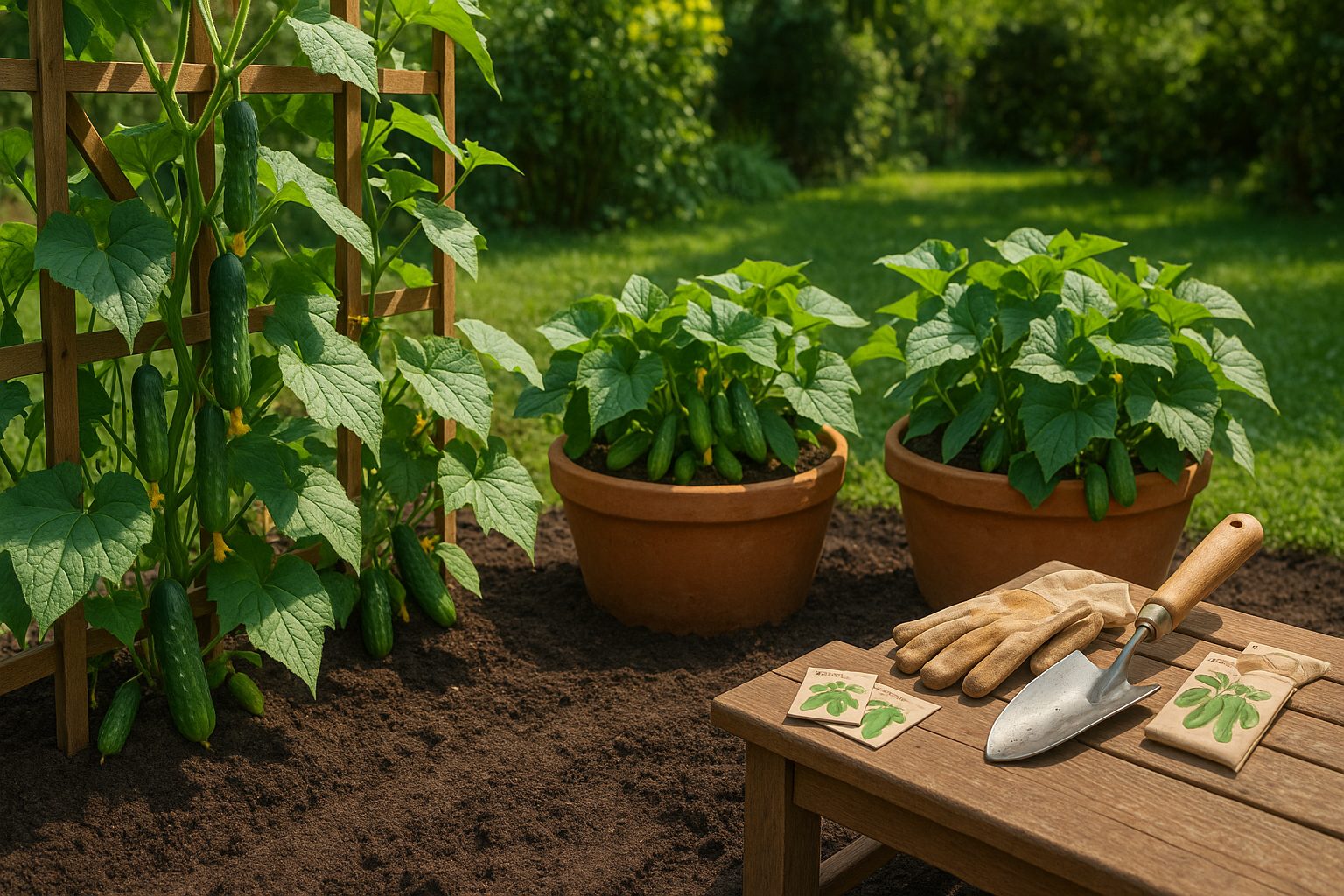
When it comes to choosing the right cucumber variety for your garden, start by considering the plant’s growth habit and how much space you have available. Bush cucumbers grow in compact mounds, making them perfect for small garden beds, raised beds, and even containers on patios or balconies. Vining cucumbers, on the other hand, produce long, sprawling vines that need room to spread out or a sturdy trellis for vertical growth—these are best suited for larger garden beds where you have the space to accommodate them.
For slicing cucumbers, varieties like Marketmore 76, Straight Eight, and Sumter are well-known for their crisp texture and mild, sweet flavor, perfect for salads and snacking. If pickling is your goal, Boston Pickling, National Pickling, and Little Leaf produce smaller, bumpy fruits ideal for jars. Specialty types like Lemon cucumbers offer a unique, sweet flavor and eye-catching look, while Armenian cucumbers stand out for their heat tolerance and long, slender shape.
When selecting seeds, think about your preferred use—do you love fresh crunch or homemade pickles? Also, consider your local climate: some varieties, such as Diva or Suyo Long, perform better in hot weather, while others tolerate cooler conditions. Always check seed packets for disease resistance, especially to common problems like powdery mildew, if you live in a humid area.
Local garden centers and fellow gardeners are great resources for finding varieties proven to do well in your region. By matching your cucumber choice to your space, climate, and culinary plans, you’ll set yourself up for a productive—and delicious—garden season.
Preparing for Planting
Getting your cucumber plants off to a strong start begins with choosing the right site and soil. Cucumbers thrive in locations that receive at least six to eight hours of full sunlight daily, with light, well-draining soil rich in organic matter—think compost or aged manure. Aim for a slightly acidic to neutral pH, around 6.0 to 7.0.
If your garden soil is heavy or clay-like, mixing in compost or sand can greatly improve drainage and root growth. For those opting for container gardening, select a pot that’s at least 12–16 inches wide and deep to accommodate vigorous cucumber roots. Use a high-quality vegetable potting mix with added perlite or coconut coir to ensure excellent drainage, and always make sure your container has holes at the bottom to prevent water buildup, which can cause root rot.
When it comes to planting, you have two main options: start seeds indoors or sow them directly outdoors. Starting seeds inside about three to four weeks before your last frost helps get a jump on the growing season—use peat pots or small seed trays, and transplant seedlings once the weather warms and soil is consistently above 60°F (16°C). If you prefer direct sowing, wait until after your region’s final frost date when the soil has warmed up, then plant seeds about an inch deep.
Either method can yield great results, but indoor starting gives you a head start in cooler climates, while direct sowing is simple and effective where spring arrives early.
Planting and Early Care
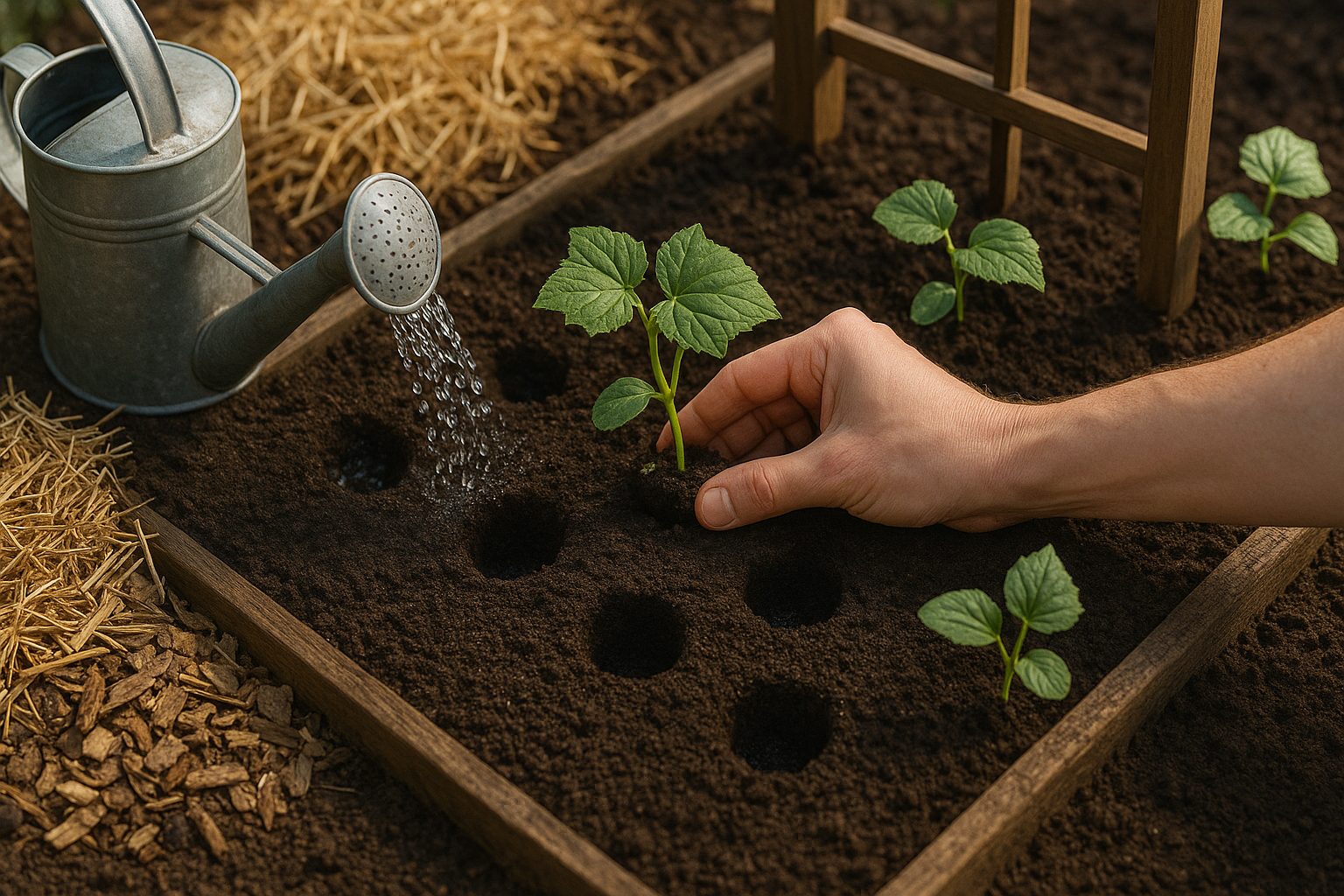
Getting off to the right start is key when planting cucumbers. In most regions, wait until all danger of frost has passed and the soil has warmed to at least 65°F (18°C)—cooler soil may stunt seedling growth. Whether planting in a garden bed or large container, sow cucumber seeds about 1 inch deep and keep them moist until sprouted.
For bush types, space seeds or transplants 12-18 inches apart; vine varieties need more elbow room—place them 2-3 feet apart, with rows about 4-6 feet apart for sprawling growth. If you’re working in tight spaces or using containers, opt for bush types or train vine types up a trellis, fence, or sturdy cage for better air circulation and easier harvesting.
Right after sowing, water gently and consistently to avoid drying out the topsoil, but don’t let containers or beds get soggy, as cucumbers dislike “wet feet.” Once seedlings show their first true leaves, mulch around plants with straw, wood chips, or even grass clippings to preserve moisture and keep weeds at bay.
If several seeds sprout too close together, thin them out to prevent overcrowding—keep the healthiest one every foot for bush types or every few feet for vining types. Consistent care in these early weeks makes a big difference, setting the stage for vigorous, productive cucumber plants all season long.
Feeding and Fertilizing Cucumbers
To grow healthy, high-yield cucumbers, it’s important to start with a balanced fertilizer and maintain a consistent feeding routine. Cucumbers are heavy feeders, so gardeners often use a general-purpose fertilizer, such as a 10-10-10 (N-P-K) formula, applying it at planting time and then side-dressing again when flowers appear.
If you prefer an organic approach, compost or well-rotted manure can work wonders, or you can use fish emulsion or seaweed extract every two to three weeks. A slow-release organic granular fertilizer is also a great hands-off option.
Keep an eye out for nutrient deficiencies—yellowing leaves usually signal a nitrogen shortage, which you can fix with a side-dressing of compost or a water-soluble fertilizer. If the leaf edges turn brown and brittle, it may be a potassium deficiency, while poor fruit development or blossom-end rot often hint at a lack of calcium; try adding a balanced fertilizer or bone meal.
Finally, always water deeply after fertilizing to help nutrients reach the root zone. Consistency, observation, and choosing the right products will keep your cucumbers happy and productive all season long.
Managing Pests and Diseases
Cucumber plants are especially prone to common pests like aphids, cucumber beetles, and spider mites, as well as diseases including powdery mildew, downy mildew, and bacterial wilt. Prevention is your first line of defense: start with disease-resistant cucumber varieties, provide proper spacing to improve air circulation, and avoid overhead watering to reduce leaf wetness, which attracts fungi.
Regularly inspect both sides of leaves for pests, and remove any affected leaves or insects by hand if possible. For natural pest control, encourage beneficial insects like ladybugs to your garden and consider spraying neem oil or insecticidal soap to control infestations without harming pollinators.
Chemical pesticides can be effective, but use them as a last resort and always follow label instructions to avoid damaging your plants or beneficial species.
To keep soil-borne diseases at bay, practice crop rotation by avoiding planting cucumbers or other cucurbit family members (like squash or melons) in the same spot more than once every three years. Companion planting also helps:
- Marigolds can repel beetles
- Nasturtiums can act as a trap crop for aphids
Maintaining healthy, balanced soil with plenty of organic matter also boosts your plants’ natural defenses, making them less inviting to both pests and diseases. By combining these preventive and management strategies, you’ll create a thriving cucumber patch with fewer headaches throughout the growing season.
Harvesting and Storing Cucumbers
Knowing when to pick cucumbers is key for the best flavor and texture. Look for fruits that are bright to dark green, firm, and have a glossy skin—avoid those that look yellow or feel soft, as they’re likely overripe and bitter. For slicing varieties, harvest when cucumbers are about 6–8 inches long; pickling types are best at 2–4 inches.
Use garden shears or a sharp knife instead of pulling, which can damage the vine and slow future growth. To extend your harvest season, check plants every couple of days and pick regularly—this encourages the plant to keep producing.
Mulching around the base can help keep soil moisture consistent, and providing a bit of afternoon shade with row covers can protect crops as summer heats up.
Once picked, store cucumbers unwashed in a perforated plastic bag in the refrigerator crisper. They’ll keep fresh for about a week this way. Avoid storing them near ethylene-producing fruits like tomatoes or bananas, as this can cause cucumbers to yellow and spoil faster.
If you have a surplus, consider quick pickling or slicing and freezing for smoothies to stretch your harvest even further.
Conclusion & Next Steps
Choosing the right cucumber variety and providing plenty of sun, water, and support are key steps for a bountiful harvest. Don’t be afraid to try different types, like crunchy pickling cucumbers or sweet slicing varieties, to find what works best in your space and climate.
Experiment with trellises, containers, or raised beds to see which method suits your garden. For more guidance, explore local gardening groups, online forums, or seasonal planting calendars to stay on track.
With a little curiosity and these practical tips, you’ll soon enjoy fresh, homegrown cucumbers all season long.