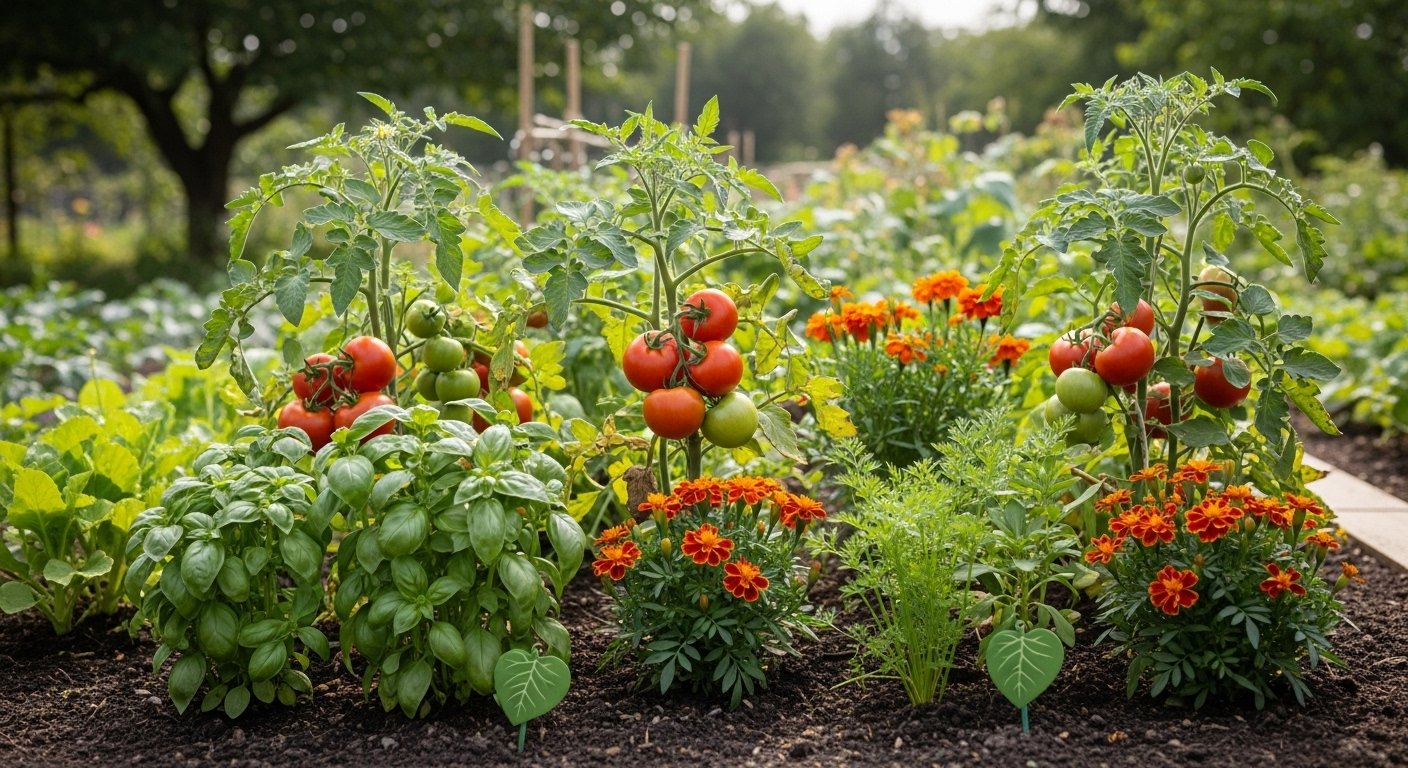
Introduction to Companion Planting with Tomatoes
When planning your vegetable garden, understanding the power of tomato companion plants can make all the difference between a mediocre and an abundant harvest. Companion planting means growing different crops together to take advantage of their natural interactions, which can boost growth, repel pests, and enhance flavors.
For tomatoes, choosing the right companions is especially important—it helps manage problems like pests and diseases, improves pollination, and even maximizes garden space. Some plants, like basil and marigolds, are well known for their pest-repelling or flavor-enhancing benefits when planted among tomato vines.
But not every plant is a good match! Planting tomatoes alongside the wrong neighbors can stunt growth, attract insects, or spread disease. In this post, we’ll explore why tomatoes thrive with the right companions, the top tomato-friendly plants to consider, how to design your garden layout efficiently, and which plants to avoid near your tomatoes.
You’ll also pick up practical tips for getting the most from your tomato patch, whether you’re working with raised beds, containers, or a traditional garden plot. Whether you’re an expert or just starting out, these insights can help you grow healthier, more productive tomato plants—and squeeze in a few extra vegetables along the way.
Why Companion Planting Is Effective
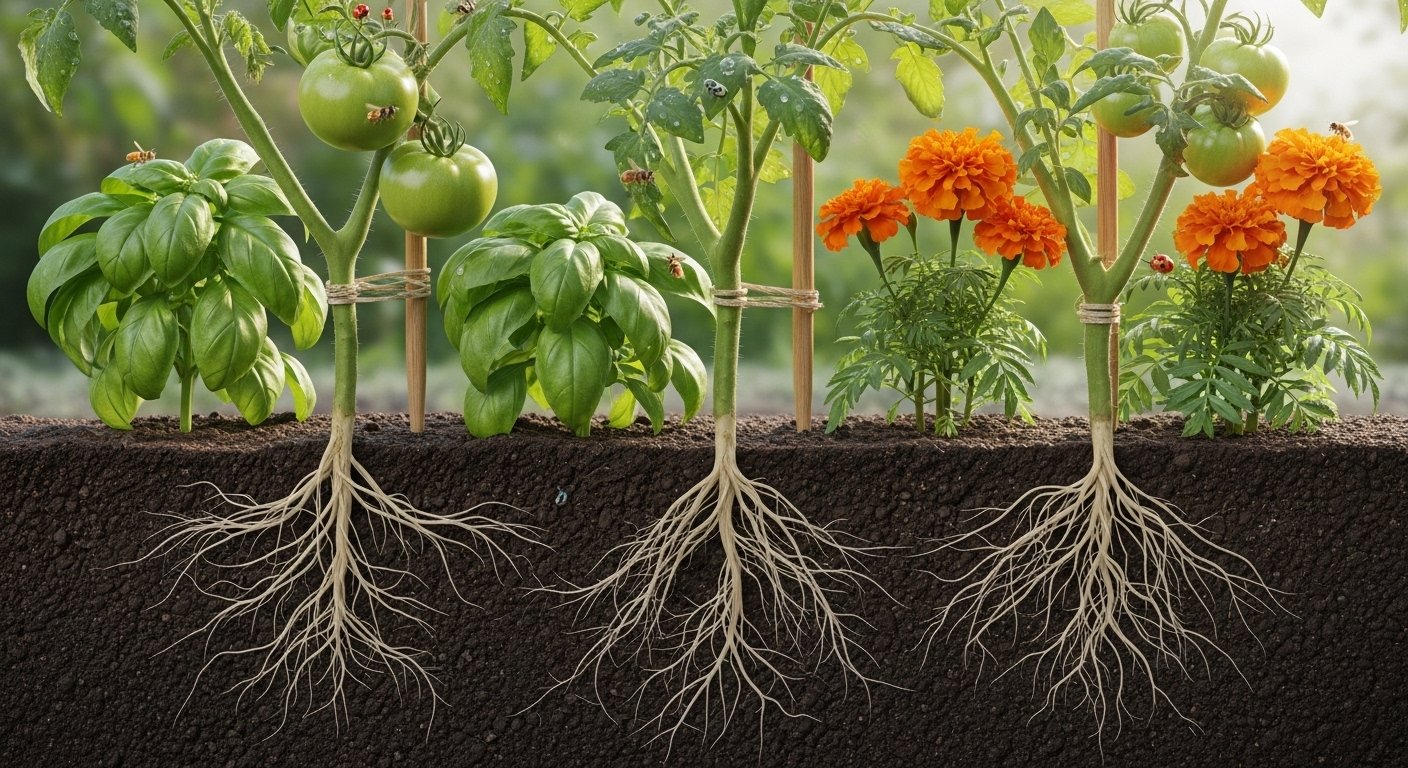
Companion planting is a time-tested gardening technique that uses smart plant pairings to boost tomato growth and yield, drawing from both traditional wisdom and modern science. Tomatoes thrive when planted next to basil, marigolds, or carrots—not just because these plants look good together, but because they actually work as a team.
For pest control, marigolds are a classic example; their roots release natural compounds that repel harmful nematodes and deter pests like whiteflies and aphids. Likewise, basil’s aromatic oils can help confuse and drive away tomato hornworms, so many gardeners tuck basil plants between tomato rows.
This partnership does more than defend tomatoes—some studies suggest that basil can even improve the flavor and aroma of ripe tomatoes, a belief echoed by chefs and gardeners for generations. Adding carrots around tomatoes helps with soil aeration as their roots grow deep, lessening compaction and making it easier for tomato roots to access water and nutrients.
Scientific studies back up these benefits, finding that certain plant combinations can reduce the need for chemical pesticides and boost overall plant health. Some gardeners swear by the “Three Sisters” technique, a Native American tradition that pairs corn, beans, and squash to naturally balance and support each other, and similar traditional pairings exist worldwide.
For example, one backyard gardener shared how lining her tomato patch with garlic and chives kept fungal diseases at bay while attracting pollinators. Whether you’re working with a large plot or just a few grow bags on a balcony, planning your tomatoes’ neighbors can yield healthier plants, tastier fruits, and a garden that’s naturally resilient against pests and disease.
Top Companion Plants for Tomatoes
When planning your tomato patch, pairing the right companions can help deter pests, boost growth, and even improve flavor. Basil is a classic partner—many gardeners swear that planting basil near tomatoes not only repels pests like aphids, whiteflies, and mosquitoes but also enhances the tomatoes’ taste.
Another winning combo is tomatoes with carrots; carrots use the space below ground while tomatoes stretch up, maximizing your garden’s productivity. Just sow carrots a few weeks before tomatoes to avoid disturbing their roots during transplanting.
Marigolds are well-known for their pest-fighting abilities. Their roots exude a substance that wards off nematodes, and their bright flowers attract pollinators.
Nasturtiums are another excellent flower to tuck in with your tomatoes, as they draw away aphids, whiteflies, and beetles, acting as a “trap crop.” If you’re looking to repel hornworms, consider borage. This lesser-known companion not only deters tomato pests but also attracts beneficial pollinators with its bright blue flowers.
Chives and onions are also worth considering; their strong scent confuses pests like aphids and spider mites and can help prevent fungal diseases from spreading.
For those open to less common companions, try asparagus—tomatoes repel asparagus beetles, while asparagus’s deep roots improve soil structure and health.
Leafy greens such as lettuce and spinach can be planted nearby to use shaded areas under growing tomato vines, which keeps the soil moist and limits weed growth.
Avoid planting close to crops that can hinder tomato growth, like corn (which attracts tomato fruitworms) and potatoes (increasing blight risk).
By thoughtfully including these herbs, flowers, and vegetables in your garden plan, you’ll create a healthier, more productive tomato patch that naturally resists pests and diseases while making the most of your garden space.
Designing a Tomato Bed with Companion Plants
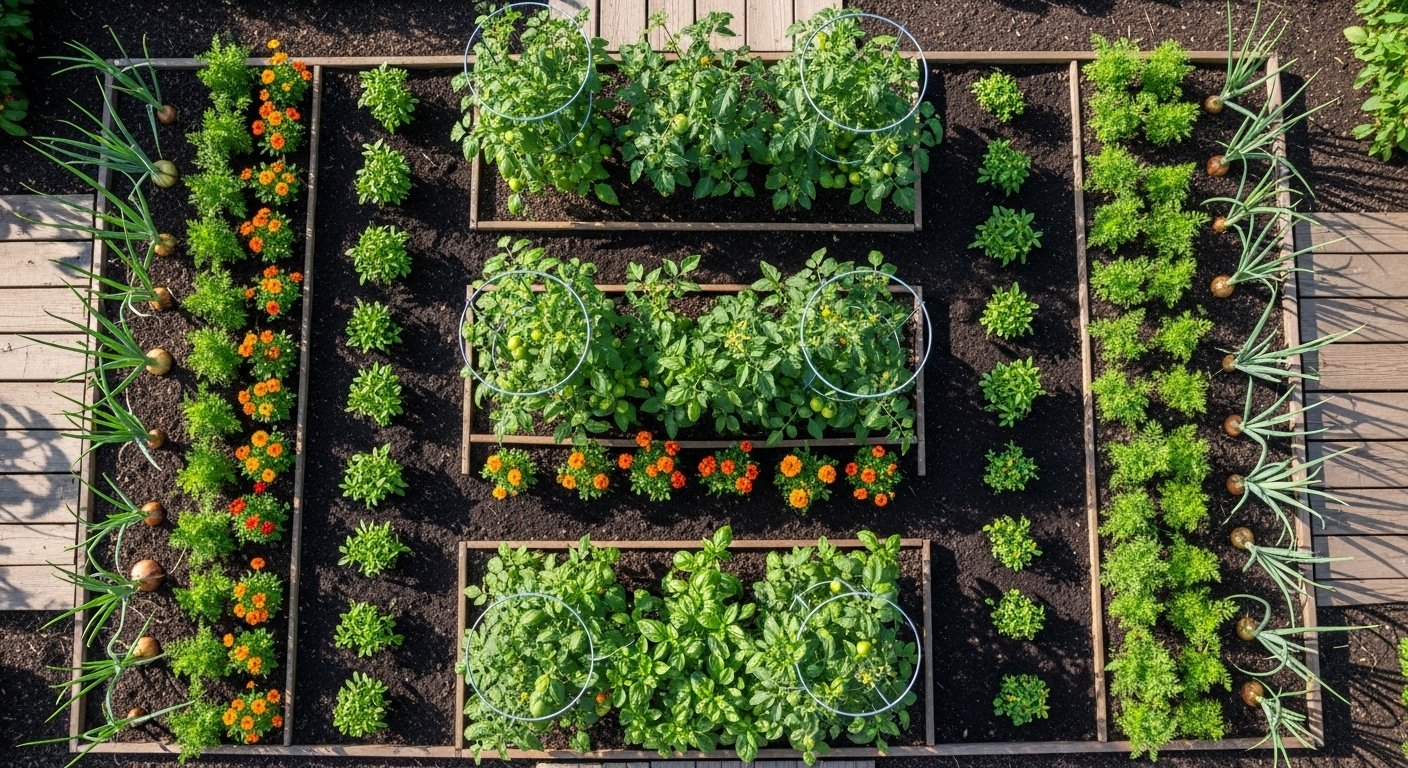
When planning a tomato bed with companion plants, thoughtful arrangement is key to helping your tomatoes thrive while maximizing every inch of space. Start by placing taller tomato plants at the center or back of your bed, using cages or stakes for support, and leave about 18-24 inches between each tomato to give them ample air circulation.
Surround your tomatoes with low-growing companions like basil, marigolds, or nasturtiums, which not only deter pests but also save space by spreading under and around the tomatoes’ foliage; keep these about 6-12 inches from the tomato stems.
To further boost diversity, tuck in carrots or onions at the bed edges, since their roots occupy different soil levels, reducing competition. For small gardens, consider interplanting bush beans or lettuce under the tomatoes—these companions benefit from the dappled shade and don’t compete for height.
If you’re working with containers or vertical gardens, choose compact tomato varieties with companion plants like chives or petite marigold varieties; hanging baskets can even accommodate trailing herbs like thyme.
In city gardens or narrow side yards, line up grow bags against a sunny wall and alternate tomato plants with pots of basil or alyssum to attract pollinators and make the most of the footprint.
No matter your space, always rotate tomato beds each year to reduce disease, and avoid planting them with heavy feeders like cabbage or corn to keep nutrient needs balanced.
By mixing plants thoughtfully and using every available layer—groundcover, upright, and trailing—you’ll create a healthier, more productive, and visually appealing tomato bed.
Plants to Avoid Near Tomatoes
When planning your garden, it’s important to remember that not all veggies get along—especially when it comes to tomatoes. Certain plants can hinder their growth or even increase the risk of disease.
For example, brassicas like cabbage, broccoli, and cauliflower should be kept away because they compete heavily for nutrients and tend to stunt tomato development. Corn is another poor companion, as both it and tomatoes are susceptible to the same fungal blights, which can spread quickly if one becomes infected. Potatoes are perhaps the most classic tomato “enemy,” sharing vulnerability to blight and easily transferring disease through the soil.
Eggplants and peppers, fellow members of the nightshade family, are also risky partners for tomatoes due to similar disease concerns, though some gardeners have limited success with careful management.
To avoid these common mistakes, take time to map out placement before planting season. Keep records of where you plant nightshades each year and try not to grow them in the same spots consecutively to prevent soil-borne disease buildup.
Don’t be tempted to fill space with convenient options like cabbages or potatoes near tomatoes—what looks like efficient use of room can lead to problems down the road. Instead, opt for beneficial companions like basil or marigolds, which help deter pests and promote tomato health.
Being aware of poor companions is a simple step that can save you time, reduce losses, and lead to a much healthier harvest overall.
Tips for Successful Companion Planting in Different Environments
Growing tomatoes alongside companion plants can boost yields and deter pests, but your approach should match your growing environment.
Raised Beds
Maximize space by interplanting basil, lettuce, or marigolds around tomato plants. These companions improve flavor and ward off insects, but make sure there’s enough airflow by spacing plants at least 18–24 inches apart.
Container Gardens
Select compact partners like chives or small marigolds, and use deep pots (at least 5 gallons for tomatoes) to ensure ample root space. Watering is trickier in containers; check soil daily and water until it drains freely, as both tomatoes and their companions are sensitive to inconsistent moisture.
Traditional Garden Plots
These offer more room for companions like carrots or onions. Just be mindful not to overcrowd, as this encourages disease. Rotate tomato companions each season to prevent soil nutrient depletion.
If you notice wilting or yellowing leaves, check whether companions are crowding roots or competing for sunlight, and cull or trim as needed.
Don’t be afraid to experiment—try different combos each year and keep notes on what thrives. Every garden is unique, so observation and adjustment are key to finding the companion planting mix that works best in your space.
Conclusion & Quick Reference Guide
Companion planting with tomatoes offers a simple, natural way to boost your garden’s health and harvest. Pairing tomatoes with helpful plants—like basil to repel pests and enhance flavor, or marigolds to deter harmful insects—can reduce the need for chemicals and increase your yields.
Avoid planting tomatoes near members of the cabbage family or corn, as they can attract unwanted pests or stunt growth.
Quick Checklist
- Plant tomatoes alongside basil, marigold, carrots, lettuce, or chives.
- Steer clear of cabbage, corn, potatoes, and fennel.
By experimenting with these pairings, you’ll discover what works best in your garden’s unique environment. Companion planting is both a science and an art, so don’t be afraid to try new combinations.
Start this season and let your experience guide you—share your results and tips with fellow gardeners to grow an even stronger community garden network.