Introduction
Knowing how to store tomatoes can make all the difference between biting into a juicy, flavorful fruit and tossing a mealy, disappointing one. Proper storage is the secret to maintaining that just-picked taste, extending shelf life, and preserving the perfect texture—yet many of us aren’t sure whether the fridge or the counter is best.
You’ve probably wondered: do you refrigerate ripe tomatoes or leave them out? And what about those firm, green ones that aren’t quite ready? In this guide, we’ll clear up the confusion and share real-world tips to help you keep your tomatoes at their best.
You’ll learn the best storage methods for both ripe and unripe tomatoes, how to safely store sliced or cut fruit, smart long-term preservation options, and even get a few tricks straight from farmers themselves. Whether your tomatoes come from the supermarket, your local farm stand, or your own backyard, these proven strategies will help you maximize their flavor and freshness, reduce waste, and enjoy the taste of summer for longer.
Understanding Tomato Ripeness and Storage Basics
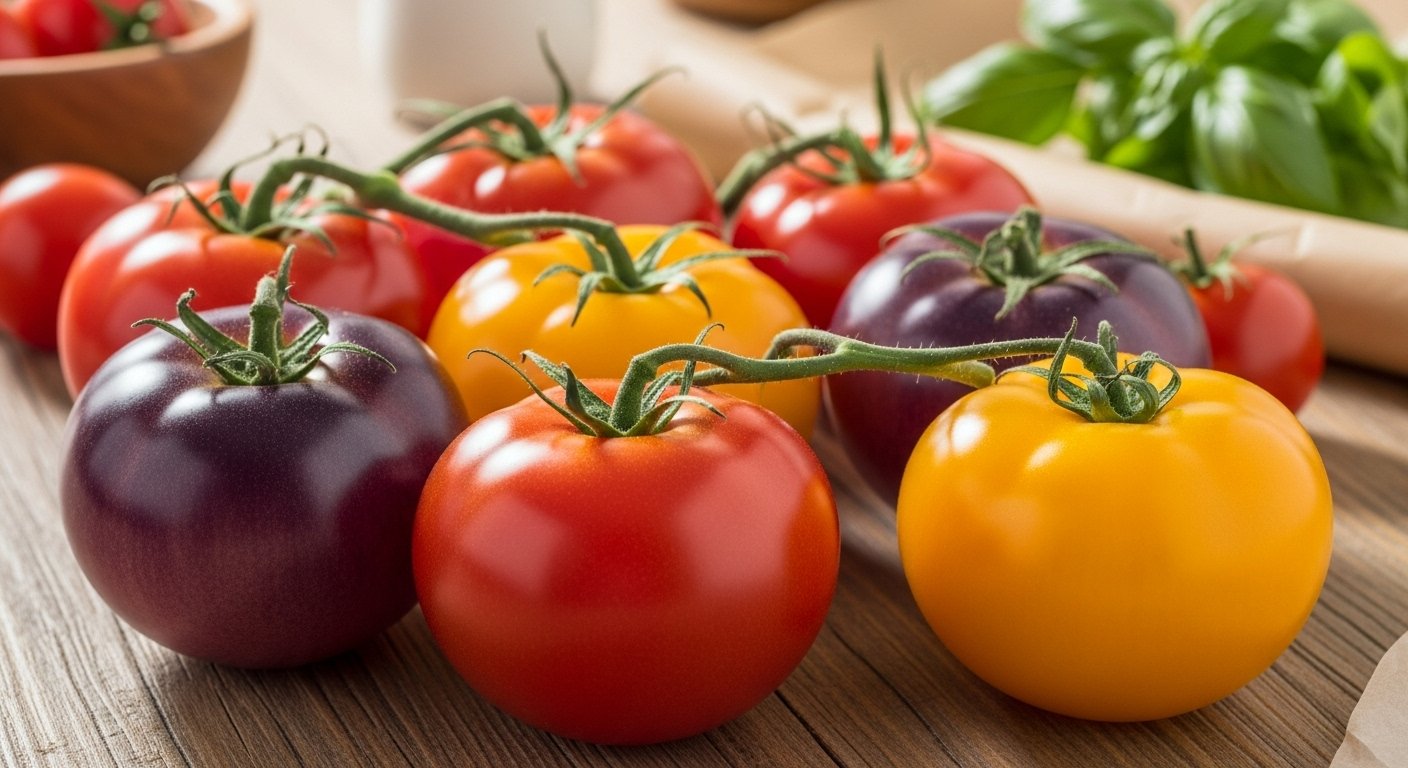
Knowing when a tomato is perfectly ripe can make all the difference in flavor and texture. Start by gently squeezing the fruit—ripe tomatoes will feel slightly firm but give a bit under gentle pressure, while unripe ones remain hard and underripe. Color is another clue: ripe tomatoes usually have rich, even coloring, depending on the variety (deep red, bright yellow, or even purple hues), without green shoulders.
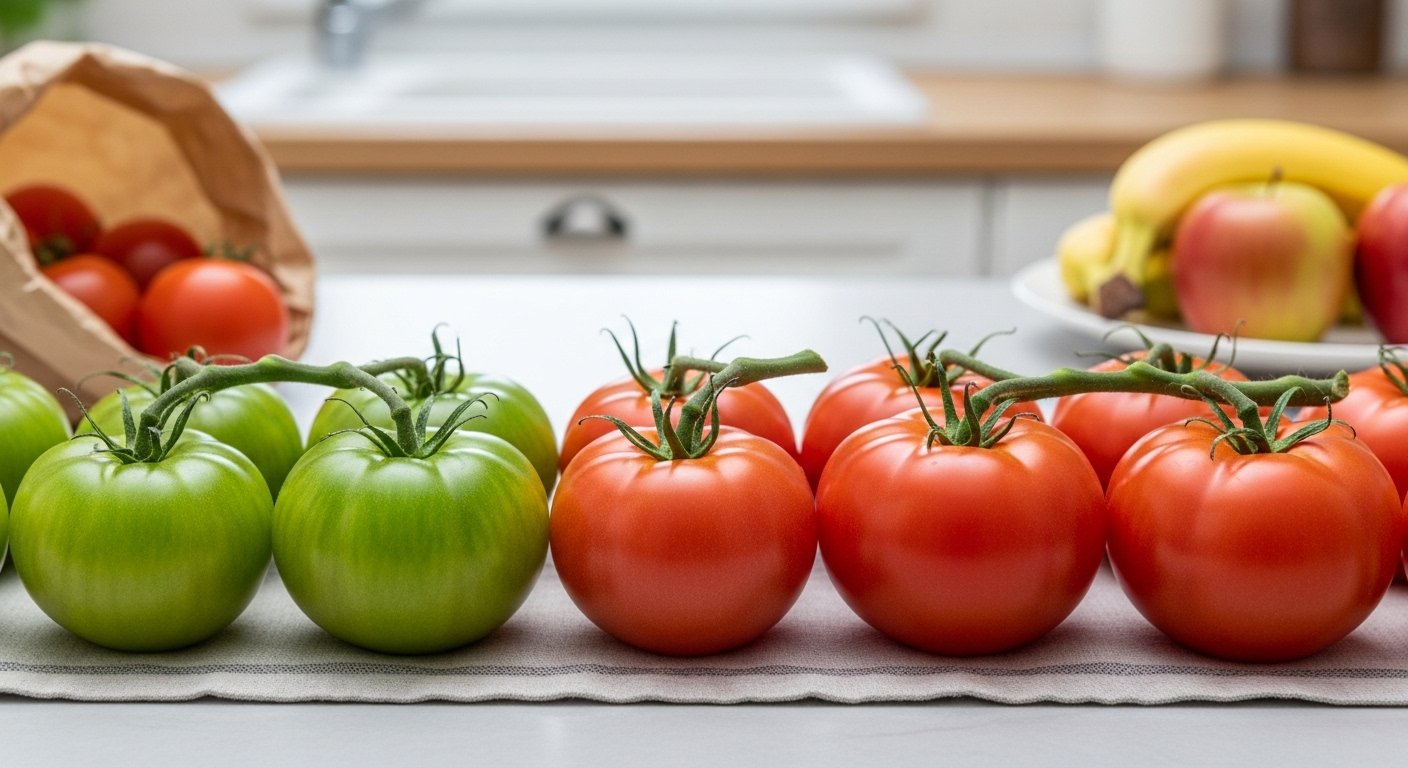
Storage matters, too—unripe tomatoes need room-temperature storage out of direct sunlight to continue ripening, ideally placed stem side down on a countertop. Meanwhile, ripe tomatoes are best kept at room temperature if you’ll eat them within a day or two. If you need them to last longer, loosely refrigerate them and bring them back to room temperature before eating to regain some lost flavor.
Temperature and humidity dramatically impact freshness; cold temperatures can make ripe tomatoes mealy and dull their taste, while too much moisture can cause mold. Humidity also encourages spoilage, so ensure tomatoes are dry and stored in single layers for good airflow.
Ethylene gas, naturally released by tomatoes, accelerates ripening—so placing unripe tomatoes in a paper bag or alongside bananas and apples (other ethylene producers) helps speed the process. On the flip side, ripe tomatoes stored with ethylene sources spoil quicker, so always separate them once they’ve reached ideal ripeness.
Following these simple checks and storage tweaks will help you enjoy the freshest, tastiest tomatoes at home.
Storing Whole Tomatoes: Pantry vs. Fridge vs. Countertop
When it comes to storing whole tomatoes, where you keep them—countertop, pantry, or fridge—can make a big difference in their flavor, texture, and shelf life.
If you have unripe tomatoes, the countertop is your best friend; the open air helps them ripen naturally, thanks to both warmth and the ethylene gas they produce.
For ripe tomatoes, a cool, shaded countertop or pantry keeps them at their peak for a few days, letting their flavor and juiciness develop fully.
However, the downside is that both ripe and unripe tomatoes left too long in open air can become overripe, moldy, or shriveled—especially in warm kitchens.
Most farmers and food scientists agree that refrigeration can harm tomato texture, making them mealy and dull in flavor due to cell wall breakdown—unless they’re already overripe or your house is sweltering.
The University of California’s Division of Agriculture recommends keeping tomatoes at room temperature until fully ripe; only then, if they risk spoiling, pop them in the fridge to slow down decay.
Always bring chilled tomatoes back to room temp for the best taste.
Positioning Matters
Storing tomatoes stem-side down helps reduce moisture loss through the scar where the tomato was attached to the vine and provides a barrier against air and mold sneaking in, which extends freshness by a day or two.
In contrast, stem-side up is riskier since that vulnerable spot is exposed.
Exceptions
If your home consistently runs hot or humid, it’s better to refrigerate ripe tomatoes briefly rather than let them rot—just know they’ll taste best after warming back up.
For small batches or delicate heirlooms, prioritize frequent checks and gentle handling no matter the method.
How to Store Cut or Leftover Tomatoes
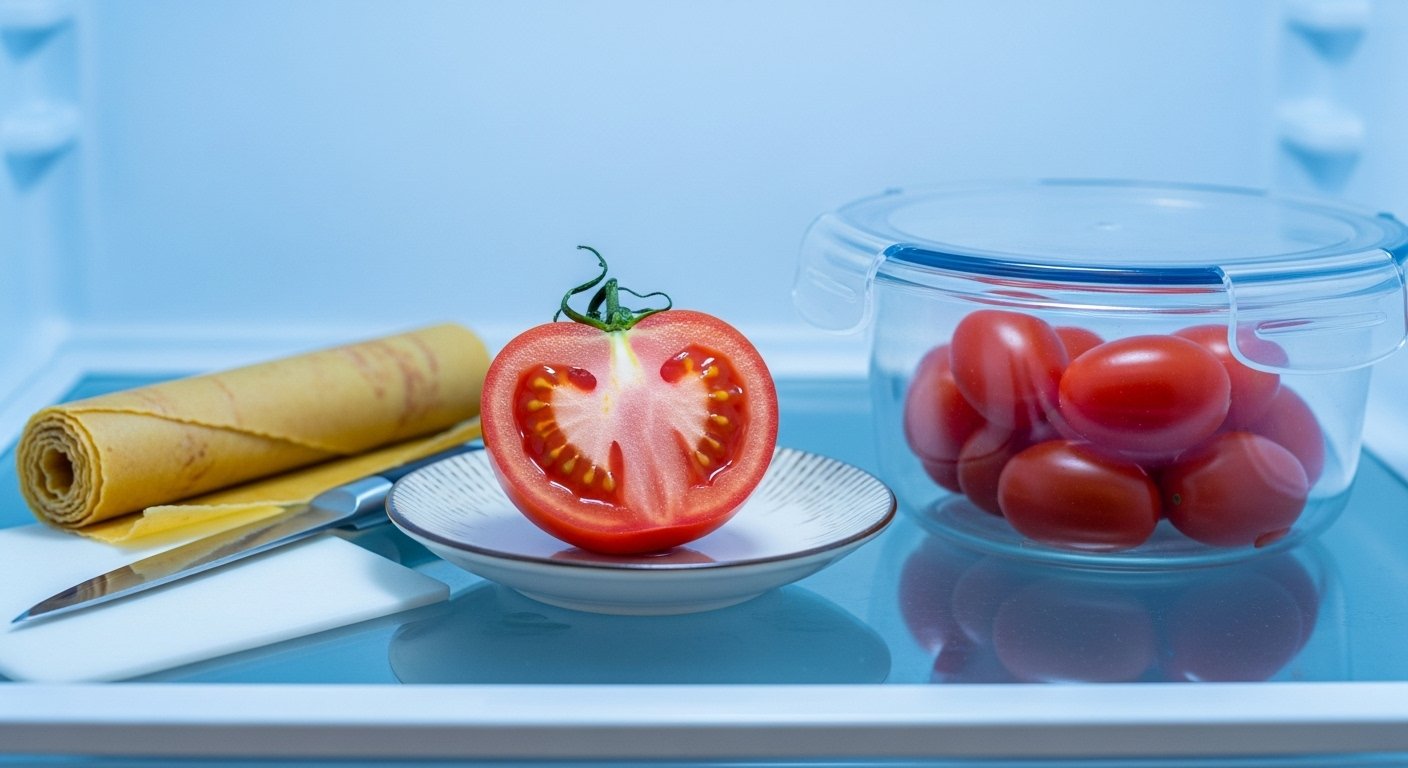
Once you’ve sliced into a tomato, it’s important to store the leftovers properly to keep them fresher for longer and avoid waste. Start by wrapping the cut side tightly with plastic wrap or beeswax wrap to minimize air exposure—this helps lock in moisture and flavor.
For even better results, place the covered tomato in an airtight container before stashing it in the fridge. This double-protection strategy prevents the fruit from absorbing other fridge odors or drying out. Always keep cut tomatoes on the top fridge shelf where it’s coldest, and use them within two days for the best taste and texture.
If the tomato is very juicy, set it cut side down on a small plate to help retain moisture. Never leave sliced tomatoes at room temperature for more than two hours, as bacteria can multiply quickly and make them unsafe to eat.
Before using leftover tomatoes, give them a quick look and sniff—discard anything that looks mushy, has mold, or smells off. With these easy steps, you can enjoy every last bit of your tomatoes without sacrificing flavor or safety.
Long-Term Tomato Storage: Freezing, Canning, and Drying
When you find yourself with an abundance of tomatoes, long-term storage lets you enjoy garden-fresh flavor all year. Freezing is the simplest method—just wash, core, and freeze whole tomatoes on a baking sheet before transferring them to freezer bags. Alternatively, blanch first and peel for a smoother texture in future soups and stews. Chopped tomatoes can be portioned into containers or ice cube trays for quick sauces or chili.
Canning, ideal for sauces, purées, and pastes, requires more preparation but provides shelf-stable jars that last for months. Start by blanching and peeling your tomatoes, then cook them down as desired before ladling into sterilized jars. Process the jars using a water bath or pressure canner per USDA guidelines to ensure safety.
For homemade sun-dried tomatoes, slice ripe Roma or plum tomatoes, arrange them cut-side up on a baking sheet, lightly salt, and oven-dry at low heat (around 200°F/93°C) for several hours until leathery. Store dried tomatoes in oil in the fridge for a flavor-packed snack or to toss into pasta.
Juicy heirloom or slicing varieties freeze well for sauces, while meatier Romas are best for canning and drying. Whole tomatoes are handy for stews, peeled or puréed for sauces, and dried for pizzas and salads. Each method suits different tomato types and recipes, so mix and match based on your harvest and kitchen needs.
Expert Tips from Farmers on Maximizing Freshness
To get the most out of your tomatoes, seasoned farmers recommend handling each variety a bit differently and avoiding some common missteps.
First, steer clear of storing tomatoes in plastic bags or sealed containers, which trap moisture and speed up spoilage. Over-stacking tomatoes in baskets or bowls can bruise the fruit, so spread them out in a single layer, stem side down, to protect their delicate tops.
Heirloom tomatoes, known for their thin skin, do best at room temperature out of direct sunlight and should be consumed within a few days.
Cherry tomatoes are a bit hardier; keep them on the counter in a breathable container, and only refrigerate if you notice overripening—bring them back to room temperature for full flavor before eating.
Beefsteak tomatoes, with their thicker walls, can last up to a week at room temperature, but if you must refrigerate them, let them warm up before slicing to help restore their texture.
Also, avoid washing tomatoes until right before you use them, as moisture can accelerate mold.
By following these simple tips from tomato growers, you can enjoy fresher, tastier tomatoes a lot longer.
Frequently Asked Questions about Tomato Storage
Wondering how to store your tomatoes for maximum freshness? For ripe tomatoes, keep them at room temperature away from direct sunlight—refrigerating them can dull their flavor and make them mealy. However, if you have super ripe cherry tomatoes that you can’t eat quickly, pop them in the fridge in a breathable container and let them come to room temperature before eating to boost their taste.
Storing green tomatoes? Let them ripen on a windowsill or in a paper bag at room temperature, away from bananas and apples if you want to slow ripening. Avoid using airtight plastic bags, which trap moisture and speed up spoilage; instead, opt for bowls or cardboard boxes.
Tomatoes tend to wrinkle or become mushy if stored too long or too cold, but don’t toss them—those less-than-perfect tomatoes are great for sauces or soups. Simply roast or simmer them with garlic, herbs, and olive oil for a rich, flavorful base.
If tomatoes lose their flavor, a sprinkle of salt or a splash of good olive oil can revive them for salads. Remember, fresher is better, but even aging tomatoes can shine with a little kitchen creativity.