Why Staking Is Essential for Healthy Tomato Plants
When it comes to growing vibrant, productive tomato plants in raised beds or pots, understanding tomato support methods is absolutely crucial. Tomatoes, with their sprawling growth habit and heavy fruit clusters, quickly outgrow their own strength. Staking provides essential structural support, keeping plants upright and stable, especially when summer storms or heavy fruit threaten to topple them.
Beyond just looks, staking aids in disease prevention—lifting foliage and fruit off moist soil greatly reduces the risk of soil-borne illnesses and fungal problems common in humid weather. Improved air circulation around the plant is another major advantage, as good airflow dries leaves faster and deters disease.
Neglecting to stake your tomatoes can lead to a host of headaches. Unstaked vines crawl across the ground, making them vulnerable to broken stems and bruised fruit. They’re also harder to spot—meaning harvests can be missed or ruined by pests. Sprawling, crowded tomato plants may suffer reduced fruit yield and flavor as energy is diverted from fruiting to repairing damage or fighting disease.
But there’s no one-size-fits-all approach: tomato support methods range from classic single stakes and sturdy cages to trellising and even vertical string systems. Each caters to different gardening setups—compact pots, long raised beds, or even limited balcony spaces.
Choosing the right method makes plant care easier and rewards you with healthier, heavier harvests. With a bit of planning and the right support, your tomatoes can thrive in any container or garden.
Choosing the Right Tomato Support: Stake, Cage, or Trellis?
When it comes to supporting your tomato plants, stakes, cages, and trellises each offer different benefits depending on your garden setup and tomato variety.
Stakes are a classic choice, especially for indeterminate varieties that grow tall and need regular pruning. They’re budget-friendly and take up very little space, but require you to tie plants as they grow and can be less stable in windy conditions.
Tomato cages, on the other hand, are ideal for determinate types, which tend to be bushier and grow to a set height. Cages offer all-around support with less maintenance, but they do take up more room and can be pricier, especially for sturdier versions.
Trellises are best for maximizing vertical space—great for small gardens or raised beds—and work well with indeterminate tomatoes. They let you train vines upward for easy harvesting and better air circulation, though they may involve more up-front effort to set up.
If you’re tight on space and want low-cost support, stakes are your best bet. But if you prefer less hands-on management, opt for cages. Trellises are perfect if you enjoy training plants and want a neat, vertical look.
Always consider your plant variety, available space, and how much time you want to spend maintaining your supports when making your choice. Investing in the right structure helps ensure a healthy, productive tomato harvest.
How to Stake Tomato Plants: Step-by-Step Guide
Staking tomato plants is essential for healthy growth and easier harvesting. Start by installing stakes when your tomato seedlings are about 6-12 inches tall—before they begin sprawling.
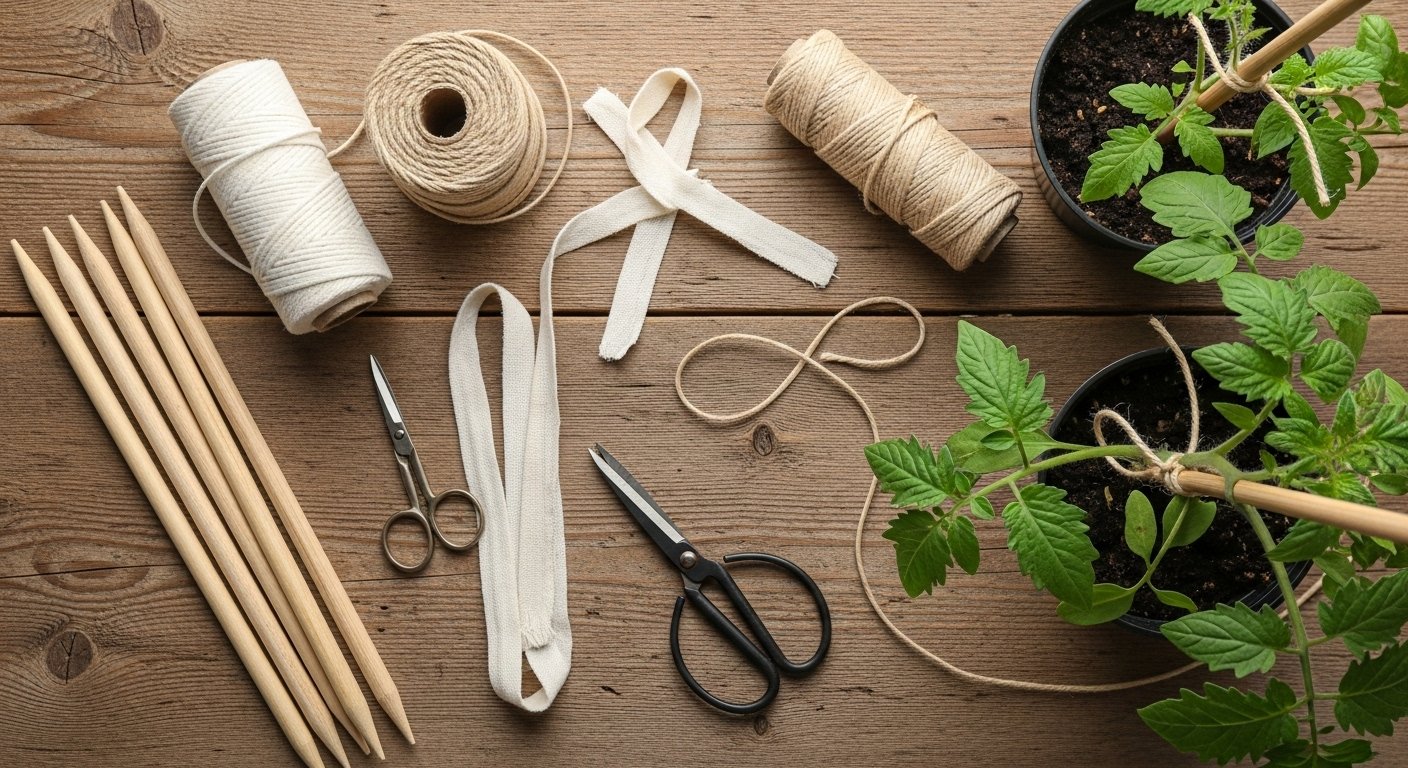
For most tomatoes, use sturdy stakes like wooden, bamboo, or metal rods about 6-8 feet tall; make sure they’re thick enough to support mature plants. Drive the stake into the ground about 3-4 inches away from the main stem, deep enough to stand firm.
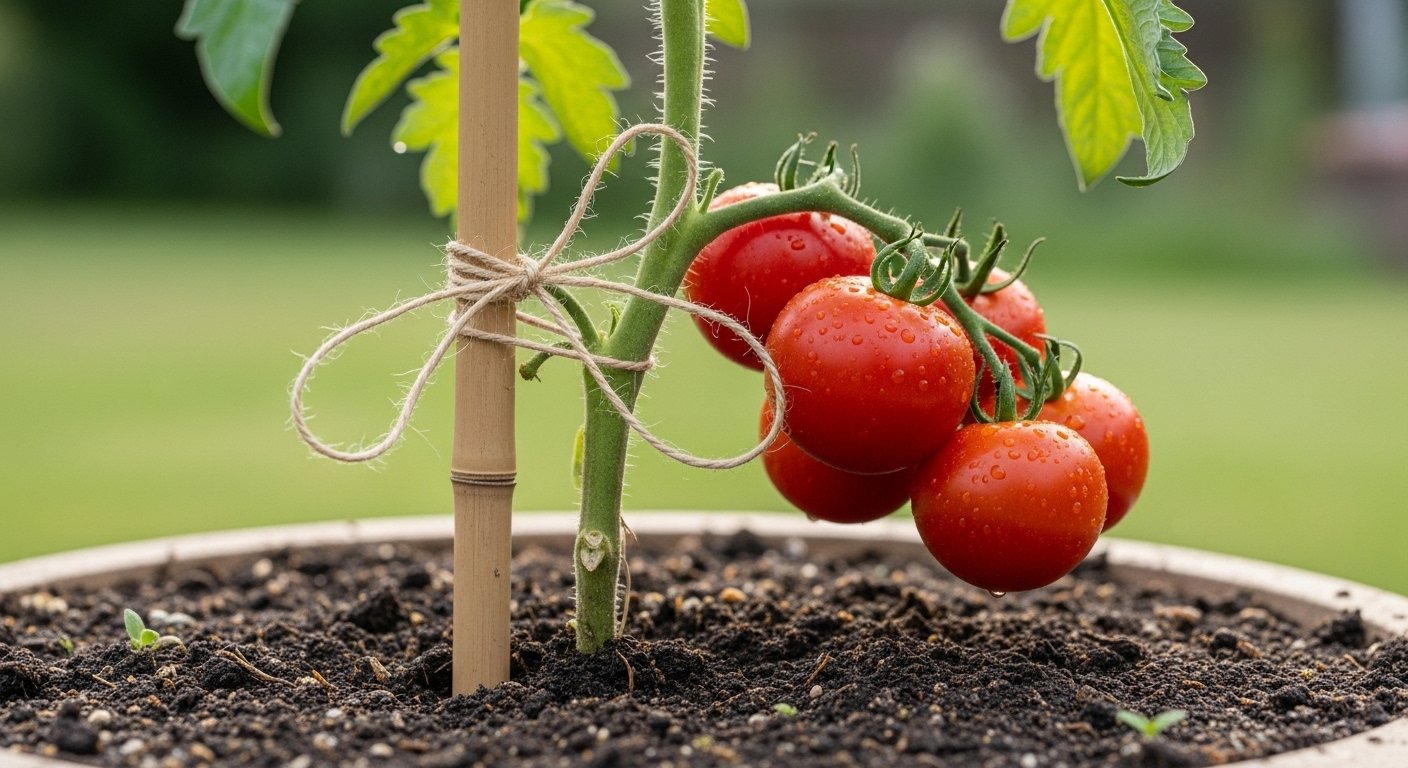
As your plant grows, use soft materials such as garden twine, cloth strips, or specialized plant ties to secure the main stem to the stake. Loop the tie around both the stake and the stem, but don’t tighten it too much—a loose figure-eight shape works best, allowing room for stem growth without pinching.
Continue adding ties every 8-12 inches as the tomato plant climbs. Be gentle when handling stems and branches, as they snap easily, especially when loaded with fruit. Avoid using wire or rough rope, which can cut into the plant as it sways in the wind.
Check your ties every week, adjusting them to keep up with the plant’s growth. Proper staking keeps tomatoes off the soil, reduces disease, and makes maintenance easier as the season progresses.
DIY Tomato Cages and Alternative Support Ideas
Building your own tomato cages is surprisingly simple and budget-friendly, especially when you use materials you might already have around the house. One classic method is to use sturdy wire mesh, such as concrete reinforcing wire or fencing, cut into five- or six-foot panels. Bend these into a cylinder and secure the ends together with zip ties or garden wire—the resulting cage is robust enough to handle heavy tomato vines.
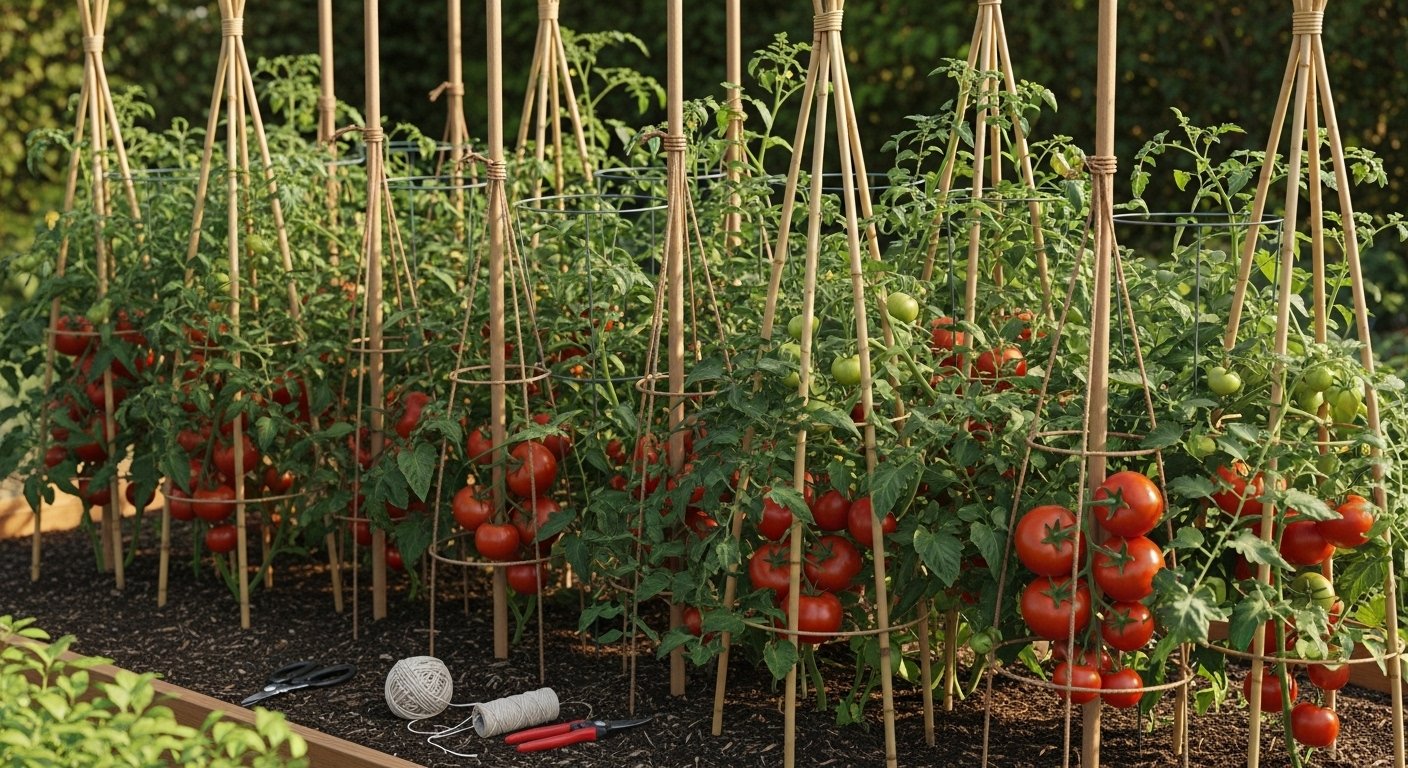
For a super affordable option, try bamboo stakes: push three or four stakes around each plant and tie them together at the top with twine, forming a simple teepee shape. If you’re looking for creative alternatives, consider fashioning a trellis using wooden stakes and string, or even using old bed frames or ladders as makeshift supports.
Arches made from hog panels or cattle panels stretched over garden beds provide both support and visual interest, particularly effective in large gardens. Container gardeners can repurpose items like old laundry baskets or tomato cages made from leftover PVC pipe—just ensure stability with a weighted base.
Wherever possible, opt for reusable or upcycled materials to keep costs low while ensuring your tomato plants get the reliable support they need for healthy growth and maximum yield.
Tips for Staking Tomatoes in Special Situations
Staking tomatoes in unique setups like straw-bale gardens, raised beds, and containers requires a few thoughtful tweaks for the best results.
Straw-Bale Gardens
Drive sturdy wooden or metal stakes deeply through the bales next to each plant for a stable anchor. Since bales can shift, choose heavy-duty stakes and check them after heavy rains.
Raised Beds
Use tall stakes positioned toward the bed’s edge to avoid damaging roots. Secure flexible ties loosely as the vines grow to prevent constriction.
Containers
Select a tomato cage or spiral stake that fits the pot without tipping. Pots can get top-heavy, so weigh them down with stones or bricks at the base if needed.
Windy Areas and Large Plants
Try a Florida weave system: stake both ends of your row, then run strong twine between the stakes, weaving around the plants for all-around support.
Supporting Heavy Fruit Clusters
Install additional ties or soft fabric slings beneath the branches to relieve stress on the stems.
Adjusting Ties as Plants Grow
As your tomatoes grow taller, move ties upward and outward to provide space for thicker stems and new growth without pinching.
Frequent checks and light adjustments go a long way to keep your tomato vines upright, productive, and healthy no matter their growing situation.
Common Tomato Staking Mistakes to Avoid
Many gardeners rush to stake their tomato plants but end up making a few common mistakes that can hinder growth and reduce yields. One frequent issue is using flimsy stakes that can’t support a mature, fruit-laden vine; always opt for strong, weather-resistant materials like bamboo or sturdy wooden stakes.
Another pitfall is tying stems too tightly, which can cut into the vine and restrict growth—use soft ties or old nylon stockings and gently loop them around the stem and stake.
Gardeners also sometimes place the stake too late, damaging the roots; it’s best to insert supports at planting time.
Overcrowding is another mistake: make sure to space each plant far enough apart for good airflow, helping prevent disease.
Finally, don’t be afraid to try different staking methods, such as cages, trellises, or the Florida weave. Experimenting with various techniques can help you discover what works best in your garden for healthier plants and a bigger harvest.