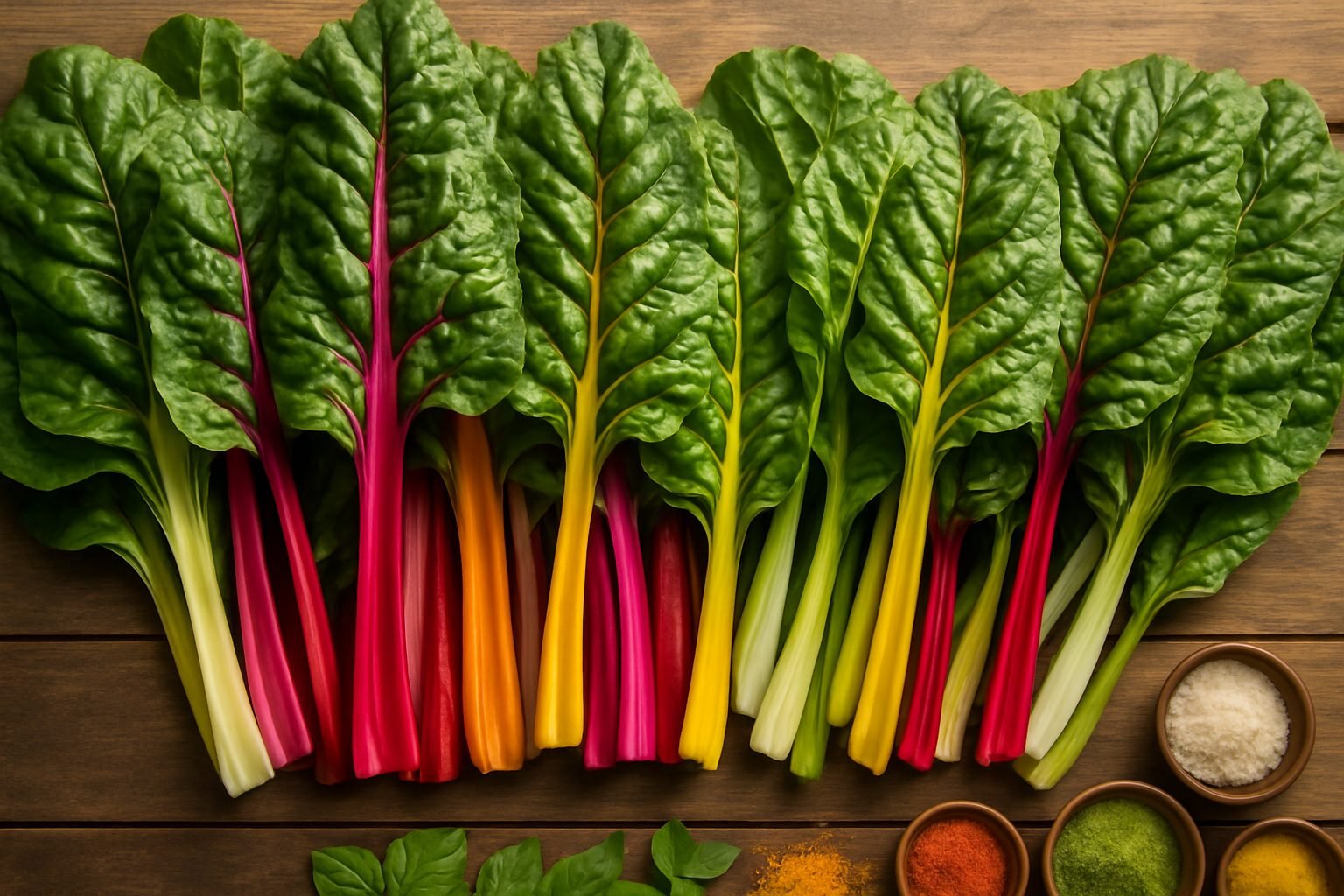
What Is Swiss Chard?
Cooking with swiss chard is an exciting way to brighten up your meals while packing in nutrition. Swiss chard is a leafy green vegetable with vibrant stalks and broad leaves that come in a swirl of colors—red, green, or the stunning rainbow variety, with stems ranging from yellow to pink. Each type brings a subtle variation in flavor and a splash of color to your plate.
Beyond its good looks, Swiss chard is a nutritional powerhouse, loaded with vitamins A, C, and K, magnesium, and iron, yet low in calories. It stands out among leafy greens because it’s particularly high in antioxidants and offers a mild, slightly earthy flavor that isn’t as bitter as kale or as delicate as spinach. This unique blend of nutrients and taste makes Swiss chard a favorite among health-conscious cooks.
In the kitchen, its versatility really shines: you can sauté it with garlic for a quick side, toss raw leaves into salads, stir it into soups, frittatas, or even mix it into pastas for a hearty touch. More and more chefs are embracing Swiss chard, thanks to its ability to match both rustic comfort dishes and modern cuisine trends. If you’re looking to diversify your greens or try something new, cooking with Swiss chard is a delicious place to start.
How to Choose and Store Swiss Chard
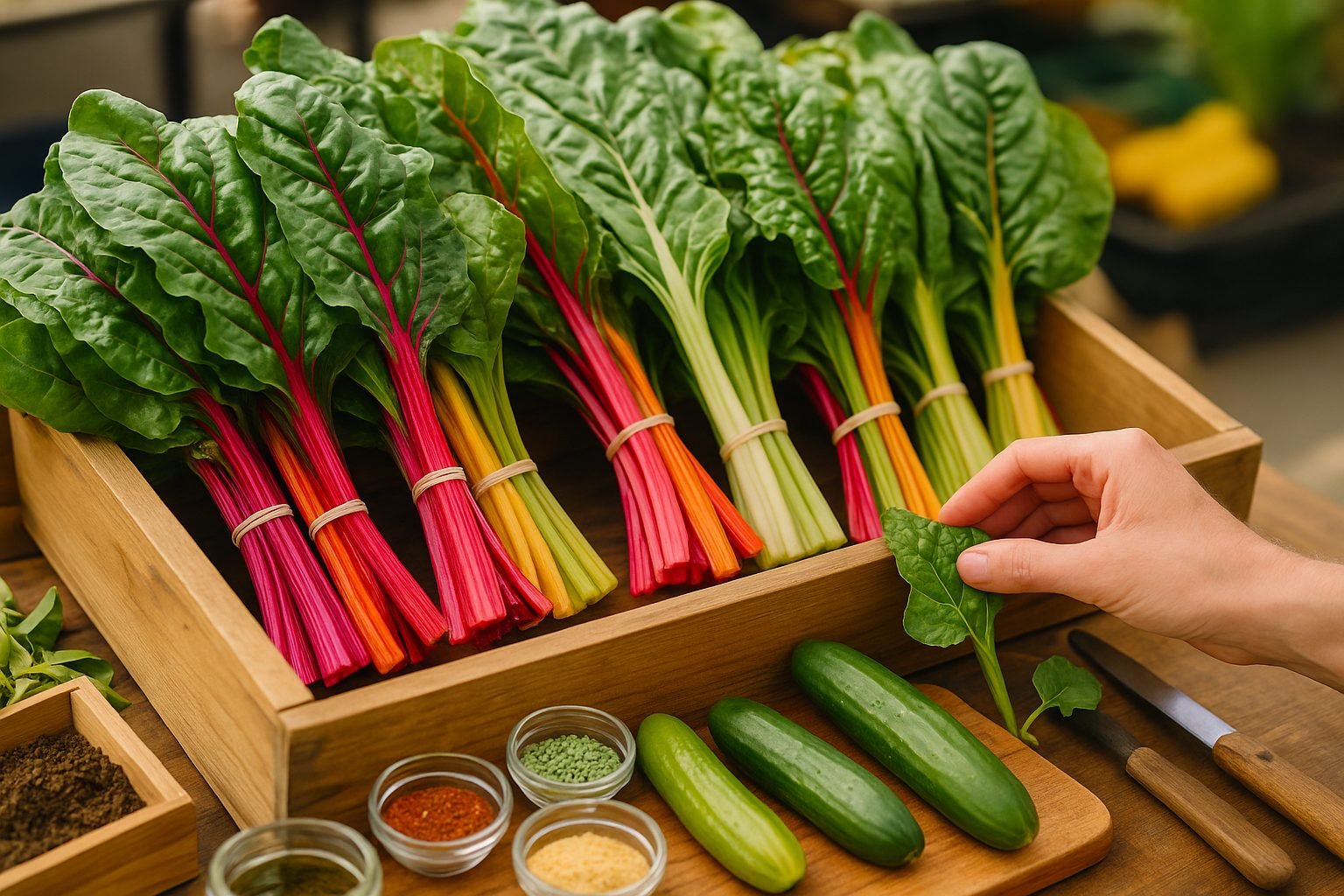
When picking out Swiss chard at the market, look for bunches with crisp, brightly colored stalks and deeply green, vibrant leaves. The stems should feel firm—not rubbery—and the leaves should be free from yellow spots, holes, or signs of wilting. Avoid bunches with slimy or browning edges, as these are past their prime.
Once you get your Swiss chard home, don’t wash it until you’re ready to use it, since excess moisture can cause the leaves to spoil more quickly. To store, wrap the unwashed bunch loosely in a damp paper towel and place it in a plastic bag or airtight container, then refrigerate it in your veggie drawer; this helps keep the chard fresh and crisp for up to five days.
If the leaves seem limp before you cook them, revitalize them by soaking in cold water for a few minutes. Always check for any sliminess or an off smell before using chard—if you notice either, it’s time to toss it out.
Using your Swiss chard sooner rather than later means you’ll enjoy its best flavor and texture, whether you’re sautéing it or adding it fresh to salads and stews.
Cooking Swiss Chard – Techniques and Tips
Swiss chard is a versatile leafy green that shines in a range of dishes. Knowing how to properly prepare and cook it makes all the difference.
Before cooking, wash the entire bundle thoroughly under cold water, as dirt often hides in the stems and crinkles of the leaves. Trim the bottom of the stems and, if they’re thick, slice them into smaller pieces since they take longer to cook than the leaves.
For a quick weeknight side, sauté the chopped stems in olive oil with garlic for a few minutes until just tender. Then add the torn leaves and cook until wilted—about three more minutes.
Steaming Swiss chard is another gentle method; place the stems and leaves in a steamer basket for five to seven minutes to preserve color and nutrients.
Braising works beautifully when you want to infuse flavor: simmer chard in a splash of broth with aromatics like shallots, chili flakes, or lemon zest for 10–12 minutes. This allows both stems and leaves to soften while absorbing savory notes.
Chopped chard also boosts soups and stews—add the stems early with onions and carrots, then stir in the leaves in the last five minutes so they stay vibrant.
Swiss chard’s earthy flavor pairs especially well with bright, assertive ingredients. Consider:
- Sprinkling with lemon juice, zest, or a dash of balsamic vinegar right before serving
- Topping with toasted pine nuts, golden raisins, or a grating of Parmesan to elevate the dish
No matter the method, avoid overcooking—Swiss chard should maintain its brilliant color and a slight bite. Aim for a total cook time of five to 12 minutes, depending on thickness.
Quick, colorful, and packed with vitamins, Swiss chard makes any meal both healthier and more exciting.
Easy Sautéed Swiss Chard Recipe
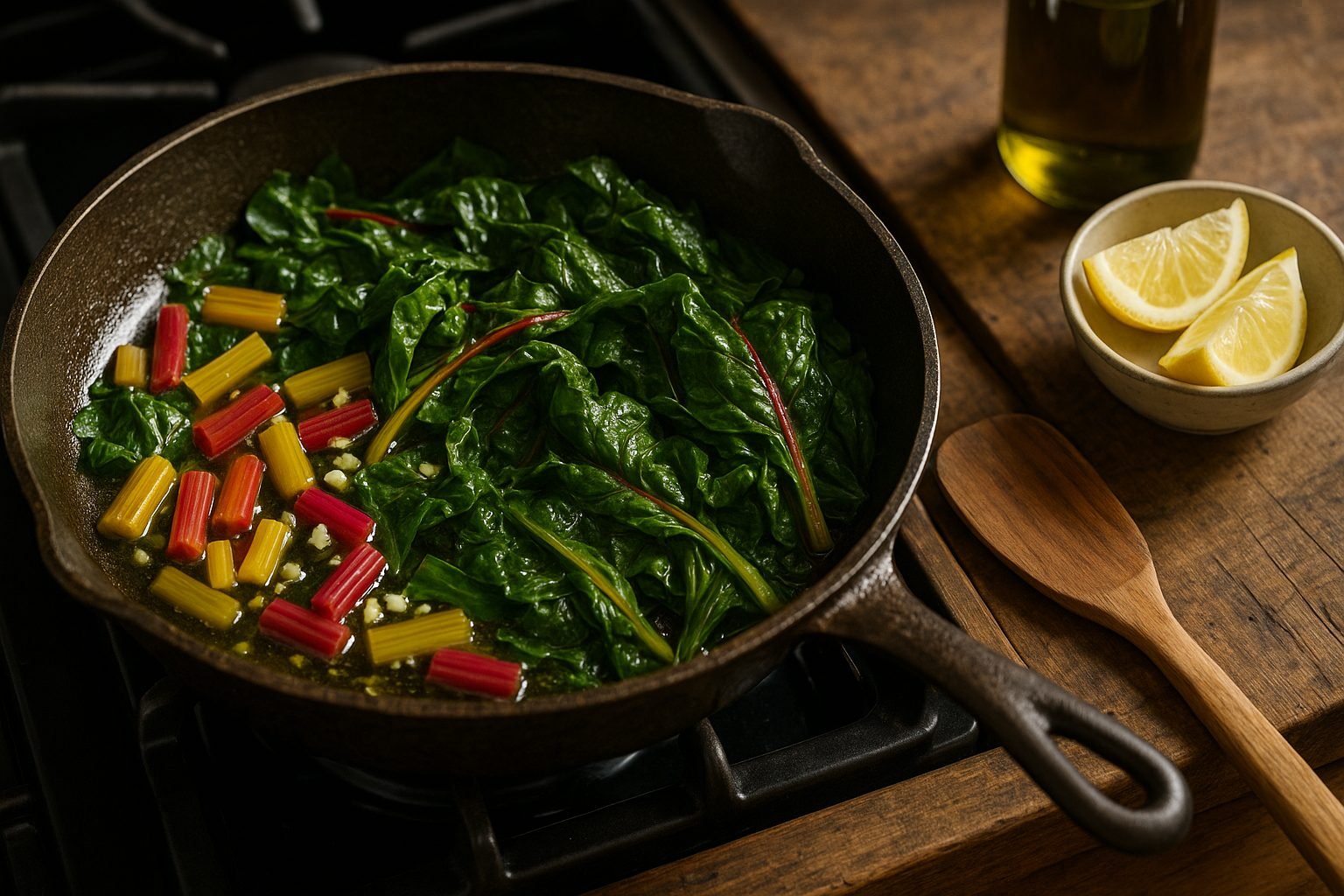
Sautéed Swiss chard is a quick, nutrient-packed side that’s super easy to customize. Start by washing one bunch of Swiss chard thoroughly and separating the stems from the leaves. Chop the stems and leaves separately.
Heat two tablespoons of olive oil in a large skillet over medium heat. Add two minced garlic cloves and the chard stems; cook for about two minutes until the stems start to soften. Then, toss in the chopped leaves and sprinkle with salt and pepper.
Sauté, stirring occasionally, for three to five minutes until the leaves wilt and become tender but still vibrant. If you like a little kick, add a pinch of red chili flakes with the garlic.
Just before serving, squeeze fresh lemon juice over the chard for a bright, tangy finish. For extra flavor, try mixing in sliced almonds or crumbled feta at the end.
This dish pairs perfectly with grilled chicken, fish, or on top of a bed of cooked grains. To suit your dietary needs, swap olive oil for ghee or avocado oil, and omit cheese for a vegan option.
Swiss chard is quite forgiving—use more garlic if you love its punch, or swap in shallots for a milder touch. With so many options, this recipe easily adapts to your preferences, making weeknight veggies feel special and satisfying.
Creative Ways to Use Swiss Chard
Swiss chard is way more versatile than just a simple sauté. Get creative by tossing the vibrant leaves into fresh salads, blending them into smoothies for a nutrient boost, or layering them in wraps instead of tortillas. The sturdy leaves hold up beautifully in hearty pastas—add them at the end of cooking for a burst of color—or fold them into cheesy frittatas and quiches for easy breakfasts or lunches that reheat well throughout the week.
Don’t toss those colorful stems! Chop them and add to stir-fries, or roast them with olive oil, salt, and pepper for a crunchy snack. For an easy dip, sauté chard stems with garlic and blend with white beans and lemon for a creamy, veggie-packed spread.
In soups and stews, both the stems and leaves shine. Add stems first since they need a bit more time to soften, then stir in the leaves just before serving. If you have extra chard, prep it for the freezer by blanching and cooling both stems and leaves separately before storing in airtight bags—they’ll be recipe-ready for busy nights.
You can even assemble chard-filled casseroles or lasagna rolls ahead of time and freeze them, making weeknight meals effortless while ensuring nothing goes to waste.
Frequently Asked Questions About Swiss Chard
Swiss chard has a mild, slightly earthy taste with a hint of beet-like sweetness, making it easy to swap for spinach or kale in most recipes. If you’re wondering whether you can cook the colorful stems, the answer is yes—just give them a few minutes’ head start in the pan, as they take longer to soften than the leaves.
Chard rarely triggers allergies, but be sure to wash it thoroughly to remove any lingering soil or pesticides. If your chard tastes bitter, it’s often because the leaves are old or overcooked; briefly sautéing with a squeeze of lemon or a splash of vinegar can help mellow the bitterness.
For overcooked, wilted chard, try stirring it into soups or casseroles to mask the texture. Remember, as discussed earlier, you can store fresh chard in the fridge for up to a week or freeze blanched leaves for longer use.