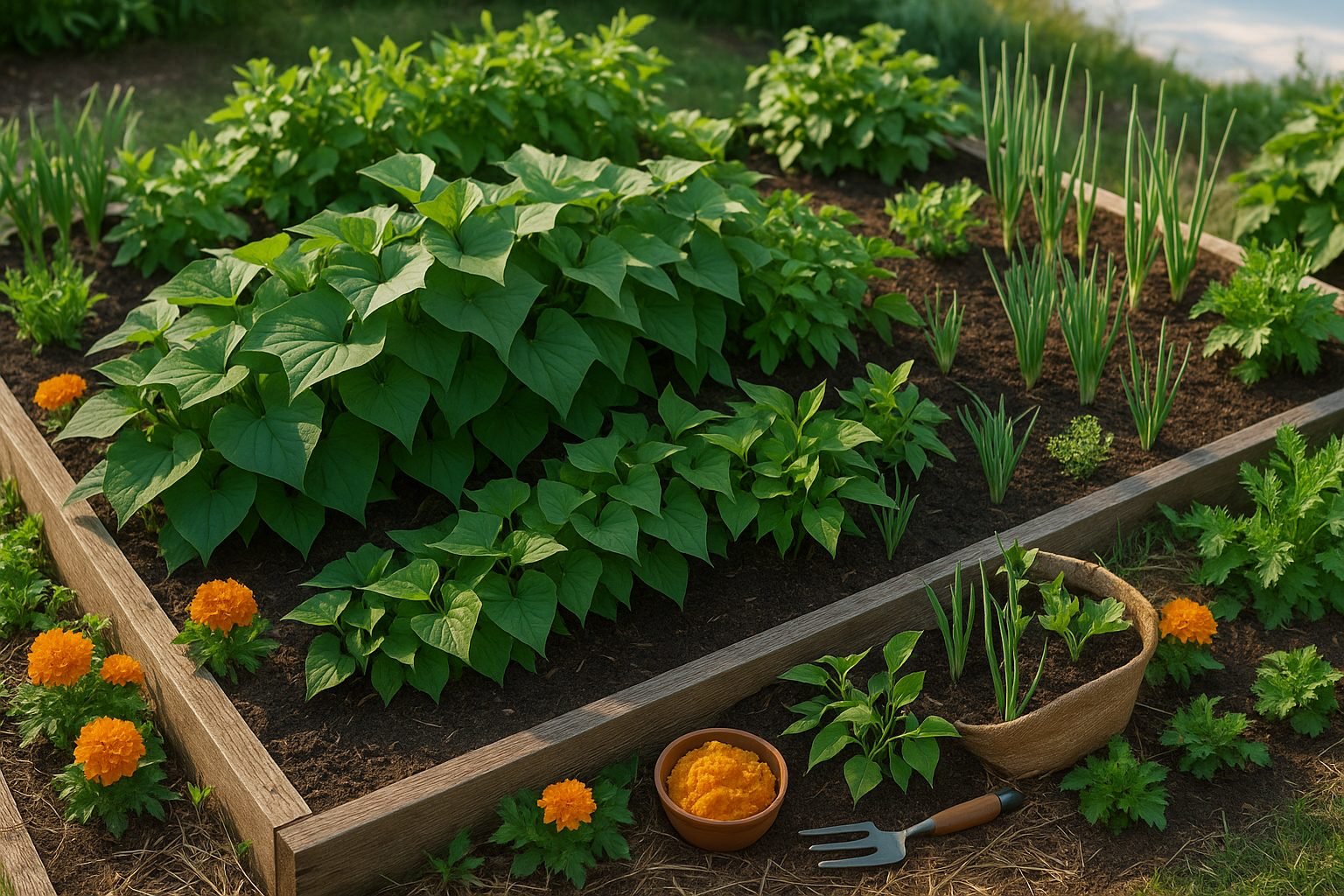
Introduction to Companion Planting with Sweet Potatoes
If you’re planning to grow sweet potatoes this season, choosing the right companion plants can transform your garden’s results. Companion planting—the thoughtful pairing of different crops in the same space—isn’t just an old gardening tradition; it’s a science-backed way to encourage healthier plants, stronger yields, and a thriving, diverse ecosystem right outside your door. For sweet potatoes, companion plants can make a huge difference by enriching the soil, naturally fighting off pests, and maximizing productivity in limited garden space.
Imagine your sweet potato vines sharing their bed with bush beans, which fix nitrogen into the soil, or aromatic herbs like dill, which lure away unwanted insects. Instead of wrestling with weeds and pests, you let plant partnerships do the heavy lifting. Companion planting means your sweet potatoes grow alongside beneficial neighbors—offering shade, improving soil health, and even acting as natural bug repellents—so you’re less reliant on chemicals and more in tune with your garden’s rhythms.
But not every plant is a good neighbor. Some combinations can cause problems, inviting diseases or stunting growth. That’s why knowing exactly which plants to pair—and which to avoid—is key to a successful harvest.
In this article, we’ll dive into the very best sweet potato companion plants, as well as the ones you’ll want to steer clear of. We’ll share real-life examples and practical gardening tips so you can plan your patch for maximum yield and minimum hassle, whether you have a sprawling backyard or a compact raised bed. Ready to discover how companion planting can unlock your sweet potato garden’s full potential? Let’s get digging.
Best Companion Plants for Sweet Potatoes
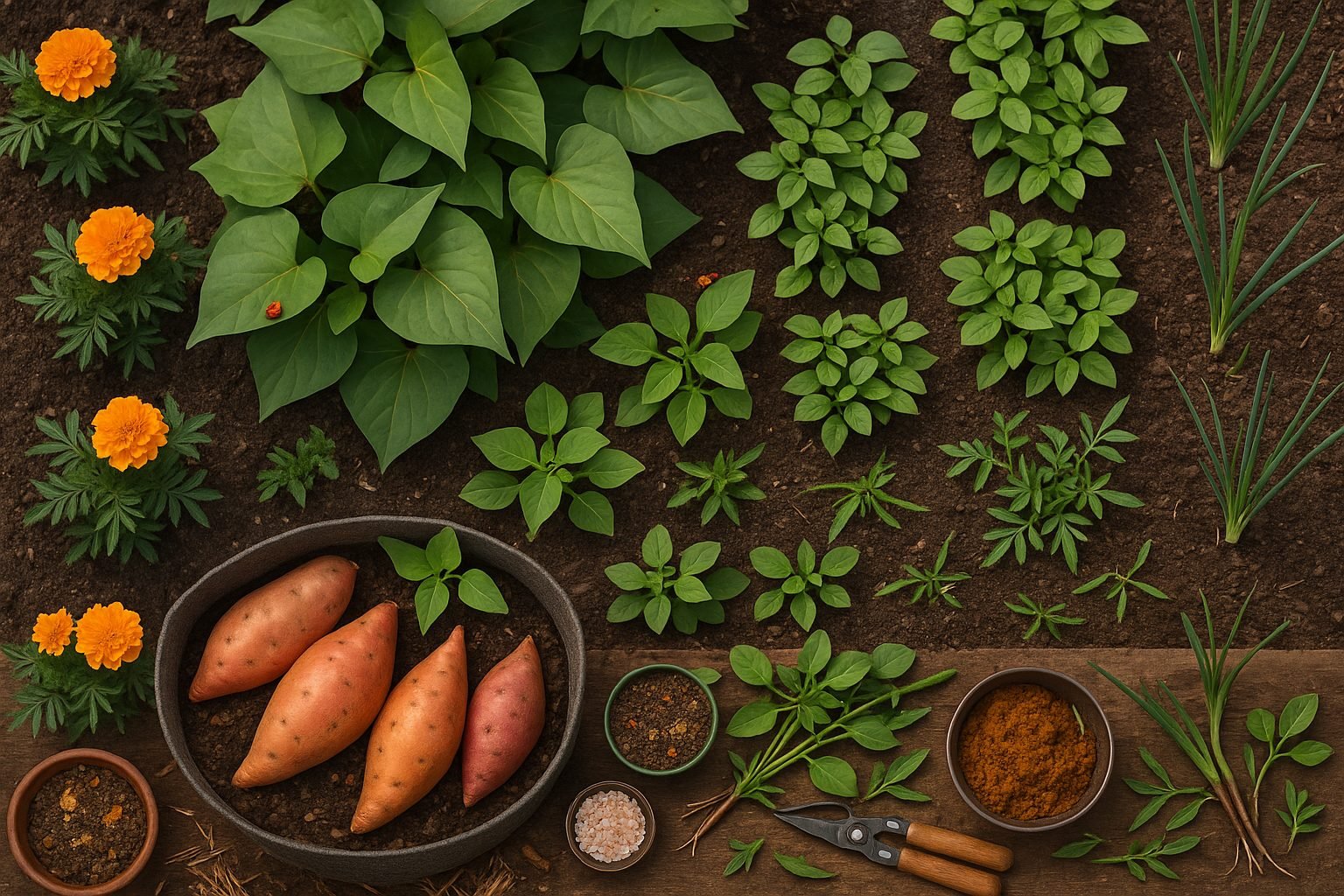
When planning a garden bed for sweet potatoes, choosing the right companion plants can make a big difference in plant health and yield. Alliums, like onions and garlic, are top choices because their natural sulfur compounds help deter common pests such as aphids and beetles. Plant alliums at the borders of your sweet potato patch to create a pest-repelling barrier.
Legumes, including beans and peas, offer a natural boost by fixing nitrogen in the soil, which sweet potatoes love since they’re heavy feeders. Consider interplanting bush beans or pole beans in alternate rows beside your sweet potatoes—the legumes will enrich the soil while also providing partial shade for tender vines during hot afternoons.
Marigolds are another powerhouse companion; their roots release chemicals that suppress nematodes, tiny soil-dwelling pests that can damage sweet potato tubers. Ring your garden bed with marigolds or tuck them between hills for a pop of color and protection.
Summer savory is an herb that’s not only flavorful but also known to repel bean beetles and enhance the flavor of nearby vegetables. Sprinkle a few plants throughout your bed for both culinary and pest control benefits.
Yarrow acts as a pollinator magnet, attracting beneficial insects like ladybugs and lacewings that help keep aphids in check. It can grow at the corners or ends of rows without crowding your main crops.
Don’t forget about root vegetables such as radishes and beets; these grow quickly and can be sown in between sweet potato starts to maximize space and help break up compacted soil.
For optimal results, arrange your garden so tall and flowering companions are on the outer edges to avoid shading out your sweet potatoes. Keep lower-growing companions between or beside vines and leave enough space around each plant for good airflow.
By mixing and matching these companions, you’ll create a healthier, more resilient garden that naturally discourages pests, boosts fertility, and produces a more abundant harvest.
Plants to Avoid Near Sweet Potatoes
When planning your sweet potato patch, it’s important to be mindful of nearby plants that could cause problems. Avoid planting root crops like carrots, beets, and potatoes too close to sweet potatoes—these all compete for the same underground space and nutrients, leading to stunted growth for everyone involved.
Nightshades, including tomatoes, peppers, and eggplants, are also poor companions. They attract similar soil-borne pests and diseases, especially fungal issues like blight, which can easily spread between these relatives.
Members of the squash family, such as zucchini, pumpkins, and cucumbers, are best kept at a distance as well. Their sprawling vines and large leaves can overshadow sweet potato plants, blocking sunlight and airflow. Plus, both squash and sweet potatoes are susceptible to common pests like cucumber beetles and squash bugs, which can easily move from one to the other.
If you still want to grow these incompatible species, try placing them in different raised beds or containers on opposite sides of your garden. This separation makes it harder for pests to travel and reduces the risk of diseases spreading, giving your sweet potatoes the best environment to thrive.
Instead, surround sweet potatoes with friendly, non-competitive companions like beans, oregano, or marigolds, which can naturally repel pests and promote healthier growth for all your plants.
Planning Your Sweet Potato Bed
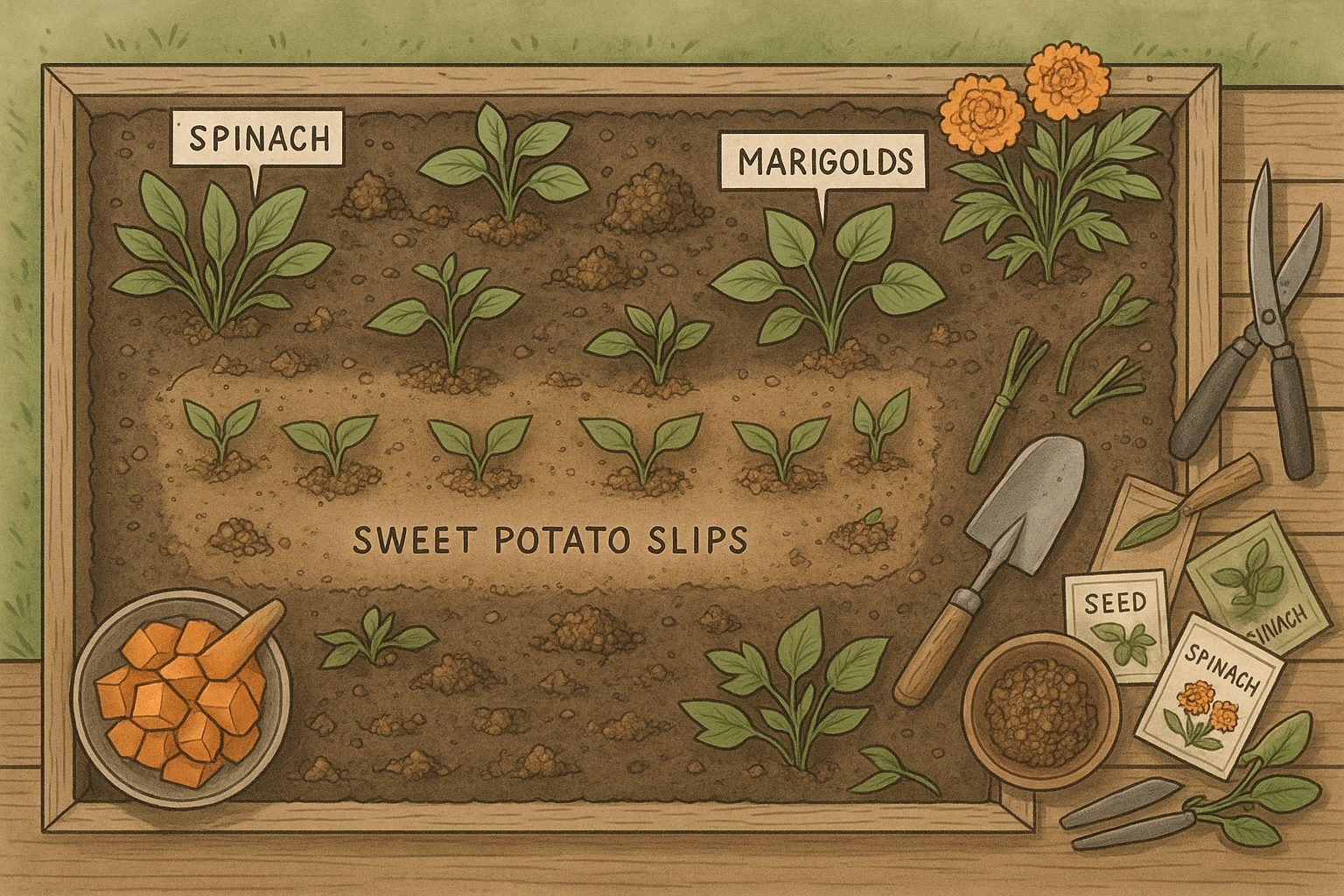
When planning your sweet potato bed, think beyond straight rows and embrace a mixed planting layout that combines sweet potatoes with compatible companions such as bush beans, marigolds, and spinach. To start, ensure each sweet potato slip has at least 12 to 18 inches of space in every direction—these vigorous vines need plenty of room to sprawl and develop healthy tubers.
For sunlight, sweet potatoes thrive in full sun, so choose a spot that gets at least six to eight hours of direct light per day. Group sun-loving companions like bush beans close by, which also help fix nitrogen in the soil, giving sweet potatoes a nutrient boost. Marigolds can be planted at the bed’s edge to deter pests and add cheer, while leafy greens like spinach fit well in partly shaded gaps between the vines and mature quickly, making efficient use of space early in the season.
Soil Requirements
Soil is a key factor: sweet potatoes grow best in loose, well-draining, sandy soil rich in organic matter. Avoid areas with heavy clay or places that stay soggy, as these can cause the roots to rot. Before planting, mix in compost or well-rotted manure to give your bed a fertile start.
Crop Rotation
Practice crop rotation to keep your soil healthy; avoid planting sweet potatoes or other root crops in the same location for at least three years. Rotate with crops that do not share the same pests or diseases, such as leafy greens or members of the onion family. This helps break pest cycles and reduces disease buildup.
Garden Design Tips
Integrating sweet potatoes into a broader garden plan means factoring in their spreading habits. Use trellises for climbing companions like pole beans on the north or east sides to avoid shading the vines. Planning pathways between planting sections ensures you have easy access for harvesting while minimizing vine damage.
With a little thoughtful design and smart plant partnerships, you’ll enjoy a productive sweet potato bed that fits naturally into your garden’s overall rhythm.
Sweet Potato Care & Pest Management in Mixed Plantings
Sweet potatoes thrive when given consistent moisture, so aim to keep the soil evenly damp, especially during the peak growing season. Water deeply about once a week, but adjust based on rainfall and your soil type—well-drained beds dry out faster and may need more frequent attention.
Since sweet potatoes are light feeders, use a balanced, organic fertilizer or plenty of compost at planting. Avoid high-nitrogen fertilizers, which can encourage leafy growth over tuber development.
Companion Planting for Pest Control
In mixed plantings, interplant sweet potatoes with companions like bush beans, marigolds, or nasturtiums, which naturally deter unwanted pests.
Watch for common pests like sweet potato weevils, whiteflies, and aphids. These pests are less likely to become a problem when surrounded by plants that confuse or repel them:
- Marigolds release substances that drive away nematodes and beetles.
- Nasturtiums attract aphids away from your crop.
Additional Care Tips
Use mulch made from straw or shredded leaves to retain moisture, suppress weeds, and provide habitat for beneficial insects like ladybugs and ground beetles that prey on harmful pests.
For low-maintenance organic pest control, hand-pick pests when numbers are low or wash aphids off with a gentle spray of water. Avoid overhead watering to prevent fungal issues, and keep vines trimmed to ensure good air circulation.
By combining careful watering, thoughtful companion planting, and simple organic controls, your mixed garden bed can grow healthy sweet potatoes with minimal fuss.
Harvest, Storage, and Safe Re-use of Your Companion Plants
Knowing when and how to harvest your sweet potatoes is crucial for garden success, especially in companion planting systems. Aim to dig them up when the leaves start yellowing and just before your region’s first predicted frost—usually around 90–120 days after planting.
Use a garden fork to gently loosen the soil around each plant, being careful not to damage the tender tubers or disturb nearby companions like beans or marigolds. Once harvested, brush off any excess dirt but don’t wash them yet.
Cure your sweet potatoes by placing them in a warm, humid spot (about 80–85°F and high humidity) for 7–10 days—this helps toughen the skin and improves flavor.
For storage, choose a cool, dark, and well-ventilated space; a basement closet or insulated garage works well if temperatures stay between 55–60°F. Store the tubers in single layers inside crates or on shelves, ensuring they’re not touching to prevent mold.
For leftover companion plants, consider their future roles:
- Legumes like bush beans can be left to dry. Once harvested, their roots can be snipped and left in the soil to decompose, enriching it with natural nitrogen for next year’s crops.
- Marigolds, if still healthy, can be uprooted and composted, or save their seeds by drying mature flower heads indoors—store these in paper envelopes for easy replanting next spring.
By taking time to harvest thoughtfully and reuse your companion plants, you’ll be building not just a stronger harvest this year, but a more resilient garden for seasons to come.
Frequently Asked Questions & Troubleshooting
When it comes to companion planting with sweet potatoes, gardeners often wonder how much space their plants need. Sweet potatoes are vigorous growers with sprawling vines, so it’s best to allow at least three feet between each plant for optimal growth and easy access.
A common mistake is planting companions—like beans or marigolds—too close, which can cause overcrowding and competition for nutrients. To avoid this, stagger your companion plants along the edges of sweet potato beds or in nearby rows, rather than directly among the vines.
If you notice poor growth, check the soil; sweet potatoes thrive in loose, well-draining soil high in organic matter, so amend with compost if needed.
Pest Problems and Natural Solutions
Pest problems, such as sweet potato weevils or flea beetles, can also occur. Good companions like calendula and nasturtiums repel pests naturally, reducing your reliance on chemicals. However, avoid planting sweet potatoes near crops like squash or pumpkins, which can compete for space and attract similar pests—leading to more problems than benefits.
Tips for Success
If you’re still running into trouble, remember that every garden is different: microclimates, soil conditions, and pest populations vary widely. Don’t hesitate to tweak your combinations or try new companion plant pairings each season. Garden success often comes from observation and small experiments—keep notes, share experiences with other gardeners, and enjoy learning what works best for your unique space.