Introduction
If you’re looking to get the healthiest, juiciest berries possible from your garden, understanding strawberry companion plants is a game-changer. Companion planting—the practice of growing certain crops together to boost one another’s health and productivity—can make all the difference for strawberries.
Not only does planting the right neighbors help repel troublesome pests and diseases, but it can also improve yields and make more efficient use of your space—especially important in smaller gardens or raised beds. For example, planting strawberries with borage attracts pollinators and deters harmful insects, while growing them near plants like beans or lettuce maximizes edible variety without overcrowding.
On the flip side, choosing the wrong companions can lead to stunted growth, more bugs, or even reduced fruit quality. In this post, we’ll dive into the best companion plants for strawberries, spotlighting those partners that contribute to healthy, abundant crops, as well as the plants you should avoid.
Whether you’re a new gardener or a seasoned berry grower, these tips will help you cultivate strawberries that are not only delicious but also resilient throughout the growing season.
What is Companion Planting for Strawberries?
Companion planting for strawberries is the practice of growing certain plants alongside your strawberry patch to create a natural and supportive environment. This approach goes beyond simply maximizing space—it’s about selecting neighboring plants that help strawberries thrive by reducing pests, boosting growth, and improving soil health.
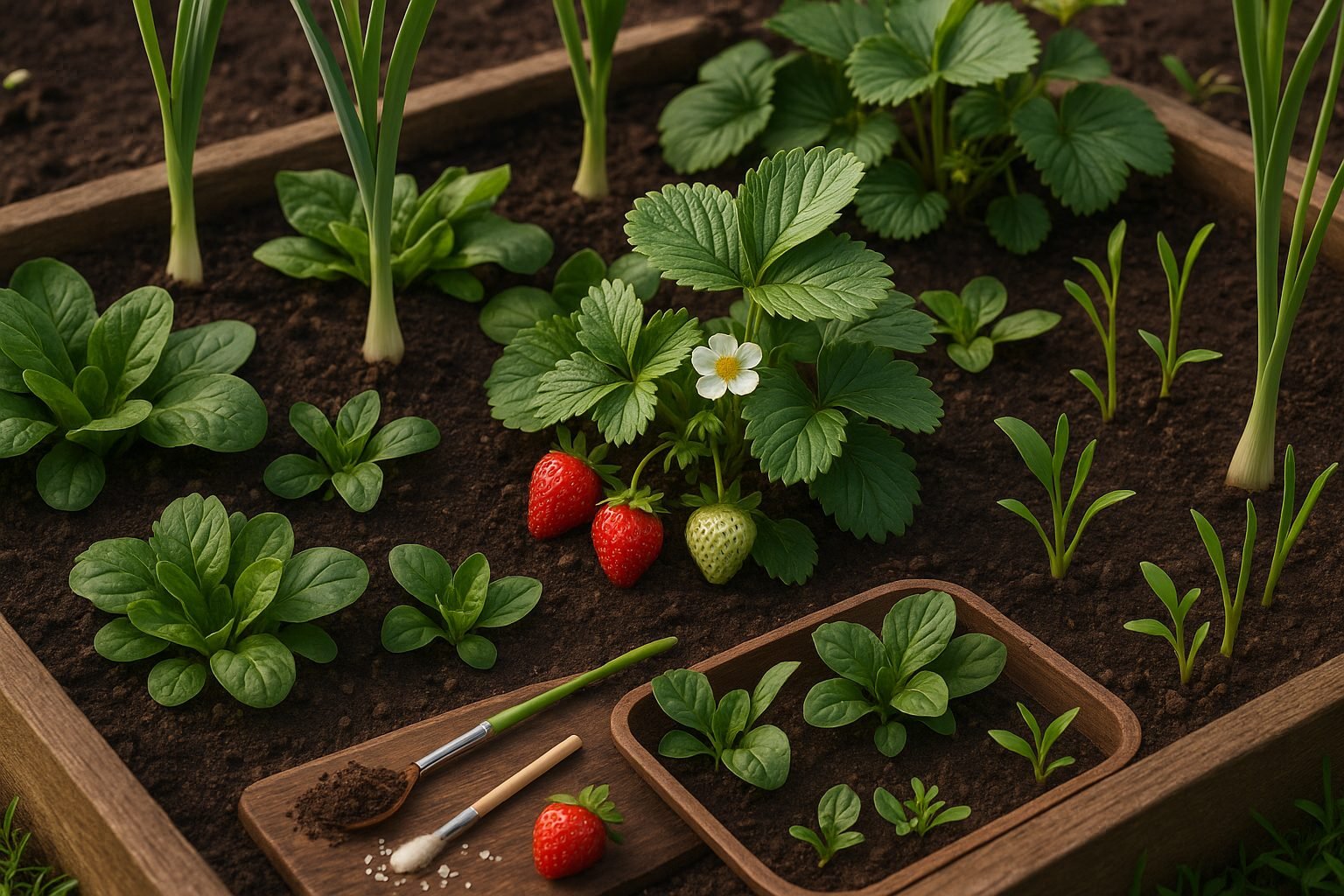
For instance, planting garlic or onions around strawberries can naturally deter common pests like aphids and slugs without the need for chemical sprays. Leafy greens such as spinach or lettuce can act as living mulch, helping retain soil moisture and suppress weeds, while legumes like bush beans actually fix nitrogen in the soil, nourishing your strawberries with essential nutrients.
However, not all pairings are beneficial. Avoid planting strawberries with members of the cabbage family or with nightshades like tomatoes and peppers—these can compete for nutrients or attract diseases and pests such as verticillium wilt, which is harmful to strawberries.
As a beginner, start simple by circling your strawberry plants with herbs like thyme or borage, both of which are widely known to attract pollinators and improve strawberry yield. Always give plants adequate space and observe how they interact; companion planting is as much about experimentation as it is about tradition, and over time you’ll discover what combinations work best in your own garden.
Top Companion Plants for Strawberries
Choosing the right companion plants for your strawberries can dramatically boost their health, yield, and flavor, all while making your garden more beautiful and productive.
Leafy greens like lettuce and spinach make excellent strawberry neighbors because their shallow roots don’t compete. Plus, they act as living mulch, helping preserve soil moisture and suppress weeds. Just tuck them into spaces between strawberry plants early in the season.
Onions and garlic serve double duty as pest repellents, naturally deterring aphids, spider mites, and even rabbits. Try lining the edge of your strawberry bed with alternating clusters.
For herbs, sage and thyme are aromatic powerhouses: both repel common insect pests and diseases, and their leaves are delicious in summer recipes.
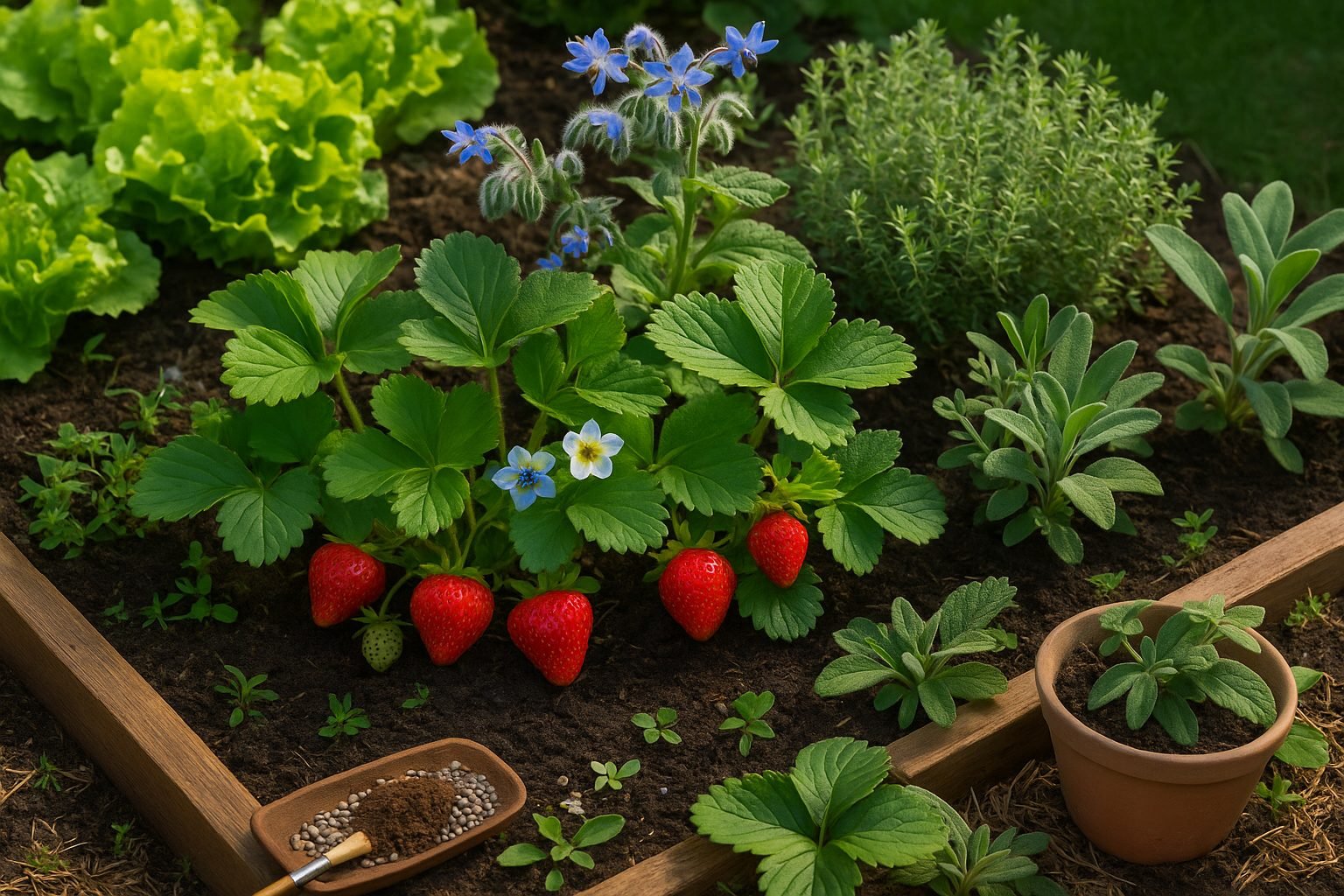
Borage is a superstar companion; not only do its edible blue flowers attract pollinators, which improves strawberry fruit set, but its deep roots also help draw up trace minerals from the soil, benefiting surrounding plants. One or two borage plants at the corners of your bed go a long way.
Yarrow brings in beneficial insects like ladybugs and lacewings that prey on strawberry pests, while also being a lovely cut flower for arrangements.
For natural pest control and bright color, nestle marigolds intermittently around the perimeter. Their scent keeps many nematodes and beetles at bay, and the blooms can be tossed into salads.
When arranging your bed, aim for clusters or small rows of companions so each strawberry plant benefits from at least one partner. Avoid overcrowding by sticking to a checkerboard or border layout.
With clever placement, you can not only protect your strawberries but also enjoy frequent harvests of tender greens, aromatic herbs, and edible flowers—all from the same garden space.
Plants to Avoid Near Strawberries
When planning your strawberry patch, it’s important to keep certain plants at a distance to ensure your berries thrive. Members of the cabbage family—like broccoli, cauliflower, and Brussels sprouts—compete aggressively for nutrients that strawberries need and can stunt their growth.
Tomatoes, peppers, potatoes, and eggplants (all nightshades) should also be avoided because they share susceptibility to verticillium wilt, a soil-borne disease that can easily spread to strawberries, drastically reducing yields.
Melons and cucumbers might seem like harmless neighbors, but they attract pests such as aphids and spider mites, which can quickly infest strawberries as well. Beyond these, even potatoes can contribute to nutrient depletion and encourage the spread of fungal diseases.
One smart way to spot trouble brewing is to watch for warning signs: if your strawberry plants begin to look pale or stunted, or you notice wilting and browning leaves, it could mean they’re fighting with neighboring crops for nutrients or are being affected by transferable diseases.
Frequent outbreaks of aphids, mites, or fungal issues nearby are a red flag that the plant community isn’t harmonious. Crop rotation helps, but if you see frequent yellowing, reduced berry size, or a noticeable decline in plant health despite care, consider what’s growing around your strawberries.
Choosing good companion plants—such as garlic, lettuce, or bush beans—while avoiding the troublemakers can make a noticeable difference in the health and productivity of your strawberry patch.
Practical Tips for Companion Planting Strawberries
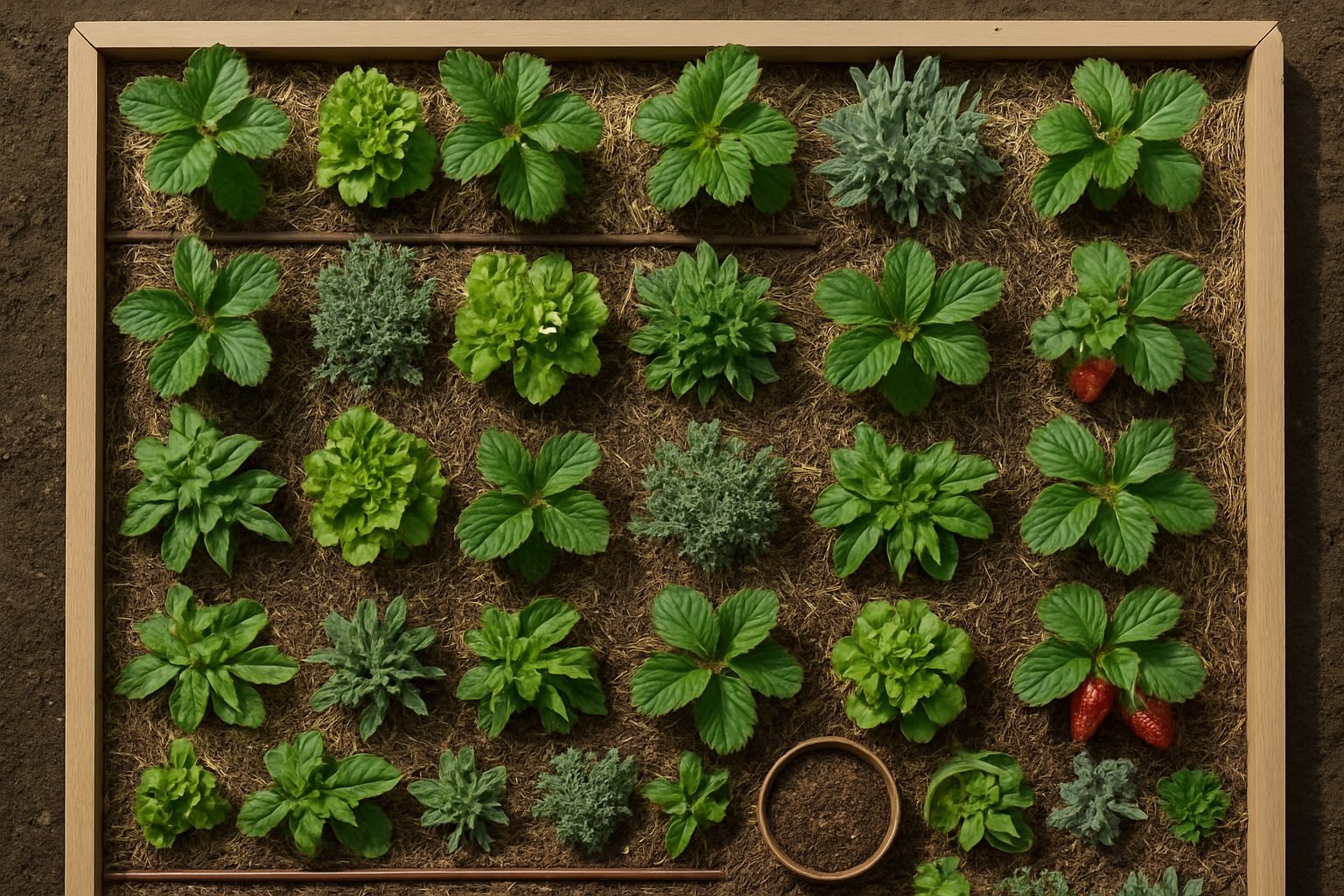
When planning a strawberry companion garden, start by keeping things simple—choose only two or three compatible companions like lettuce, spinach, or bush beans to avoid overcrowding and competition.
Space strawberry plants about 12 to 18 inches apart, planting companions in between or at the row edges to maximize space and airflow, which helps deter mold and pests. For example, interplanting leafy greens between strawberry rows can take advantage of shaded spots while minimizing weed growth.
Make sure your mixed bed gets at least 6–8 hours of sun daily; strawberries thrive in well-draining, slightly acidic soil, so check that chosen companions share similar preferences.
When it comes to watering, use mulch to retain moisture but avoid overwatering—too much water encourages rot, especially in dense plantings.
Stick to the beginner-friendly rule of grouping plants with similar needs together and avoid incompatible companions like brassicas (cabbage family) or strong aromatic herbs (like fennel), which can stunt strawberry growth.
Label your rows or sections to prevent confusion as the garden fills in.
Finally, start small and monitor your plants regularly, adjusting arrangement and care as you learn what works in your space. Successful companion planting often comes down to thoughtful observation and a bit of trial and error.
Conclusion & Next Steps
Companion planting with strawberries offers a natural way to boost yields, deter pests, and promote healthier plants—a win for both your garden and your table. By growing strawberries alongside helpful partners like bush beans, lettuce, or borage, you’ll make better use of space while reducing your reliance on chemical solutions.
Every garden is unique, so don’t be afraid to experiment; observe which combinations perform best in your own soil and conditions, and keep notes for next season. If you’re just starting out, try planting strawberries with leafy greens or garlic, which are easy options that most gardeners find successful.
Remember, questions are always welcome—leave a comment below if you need guidance or want to share your own experiences. For more inspiration, check out resources from your local extension office or reliable gardening websites.
Happy planting, and may your strawberry patch thrive!