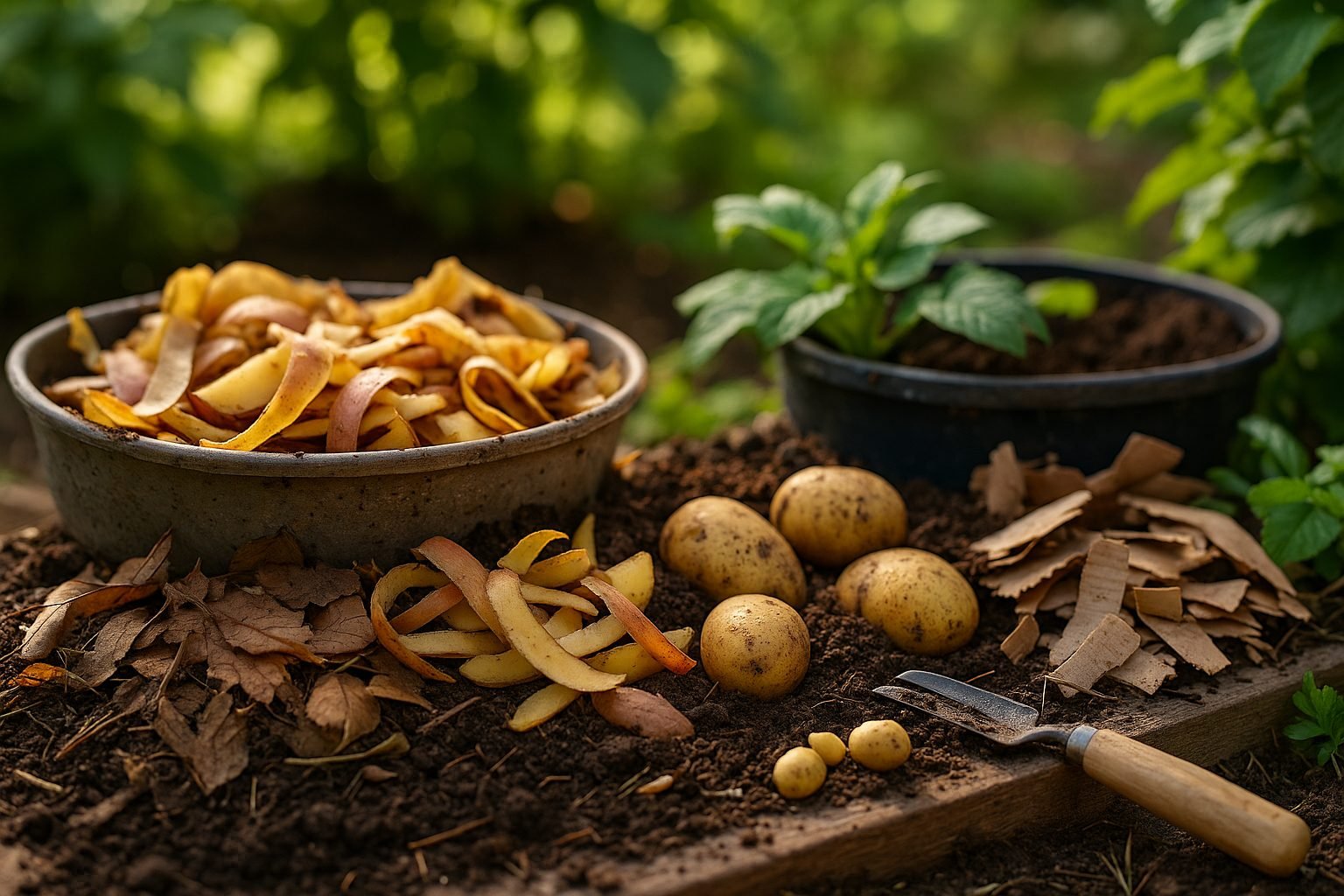
Can You Compost Potatoes and Potato Peels?
Composting potato peels isn’t just an eco-friendly choice—it can give your garden soil a serious nutrient boost while helping you cut down on kitchen waste. For anyone who loves potatoes, they’re a staple that show up in all kinds of home-cooked meals, which means leftover potato peels (and the occasional whole spud) are among the most common kitchen scraps. But many gardeners wonder: Can you compost potatoes and potato peels safely, or will they cause more problems than they’re worth? Let’s clear things up.
Some people worry potato peels might attract pests, encourage plant diseases, or even sprout into new potato plants right there in the compost pile. While it’s true that both raw and cooked potatoes can become tricky if left unchecked, you absolutely can compost them safely with a few simple precautions.
For example, chopping peels into smaller pieces and mixing them well with browns (like dried leaves or cardboard) speeds up decomposition and minimizes issues. It’s wise to avoid adding large amounts of cooked potatoes with butter or oil, as fats can slow the composting process and attract unwanted critters. If you spot any sprouting potatoes, just chop them up or bury them deeper in the pile.
By keeping an eye out for moldy or diseased potatoes and making sure your pile stays hot and well-balanced, composting potato peels becomes an easy, earth-friendly habit that turns a kitchen throwaway into garden gold.
Understanding Potatoes as a Composting Material
Potatoes and their peels are considered “green” materials in composting because they’re rich in moisture and nitrogen, which help fuel the microbial activity needed to break materials down. When you toss leftover potatoes or fresh peels into your compost pile, you’re contributing essential nutrients that balance well with “brown” materials like dried leaves or cardboard, which are higher in carbon.
However, there are a few watch-outs:
- Whole potatoes can sprout in compost, so it’s smart to chop them up to help them decompose faster and reduce the chance of volunteer plants growing where you don’t want them.
- Avoid adding potatoes with signs of disease—such as dark spots or mold—as certain pathogens can survive the composting process and potentially infect garden plants later.
- Because potatoes are attractive to rodents and other pests, it’s best to bury them in the center of your pile and cover them with a thick layer of browns.
Overall, potatoes and their peels are a helpful addition to compost as long as you manage them mindfully to minimize issues.
Preparing Potatoes and Peels for Composting
To compost potatoes and their peels effectively, start by prepping them based on their condition.
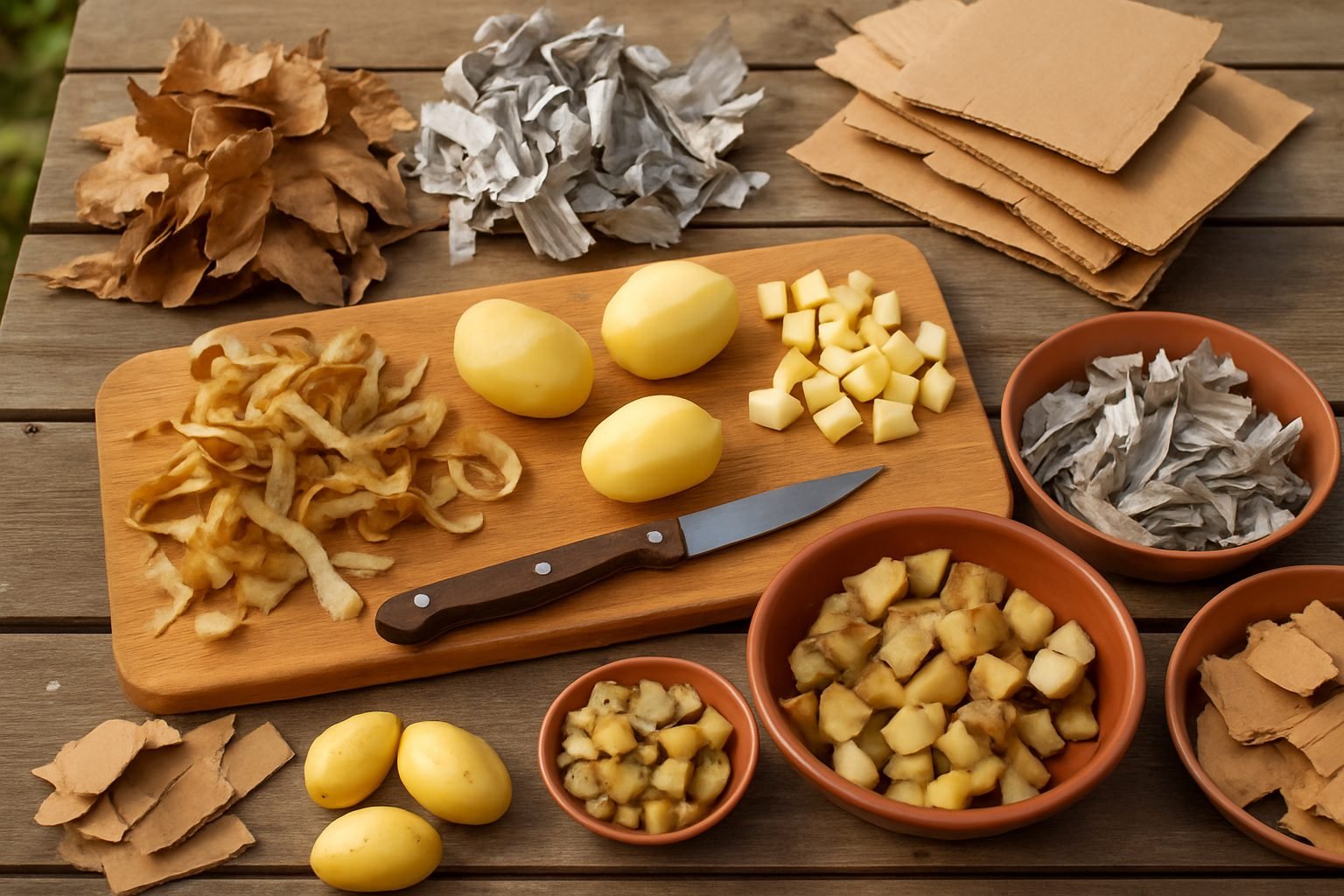
For raw potatoes and peels, cut them into small pieces to help them break down faster and reduce the risk of sprouting—potatoes can send out shoots if left whole or in large chunks, especially in a warm, moist pile.
For cooked potatoes and peels, make sure they aren’t coated in heavy oils, butter, or cheese, as these fats can attract pests and slow decomposition; if they are, it’s best to dispose of them elsewhere.
Moldy potatoes or peels can go into the compost, as fungi are normal in the pile, but cut them up first to aid decomposition and distribute them into the pile rather than leaving them exposed. This discourages pests and spreads their nutrients efficiently.
Always balance your potato scraps with “browns” such as dry leaves, shredded newspaper, or cardboard to maintain the right carbon-to-nitrogen ratio and avoid a soggy, smelly mess.
Mix potatoes and peels well with other compost materials to ensure even breakdown and aeration.
Finally, don’t add large amounts of potatoes at once, as their density can create compacted, anaerobic pockets—small batches work best.
With these steps, potatoes and peels become beneficial additions to your compost rather than pests or problems.
Composting Methods for Potatoes: Pile, Bin, and Alternative Systems
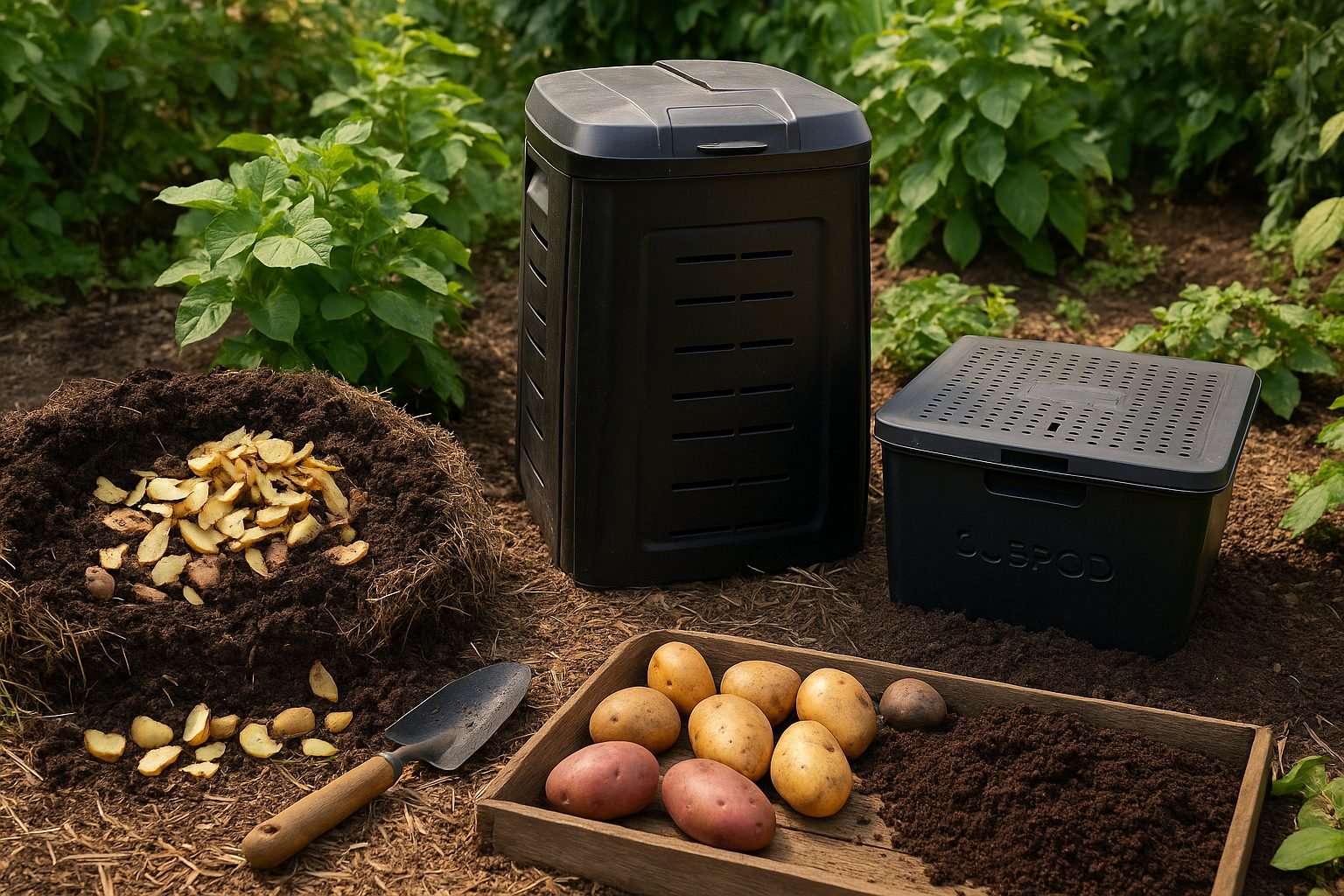
When it comes to composting potato scraps, you have a few reliable options: classic compost piles, bins, and newer contained systems.
Traditional backyard piles are simple and cost nothing—just set aside a space and heap your food waste. However, they compost slowly and can attract rodents, especially if cooked potatoes or peelings are visible.
Compost bins speed things up a bit and keep your yard tidier. Their enclosed walls help trap heat and moisture, which accelerates breakdown and deters pests better than open piles. That said, bins still require regular turning and can be awkward to empty if you compost a lot of kitchen scraps.
For maximum convenience, self-contained systems like Subpod or electric indoor composters really stand out. These minimize odors and virtually eliminate pest access, making them ideal for small city gardens or even apartments. Plus, brands like Subpod double as worm composters, turning potato peels into super-rich soil quickly. On the downside, these units tend to cost more upfront.
For large households with plenty of space, traditional piles or multiple bins work well, especially if you manage a lot of garden and food waste. Smaller homes, urban gardens, and those wanting a low-hassle setup may prefer modern contained systems, which deliver compost quickly and cleanly—even from potato scraps that might otherwise draw critters.
Troubleshooting and Tips for Success
Keeping your compost pile healthy when adding potatoes is all about balance and vigilance. To prevent odors and rodents, always bury potato scraps under a layer of “brown” materials like dry leaves, paper, or straw—never leave them on the surface. This not only reduces smells but also deters pests like mice and rats.
Control potato sprouting by chopping potatoes into small pieces and, if possible, letting them dry out or wilt before composting. This discourages unwanted potato plants from taking root in your bin.
Remember, a good compost mix has both “greens” (potato peels, kitchen scraps) for moisture and nitrogen, and “browns” (leaves, cardboard) for carbon. Keep about a 1:2 ratio to maintain airflow and prevent sogginess, which can cause mold.
Worried about diseased or moldy potatoes? Most home compost piles don’t reach high enough temperatures to kill pathogens, so it’s safer to dispose of obviously diseased potato parts in the trash.
If potato sprouts do pop up, just pull them out and turn your pile—a great chance to aerate and check moisture.
By staying attentive and tweaking your mix as needed, you’ll avoid the most common pitfalls and enjoy nutrient-rich compost for your garden.
Final Thoughts and Sustainable Gardening Takeaways
Composting potatoes and their peels is both safe and beneficial when done thoughtfully. To avoid problems like sprouting, always chop potatoes into small pieces and bury them deep in your compost pile. Watch for signs of blight or rot—skip adding any diseased tubers, as these can spread pathogens throughout your pile and garden.
Mixing potato peels with a wide variety of kitchen scraps, like fruit cores, coffee grounds, and eggshells, helps provide the right balance of carbon and nitrogen for efficient decomposition. By diverting potato peels and other food scraps from landfills, you’re reducing methane emissions, cutting down on waste, and creating a nutrient-rich compost that will boost your soil health naturally.
The more you compost, the more self-sufficient your garden becomes; healthy, compost-fed soil holds water better and supports robust blooms and crops. Consider keeping a small kitchen container for all your vegetable offcuts, coffee filters, and more—not just potatoes.
Over time, making composting a daily habit transforms both your garden and your environmental impact, turning leftovers into valuable resources for a thriving, sustainable outdoor space. Every banana peel or apple core you add to your bin helps build a greener future right in your backyard.