Introduction
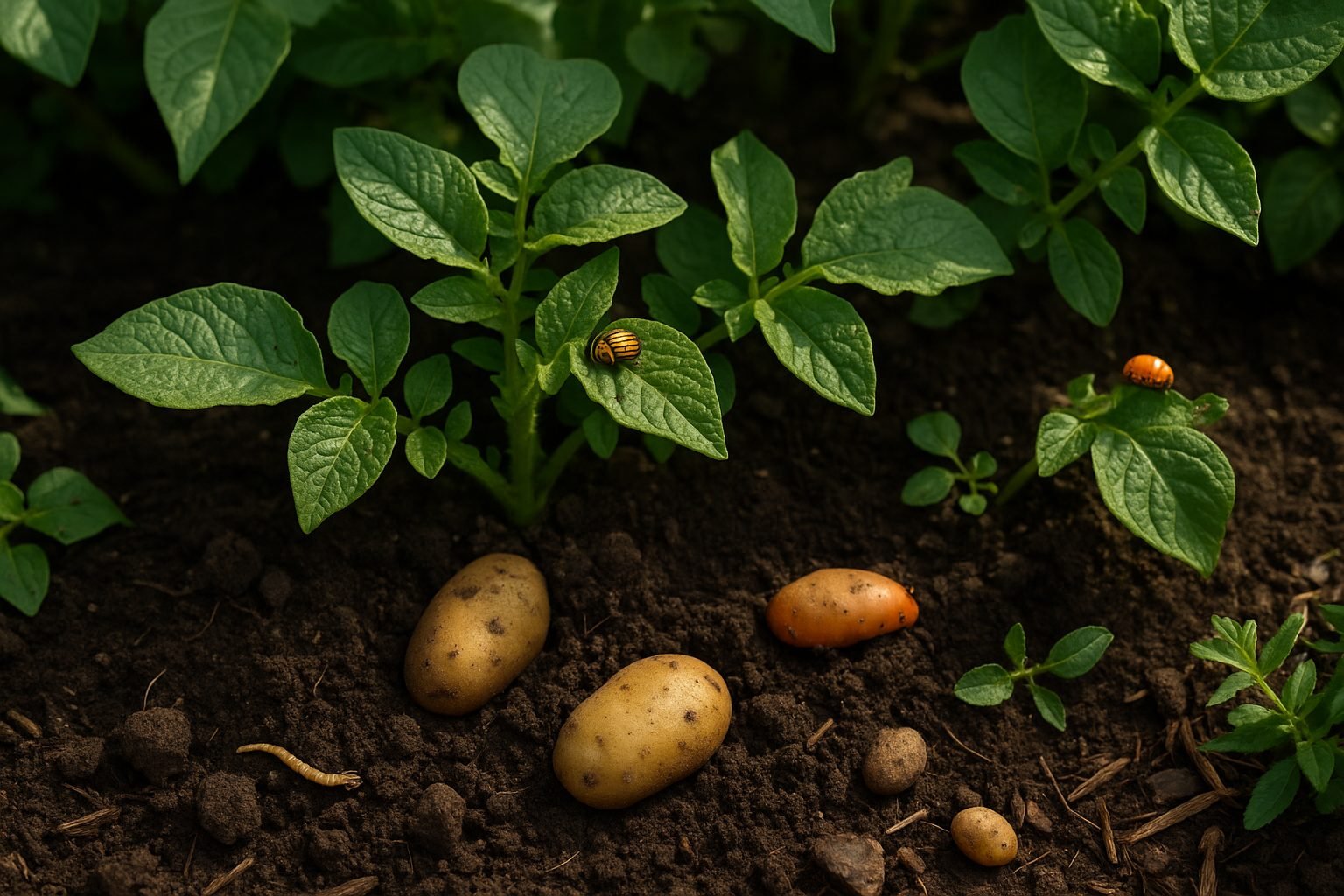
If you’ve ever grown potatoes, you know that potato pests can quickly turn a promising crop into a real headache. Potatoes are especially vulnerable because their fleshy tubers grow underground, making them hidden targets for insects and diseases. Above ground, lush potato foliage attracts a host of hungry bugs like beetles, aphids, and caterpillars, while below ground, worms and larvae can quietly devastate developing tubers.
The result? Pest damage can lead to poor yields, misshapen or spoiled potatoes, and sometimes crop failure. It isn’t just about losing food—it’s about wasting time, effort, and gardening enthusiasm.
But you don’t have to rely on harsh chemicals to protect your potato patch. In this post, we’ll break down the most common potato pests you’re likely to encounter and share proven, natural solutions to stop them in their tracks. Whether you’re a home gardener or manage a small farm, these pest control strategies will help you defend your potatoes while keeping your soil, crops, and family safe. Let’s get ahead of the pests and keep your potatoes healthy from planting to harvest.
Colorado Potato Beetle: Identification and Control
The Colorado potato beetle is one of the most notorious potato pests, easily recognized by its round, bright-yellow body with bold black stripes running down its back and small black spots on its head. Adult beetles measure about half an inch long, while their larvae are soft, humpbacked, and reddish-orange with black spots along their sides. This pest’s life cycle begins in early spring, when adults emerge from the soil to lay clusters of orange eggs on the undersides of potato leaves. Within a week, these eggs hatch into larvae that voraciously feed on the foliage, molting several times as they grow. Both adults and larvae can severely defoliate potato plants, leaving behind skeletonized leaves, stunted growth, and ultimately reduced yields. The beetle’s rapid ability to develop resistance to chemical pesticides, combined with its high reproductive rate—females lay hundreds of eggs in a single season—makes it especially challenging to manage in potato crops.
Natural Control Methods for Potato Pests
For home gardeners and small-scale growers, natural control methods provide effective, eco-friendly alternatives. Begin by regularly inspecting your potato plants, especially the undersides of leaves, and hand-picking beetles, larvae, and egg clusters whenever you find them. Dropping them into a bucket of soapy water is an effective disposal method. Mulching with straw around your potato plants creates a physical barrier that helps deter beetles from laying eggs and keeps the soil cool, disrupting their life cycle.
Crop rotation is another important tactic: avoid planting potatoes or other nightshades in the same spot each year to interrupt overwintering beetle populations. Introducing beneficial insects such as ladybugs and lacewings can also help by preying on beetle eggs and larvae. By combining these natural solutions, you can significantly reduce Colorado potato beetle infestations and protect your potato harvest without relying on harsh chemicals.
Aphids: Tiny Yet Destructive Potato Pests
Aphids are some of the most common potato pests, and despite their tiny size, they can cause major problems in your garden. These pear-shaped insects come in shades of green, yellow, or black and tend to cluster tightly on the undersides of potato leaves or along tender stems. One telltale sign of an aphid infestation is a sticky, shiny residue called honeydew that they leave behind. This sugary substance not only makes leaves look unhealthy but also attracts ants and can lead to the growth of sooty mold, a black fungus that further stresses the plant.
Aphids damage potato plants by piercing the leaves with their needle-like mouths and sucking out the sap, which stunts growth and can cause leaves to curl or yellow. Even worse, as aphids feed, they’re notorious for spreading serious plant viruses, such as potato virus Y, which can drastically reduce yields and harm your crop for seasons to come.
Thankfully, you don’t have to rely on harsh chemicals to control these potato pests. A simple jet of water from your hose can gently dislodge aphids from plants without damaging the leaves. Neem oil works well as a natural insecticide, disrupting the aphids’ lifecycle without leaving toxic residues. You can also encourage beneficial insects like lacewings and ladybugs to inhabit your garden, as they eagerly hunt aphids and keep their numbers in check. By staying vigilant and using these natural solutions, you can protect your potato plants from aphids in an eco-friendly way.
Wireworms and Potato Tuberworms
Wireworms and potato tuberworms are two distinct potato pests, each with unique habits and damage signs to watch for. Wireworms, the larvae of click beetles, are slender, yellowish-brown worms that tunnel into potato tubers and stems, leaving small, round feeding holes. If you notice rough, shallow tunnels or wilted potato plants, wireworms may be active beneath the soil.
In contrast, potato tuberworms are the larvae of a small moth and appear as cream-colored caterpillars. Their feeding damage is more irregular—look for winding tracks just under the potato skin, often filled with frass (caterpillar droppings). Potatoes infested with tuberworms may rot quickly or become vulnerable to secondary infections.
To reduce infestations, practice good soil management by keeping fields weed-free and avoiding excessive soil moisture, which attracts both pests. Crop rotation is also vital: don’t plant potatoes in the same spot each year, and avoid following potatoes with other root crops that are susceptible to these pests.
For natural control of wireworms, simple bait traps—such as chunks of carrot or potato buried just below the soil surface—can attract and concentrate larvae for easy removal. Encouraging birds like robins and crows by setting up perches or feeders helps, as they consume wireworms while foraging.
Introducing beneficial nematodes (such as Steinernema species) into the soil is highly effective against both wireworms and tuberworms. These microscopic creatures seek out and destroy larvae without harming your crop or the environment. With vigilance and these sustainable methods, you can keep potato pests in check naturally.
Slugs and Snails: Nighttime Potato Pests
Slugs and snails are some of the most troublesome potato pests, especially active during damp or rainy periods. These slimy invaders come out at night to feast on the tender leaves and stems of your potato plants, often leaving ragged holes and shiny trails behind. Even worse, when their numbers increase or the weather stays wet, they burrow into the soil and nibble directly on growing tubers, creating unsightly entry holes that invite rot and disease.
To combat these nocturnal nuisances, gardeners can rely on several natural defenses:
- Stretching copper tape around the base of raised beds or potato patches creates a mild electric charge that deters slugs and snails.
- Beer traps—shallow dishes filled with beer—can be sunk into the soil to lure these pests overnight; attracted by the smell, slugs and snails crawl in and can’t escape.
- Hand-picking is another effective strategy: head into the garden at dusk with a flashlight and bucket, gather any visible pests, and safely dispose of them away from your plants.
- Sprinkling diatomaceous earth around the base of potato plants helps keep pests at bay. This powdery substance is harmless to humans and pets but abrasive to soft-bodied pests.
Combining these methods offers a safe, chemical-free way to protect your potato crop from persistent slug and snail damage.
Managing Potato Leafhoppers
Potato leafhoppers are tiny, wedge-shaped insects—usually just 1/8 inch long—with bright green or pale yellow bodies and quick, sideways movements when disturbed. Don’t let their size fool you: these potato pests can cause serious damage to your plants, mainly through a condition called “hopperburn.” This damage shows up as yellowing leaf tips that curl and dry out, eventually turning brown and scorched, which reduces plant vigor.
Because leafhoppers are so small and mobile, regular monitoring is essential. Check the undersides of leaves at least once a week, especially during warm, dry weather, and watch for early signs of the distinct yellowing pattern. Installing yellow sticky traps can help you detect their presence and catch them as they fly around your garden.
Using reflective mulches, like silver-colored plastic, beneath your potato rows can also deter adult leafhoppers by confusing them and making it harder to settle on your plants. Lastly, attract beneficial insects such as ladybugs, lacewings, and pirate bugs—natural predators of leafhoppers—by planting insectary flowers like alyssum and dill nearby. This balanced approach helps manage potato pests without harsh chemicals, promoting a healthy garden ecosystem.
Integrated Pest Management (IPM) for Potatoes
Integrated Pest Management (IPM) is a holistic and sustainable approach that combines natural strategies to manage potato pests effectively while minimizing the use of harmful chemicals. By layering different methods—such as introducing beneficial insects, using organic deterrents, and practicing good cultural techniques—you create a resilient potato patch that tackles pests from multiple angles.
The first step in IPM is careful observation. Regularly inspect your potato plants for signs of damage or pest activity, like chewed leaves or burrowed tubers. Keep records of what you see to spot patterns and potential outbreaks early. Once a problem is suspected, properly identify the pest by looking for telltale signs or consulting trusted gardening guides. Knowing whether you’re dealing with Colorado potato beetles, aphids, or wireworms makes all the difference when choosing the right remedy.
Next, select targeted control measures—introduce ladybugs for aphids, handpick beetles in the early morning, or plant trap crops like nasturtiums nearby. Always start with the least invasive method and escalate only if necessary.
Don’t underestimate the importance of ongoing ecosystem care in your potato patch: maintaining soil health with compost and organic matter encourages strong, pest-resistant growth, while crop rotation breaks up pest life cycles and reduces the risk of reinfestation year after year. Encouraging a variety of plants around your garden, including flowering borders, attracts natural predators and supports overall biodiversity, making your potato crop less appealing to specialized pests.
When natural solutions and smart gardening habits work together, the fight against potato pests becomes easier and more sustainable.
Conclusion
Staying vigilant for potato pests and responding quickly with natural solutions can make a huge difference in protecting your crop. Early detection allows you to address problems before they escalate, while organic methods help maintain your garden’s health and protect the environment. Every garden is unique, so don’t hesitate to experiment—try different deterrents, rotate your crops, and share your successes (or failures) with fellow gardeners. Your experiences might just help someone else! Be sure to check back often for more expert tips and practical advice on organic gardening and managing pests naturally.