Introduction
When deciding between beets vs. radishes, it’s easy to get overwhelmed by the range of flavors, colors, and nutrients these popular root vegetables offer. Both beets and radishes have made their mark in kitchens around the world, starring in everything from salads to smoothies to vibrant side dishes. Yet, they couldn’t be more different in taste—beets are naturally sweet and earthy, with a dense, tender texture, while radishes pack a crisp, peppery bite that livens up any plate. Understanding the core differences can help you make the right choice for your next meal and even your garden.
In this blog post, we’ll dig into what sets beets and radishes apart—breaking down their nutrition profiles, unique health benefits, and practical ways to shop for, store, and prepare each one. For instance, if you’re seeking vitamin C or craving a low-calorie crunch, radishes might have the edge; but if your focus is on boosting folate and antioxidants, beets could be your new best friend. Plus, we’ll share simple tips to get the most out of your root veggies—like choosing firm, blemish-free produce at the market or quick storage hacks to keep them fresh longer at home. Whether you’re a longtime fan or just looking to add more refreshing crunch and color to your meals, this guide will help you confidently compare, buy, and enjoy beets and radishes in delicious, healthy ways.
Nutrition Comparison

When comparing the nutrition of beets versus radishes, several key differences stand out in calories, macronutrients, and vitamins. A cup of raw beets contains about 59 calories, while the same amount of raw radishes has just 19, making radishes a lighter option if you’re watching your calorie intake.
Beets have more carbohydrates—around 13 grams per cup compared to just 4 grams in radishes—and this is reflected in their sugar content: beets deliver 9 grams of sugar per cup, while radishes have less than 2 grams, making beets noticeably sweeter.
For fiber, beets have a slight edge with about 3.8 grams per cup, while radishes offer just under 2 grams. Both vegetables support healthy digestion, but beets provide a minor advantage in fiber intake. Protein content is low in both: beets supply about 2.2 grams per cup, and radishes provide just under 1 gram. They are both very low in fat, containing less than 0.2 grams per serving, so they fit easily into low-fat diets.
Vitamins and Minerals
The vitamin and mineral profiles reveal even more striking differences. Beets stand out with their high folate content—one cup can provide over a third of your daily needs, which is important for DNA synthesis and a healthy pregnancy.
Radishes, in contrast, are rich in vitamin C; a single cup provides about 29% of the recommended daily allowance, giving your immune system a solid boost. Both vegetables offer potassium, which supports heart health, though beets contain slightly more.
Micronutrient Highlights
- Beets are known for their nitrates, which may help regulate blood pressure and enhance athletic performance.
- Radishes contain spicy compounds like glucosinolates that act as antioxidants and may offer cancer-protective benefits.
Both vegetables provide antioxidants, but their sources differ: beets are rich in betalains, which give them their deep color and potential anti-inflammatory benefits; radishes derive their antioxidant power from vitamin C and peppery isothiocyanates.
In summary, both beets and radishes earn their place on the plate thanks to their unique nutritional advantages—beets for more fiber, sugar, folate, and specialized plant compounds; radishes for fewer calories, higher vitamin C, and distinctive antioxidants. Choosing between them can depend on your dietary goals and flavor preferences.
Health Benefits of Beets vs. Radishes
Beets and radishes are both low-calorie root vegetables packed with distinct nutritional powers that can benefit your health in different ways.
Beets are especially famous for supporting cardiovascular health—rich in nitrates, they help widen blood vessels and improve blood flow, which can lower blood pressure, according to research published in the journal Hypertension. This can be a real asset for anyone with heart concerns. Beets also contain betalains, powerful antioxidants that fight inflammation and support liver detoxification. Studies, like one in Nutrients, show betalains may protect liver cells from harmful toxins and boost natural detox enzymes.
On the other side, radishes excel at aiding digestion and bolstering immunity. Their high fiber content helps keep things moving in your gut and promotes healthy gut bacteria, while compounds like glucosinolates have antibacterial properties that may reduce your risk of infections—a benefit highlighted by Harvard’s School of Public Health.
When it comes to antioxidants, beets are higher in betalains, giving them their deep red color and strong free-radical-fighting effects; radishes contain more vitamin C and anthocyanins, which support immune health and may help fight inflammation. Beets also supply more folate and betaine, amino acids important for reducing homocysteine, a risk factor for heart disease, while radishes boast unique isothiocyanates that support the body’s detox pathways.
In short, beets are your go-to for heart, blood pressure, and liver health, while radishes are experts at digestion, immune support, and gentle detox—making both worthy of a spot in your diet.
Try adding roasted beets to salads for a sweet, earthy flavor, or enjoy crunchy radishes as a snack or slivered into tacos for a fresh, peppery kick.
Varieties and Taste Differences
Beets and radishes come in a surprising array of varieties, each offering unique flavors and visual appeal.
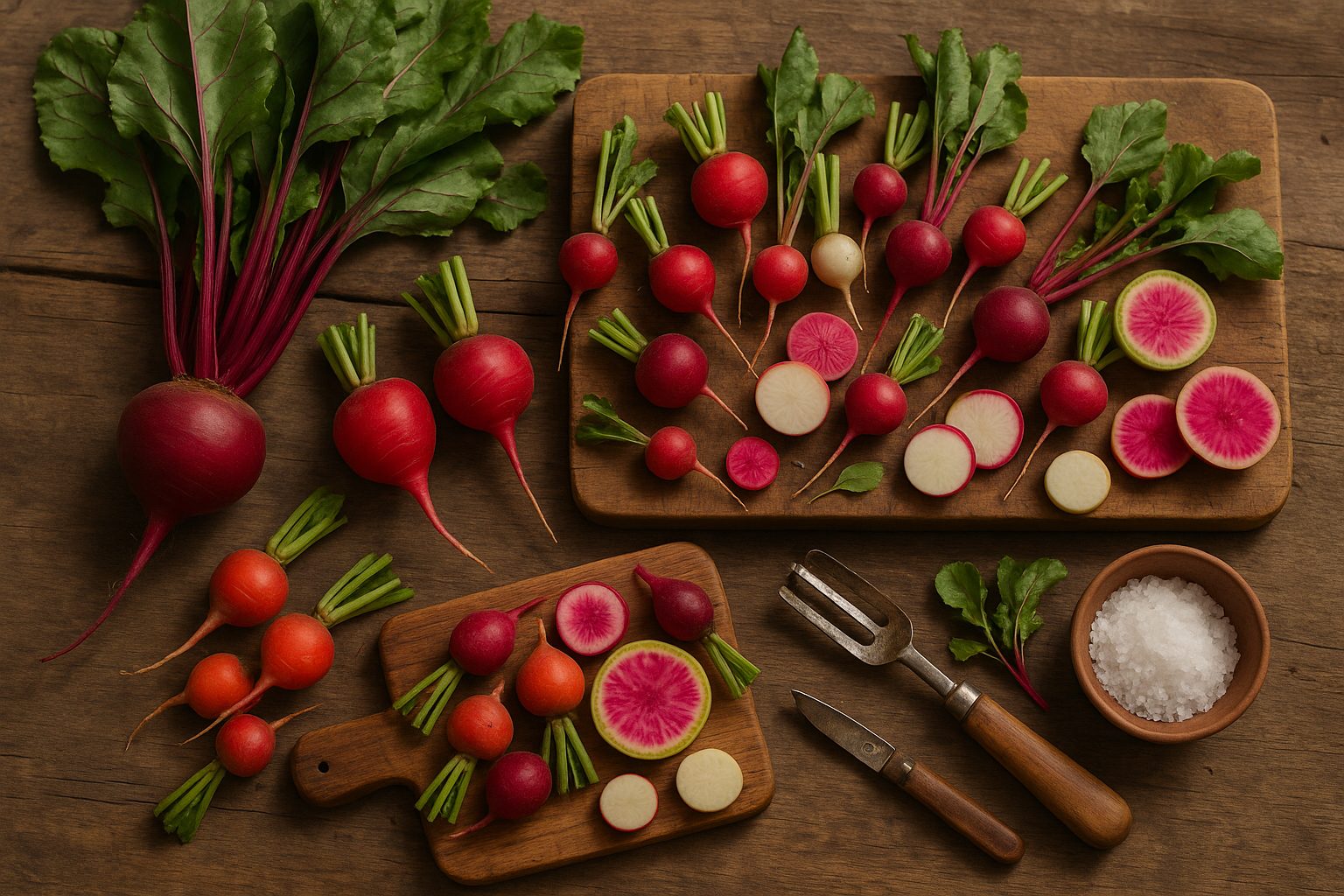
Among beets, the most common are red beets, known for their deep burgundy color and earthy, sweet taste. Golden beets follow closely; their yellow-orange flesh is milder and less earthy, often appealing to those new to beets. You might also spot Chioggia (or candy cane) beets, recognized by their pink-and-white striped insides and slightly sweeter flavor profile.
On the radish side, classic round red radishes offer a sharp, peppery bite and crisp texture, ideal for adding zing to salads or sandwiches. Daikon radishes stand out with their long white roots and mild, juicy flavor, making them staples in Asian slaws and pickles. Watermelon radishes are a favorite at farmers’ markets: with pale green exteriors and vibrant pink centers, they provide a mild, slightly sweet crunch—perfect for decorative salads or snacking. Round, golf ball-sized Easter Egg radishes can range from purple to white, each with subtle flavor differences.
These color and shape variations aren’t just for looks; the spectrum of flavors and textures affects how you use them in the kitchen. For example, earthy, firm red beets hold up well to roasting or pickling, while golden beets shine in raw salads for a splash of color and gentler taste. In contrast, crisp red radishes bring a bold bite to fresh dishes but mellow when roasted. Daikon’s subtle texture is perfect for grating into slaws, and watermelon radishes can be thinly sliced for striking visual contrast.
Try mixing several varieties for dynamic, flavorful salads that tempt both the eye and palate, or roast an assortment together for a colorful, sweet-savory side dish.
How to Eat and Cook Them
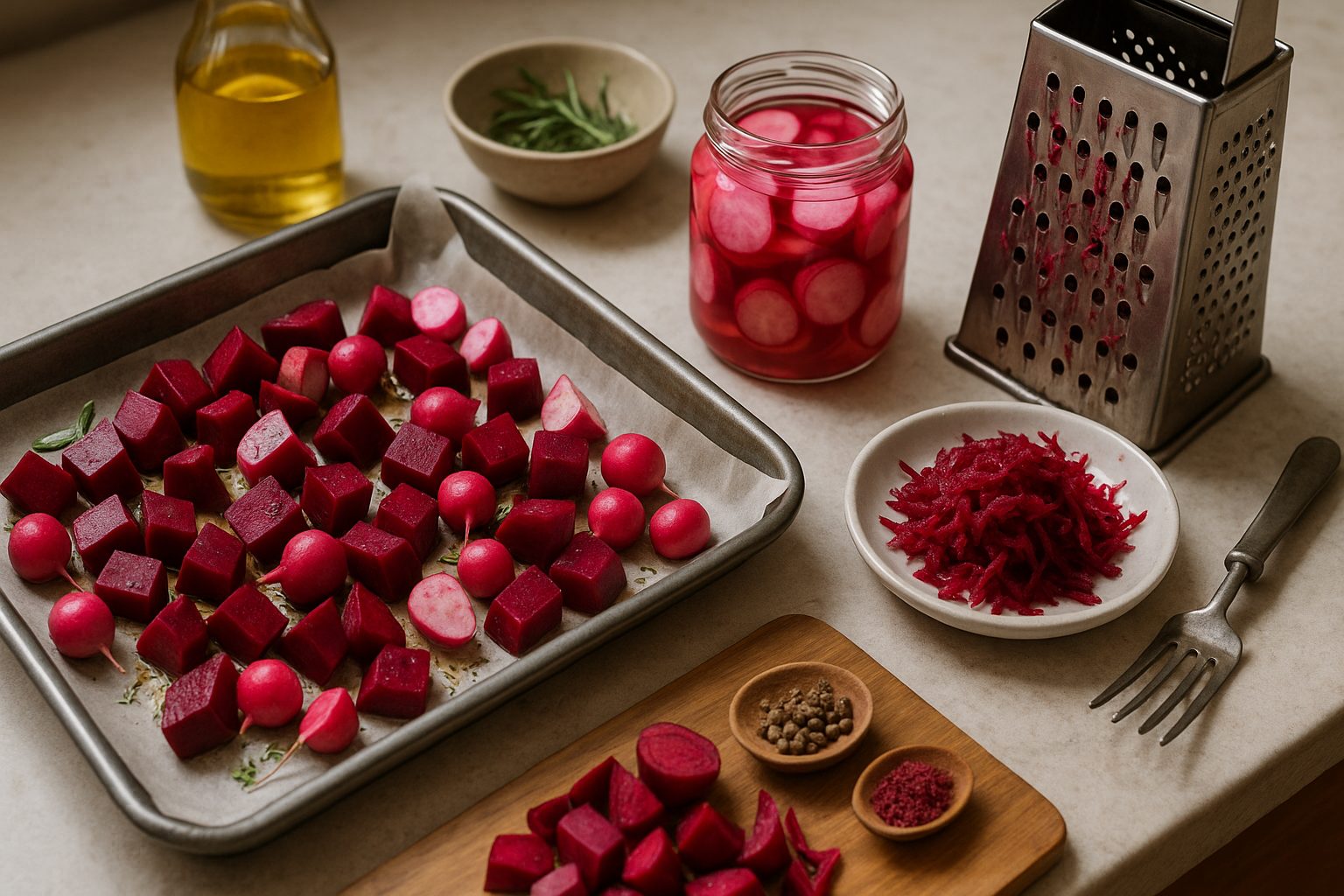
Beets and radishes are surprisingly versatile in the kitchen, offering a range of textures and flavors depending on how you prepare them. Eating them raw is the quickest option—simply slice radishes thin for a peppery crunch in salads, or grate raw beets to add a bright, earthy boost to slaws and wraps.
Roasting is another popular method; toss beet chunks or whole radishes with olive oil, salt, and your favorite herbs, then bake at 400°F until tender. Roasted beets become sweet and velvety, while radishes mellow in flavor and take on a slightly nutty taste.
Boiling is useful if you want to prep beets in advance—just simmer whole, unpeeled beets in water until a fork pierces them easily, then rub off the skins for use in salads, soups, or as a colorful side.
Pickling is a smart way to add tangy zip and extend shelf life: slice your veggies, cover them with a mix of vinegar, sugar, and spices, and refrigerate for at least a day before eating.
For a refreshing twist, both beets and radishes can be juiced with apples, carrots, or citrus for a nutrient-packed drink that wakes up your taste buds.
Ways to Add Beets and Radishes to Meals
Adding beets and radishes to meals is easy and rewarding. For salads, try mixing roasted beet cubes with goat cheese and walnuts, or add sliced radishes to a classic Greek salad. Both veggies make great side dishes: toss roasted roots with a sprinkle of fresh herbs or stir boiled beet chunks into creamy risotto.
Sautéed beet greens and radish leaves are edible, too—use them like spinach: sauté with garlic and olive oil for a quick, nutritious side, or stir into soups for a boost of flavor.
For mains, top pizzas with thinly sliced beets or scatter spicy radish slices over tacos. Experiment with different methods to find your favorites—the variety of textures and flavors will keep your meals interesting and vibrant.
Storage and Buying Tips
When choosing beets and radishes at the market, look for firm, smooth-skinned bulbs free of cracks or soft spots—these are signs of freshness and good hydration. A vibrant, deep color and crisp, attached greens on beets indicate they’re freshly harvested, while radishes should feel dense and heavy for their size.
Once home, trim off the leafy tops (leaving about an inch of stem) to prevent moisture loss, then gently scrub away soil under cool running water. To store, place beets and radishes in separate perforated plastic bags or in a vegetable crisper. Both stay freshest when kept unwashed until use, lasting up to two weeks for beets and about one week for radishes.
You can extend their shelf life by wrapping them in damp paper towels and keeping the humidity high in your fridge drawer. Avoid storing them near fruits like apples and pears, as these emit ethylene gas that speeds up spoilage.
Be on the lookout for signs your veggies are past their prime: soft spots, wrinkled or shriveled skins, or a musty smell signal it’s time to toss them. With these steps, your beets and radishes will stay crisp, flavorful, and ready for your next recipe.
Potential Risks and Side Effects
While beets and radishes are nutritious additions to meals, they can cause sensitivities for some people. Beets are high in oxalates—a compound that may contribute to kidney stone formation—so those with a history of stones or kidney issues should limit their intake or consult a doctor before adding large amounts of beets to their diet.
Radishes, on the other hand, are known for their spicy, pungent bite, which may trigger digestive discomfort, heartburn, or bloating in sensitive individuals. People with allergies should also be cautious, as reactions like itching or swelling, though rare, can occur after eating these vegetables.
To enjoy beets and radishes safely, start with small portions and pay attention to how your body responds. Cooking beets can reduce oxalate levels, while roasting or pickling radishes often mellows their sharpness, making them easier to digest.
If you have specific health concerns or chronic digestive issues, consult a healthcare professional before making significant changes to your diet. For most healthy adults, enjoying these vegetables in moderation as part of a varied menu can provide their benefits without unwanted side effects.
Conclusion
Beets and radishes may look similar, but their flavors, textures, and uses in the kitchen set them apart. Beets offer an earthy sweetness and a tender bite, making them perfect for roasting or blending into smoothies. Radishes, on the other hand, bring a crisp, peppery crunch that livens up salads and sandwiches.
To get the most from these nutritious veggies, try experimenting with simple dishes: roast beets with olive oil or slice radishes thinly for a fresh slaw. Both are rich in vitamins and add color and variety to your meals. If you’re new to either, start with small servings to see how you like the taste and texture.
Don’t be afraid to swap them into your favorite recipes or pair them together for a unique twist. Give both a chance in your kitchen, and don’t forget to share your creative root vegetable dishes or stories in the comments below!