Introduction
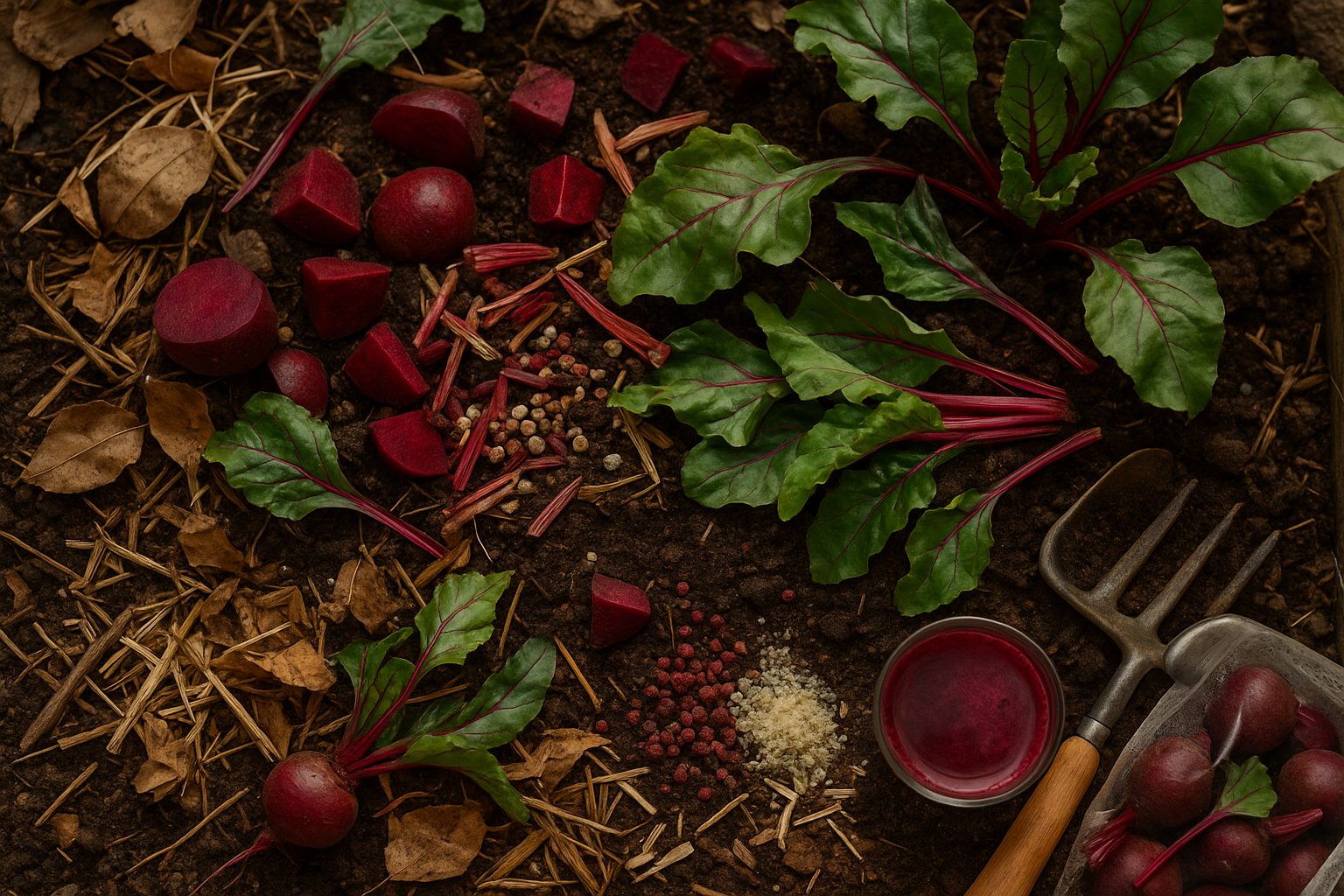
Composting beets is a smart way for eco-conscious gardeners to turn kitchen scraps into nutrient-rich soil while reducing household waste. If you’ve ever wondered what to do with beetroot skins, stems, leaves, or those leftover bits after making a salad, you’re not alone. Many gardeners ask if composting beet scraps and greens is safe, effective, or even advisable—especially given the strong pigments and earthy flavors that make beets so distinctive.
In this article, you’ll discover the best practices for composting every part of the beet plant, from tough roots to delicate leafy greens. We’ll answer key questions like: Will beet colors affect my compost? Are beet greens as compostable as the roots? Is there a trick to breaking down stubborn beet chunks? Along the way, you’ll get easy, step-by-step tips, learn about the benefits of adding beets to your compost bin, and see how these vibrant veggies can help improve soil quality in your own garden. Whether you’re a composting newbie or a seasoned pro looking to fine-tune your process, you’ll come away ready to make the most of every beet from root to leaf.
The Benefits of Composting Beetroot
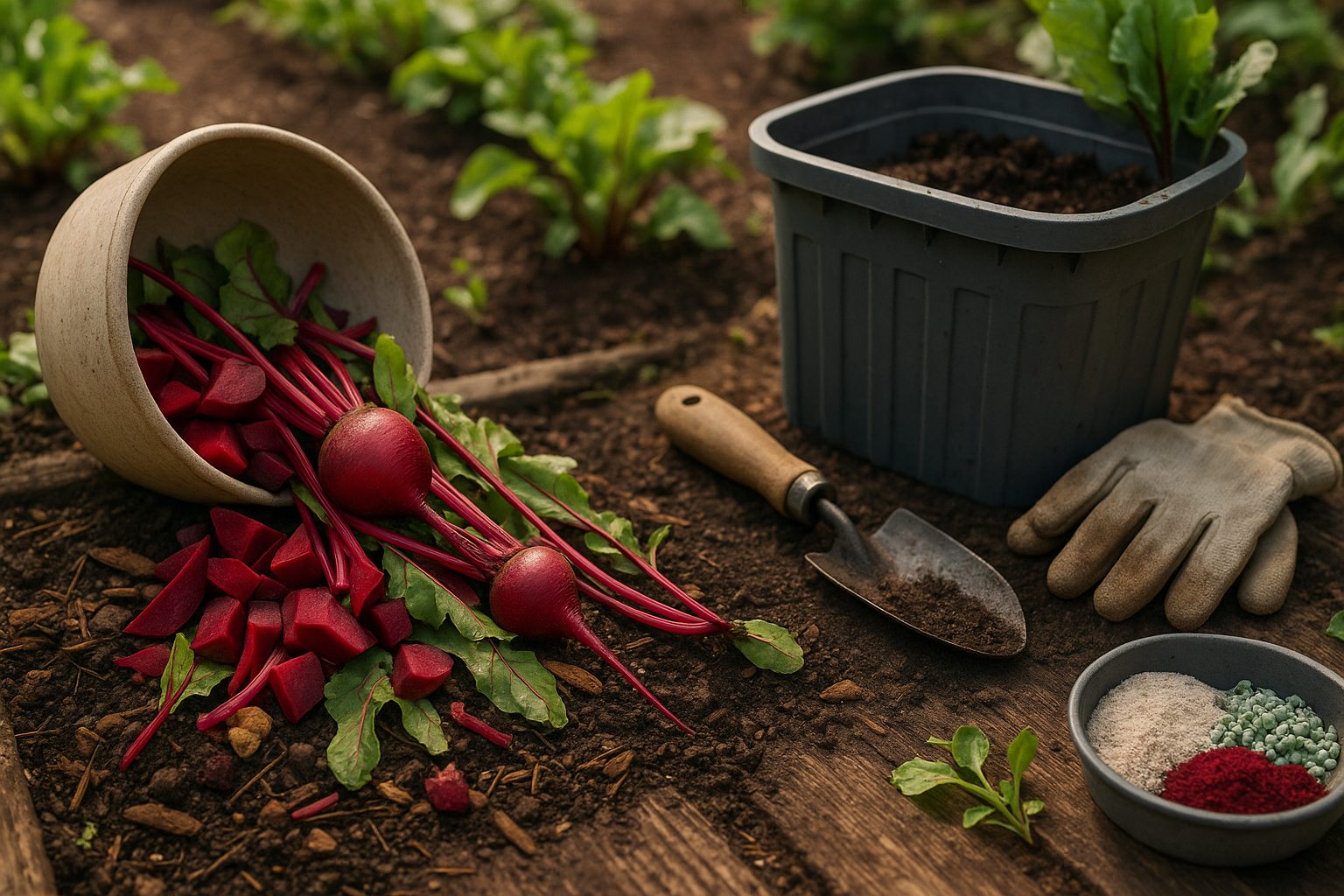
Composting beetroot scraps is a simple yet powerful way to boost the health of your garden and the environment. Beetroot is loaded with nutrients like potassium, magnesium, and iron, which break down and enrich your compost heap.
When you add beetroot peels, leaves, or even whole beets that have gone soft, you’re investing in compost that’s higher in organic matter and vital minerals. This extra nutrient content directly benefits your garden soil—beetroot-enriched compost feeds beneficial microbes, improves soil structure, and gives your plants ready access to key elements for growth.
Gardeners often notice healthier root systems, sturdier stems, and more vibrant blooms after using compost with beetroot scraps mixed in. Plus, composting beetroot scraps keeps them out of landfills, where they would produce methane, a potent greenhouse gas, as they break down anaerobically.
By turning your beetroot leftovers into compost instead, you’re not only nourishing your garden but also doing your part to cut down on unnecessary waste and support a healthier planet.
Real-World Tip
If you’re worried about beetroot staining your compost pile, just bury the scraps in the center or cover them with a bit of dry material—it will blend right in.
Whether you’re an experienced gardener or just starting out, making use of beetroot waste in your compost bin is a win-win for your plants and the environment.
What Parts of Beetroot Can You Compost?
Beetroot is a great addition to your compost pile, and most parts can be composted safely, including the roots, skins, greens (leaves and stems), and even cooked leftovers as long as they don’t contain oils, dairy, or meats. The fresh beetroot roots and greens break down quickly, adding valuable nutrients and moisture to your compost.
Skins and peelings are also compost-friendly, and if you juice beets, the leftover pulp is perfect for composting. Cooked beetroot scraps can go in as long as they’re free from added fats or seasoning, which might attract pests.
However, steer clear of composting any beetroot that shows signs of disease or rot, as harmful pathogens could contaminate your finished compost. Also, avoid very large pieces—these take much longer to decompose and can slow the whole pile down. To speed decomposition, chop beetroot parts into smaller pieces before adding them.
Mixing beetroot material with dry, carbon-rich items like leaves, straw, or shredded paper helps keep the compost balanced and prevents it from getting too soggy. Remember, beet juice can stain and sometimes attract insects, so be sure to bury fresh beet scraps deep inside your compost pile rather than just tossing them on top.
As with any composting, turning your pile regularly and keeping a good balance of green and brown materials will ensure that your beetroot scraps break down efficiently and help create rich, healthy compost for your garden.
How to Compost Beetroot Effectively
Composting beetroot waste is a fantastic way to recycle kitchen scraps and create nutrient-rich compost for your garden. To get the best results, follow these simple steps.
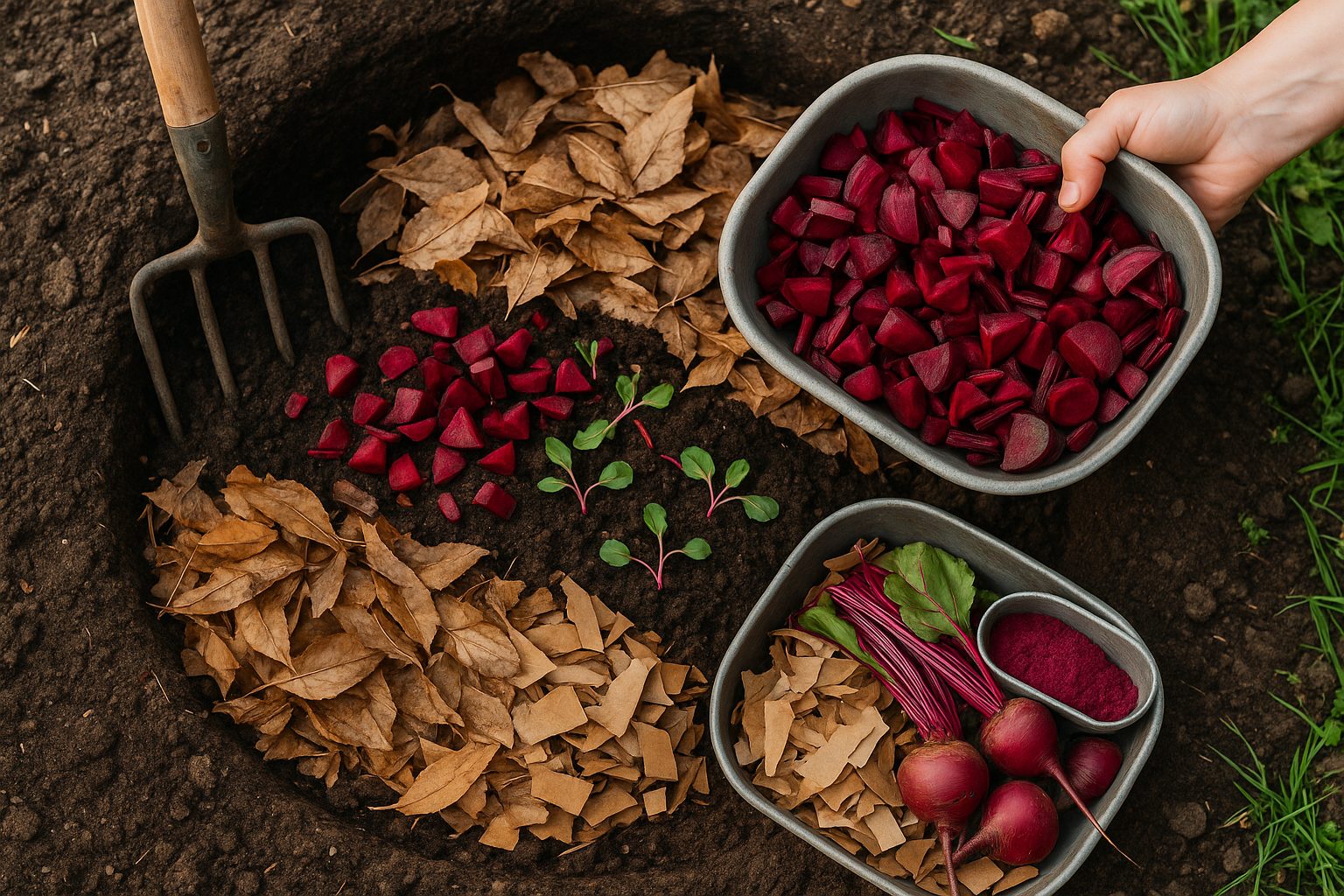
Start by chopping beetroot peels, leaves, and any leftover pieces into small chunks—smaller pieces decompose faster and help prevent clumping.
Since beetroot is a “green” material, meaning it’s high in nitrogen, it’s important to maintain a healthy compost balance by layering it with “browns” such as dry leaves, cardboard shreds, or straw. Aim for roughly one-third greens to two-thirds browns to encourage efficient breakdown and avoid soggy or smelly piles.
Every week or two, use a garden fork or compost aerator to turn the pile. Mixing the beetroot with other ingredients and ensuring plenty of airflow speeds up decomposition and prevents odors.
Traditional (Cold) Composting
If you’re using the traditional cold composting method, keep your pile moist but not soggy, and be patient—beetroot can take a few months to break down fully.
Hot Composting for Faster Results
For quicker composting, try hot composting:
- Build a larger pile (at least 3 feet wide and tall)
- Maintain a good green-to-brown ratio
- Check the temperature regularly to keep it above 130°F
Hot composting breaks beetroot down in just a few weeks if you turn the pile frequently and keep it moist.
You might notice the beetroot’s vibrant color initially, but it will fade as it breaks down and won’t stain your finished compost.
Whether you choose traditional or hot composting, regular mixing and balancing with browns help the beetroot decompose efficiently. The result will be rich, crumbly compost that’s perfect for feeding your plants.
Troubleshooting and Common Pitfalls
Composting beetroot might sound straightforward, but several common pitfalls can slow down the process or create unpleasant side effects. One main issue is slow decomposition, which often happens if beetroot pieces are too large or if there’s an imbalance between “greens” (like beetroot) and “browns” (leaves, straw, shredded paper). To fix this, chop beetroot into small pieces and always add a layer of dry materials after each deposit.
Another frequent problem is a strong, unpleasant odor—usually a sign of too much moisture or not enough oxygen. If your pile smells sour or rotten, mix in more browns and turn the pile often to improve aeration.
Persistent pests such as flies or rodents can also strike, especially if you’re composting cooked or pickled beetroot, which tends to be more aromatic and break down differently. Avoid this by burying food scraps deeper in the pile or covering them with plenty of browns.
For beetroot that’s heavily salted, pickled, or cooked with oils and spices, it’s best to add only small amounts at a time, since salt and fats can disrupt the composting process and slow things down.
If you notice visible chunks or pinkish, slimy pieces that just won’t break down, it usually means your pile isn’t hot or active enough—turn the compost more regularly and maintain a balanced ratio of greens to browns.
Remember, patience is key. Small tweaks like shredding beetroot, balancing moisture, and ensuring plenty of aeration can help create rich, odor-free compost—even with tricky materials like beetroot.
Using Your Beetroot-Enriched Compost in the Garden
Knowing when your beetroot-enriched compost is ready is simple: it should be dark brown, crumbly, and have an earthy smell, with no visible beet scraps or strong odors. If you still spot purple beets or smell anything sour, let it break down a bit longer.
Once it’s finished, spread a 1-2 inch layer of this nutrient-rich compost over your garden beds. Use a garden fork to gently mix it into the top few inches of soil, or simply side-dress around established plants.
For potted plants, blend compost with potting mix at a 1:3 ratio or add a thin top layer and water it in.
Beetroot-enriched compost is especially fantastic for root vegetables like carrots and potatoes, leafy greens, and even tomatoes, thanks to the potassium and micronutrients from the beets. It works well in clay or sandy soils, helping improve drainage and water retention.
Quick tip: avoid piling compost against plant stems to prevent rot, and water freshly composted areas to help nutrients move into the soil.
For best results, refresh your beds with compost at the start of each season and add a small handful when transplanting new seedlings.
If you notice worms in your garden beds after adding beetroot compost, that’s a great sign—healthy soil life means bigger, tastier crops.
Frequently Asked Questions About Composting Beetroot
Many people wonder whether beetroot can go in their compost, especially when it comes to vermicomposting with worms or adding cooked and pickled beets. Good news—worms can handle beetroot scraps, but remember that cooked or pickled beets are best added in moderation.
Cooked beets break down faster but might attract pests or get mushy, so balance them with dry materials like shredded paper. Pickled beets contain vinegar or salt, which can harm worms if added in large amounts—try letting pickled pieces air out or rinse them first to reduce acidity.
Another frequent question involves the beet’s deep red color; while the color can briefly dye other compost materials, it doesn’t cause any harm or affect the finished compost. The color will fade as everything decomposes.
If you notice “pink” worm castings or a lingering beet smell, it just means the material is still breaking down—just keep mixing your compost and add brown, dry materials to balance moisture.
Every compost pile is unique, so if you see worms avoiding beetroot at first, don’t worry—they may take a little time to adjust. Try chopping up the beets smaller to speed things along.
Composting is all about learning what works for your setup, so don’t be afraid to experiment with different beetroot forms and monitor your results. If something doesn’t break down well, adjust your approach and share what you’ve learned with your fellow composters!
Conclusion
Composting beetroot scraps is a simple and rewarding way to turn kitchen waste into nutrient-rich soil for your garden. By following the steps outlined in this guide—such as chopping up scraps, balancing greens and browns, and maintaining moisture—you can ensure your compost pile breaks down efficiently.
Not only does composting reduce the amount of waste sent to landfill, but it also feeds your plants naturally, leading to healthier growth and bigger harvests. Start small, experiment with what works best for your space, and enjoy the satisfaction of giving back to the earth while improving your garden.