Introduction
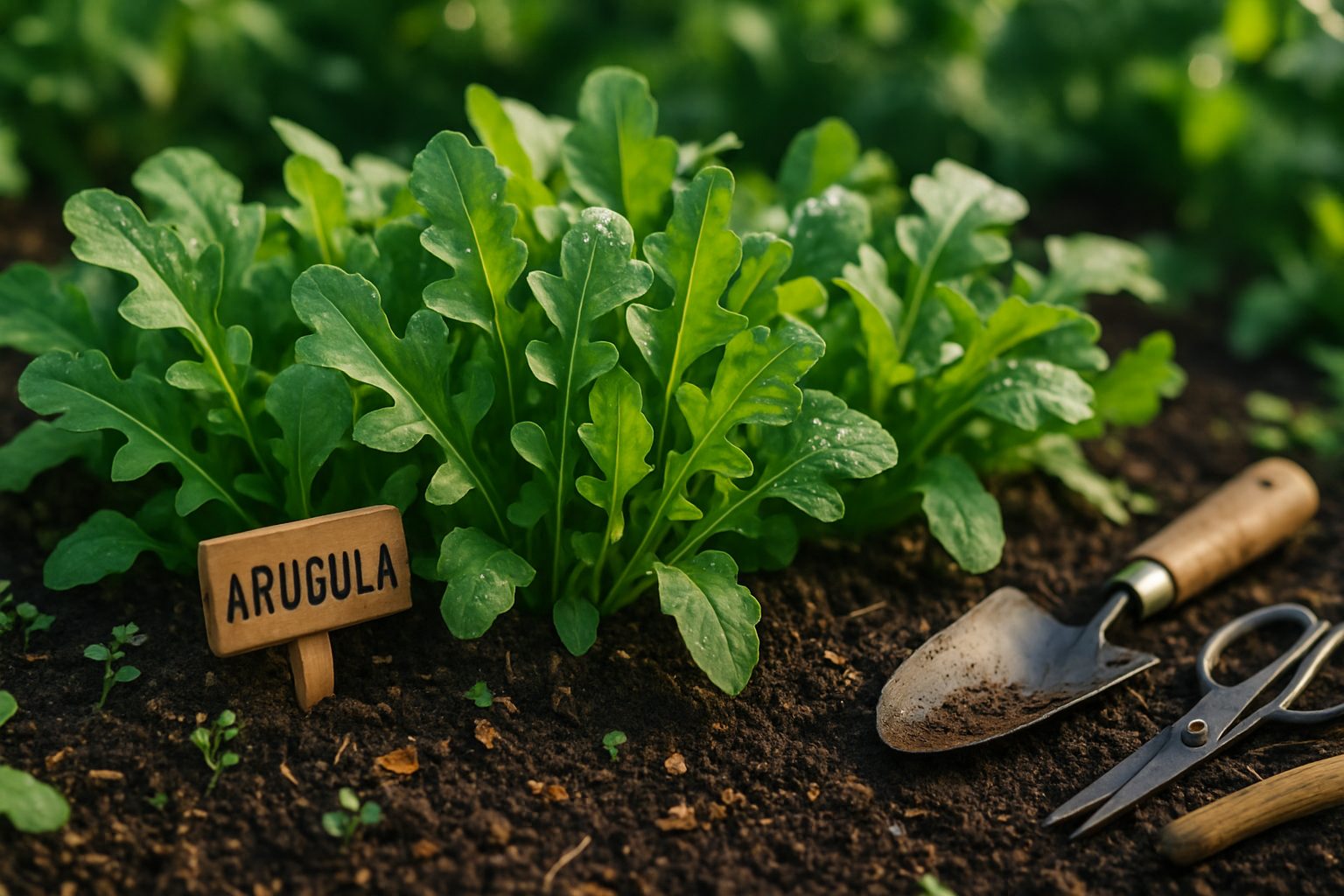
Year-round arugula growing is gaining popularity among home gardeners and chefs alike, and it’s easy to see why. Arugula, also known as “rocket,” is loved for its peppery flavor and impressive versatility—it can jazz up salads, sandwiches, pastas, or even homemade pizzas. What really sets arugula apart is how incredibly easy it is to grow, even for beginners.
Whether you’re working with a sunny garden bed, a balcony container, or an indoor windowsill, arugula thrives with minimal effort and matures quickly, rewarding you with fresh greens in just a few weeks. In this blog post, we’ll explore how to successfully grow arugula throughout the entire year, with practical tips for planting, caring for your crop, harvesting for maximum flavor, and creative ways to use your bounty in the kitchen.
Let’s dig into the secrets of enjoying arugula in every season!
Why Grow Arugula? (Benefits and Uses)
Growing arugula at home offers a range of benefits that go beyond just adding another leafy green to your garden. Packed with essential nutrients, arugula is a treasure trove of vitamins A, C, and K, along with minerals like calcium, potassium, and magnesium that support bone health and immune function. It’s also full of antioxidants, which help protect your cells from everyday stress and may reduce inflammation.
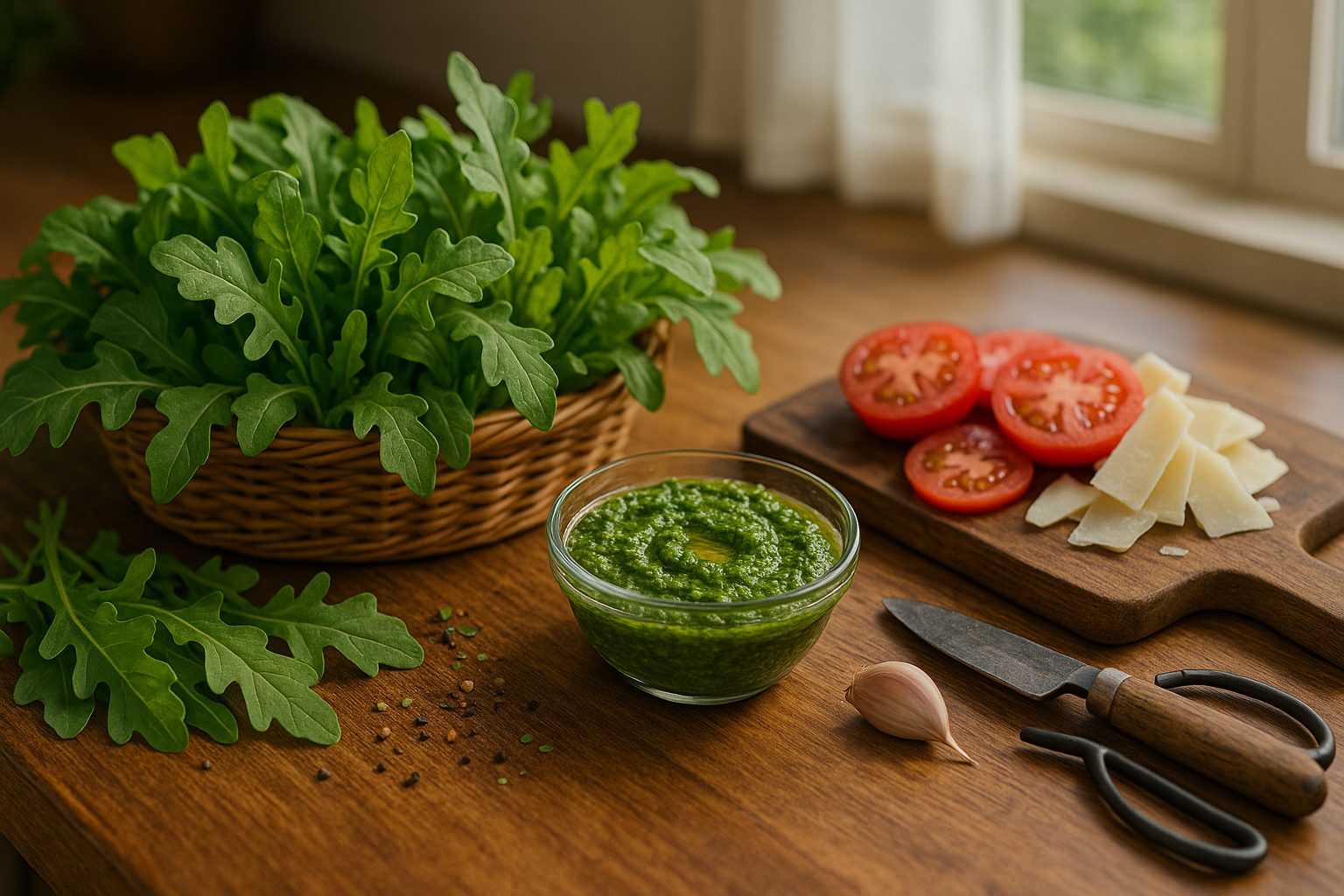
In the kitchen, arugula stands out for its signature peppery, slightly tangy flavor—a tasty change from more common lettuces. This unique bite makes arugula a favorite in fresh salads, adding depth and zing. It’s just as delicious scattered atop homemade pizza or tucked into a pressed sandwich. The culinary possibilities are almost endless; you can even blend it into pesto or stir it into scrambled eggs for an extra hit of flavor.
When you grow your own arugula, you’ll notice the leaves are crispier and more flavorful than most supermarket varieties, which often lose their punch during long transit and storage. Harvesting right from your garden means fresher salads and a constant supply you can tailor to your needs, boosting both taste and self-sufficiency. Plus, arugula is one of the easiest greens to grow, thriving in small spaces or containers.
Another perk: arugula’s natural spiciness and aroma help repel certain pests, making it a fantastic companion plant for vegetables like tomatoes or carrots. By including arugula in your garden, you’re not only enhancing your meals and health, but also helping to create a more resilient and productive organic plot.
Planning Your Arugula Crop: When and Where to Plant
Arugula thrives in cool weather, making early spring and fall the best seasons to plant it for tender, peppery leaves. Whether you have a backyard garden, a few pots on your patio, or even a sunny windowsill indoors, arugula is surprisingly flexible about where it grows.
Outdoors, look for well-drained soil and space your rows or containers so each plant gets enough airflow—a 6-to-8 inch gap between plants prevents overcrowding and disease. If you’re short on space, arugula grows exceptionally well in containers that are at least six inches deep, making it perfect for balconies or small patios.
Indoors, place your pots in spots that get at least four hours of direct sunlight a day, like a south-facing window, or supplement with a grow light if needed.
Arugula flourishes in USDA zones 3-11, but in especially hot climates, provide some afternoon shade or plant early enough to avoid scorching summer heat.
For gardeners who love a steady supply, try succession planting: sow a few seeds every two or three weeks from early spring through fall. This way, you’ll always have fresh leaves ready to pick instead of a single overwhelming harvest.
Whether you’re growing in the ground, in containers, or on your kitchen counter, a bit of planning helps you enjoy arugula’s fresh flavor almost year-round.
Planting Arugula: Step-by-Step Guide
When choosing arugula seeds, consider your taste and intended use—cultivated varieties like ‘Rocket’ and ‘Astro’ offer milder, nutty flavors perfect for salads, while wild types like ‘Sylvetta’ pack a peppery punch and thrive in tougher conditions. Microgreen seeds yield tender, quick-growing greens ideal for snappy garnishes.
Once you’ve picked your seeds, prepare well-draining, loose soil rich in organic matter; arugula prefers slightly sandy or loamy soils with a pH between 6.0 and 7.0. Clear out any rocks or debris, mix in compost, and keep the bed moist but not soggy.
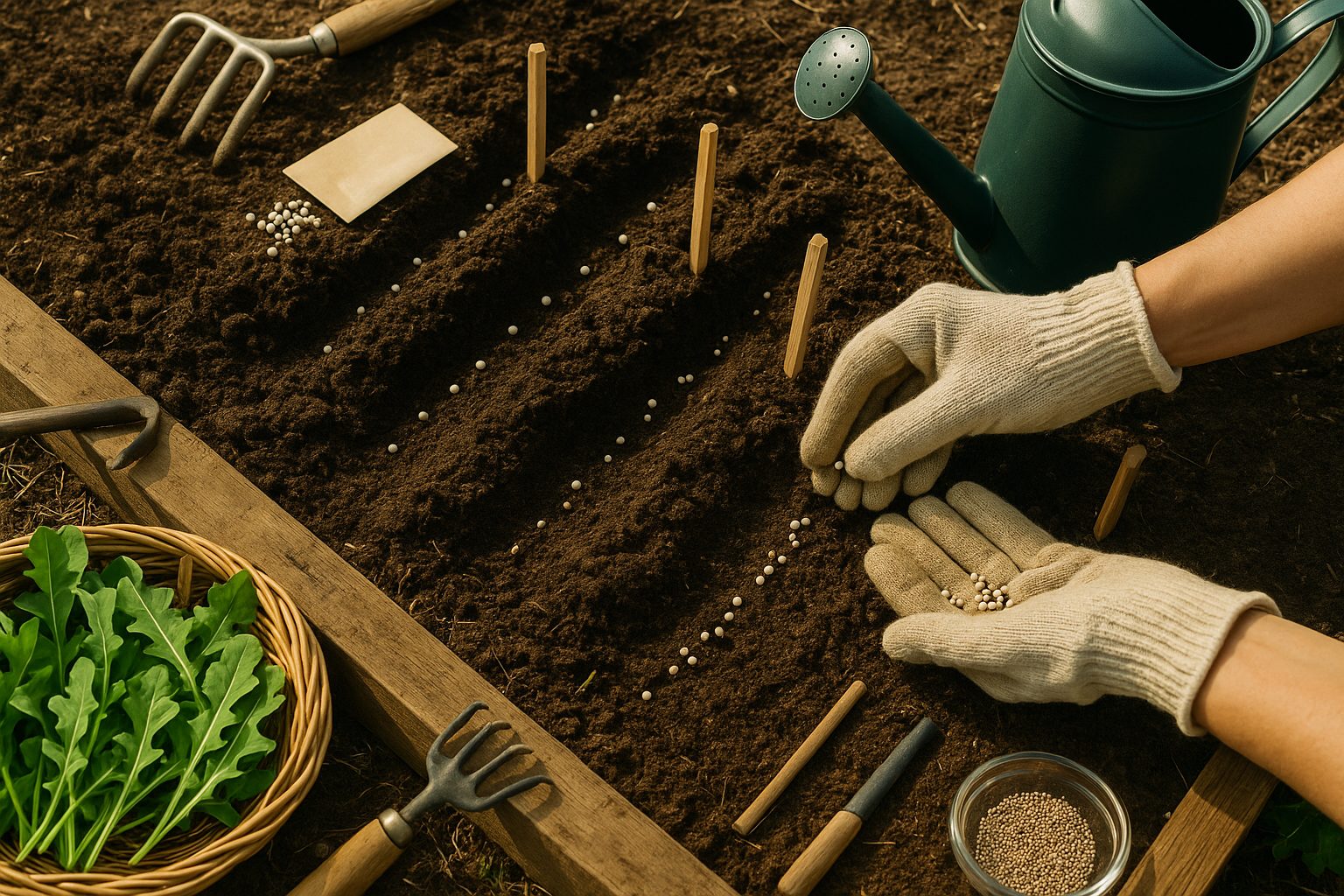
To sow, plant seeds about 1/4 inch deep and 1–2 inches apart. For full leaves, sow them directly in the garden several weeks before your last expected frost, as arugula thrives in cool weather. Alternatively, you can start seeds indoors in trays for an early crop and transplant them after the risk of frost passes.
Germination usually happens quickly—expect seedlings in as little as 5 to 7 days if soil temperatures are around 50–65°F (10–18°C). To boost germination, keep the soil consistently moist and avoid letting the top layer dry out. Thin the young plants to about 6 inches apart once they have two true leaves to ensure enough space for healthy growth.
With the right prep and care, you’ll be harvesting peppery arugula leaves in just three to four weeks, making it a rewarding and fast addition to your garden or kitchen windowsill.
Caring for Your Arugula Plants
Caring for your arugula plants is all about consistency and observation. Keep the soil evenly moist—water when the top inch feels dry, but avoid letting the roots sit in soggy ground, which can cause rot. If you’re growing in containers, use well-draining soil and water more frequently, as pots dry out faster.
Feed your arugula with a balanced, all-purpose fertilizer every 3-4 weeks; a lack of nutrients can show up as yellowing leaves and slow growth, so watch for these signs. For an organic boost, try adding compost or a liquid seaweed solution.
When it comes to pests like aphids or flea beetles, encourage ladybugs or spray with diluted neem oil, and hand-pick larger culprits—always check the undersides of leaves. Fungal diseases are less common if you space your plants well and avoid wetting the foliage. But if you spot mildew, try spraying with a baking soda solution.
Arugula thrives in full sun but can tolerate partial shade, a real plus for containers on patios or indoor setups—just ensure at least 4-6 hours of bright light daily. Indoors, place pots near a south-facing window or supplement with a grow light.
Thin seedlings once they have two true leaves, leaving 4-6 inches between each plant for good airflow and robust growth. Keep the area weed-free, as weeds compete for nutrients and invite pests, and snip off any yellow or damaged leaves to promote healthy new greens.
With a bit of routine care, your arugula will reward you with plenty of peppery, nutritious leaves.
Harvesting and Storing Arugula
Knowing when to harvest arugula is key to getting tasty, tender leaves. Look for young, bright-green leaves about 2-3 inches long—these smaller, delicate leaves offer the best flavor, with a peppery bite that isn’t too bitter. If you wait until the leaves are much larger, they can become tough and overly pungent.
For a “cut and come again” approach, use clean scissors to trim the outer leaves a couple of inches above the base, leaving the central stem and a few inner leaves untouched. This lets the plant continue producing new foliage for future harvests.
Try to pick arugula in the cool of the morning when leaves are crisp and hydrated for maximum freshness. Once harvested, shake off any dirt and gently pat the leaves dry.
Storing Arugula
To store arugula, place the unwashed leaves in a container lined with a damp paper towel, which helps retain just enough moisture without causing rot. Cover loosely and refrigerate—the leaves should stay fresh for up to a week.
If you notice leaves wilting, give them a brief soak in cold water and dry them well before use; this can revive their texture and flavor.
Enjoying Your Arugula: Culinary Tips and Final Thoughts
Arugula adds a peppery punch to nearly any dish and is incredibly versatile, whether enjoyed raw or cooked. For a quick, fresh hit, toss arugula with lemon juice, olive oil, and a sprinkle of salt for a simple salad—try adding shaved Parmesan, cherry tomatoes, or thinly sliced apples for extra flavor and crunch.
Layer fresh arugula onto sandwiches, in wraps, or over homemade pizzas just after baking for a vibrant finish. Sautéing arugula with garlic and olive oil makes a tasty side dish or pasta topper, wilting the greens just enough to mellow their bite.
You can even blend arugula into a zesty pesto: combine it with walnuts, Parmesan, garlic, olive oil, and a squeeze of lemon for a bright sauce that’s delicious on pasta, roasted veggies, or grilled chicken.
Sprinkle arugula over scrambled eggs or mix it into grain bowls for a nutrient boost. Growing your own arugula is especially rewarding—it’s fast, easy, and yields a steady supply of fresh greens without constant trips to the store. Homegrown arugula also means you can harvest only what you need, enjoying the most tender, flavorful leaves possible.
Don’t be afraid to experiment: try mixing arugula with other greens, using it as a garnish, or even blending it into smoothies for a spicy twist. The more you play with this versatile green, the more you’ll appreciate its ability to liven up your meals and spark your kitchen creativity.