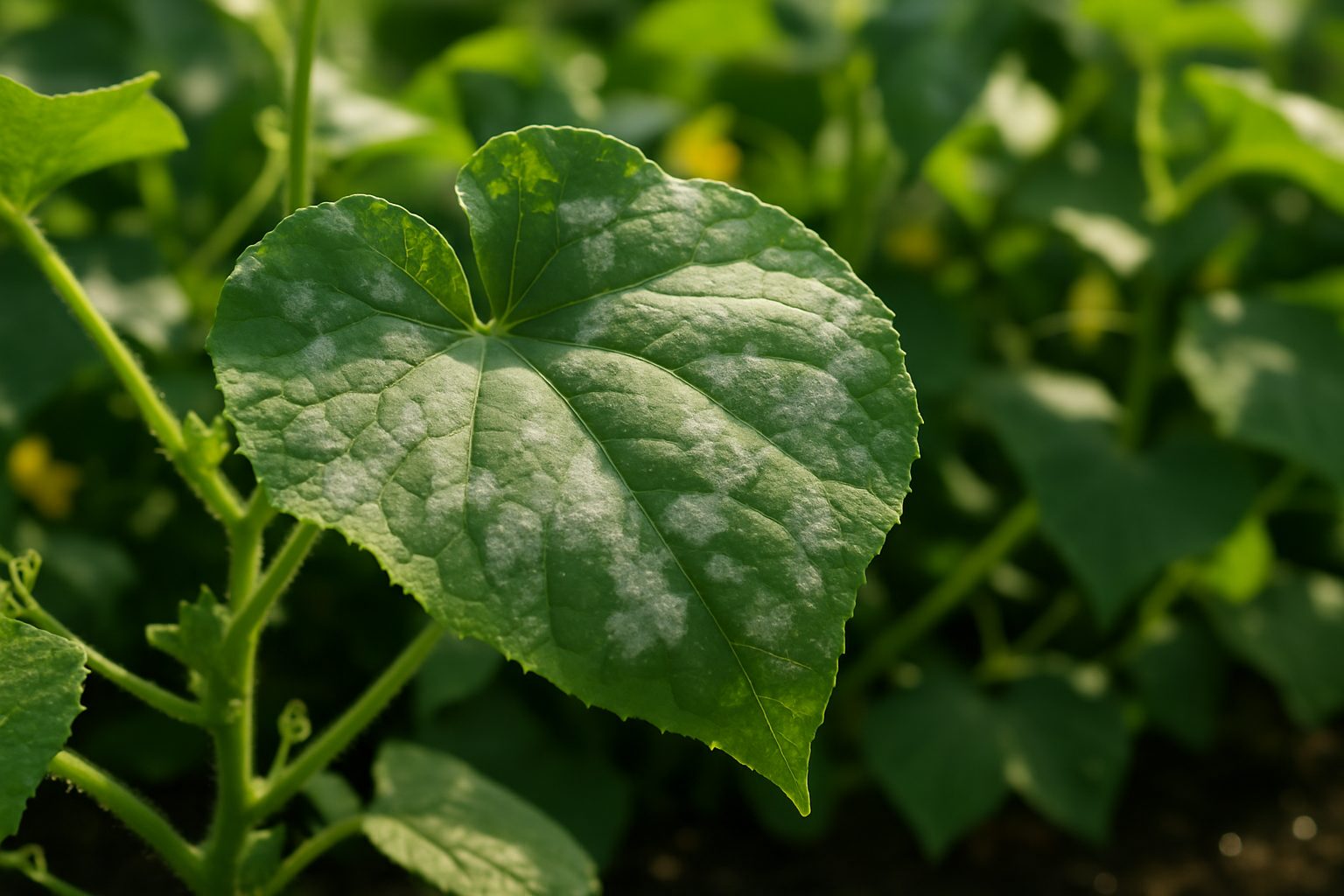
Recognizing Powdery Mildew on Cucumbers
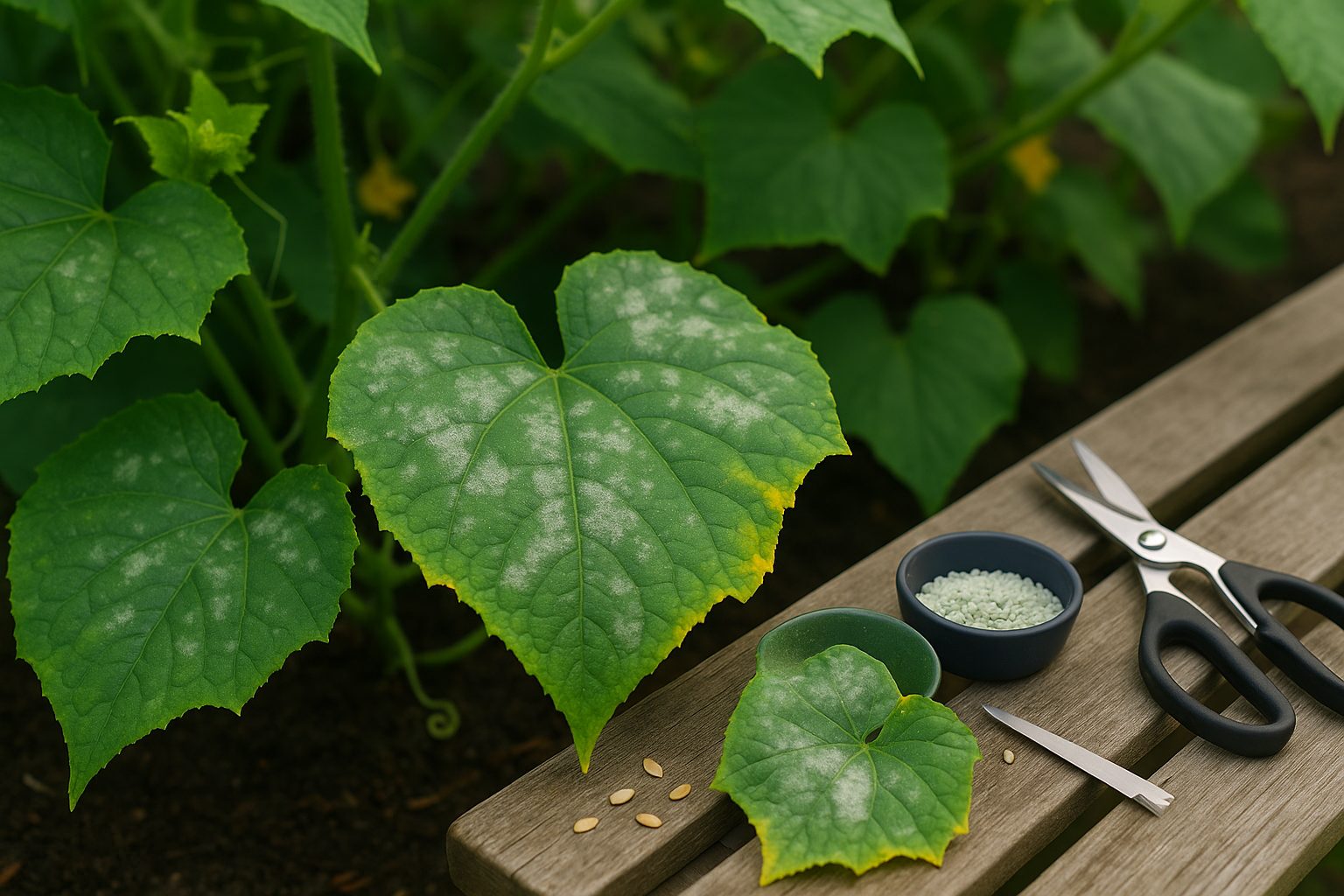
If you grow cucumbers, spotting powdery mildew early can make all the difference in saving your crop. Powdery mildew usually appears as small, white, powder-like spots on the surface of leaves, especially on the upper side. As the disease progresses, these spots may spread across the leaves, stems, and sometimes even the fruit.
You might notice leaves becoming yellow around the edges, curling, or showing slight distortion. Unlike other diseases such as downy mildew—which causes yellow or brown angular spots mostly on the underside of leaves and requires wet conditions—powdery mildew thrives even in dry, warm weather, with its hallmark being a dusty white coating. Another difference: leaf spots from bacterial infections often look water-soaked or greasy, not powdery.
As the infection advances, the white patches grow larger and merge, covering more of the leaf surface. A severely infected cucumber plant will have leaves that yellow, dry out, and eventually die. Fruit development suffers too—cucumbers may become stunted, sunburned, or oddly shaped. Over time, stems can soften or develop lesions, leading to overall plant decline.
Unlike some other foliar diseases, powdery mildew rarely causes leaves to rot or turn mushy; instead, it slowly saps the plant’s vigor, reducing yield and quality. If you catch these early signs, prompt action—like removing affected leaves or improving air circulation—can save your plants and still give you a healthy harvest.
What Causes Powdery Mildew?
Powdery mildew thrives in specific environmental conditions that make many gardens and greenhouses vulnerable, especially from late spring through early fall. High humidity—often above 60%—creates the perfect setting for spores to germinate, while moderate temperatures ranging from 60°F to 80°F encourage rapid growth of the fungus.
Poor airflow is another major contributor; crowded plants or closely spaced rows trap moisture, making it easy for spores to settle and infect vulnerable leaves. In cucumbers, powdery mildew is primarily caused by the fungi Podosphaera xanthii and Erysiphe cichoracearum. These fungi produce tiny, powder-like spores that travel easily by wind, water splashes, or even contaminated tools and hands.
Because spores can spread from infected plants to healthy ones quickly, an outbreak can escalate seemingly overnight, especially if warm, damp conditions persist. During late summer, when nights become cooler but daytime humidity remains high, outbreaks are particularly common.
To reduce your risk, consider these simple steps:
- Space plants for better air circulation
- Avoid overhead watering
- Promptly remove and dispose of infected leaves
These changes can break the cycle and keep your cucumber patch healthy.
Common Conditions that Encourage an Outbreak
Powdery mildew thrives in gardens and greenhouses where plants are crowded, air circulation is poor, or overhead watering is frequent—essentially, anywhere moisture lingers without a chance to dry out. Shade also increases the risk, since sunlight helps keep leaf surfaces dry and less hospitable to the fungus.
Outbreaks are especially common during warm, dry days followed by cool, humid nights, making late spring to early fall a risky period, particularly in temperate climates. To quickly assess your risk, take a walk through your garden in the morning:
- Check if leaves feel damp
- Notice if plants are pressed close together
- Look for areas that receive little direct sunlight
Spacing your plants well, avoiding watering foliage, and pruning dense growth can lower your chances of an outbreak. Watching for these simple cues goes a long way in staying a step ahead of powdery mildew.
Preventing Powdery Mildew on Cucumbers
Preventing powdery mildew on cucumbers starts with smart garden planning and ongoing care. Begin by spacing your plants at least 12–24 inches apart to allow air to move freely between the leaves, making it harder for mildew spores to thrive.
Trellising cucumbers is another simple way to increase air circulation and keep foliage dry. Choose powdery mildew–resistant cucumber varieties whenever possible; these are specially bred to withstand the disease, giving you a head start against infection.
Water your cucumbers early in the morning and aim for the base of the plant rather than the leaves—wet foliage creates the perfect environment for mildew to spread. Always remove any plant debris or unhealthy leaves from the garden; spores can linger on leftover material and infect healthy plants next season.
As for prevention, organic gardeners often turn to neem oil or a homemade spray of baking soda and water, both of which can help slow mildew from taking hold if applied regularly. If mildew pressure is high, certain approved fungicides can be effective as a last resort, but always read labels to ensure they are safe for edible plants and use them judiciously.
Keeping your cucumber patch clean, well-spaced, and healthy not only deters powdery mildew but also encourages a bigger, better harvest all season long.
Treating and Managing an Outbreak

When you first notice signs of an outbreak—such as discolored spots, fuzzy growth, or wilting—act fast to prevent it from spreading. Start by pruning away any affected leaves or stems using clean, sterilized scissors (wipe with rubbing alcohol between cuts), and discard them far from your garden to keep spores from returning.
Next, adjust your environment:
- Improve airflow by spacing plants further apart.
- Avoid overhead watering which keeps leaves wet.
- Water in the early morning so foliage dries quickly.
For immediate treatment, apply a fungicidal spray suitable for your plant type; options like copper-based sprays or neem oil can help curb fungal growth.
If you prefer organic home remedies, try a baking soda mixture—combine one tablespoon baking soda, one teaspoon mild liquid soap, and one gallon of water, then spray it lightly on affected plants every few days. Always spot-test before widespread application, as some homemade sprays can irritate sensitive plants.
If the disease continues to spread after these steps, intensify your efforts by reapplying treatments, increasing air circulation even further, and double-checking your watering practices.
In severe outbreaks, sometimes the best course is to remove and destroy badly infected plants entirely to protect the rest of your garden—especially if you’re fighting a fast-moving fungus or working with a small space where containment is difficult.
Every outbreak is a little different, so watch closely and don’t hesitate to respond quickly to new symptoms. Prevention, quick removal, and targeted treatments are your best tools for stopping disease in its tracks.
Tips for Long-Term Cucumber Plant Health
To keep your cucumber plants thriving year after year, start by practicing crop rotation—avoid planting cucumbers or other members of the squash family (like zucchini and pumpkins) in the same soil for at least two to three years. This prevents soil-borne diseases and pest buildup, giving your cucumbers a better chance each season.
Prioritize soil health by mixing in compost before and after each season, conducting a simple soil test to check for nutrient deficiencies, and mulching to retain moisture and suppress weeds.
As the growing season progresses, keep a close eye on your plants for signs of trouble, such as wilting leaves, spots, or unusual insect activity. Take photos and notes so you can compare year to year, catching patterns before they become persistent problems. Consider setting reminders to inspect your plants weekly during peak growing times.
If issues do pop up, don’t hesitate to tap into local extension services for expert advice or join community gardening groups—these resources often have region-specific recommendations and support.
By combining good cultural practices with a proactive monitoring routine and a solid support network, you’ll be much more equipped to maintain vigorous cucumber plants season after season.