Introduction to Winter Carrots
Carrots in winter might sound like a gardener’s dream, but with a bit of know-how, it can be your reality—even in cold climates. Many don’t realize that carrots actually become sweeter after exposure to cold; when temperatures drop, these root vegetables convert stored starch into sugar, resulting in a richer, more complex flavor.
That’s one reason why winter carrots are cherished by chefs and home cooks alike—they pack more sweetness and crunch than their summer counterparts. For home gardeners, growing carrots in winter offers more than just better taste. It’s an opportunity to extend your harvest season and enjoy the satisfaction of pulling fresh, crisp carrots from the ground long after the first frost.
Imagine serving up vibrant orange slices in stews, salads, or as a crunchy snack, straight from your own snowy backyard. Not only does this provide you with a supply of nutritious produce when grocery store options are limited or less fresh, but it also saves money and reduces your reliance on imported vegetables.
Whether you’re passionate about cooking, looking for a rewarding gardening challenge, or simply want fresh food in the colder months, growing carrots in winter is an enjoyable and practical way to make the most of your garden year-round.
Choosing the Right Carrot Varieties for Winter
Selecting the right carrot varieties is key to enjoying sweet, crisp harvests throughout the winter months. Not all carrots handle cold equally well—some withstand frosty conditions and store beautifully, while others may lose flavor or rot.
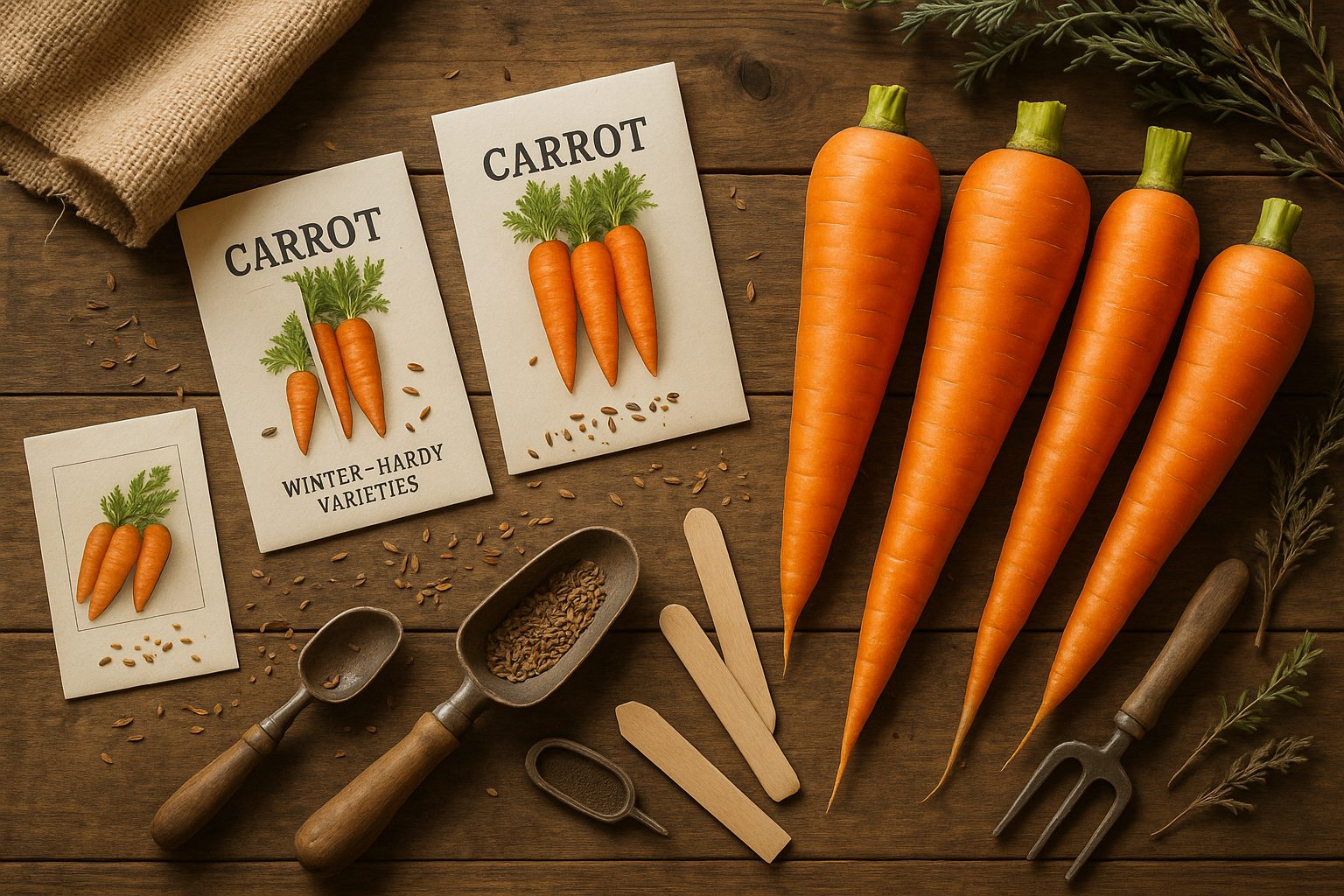
Winter-hardy varieties like Napoli, Autumn King, and Merida are favorites for cold-weather gardeners.
- Napoli is known for its early maturity and exceptional sweetness after frost, making it perfect for late fall and winter harvests.
- Autumn King produces long, thick roots that store well in the ground or a cool cellar, keeping their crunch for months.
- Merida thrives in unheated tunnels or mild climates, offering consistent yields even as temperatures dip.
When sourcing seeds, look for suppliers who specialize in heirloom or regional varieties—they often have selections tailored for overwintering. Be sure to check days-to-maturity, bolt resistance, and disease tolerance on seed packets or catalogs.
Also, consider your local climate and whether you’ll be harvesting straight from the ground or storing carrots in sand or sawdust. By prioritizing winter-resilient varieties and reputable seed sources, you can count on homegrown carrots that last through the coldest months, bringing garden-fresh flavor to your winter table.
Planting Carrots for Winter Harvest
To enjoy sweet, crisp carrots straight from your garden in the heart of winter, timing your sowing is key. Generally, aim to plant carrots 10-12 weeks before your area’s expected first hard frost. This often means mid-to-late summer for northern regions (July to early August) and early fall (September) for zones with milder winters. Check your local frost dates to fine-tune your planting window.
Choose a sunny site with loose, well-drained soil; heavy clay or rocky soils risk producing misshapen roots. To prepare the bed, remove rocks and debris, work in plenty of compost, and ensure the soil is at least 12 inches deep to give carrot roots room to grow. Avoid fresh manure, which can cause forking.
When sowing, space rows about 12-18 inches apart and sprinkle seeds thinly—dense sowing leads to thin, stunted carrots. Cover seeds lightly with 1/4 inch of fine soil, then gently firm and water the surface to avoid disturbing the tiny seeds.
Carrots need consistent moisture to germinate; keep the seedbed evenly damp (but not soggy) for two to three weeks, as carrot seeds often take this long to sprout. Consider laying a burlap cloth or a piece of cardboard over the soil to retain moisture, but remove it as soon as you see the first green shoots.
With these careful steps, you’ll set your winter carrots up for strong, healthy growth, ensuring fresh harvests when other crops are long gone.
Caring for Carrots During Cold Weather
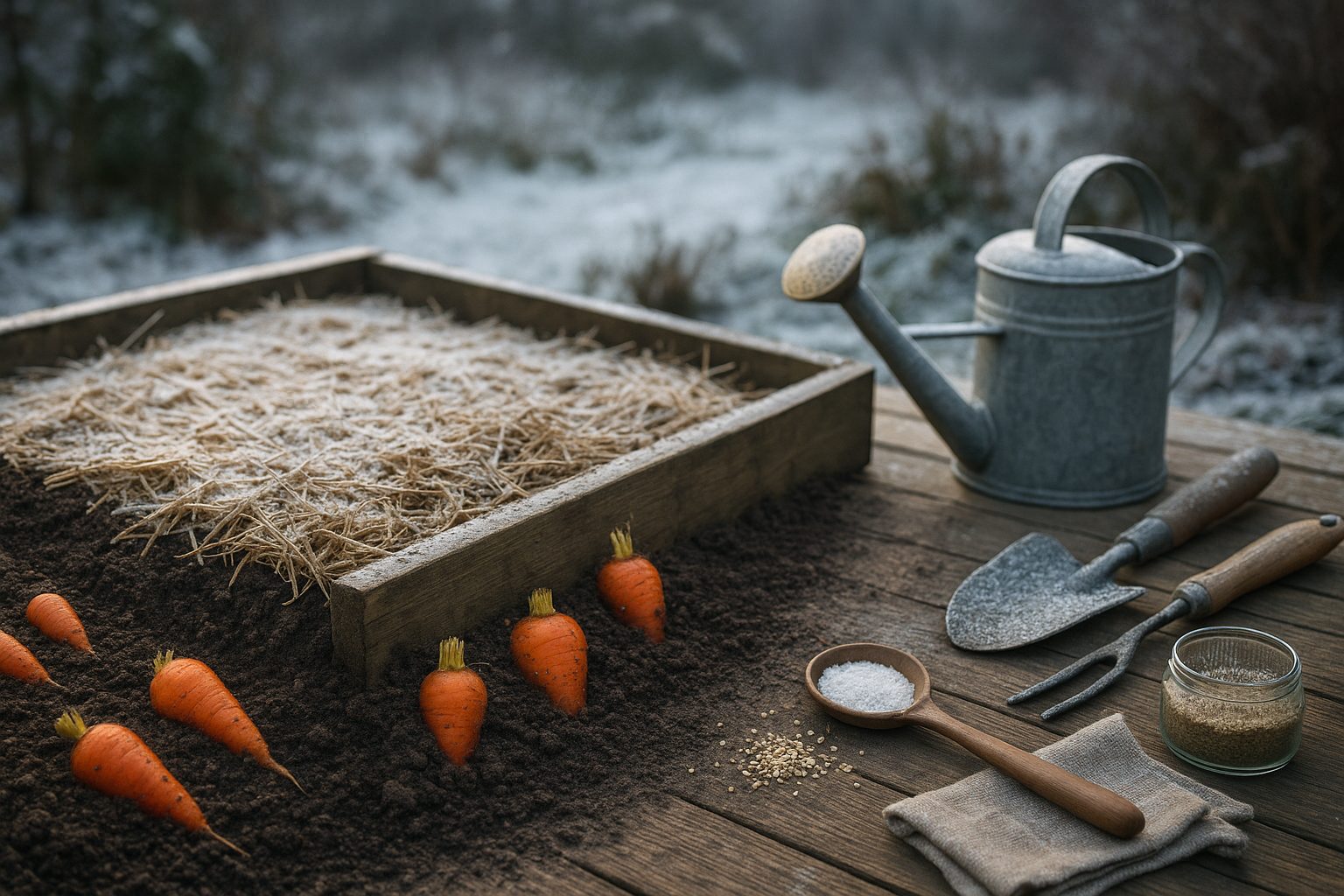
When cold weather approaches, protecting your carrot crops can make a big difference in both yield and quality. Start by applying a thick layer of mulch, such as straw or shredded leaves, over your carrot beds; this insulates the soil, keeping roots from freezing during overnight frosts and extending your harvest season.
Row covers are another simple, affordable way to shield carrots from cold snaps—just drape lightweight garden fabric directly over your plants and secure the edges to keep it in place. For even more protection, consider using cold frames, which act like mini greenhouses and can keep the ground several degrees warmer.
Throughout the fall, remember that carrots still need consistent moisture, even as temperatures drop. Water deeply when rainfall is lacking, but avoid overwatering, as soggy soil can cause roots to split or rot.
Fall is also the time to reduce fertilizer; carrots grown in rich, organic soil rarely need extra feeding once established, but if your plants look pale, a light side-dressing of balanced compost can help.
Don’t forget the importance of thinning seedlings early—crowded carrots compete for space and nutrients, leading to small, misshapen roots. Aim to thin plants to about 2 inches apart while they’re still young, and keep rows spaced about a foot apart for the healthiest growth.
By following these simple strategies, you’ll keep your carrots thriving all season long, even as temperatures dip.
Harvesting Winter Carrots: Timing and Technique
Knowing when your winter carrots are ready to harvest can make a big difference in their taste and texture. As your carrots mature, look for indicators like a bright, deep orange color peeking above the soil line and a diameter of about 1/2 to 1 inch, though size can vary depending on the variety you planted.
Gently brush away some soil to check not only the color but also the smoothness and firmness of the roots—carrots that feel plump and solid are likely ready. One of the special joys of winter carrots is their enhanced sweetness after experiencing a few frosts. Cold snaps prompt the plant to convert starches into natural sugars, acting like a built-in sweetener and creating remarkably crisp, flavorful roots.
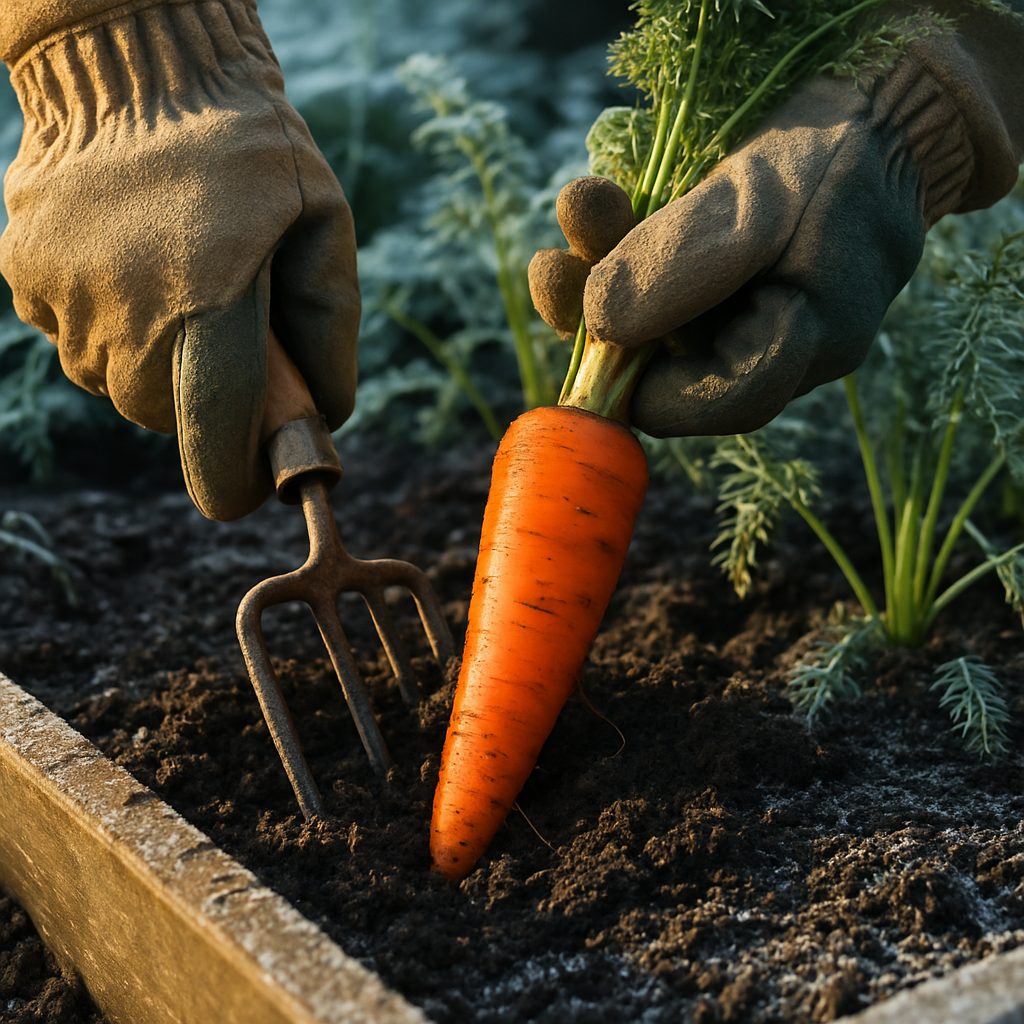
For the best results, plan to leave your carrots in the ground until after at least one or two frosts, provided your garden soil doesn’t freeze solid. When it’s time to harvest, use a garden fork to loosen the soil several inches away from the carrot row and gently wiggle each carrot free by the greens. Avoid yanking them straight up, as cold soil is often compacted and can snap the roots.
A little care in timing and technique will reward you with delicious, homegrown carrots all winter long.
Storing Carrots for Freshness All Winter
Keeping carrots crisp and fresh all winter is all about choosing the right storage method and preparing them properly. If winters are mild, one easy option is to leave carrots in the ground, covered with a thick layer of straw or leaves to insulate them from frost—just dig up as needed, but watch for rodents.
For those with root cellars or cool basements, dig up your carrots after the first light frost; brush off excess garden soil (don’t wash them yet), trim the greens to an inch to prevent moisture loss, and layer the roots in damp sand or sawdust in boxes. This keeps them from drying out and helps prevent rot.
If you don’t have a cellar, the refrigerator works too: remove greens, rinse gently, let dry completely, and store in perforated plastic bags or containers with a damp paper towel.
Whichever method you choose, check your carrots regularly for soft spots or mold, which can spread quickly—remove any affected roots right away. Avoid stacking carrots too tightly and make sure they aren’t stored near apples or pears, which emit ethylene gas and cause carrots to spoil faster.
With these strategies, you’ll have crisp, sweet carrots long after harvest.
Troubleshooting, Tips, and FAQs
Winter carrot growers often face issues like slow germination, splitting roots, and pest problems such as carrot flies. To boost germination, try soaking seeds overnight and keeping soil consistently moist, but not soggy. Protect crops from pests by using fine mesh covers and rotating where you plant each year.
Splitting can happen if carrots get too much water following a dry spell; water evenly and mulch to retain moisture. If growth is poor, enrich soil with compost and avoid fresh manure, which can cause forking.
For more tips and answers, check out local extension service guides or online forums like the RHS and GardenWeb.