Introduction
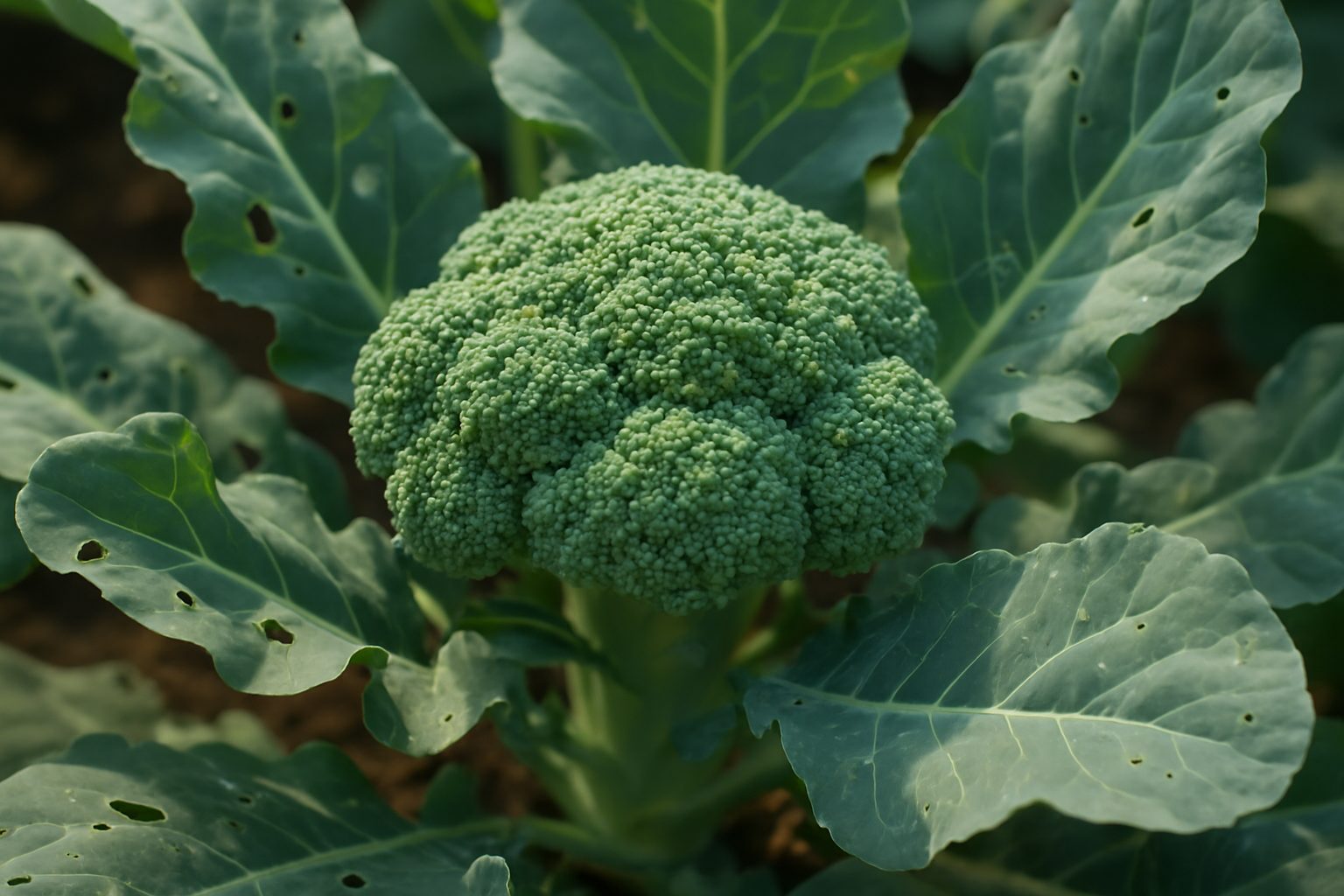
broccoli pests can turn a thriving vegetable patch into a gardener’s nightmare almost overnight. Despite its vibrant reputation as a hardy and nutritious crop, broccoli is actually highly susceptible to a range of insect invaders and diseases. If you’ve ever returned to find leaves riddled with holes or small worms hidden among the florets, you know just how quickly these pests can undo weeks of careful planting and nurturing.
Not only do these intruders target the visible parts of the plant, but some burrow unseen, compromising root systems and internal structures. This doesn’t just make your broccoli look less appealing—it poses a real threat to plant health, overall yield, and the quality of your harvest. For home gardeners and commercial growers alike, these issues can mean wasted time, resources, and money.
Left unchecked, broccoli pests can spread rapidly across a garden bed, diminishing productivity for the entire season and even affecting crops in subsequent years. Early detection is critical, as young larvae and eggs are far easier to manage than well-established pest populations. The difference between a lush, healthy crop and a stunted, infested one often comes down to regular monitoring and proactive management.
Getting into the habit of inspecting leaves (especially the undersides), monitoring soil health, and responding quickly to the first signs of trouble can save a lot of heartache—and keep your broccoli tasting as good as it should. Whether you garden for fun or food, understanding how these pests operate and knowing how to stop them is a game-changer for successful, sustainable broccoli growing.
The Most Common Broccoli Pests (Identifying the Culprits)
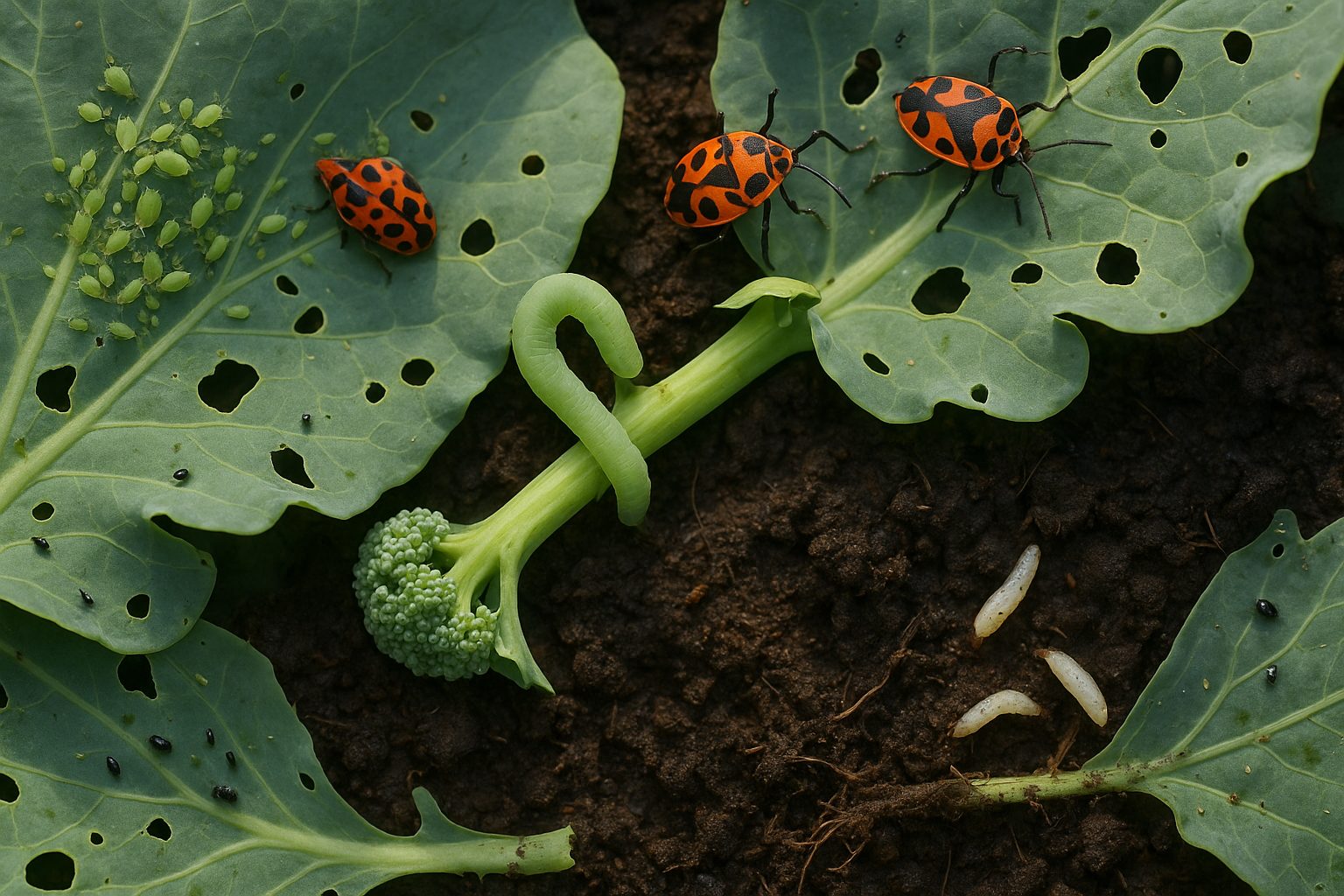
Broccoli plants can fall victim to a variety of determined pests, so learning to spot the most common culprits is key to protecting your harvest.
Aphids are tiny, soft-bodied insects—often green or gray—that cluster on new growth and the undersides of leaves, leaving behind sticky honeydew and curled leaves.
Cabbage loopers, light green inchworms known for their distinctive looping movements, chew large holes in leaves and hide on the lower surfaces.
Cabbage webworms are small, pale green caterpillars that spin webbing around young leaves and buds, leaving behind frass (caterpillar droppings) as they tunnel.
Cabbage root maggots are white, legless larvae found in the soil near roots, causing plants to yellow or wilt unexpectedly.
Diamondback moth caterpillars, tiny with forked tails, create small, irregular holes and may “drop” from leaves when disturbed.
Flea beetles are tiny, shiny black or bronze beetles that jump when approached, pitting leaves with many tiny, round holes.
Harlequin bugs, bold with orange and black patterns, suck sap from leaves, causing mottled, scorched spots and stunting plant growth.
Imported and cross-striped cabbageworms are fat green caterpillars; the former are velvety green with faint stripes, while the latter sport blue and yellow striping—both skeletonize leaves, sometimes leaving just the veins.
Armyworms are brownish, striped caterpillars that feed in groups, quickly stripping leaves and heads.
Whiteflies are tiny white insects visible on leaf undersides, where their feeding leaves yellow spots and their secretions promote sooty mold.
Spotting these pests early—whether insects themselves, telltale holes, sticky residue, faint webbing, or sudden plant decline—can help you nip infestations in the bud and enjoy a healthy broccoli crop.
Early Signs of Infestation: What to Watch For
Spotting pest problems early is key to protecting your broccoli plants, so it pays to know what to look for—even if you’re a new gardener. Common symptoms of infestation include holes in leaves, ragged edges, yellowed or wilted foliage, and black or brown specks, which are often insect droppings.
You might also notice that the broccoli heads look stunted or distorted, or see fine webbing or silky threads, a sign of caterpillars or aphids. Chewed stems and leaves are typical signs left by cabbage loopers or flea beetles—two pests that love broccoli.
In the early morning or later evening, when pests are most active, get in the habit of checking the undersides of leaves. This area is a favorite hideout for pests like aphids, cabbage worms, and eggs that blend in with the plant’s natural color.
Don’t forget to inspect the soil level and the bases of the stems, watching for cutworms or tiny beetles emerging from the ground. You can gently move the mulch or soil to spot pests trying to hide during the day.
As part of an effective routine, plan to scout your broccoli patch at least twice a week during the growing season. Carry a flashlight to check for nighttime insects, and keep a magnifying glass handy to spot tiny larvae or eggs.
Document what you see in a gardening journal or take photos with your phone, so you can compare changes over time and act quickly if a pest population seems to be growing.
By knowing these early signs and making regular inspections a habit, you’ll catch infestations before they get out of hand, keeping your broccoli healthier and your harvest more abundant.
Natural and Preventive Control Methods
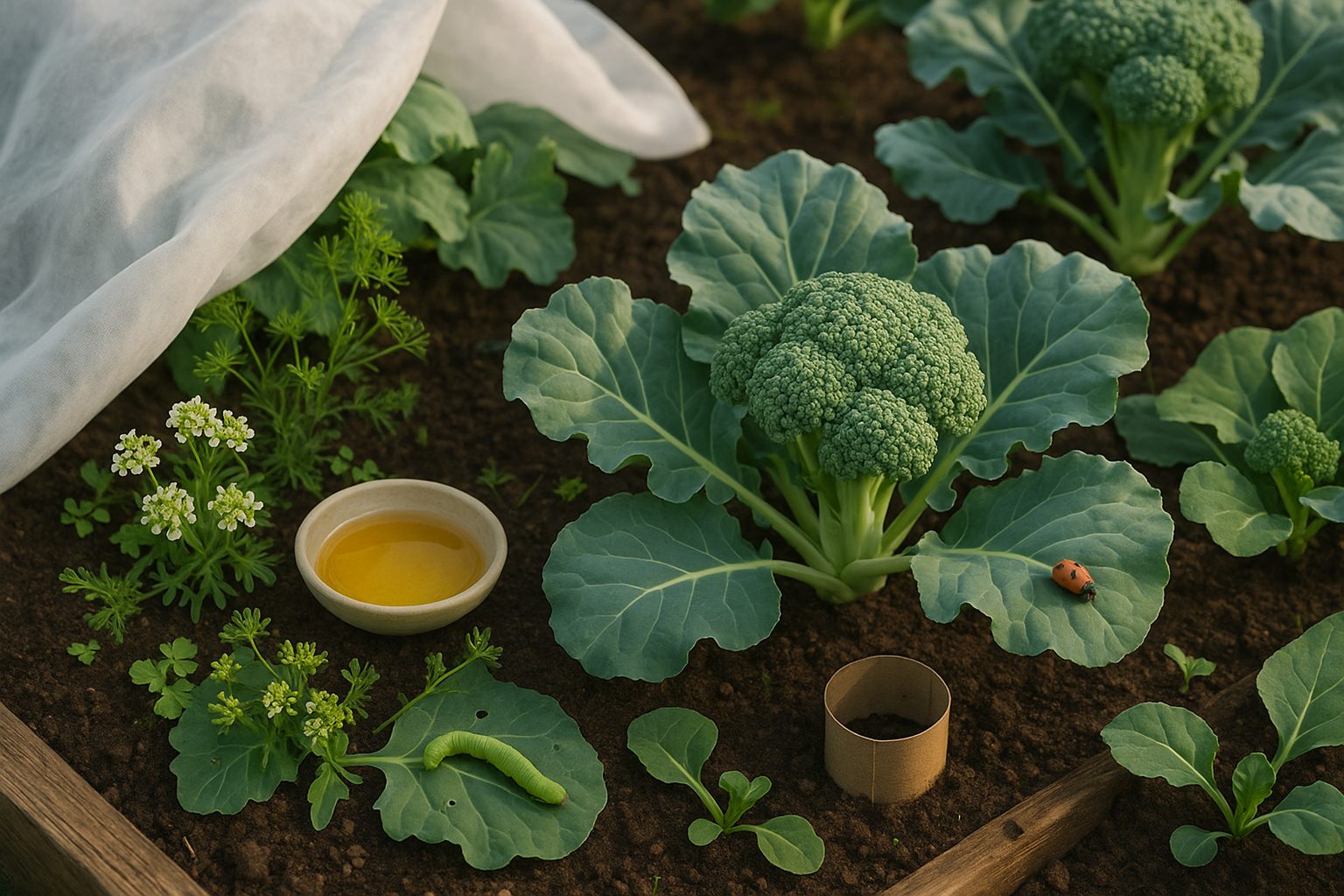
One of the easiest ways to keep pests at bay is through smart cultural practices. Start by rotating your crops each season so pest populations don’t get comfortable—this simple switch disrupts the life cycles of many common garden intruders. Proper spacing of your plants allows air to flow and keeps humidity down, making life less hospitable for fungal diseases and insects that thrive in crowded conditions.
After harvest or pruning, be sure to remove plant debris where pests can overwinter or lay eggs. Choosing disease-resistant plant varieties also gives your garden a natural shield, reducing your reliance on chemical interventions.
In addition to cultivating healthy plants, you can welcome natural pest controllers into your garden. Encourage beneficial insects like ladybugs, lacewings, and parasitic wasps by planting nectar-rich flowers such as alyssum, yarrow, or dill nearby—these attract the adults and help them stick around to feast on aphids, caterpillars, and other nuisances. You can also buy beneficial insects online and introduce them directly, but providing food and shelter keeps them coming back.
Physical barriers offer another line of natural defense: lightweight row covers can protect seedlings from moths and beetles without a single spray, and collars around stems can fend off cutworms. Try companion planting too—marigolds deter nematodes, while basil helps keep mosquitoes and whiteflies away from tomatoes and peppers.
Ultimately, maintaining a healthy, diverse garden ecosystem is your best pest insurance. Compost regularly to enrich the soil, water deeply but less frequently to strengthen roots, and avoid overfertilizing, which can attract sap-feeding pests. By creating these layers of natural resistance and inviting allies into your space, you’ll make your garden less attractive to pests and reduce the need for chemical controls.
Organic Solutions for Broccoli Pest Management
Managing broccoli pests organically can be both effective and safe when you use the right tools and techniques. Neem oil is a versatile option that disrupts insect feeding and growth cycles—spray it in the early morning or late evening for best results, making sure to coat both sides of the leaves since pests like aphids often hide underneath.
For caterpillars, especially the common cabbage looper, try Bacillus thuringiensis (Bt), a beneficial bacterium that specifically targets larvae but remains safe for pollinators and humans. Mix it according to label directions and spray only when you see young caterpillars, as Bt works best on early life stages.
Insecticidal soap, made from potassium salts of fatty acids, controls soft-bodied insects like aphids and whiteflies. Apply it directly to the pests, ensuring thorough coverage, but avoid spraying on very hot, sunny days to prevent leaf burn.
Diatomaceous earth is a powdery, abrasive substance that dehydrates crawling insects such as flea beetles and slugs. Dust it lightly on plant foliage and around the base, reapplying after rain or heavy dew for continued protection.
Always wear gloves and a mask when applying powders or sprays to minimize skin and respiratory exposure.
Maximizing Effectiveness
To maximize effectiveness and avoid harming beneficial insects, identify the specific pest and its life stage. Targeting treatments when pests are most vulnerable leads to better control and protects your broccoli crop.
Rotate your chosen products and spot test on a few leaves before broad use to avoid plant stress or buildup of resistance. Also, wash your harvested broccoli thoroughly to ensure safe, fresh produce for your table.
Using these organic methods thoughtfully helps you maintain a healthy garden while protecting the environment.
When to Take Stronger Action: Chemical and Integrated Approaches
Sometimes, even the most diligent gardeners face pest problems that outpace natural solutions. If your broccoli plants show widespread, severe infestations—like chewed leaves from cabbage loopers or aphids clustering despite regular hand-picking—it might be time to consider stronger action, such as chemical pesticides. However, chemical controls should be a last resort due to the risks they bring: beneficial insect decline, pollinator harm, pest resistance, and potential residues on your veggies.
That’s where Integrated Pest Management (IPM) comes in. IPM encourages you to first monitor pest populations, regularly inspecting leaves (especially the undersides) for eggs and larvae. Before reaching for sprays, assess whether the damage exceeds your “action threshold”—usually, if more than 20% of the plant shows feeding damage or growth is stunted, intervention is justified.
Try combining strategies like removing pests by hand, installing row covers, and using biological controls (such as releasing ladybugs) before moving to chemicals. If you decide a pesticide is necessary, pick one labeled specifically for broccoli and your target pest—organic options like Bacillus thuringiensis (Bt) for caterpillars can be effective while minimizing harm to other insects.
Always spray in the early morning or late evening to avoid harming pollinators, and follow label directions for dilution and re-entry intervals. Proper timing matters: hit pests when they’re most vulnerable—such as young larvae—rather than mature insects. Rotate chemical classes to prevent resistance, and never exceed recommended applications.
With careful observation, good garden hygiene, and smart product choices, you can protect your broccoli with minimal environmental impact, saving chemicals as a precise, last-resort tool rather than a routine solution.
Protecting Your Harvest: Cleaning and Storing Broccoli After Pests
After harvesting broccoli, it’s essential to act quickly to preserve its freshness and keep pests or residues at bay. Start by trimming away any visibly damaged or insect-infested parts of the broccoli heads.
Fill a large bowl or sink with cool water, then gently submerge the broccoli, swishing it around to help dislodge hidden bugs or dirt. Adding a splash of vinegar can boost the cleaning effect, but be sure to rinse thoroughly afterward to avoid any lingering taste.
Inspect the florets closely, paying special attention to tight clusters where tiny insects might hide; a soft brush or your fingers can help remove stubborn debris. Once clean, gently shake off excess water and allow the heads to air-dry on clean paper towels or a rack.
Storing Your Broccoli
For storage, wrap the broccoli loosely in a damp paper towel and place it in a perforated plastic bag in the refrigerator’s crisper drawer. This technique helps maintain proper humidity and airflow, reducing the risk of mold or wilting.
If you’ve dealt with a heavy pest problem, freezing may be the safest option. Blanch the cleaned broccoli in boiling water for 2-3 minutes, cool immediately in ice water, then pat dry and package in freezer-safe bags.
Whether you’re supplying your kitchen or the local market, always handle broccoli with clean hands and tools to minimize contamination. Prompt cleaning and proper storage not only preserve quality and safety but also help prevent surprise encounters with unwanted pests when it’s time to cook or sell your harvest.
Final Tips and Frequently Asked Questions
If you’re dealing with stubborn or recurring pest problems, act quickly—removing affected leaves or plants as soon as you spot trouble can stop pests from spreading. Keep your garden tidy by clearing away debris where bugs like to hide, and rotate crops each season to throw off pests that return year after year.
Many people wonder which bugs are truly harmful. As a rule, watch out for aphids, spider mites, and caterpillars that chew through leaves. But remember, not all insects are enemies—ladybugs and lacewings, for example, are natural helpers.
Should you remove infested plants? If the infestation is severe and affecting plant health or spreading to others, it’s better to remove and destroy those plants rather than risk the rest of your garden.
Take quick photos or notes about outbreaks, weather conditions, and what methods worked—keeping garden records helps you spot patterns and fine-tune your approach every year. By learning from past seasons and responding swiftly, you’ll become much more effective at controlling pests and protecting your harvest without unnecessary stress.