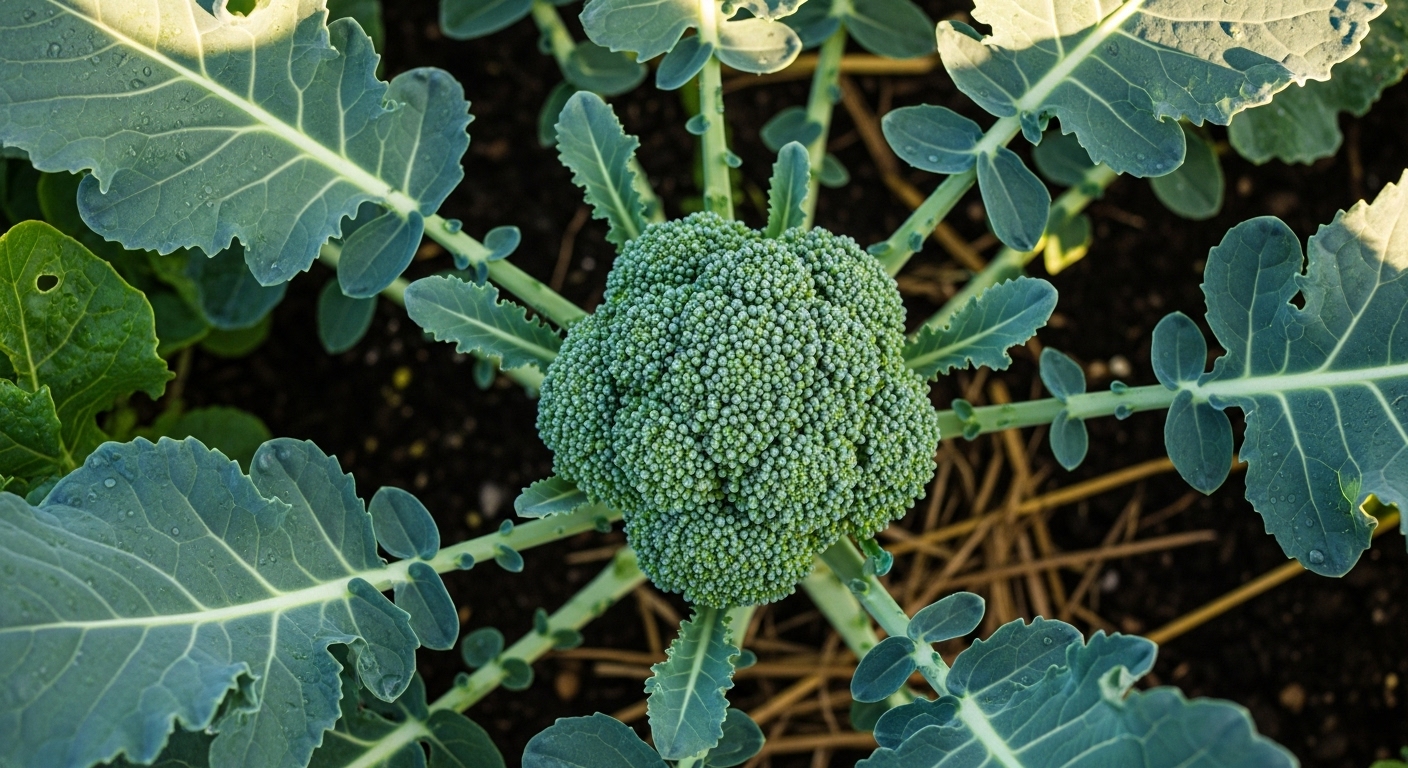
Understanding Broccoli’s Cold Tolerance
broccoli frost protection is key to a healthy, productive garden—especially as temperatures dip in the fall and spring. While broccoli is known for its impressive cold tolerance, understanding exactly how it handles frost will help you know when to provide extra care.
Broccoli seedlings are the most sensitive: they struggle when temperatures drop below 32°F (0°C), making them vulnerable to damage or slow growth with even light frost. In contrast, more mature broccoli plants can handle light frost (down to 28°F or -2°C) without serious issues; in fact, a brief touch of frost can even improve their flavor. Once broccoli reaches the stage of forming heads, it becomes more challenging—while the leaves may survive further cold, the heads can be damaged by temperatures below 26°F (-3°C).
True frost-hardy broccoli varieties are bred to withstand colder snaps, sometimes down to 20°F (-6°C) or slightly lower, but this isn’t the norm for all types. Even hardy varieties can only endure brief exposures to extreme cold before suffering damage.
For example, if you’re expecting a hard frost (temperatures below 24°F or -4°C for several hours), it’s important to take steps like:
- Covering plants
- Mulching heavily
- Harvesting heads early
Remember: while broccoli is a tough cool-season crop, its frost resistance changes drastically with its growth stage, so keep a close eye on young seedlings and those precious forming heads when the forecast calls for a freeze.
How to Protect Broccoli from Frost
Protecting broccoli from frost is easier than you might think with the right strategies. Start by keeping an eye on the weather forecast, especially when temperatures are expected to dip below freezing—this lets you act quickly, covering your broccoli before damage can occur.
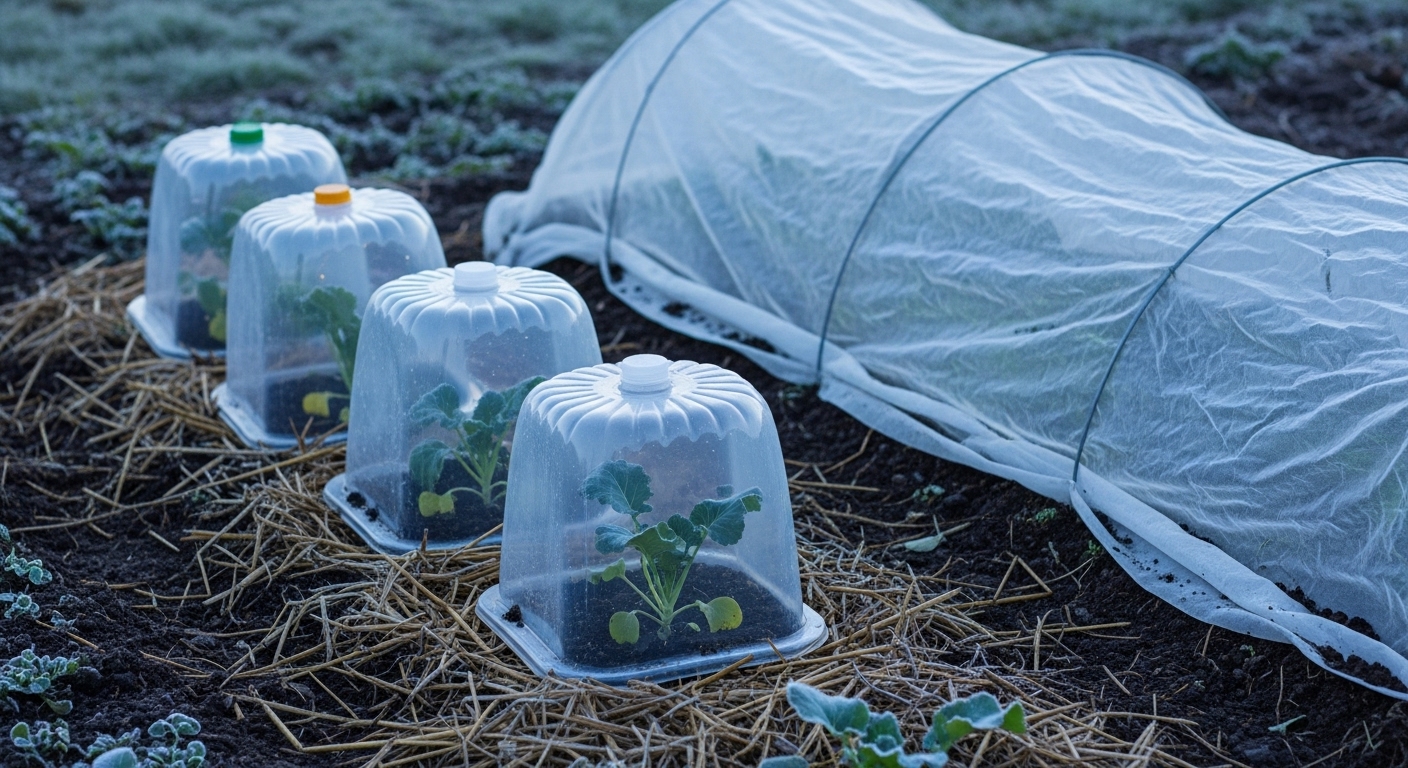
Lightweight row covers or garden fabric create a gentle shield over your plants, trapping warmth from the soil while still allowing light and moisture through. Simply drape them over hoops or frames and secure the edges with rocks or soil.
For extra cold snaps, individual cloches made from upcycled milk jugs or plastic bottles (with the bottoms cut off) can work wonders for younger plants, acting as mini-greenhouses overnight.
Mulching around the base of the broccoli with straw, dried leaves, or wood chips is another smart move—this natural layer insulates roots and helps maintain steadier soil temperatures.
If a light snowfall is predicted, let it be! Fresh snow actually acts as a natural insulator, protecting plants from harsher wind and rapid temperature drops.
You can also plant broccoli near taller, hardier vegetables like kale or collard greens, which offer a bit of wind protection and shade from sudden chills.
By mixing and matching these methods, you’ll keep your broccoli thriving despite cold snaps and unexpected frosts, ensuring a tasty, healthy harvest later in the season.
Watering and Fertilizing Broccoli During Cold Weather
During cold weather, broccoli plants need less water than in warmer months because their growth slows down and cold soil holds moisture longer. Overwatering at this time can lead to root rot, so it’s best to check the soil before watering—stick your finger about an inch deep, and only water if it feels dry.
Water early in the day to give leaves time to dry and reduce the risk of fungal diseases caused by wet, cold conditions.
When it comes to fertilizing, avoid heavy feedings or fast-release chemical fertilizers during chilly periods, as broccoli isn’t actively growing and excess nutrients can build up and harm the plant. Instead, use a balanced, slow-release organic fertilizer—apply sparingly on mild days so roots can absorb nutrients without stress. Fish emulsion or compost tea are gentle, cold-weather options that supply micronutrients without overwhelming your plants.
To support broccoli’s winter hardiness, work in organic matter like compost or well-rotted manure before planting; these amendments improve drainage and insulate roots from temperature swings. Mulch around plants with straw or shredded leaves to conserve soil warmth and moisture, acting as a buffer against hard frosts.
Skip high-nitrogen fertilizers during cold spells, as they can encourage leafy growth that’s more susceptible to frost damage. By adjusting watering habits, choosing the right fertilizers, and enhancing your soil, you give broccoli a better chance to thrive through the cold.
Indoor and Alternative Care for Winter Broccoli
Growing broccoli indoors or in protected environments like greenhouses and cold frames is a practical way to harvest fresh florets even in the heart of winter. Choose a bright, sunny spot inside your home—near a south-facing window works best, as broccoli needs at least six hours of direct light daily. If sunlight is limited, supplement with full-spectrum grow lights set on a timer for 12–14 hours.
Aim to keep the temperature between 60–70°F during the day, with nighttime temperatures not dropping below 50°F; this range encourages steady growth while preventing cold shock. Greenhouses and cold frames help trap warmth and extend the growing season outdoors, especially if paired with thick mulch for root insulation.
Indoors, watch for excess humidity—which can cause mold and mildew—by ensuring spaces stay ventilated, using a fan for gentle airflow if needed. Keep an eye out for common pests like aphids or whiteflies; washing leaves with a gentle soap solution often does the trick. Finally, prevent overcrowding by spacing plants generously to improve air circulation, reducing the risk of disease.
With a proactive approach to these basics, you’ll be able to enjoy homegrown broccoli throughout the winter months.
Recovering Broccoli After Frost Damage
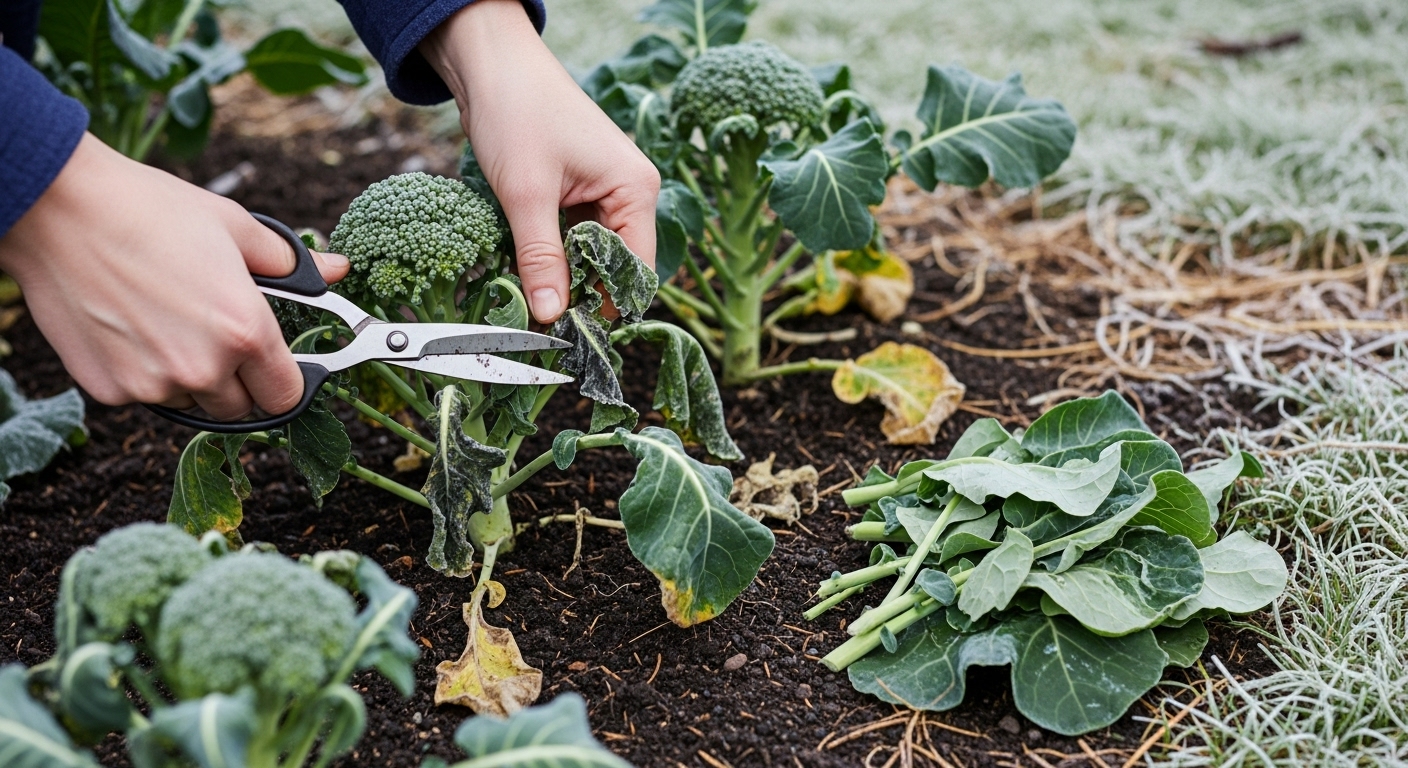
After a late frost, start by closely inspecting your broccoli plants for signs of damage—wilted, blackened, or mushy leaves are the most obvious giveaways. Gently tug at each plant; those that stay firmly rooted and still have green growth at the crown often have a good chance of bouncing back.
Salvageable plants usually show firm, healthy stems and at least some green foliage above the soil, while completely limp or slimy plants with brown crowns are likely lost and should be pulled up to make room for new seedlings.
For those with mild to moderate damage, use clean scissors to prune away all frostbitten leaves and stems—this prevents rot and lets the plant focus its energy on healthy tissue.
After pruning, help your broccoli recover faster by applying a balanced fertilizer (such as a 10-10-10 mix) and watering gently to avoid stressing the roots. Adding a light layer of mulch can protect regrowing shoots from further temperature swings.
If most of the plants in a patch appear dead or show very little green at the base, don’t hesitate to replant; it’s usually faster and more productive than nursing back severely injured broccoli.
Remember, quick action and attentive care can make the difference between a thriving crop and a lost season.