Introduction to Growing Bell Peppers Hydroponically
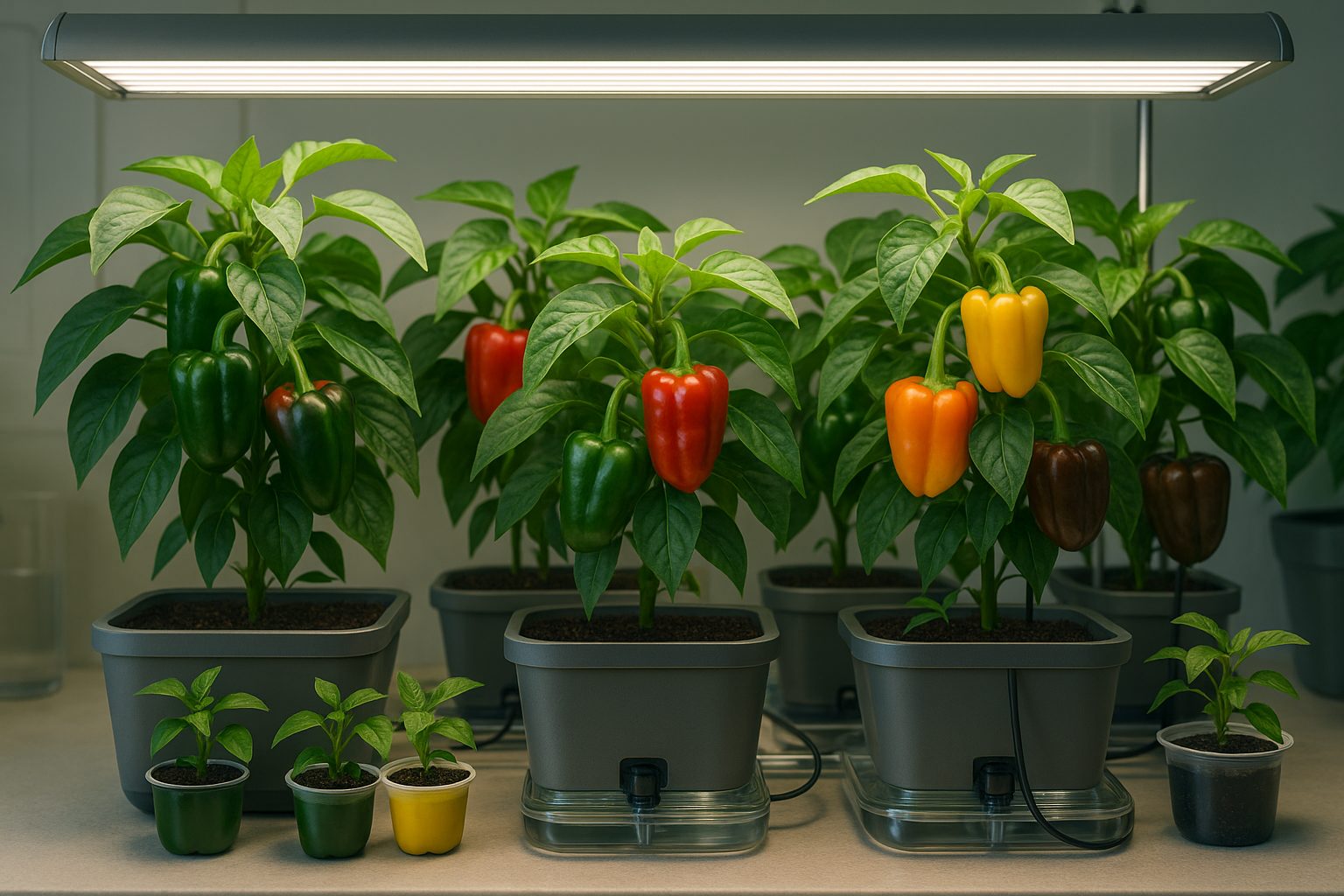
Hydroponic bell peppers are catching the attention of indoor gardeners and hobbyists everywhere, promising fresh, vibrant produce without the need for traditional soil. Hydroponic gardening is a method that replaces dirt with nutrient-rich water, allowing plants to absorb all the minerals and essentials they need directly through their roots.
This modern approach isn’t just a trendy alternative—it’s a true game-changer, especially for those who want to grow healthy, robust crops like bell peppers in limited space or under controlled indoor conditions. Bell peppers, known for their sweet flavor and crisp texture, are particularly well-suited to hydroponic systems thanks to their moderate root systems and consistent nutrient requirements.
The benefits go beyond convenience: hydroponic systems give you precise control over growing conditions, which means fewer pests, faster growth rates, and often bigger yields than their soil-grown counterparts. Plus, you can say goodbye to weeding and unpredictable outdoor weather.
Whether you’re a beginner hoping to fill your kitchen windowsill with colorful produce, a home gardener looking to boost yield in your basement, or just someone curious about cleaner, smarter ways to grow food, exploring hydroponic bell peppers might be the perfect next step.
In this guide, we’ll break down the essentials, from system setup to harvesting tips, offering real-world advice for anyone eager to enjoy fresh-picked peppers year-round.
Benefits of Hydroponic Bell Pepper Cultivation
Hydroponic bell pepper cultivation offers a range of advantages, making it an appealing choice for both hobbyists and commercial growers. One of the most significant benefits is faster growth rates; bell peppers grown hydroponically tend to mature quicker because their roots have direct access to oxygen and precisely balanced nutrients.
This controlled environment also means your harvests are cleaner—there’s no soil clinging to the fruit—making post-harvest washing much easier. Another major advantage is nutrient control: you can tailor the nutrient mix to each growth stage, supporting better yields and healthier plants overall.
Hydroponic systems are designed for year-round growing, so you’re not limited by outdoor seasons. Even in winter or urban settings, fresh bell peppers remain within reach. Space efficiency is another highlight, as vertical hydroponic setups allow you to grow more plants in a smaller footprint. This is especially valuable for those working with limited space, such as small greenhouses, balconies, or indoor grow rooms.
Pest and disease management is also improved since the absence of soil reduces the risk of soil-borne pests and diseases. This makes preventative control easier and minimizes dependence on pesticides. For example, many growers find they deal with fewer aphids and fungal infections when using closed, clean hydroponic systems.
Altogether, hydroponics not only boosts productivity but also makes bell pepper cultivation more accessible, cleaner, and sustainable for a wider range of gardeners.
Choosing the Right Hydroponic System & Equipment
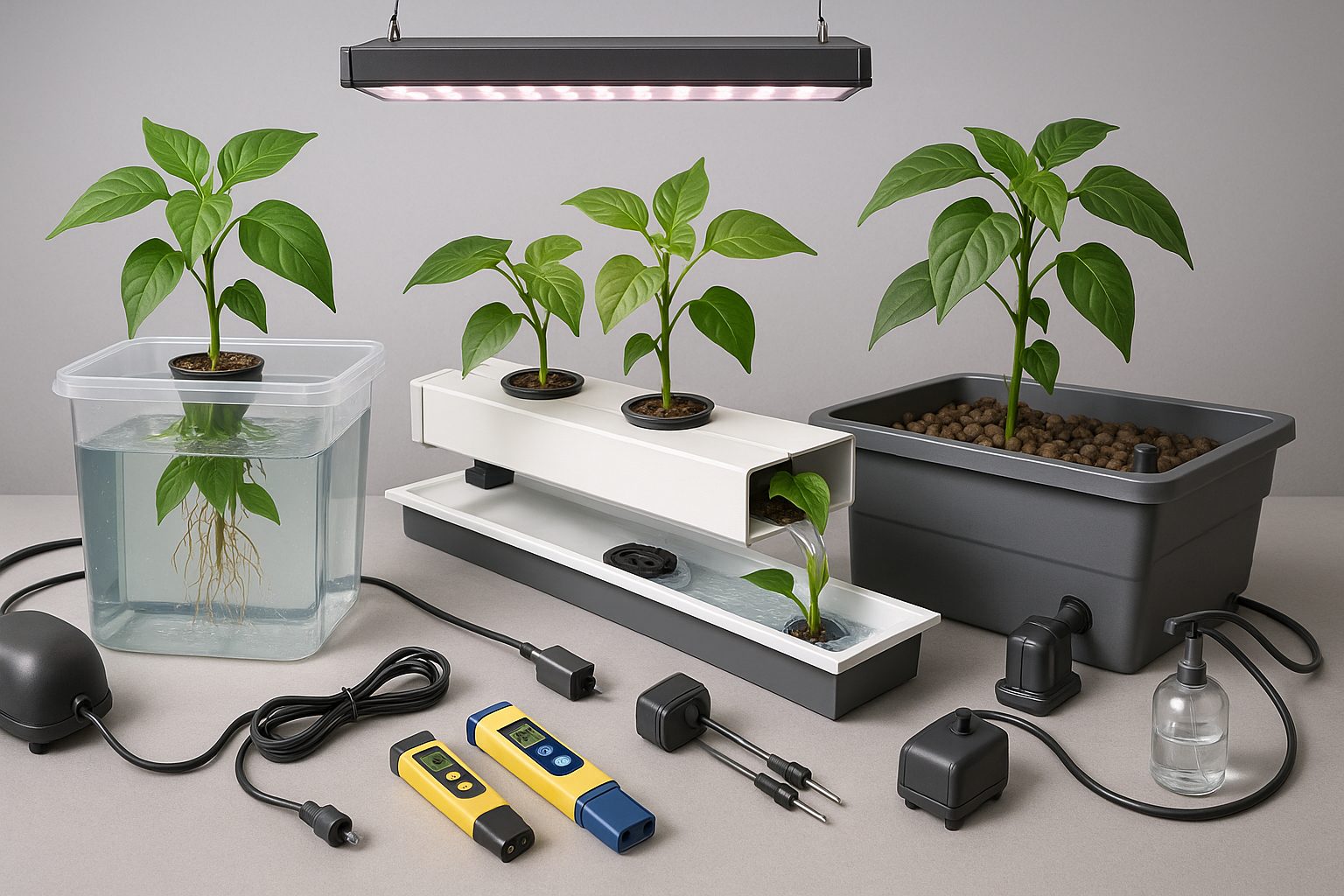
When it comes to growing bell peppers hydroponically, choosing the right system can make all the difference in your success. Three popular options for bell peppers are Deep Water Culture (DWC), Nutrient Film Technique (NFT), and Ebb & Flow systems.
DWC is beginner-friendly and great for medium to large peppers; plants’ roots float in oxygenated, nutrient-rich water, making it easy to manage nutrient levels. NFT delivers a thin film of nutrients over roots in a channel; it’s more compact and efficient for small peppers but requires precise monitoring to prevent clogs or dry-outs. Ebb & Flow periodically floods the root zone with nutrients before draining, allowing for excellent oxygenation and flexibility for a variety of plant sizes.
No matter which system you choose, you’ll need some basic equipment:
- Sturdy containers to hold your plants and nutrients
- Efficient water pumps and air pumps for circulation and aeration
- Grow lights (like LEDs or fluorescent tubes) to ensure strong growth—especially indoors
- Environmental monitoring tools such as pH and EC meters, since bell peppers are sensitive to water quality
If you have limited space, like a small apartment, compact systems such as NFT channels or countertop DWC kits are ideal and fit nicely on balconies or indoor shelves. For more ambitious home growers with dedicated space—such as a closet or grow tent—a mid-size Ebb & Flow or large DWC system lets you scale up easily.
Always consider the footprint, noise levels, and ease of access for maintenance when picking your setup. Starting with a simple kit is a smart move for beginners; you can upgrade to more advanced automation, like timers and climate controllers, as your hydroponic gardening skills grow.
Starting Your Bell Peppers: Seeds, Seedlings & Germination
When starting your hydroponic bell pepper garden, begin by selecting high-quality seeds from reputable suppliers—look for disease-resistant varieties and good germination rates on the packaging. If you prefer less waiting time and more certainty, opt for healthy seedlings from a trusted nursery, but always check that they’re free from pests and signs of disease.
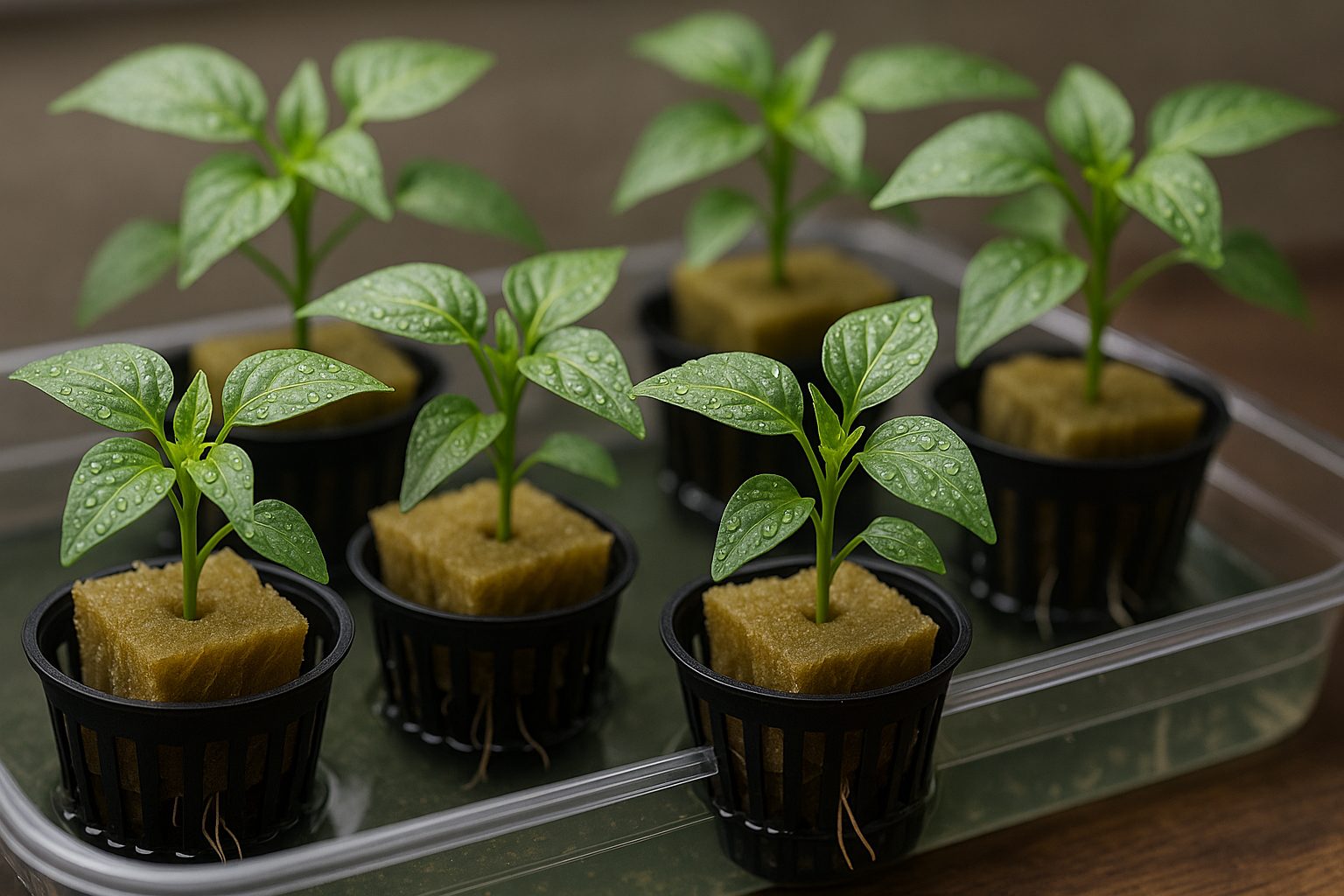
Next, for those growing from seeds, hydroponic-friendly mediums like rockwool cubes or coco coir plugs make an excellent choice. Soak rockwool cubes in pH-balanced water (around 5.5–6.0) for a few hours before use, then gently place one or two seeds about a quarter-inch deep in each cube.
Keep the cubes warm and moist—ideally at a temperature around 75–80°F—to encourage quick germination, which typically takes 7–14 days. A humidity dome can help retain moisture during this phase.
Once seedlings show several true leaves and roots begin to emerge from the bottom of the cube or plug, they’re ready for transplanting. The best practice is to transplant when the seedlings are about 2–3 inches tall and sturdy, ensuring minimal disturbance to the delicate root system.
Carefully move the entire cube or plug into your hydroponic system, placing it in its designated net pot or grow space. Transplanting early in the day and keeping light intensity low after transplant can reduce shock.
Remember, healthy starts lay the foundation for thriving bell peppers later on, so take your time at this stage for the best results.
Hydroponic Care: Feeding, Lighting & Maintenance
Proper feeding is the backbone of successful hydroponic gardening; your plants rely entirely on you for nutrients. Use a complete hydroponic nutrient solution that contains essential macro- and micronutrients, following the manufacturer’s mixing ratios—remember, overfeeding can harm roots just as much as underfeeding.
Regularly check and adjust the pH of your nutrient solution, aiming for a range between 5.5 and 6.5 to optimize nutrient absorption. Changing out your nutrient mix every two weeks helps prevent salt buildup and keeps your system clean.
Lighting
Lighting is another critical factor—choose full-spectrum LED grow lights for energy efficiency and healthy growth. Seedlings and leafy crops need 14-16 hours of light per day, while fruiting plants like tomatoes or peppers may require up to 18 hours during flowering, with increased intensity to mimic summer sun.
Position lights 12-24 inches above the canopy and adjust as plants grow to avoid leaf burn or stretching.
Maintenance
Regular maintenance ensures your system thrives:
- Prune excess foliage to improve air circulation and focus energy on productive growth.
- For plants relying on wind or pollinators outdoors, gently shake flowering stems or use a small paintbrush to pollinate by hand.
- Monitor humidity, aiming for 50-70% depending on plant type; too much humidity can cause mold, while too little may stress plants.
- Keep temperature steady, generally between 65°F and 80°F, as dramatic shifts can stunt growth or encourage disease.
- Clean your system’s pumps and reservoirs monthly to prevent algae and keep everything running smoothly.
By feeding, lighting, and maintaining your hydroponic garden with attention to these details, you’ll set yourself up for strong, healthy plant yields.
Flowering, Fruiting & Harvesting
Growing bell peppers hydroponically is a rewarding process once you understand their key growth stages and respond to their needs. Flowering typically begins 7-10 weeks after transplanting, marked by small white blossoms forming at the nodes. This is your cue to ensure your lighting provides 10-12 hours daily and that your nutrients—especially calcium and magnesium—are balanced to support blooming.
To encourage healthy fruit set, maintain moderate humidity around 60% and keep temperatures between 70-80°F, as pepper plants are sensitive to extremes. If pollination is needed, gently shake the plants or use an electric toothbrush to vibrate the stems, mimicking wind or pollinators.
As fruits develop, support branches with soft ties or netting to prevent snapping under the weight of the peppers. Harvest the fruit when they are firm, glossy, and have reached their mature color—usually green, but they’ll turn red, yellow, or orange if left longer, gaining sweetness. Use clean scissors to snip the stem rather than pulling to avoid damaging the plant.
If you notice flowers falling off (blossom drop) or poor fruiting, check for temperature stress, excess nitrogen, or inconsistent watering—bell peppers like consistency. Regularly prune lower leaves and any spindly stems to improve airflow and reduce disease risk.
With careful observation and small adjustments, you’ll maximize both the quality and quantity of your hydroponic pepper harvest.
“`html
Common Challenges & Frequently Asked Questions
Many beginners face common challenges like yellowing leaves, which often signal nutrient deficiencies—usually a lack of nitrogen or magnesium. A quick fix is to use a balanced, water-soluble fertilizer or specific supplements based on the deficiency.
Pests, such as aphids or spider mites, can sneak up on both indoor and outdoor plants. Regularly inspecting leaves and using gentle insecticidal soap can help keep infestations at bay.
Environmental stress—like inconsistent watering or insufficient light—often leads to stunted growth or lack of fruiting. Try to maintain a consistent watering routine and ensure your plants get at least six hours of light each day, whether natural or supplemented by grow lights.
Beginners often ask, “When will my plant fruit, and how do I know when to harvest?” Generally, fruiting timelines vary by plant, but watch for full coloration and gentle softness as signs your produce is ready. If your plant isn’t fruiting, it could be due to poor pollination, temperature swings, or too much fertilizer.
Don’t worry—every grower faces a learning curve! If you’re stuck or have questions about a specific issue, leave a comment below so we can help troubleshoot together.
“`