Introduction
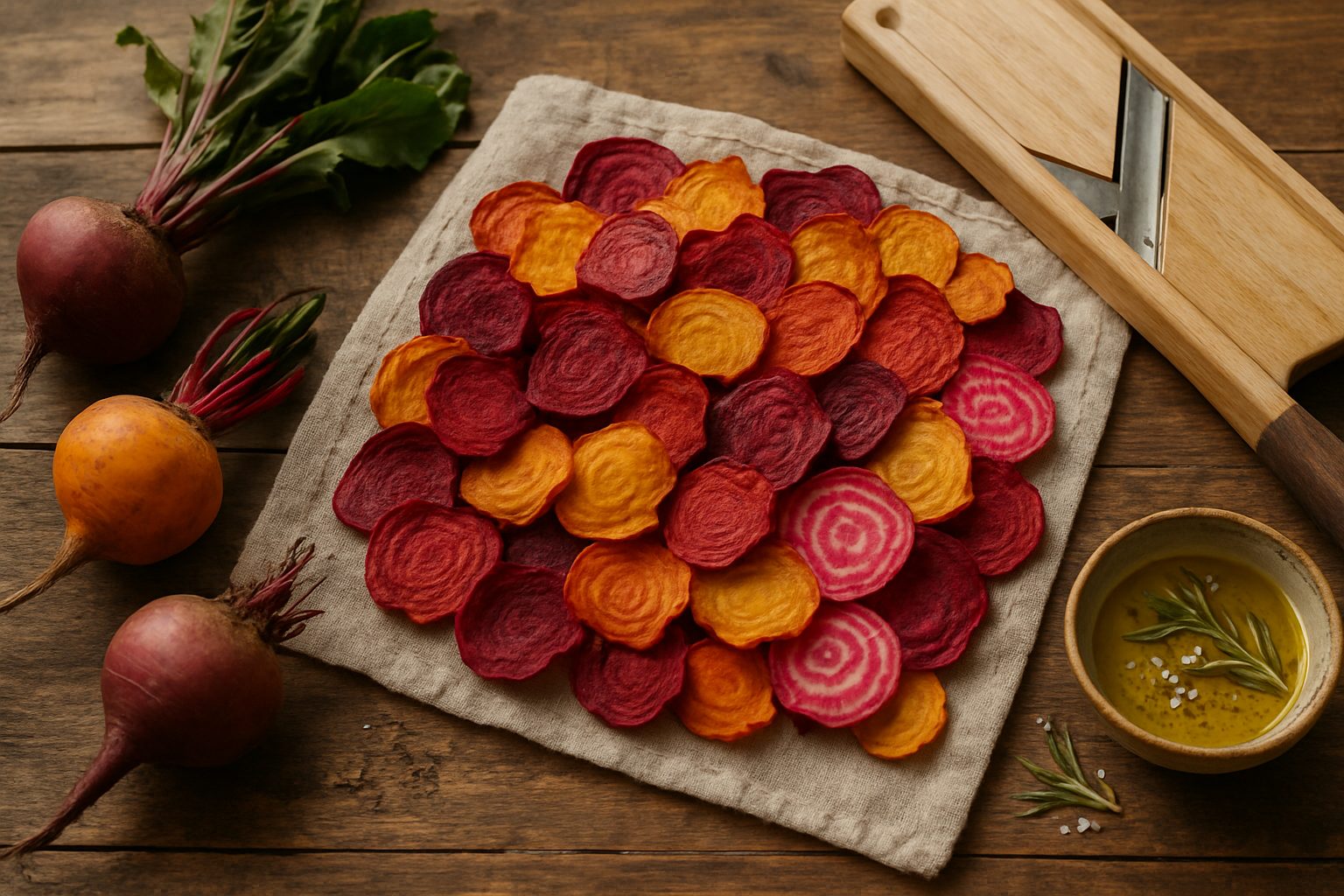
If you’re looking for a snack that’s both nutritious and satisfyingly crunchy, a beet chips recipe might be just what you need. Beet chips have become a favorite for health-conscious snackers—they’re vibrant, naturally sweet, and packed with fiber, iron, and antioxidants in every bite. Whether you have a harvest of homegrown beets from your garden or a fresh bunch from the market, making beet chips at home is surprisingly simple and rewarding.
They’re incredibly versatile too: you can bake them in the oven for a classic crunch, pop them into an air fryer for quick results, or use a dehydrator for an ultra-light, crisp texture. In this guide, you’ll discover step-by-step directions for each method, plus expert tips to get perfect chips every time. We’ll also share seasoning ideas—from sea salt and rosemary to smoky paprika—so you can customize your beet chips to suit any craving.
Get ready to transform humble beets into a colorful, wholesome snack that’s perfect for lunchboxes, party platters, or guilt-free late-night munching.
Choosing and Preparing Beets
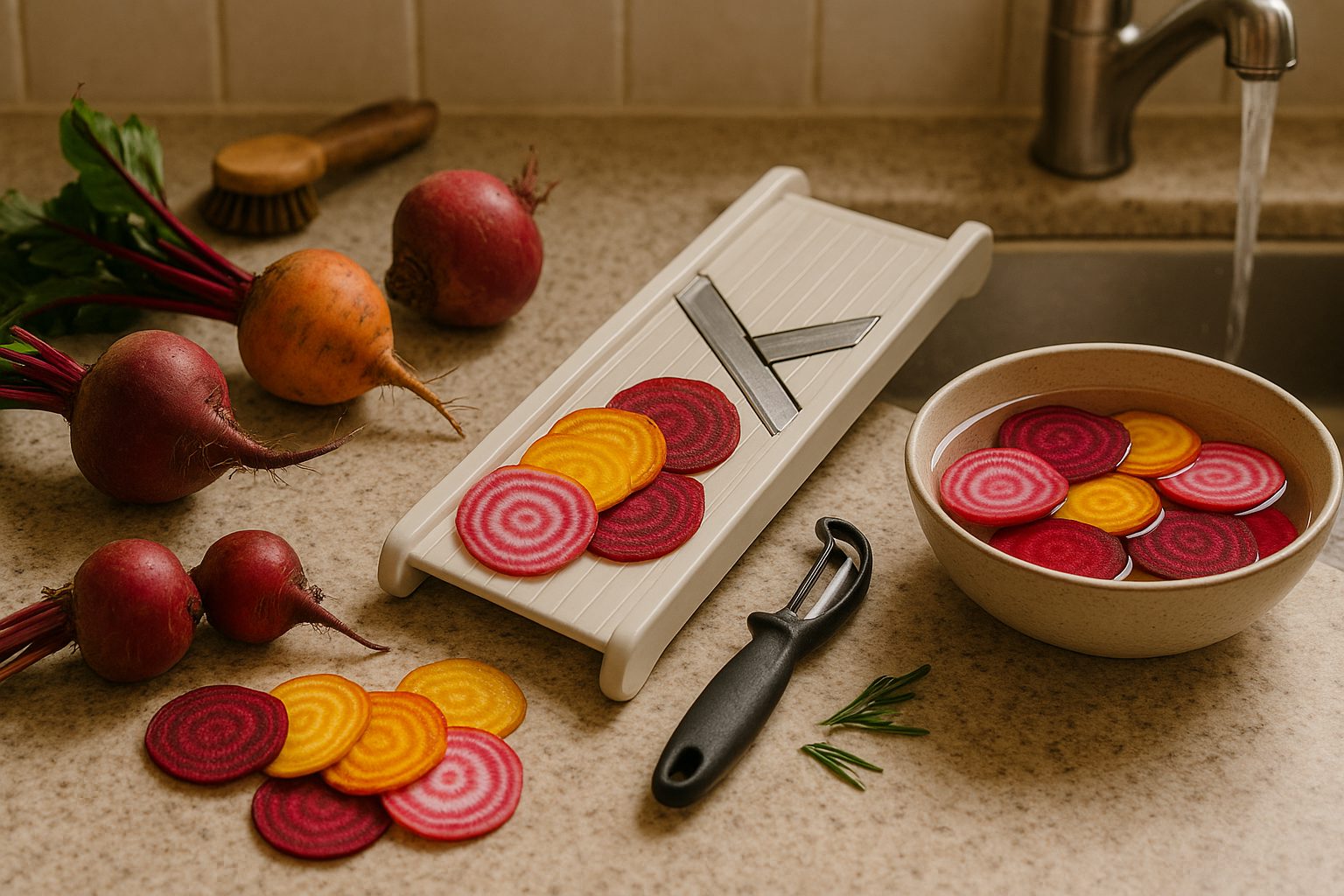
When it comes to making the perfect beet chips, starting with the right variety and freshness level is key. Red beets are the most common, offering a classic deep color and earthy taste, but you might also try golden or Chioggia (candy-striped) beets for a milder flavor and striking presentation.
No matter the variety, always choose beets that feel firm and heavy for their size, with smooth, unblemished skin. Fresh beets will result in crispier chips and brighter flavor.
To prep, scrub the beets thoroughly under running water to remove dirt, as their deep crevices can hide grit. Next, use a vegetable peeler to remove the skin—this not only improves appearance but also reduces bitterness.
For that irresistible chip crunch, uniform thin slices are critical: a mandoline slicer is the best tool, letting you achieve even, wafer-thin rounds. If using a sharp knife, take your time and slice as evenly as possible.
To lock in the beets’ vibrant color, soak slices briefly in cold water after slicing. This also helps remove excess starch and prevents sticking. Once drained and patted dry, toss the slices with a bit of olive oil and a pinch of salt just before baking or air frying—avoid over-seasoning in advance, as salt can draw out moisture and cause sogginess.
By choosing quality beets and prepping them thoughtfully, you’ll get chips with eye-catching hues, crispy texture, and the natural sweet-earthy flavors that make this snack such a hit.
Methods for Making Beet Chips: Oven, Air Fryer, and Dehydrator
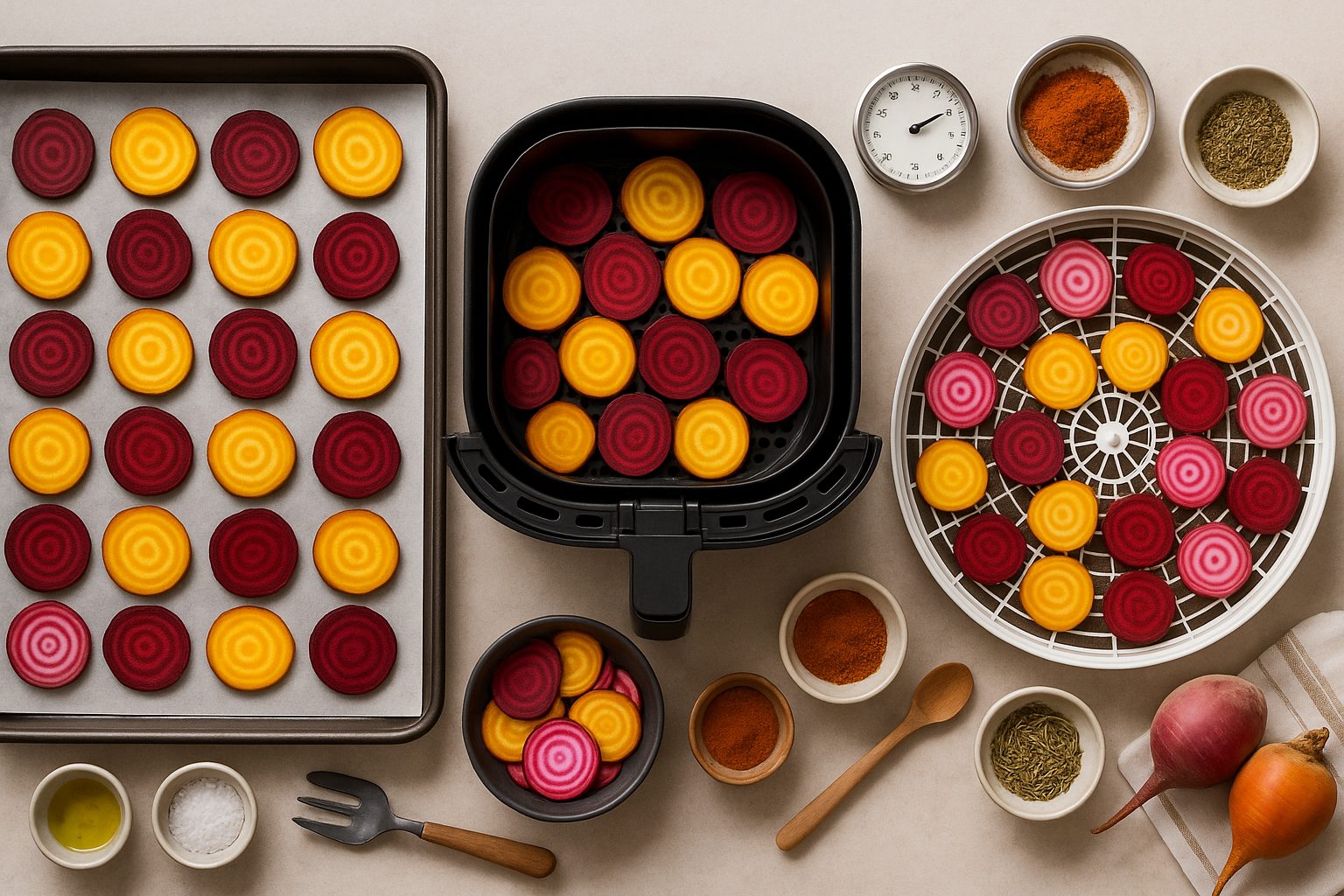
To make beet chips, you have three popular options: oven-baking, air frying, or dehydrating.
Oven-Baked Beet Chips
Slice beets thinly (about 1/16-inch), toss with a light coating of oil and a pinch of salt, then arrange them in a single layer on a parchment-lined baking sheet. Bake at 350°F (175°C) for 20–25 minutes, flipping halfway through. Keep an eye on them in the last few minutes since they can burn quickly.
For extra crunch, “sweat” the beets first by salting your slices and letting them sit for 10–20 minutes to draw out excess moisture; then, pat dry before baking.
Air Fryer Beet Chips
Air frying is faster: prep the slices just like for oven baking, preheat your air fryer to 330°F (165°C), and air fry in batches for 12–16 minutes, shaking the basket several times to prevent sticking. Chips are done when edges curl and centers feel dry. For extra crispiness, let them cool on a wire rack.
Dehydrator Beet Chips
Dehydrators require no oil—simply arrange slices on trays and set to 135°F (57°C) for 6–10 hours until crisp. This method keeps the most nutrients and natural flavor but takes much longer.
Summary of Methods
- Oven and air fryer: Quicker and deliver a classic chip texture, but can be tricky to prevent burning.
- Dehydrating: Nearly foolproof and nutrient-preserving, but you miss out on that deep-roasted flavor.
Whichever method you pick, thin slices, drying before cooking, and spacing chips apart are key for maximum crunch. Sweating helps especially with oven and air fryer methods by making chips crispier instead of chewy. Watch closely near the end—beet chips go from perfect to burnt in a flash!
Flavor Variations and Add-Ins
Experimenting with seasonings and add-ins is a great way to keep roasted beets exciting and tailored to your taste. For a savory twist, try tossing your beets with classic kosher salt and black pepper, or branch out with herbs like thyme, rosemary, or dill.
Spices such as cumin, smoked paprika, or a dash of garlic powder can bring warmth and depth—simply sprinkle these over the beets before roasting for maximum flavor impact.
If you prefer something on the sweeter side, try adding a drizzle of maple syrup or honey mixed with a sprinkle of cinnamon. This highlights the beet’s natural sugars and adds a cozy, dessert-like feel.
Oil-free options are easy too: toss the beet slices in a bit of vegetable broth or freshly squeezed lemon juice before seasoning; this helps spices stick and the beets caramelize nicely.
If you love infused flavors, use flavored oils like chili oil for a kick, or herb-infused olive oil for bonus aroma—just add a light drizzle before roasting or right as they come out of the oven.
Don’t stop with beets alone; roasted carrots, sweet potatoes, or parsnips mix wonderfully, creating a colorful, naturally sweet medley.
For an extra layer of interest, add toppings after roasting:
- Tangy goat cheese
- Chopped toasted nuts
- A sprinkle of za’atar
- A spoonful of Greek yogurt
All of these complement roasted beets beautifully. Roasted beets are also fantastic tossed with fresh herbs, orange segments, or even a few diced apples for unexpected flavor.
Start simple, then experiment with combinations until you find your favorite—each new batch is a fresh chance to play with flavors and textures.
Serving and Storing Beet Chips
Beet chips are a versatile snack that you can enjoy in several delicious ways. Try serving them with your favorite dips—hummus, guacamole, or herby Greek yogurt—at your next gathering for a colorful appetizer. They also make an excellent crunchy topping for salads, adding a sweet, earthy flavor and lovely crunch to leafy greens or grain bowls.
For a healthy lunchbox addition, pack cooled beet chips in a small container; kids and adults alike appreciate their vibrant color and satisfying texture.
To keep beet chips crispy, allow them to cool completely before storing. Moisture is their enemy, so place the cooled chips in an airtight container lined with a paper towel, which helps absorb any excess moisture. Store the container at room temperature and try to enjoy the chips within three to five days for the best texture.
If you find your beet chips have gone a bit soggy, don’t toss them out. Spread the chips in a single layer on a baking sheet and pop them in a preheated oven at 300°F (150°C) for five to eight minutes—just long enough to re-crisp but not so long that they burn. Let them cool before serving, and they’ll be crunchy and delicious all over again.
Troubleshooting and Expert Tips
When making homemade chips, a few common pitfalls can sabotage your results, but with some know-how, you can achieve perfectly crisp and golden chips every time.
Soggy chips are often caused by excess moisture—always dry potato slices thoroughly with paper towels before frying or baking. Uneven cooking typically happens when slices are of varying thickness, so use a mandoline slicer for consistent, paper-thin cuts; this also helps chips cook at the same rate and reach that classic crunch.
To avoid burning, keep an eye on oil temperature if frying (around 350°F is optimal), or rotate trays halfway through baking for even color. Color loss can result from soaking potatoes too long or baking at too low a temperature, so limit your soak to 30 minutes and always preheat your oven.
Pro chefs recommend using a high-smoke-point oil like peanut or sunflower for frying. For baked chips, try laying slices on a rack set over a baking sheet to promote airflow.
A mandoline slicer or food processor ensures even slices, but always use the safety guard or cut-resistant gloves when handling sharp blades—never rush the slicing process.
If you prefer a healthier option, try air frying: the chips cook evenly and need little to no added oil.
Finally, don’t overcrowd your pan or baking sheet; giving each chip space is crucial for maximum crispiness.
By mastering these techniques and putting safety first, you’ll enjoy crispy, golden chips without the hassle.
Frequently Asked Questions
Many people wonder if roasted beets can be made ahead of time—absolutely! roasting a batch on Sunday means you’ll have them ready for salads, grain bowls, or wraps all week. Just store them in an airtight container in the fridge for up to five days.
Health-wise, beets are rich in fiber, folate, and antioxidants like betalains, which support heart health and may help reduce inflammation.
If you’re curious about whether you need oil to roast beets, the answer is no: tossing them with a little oil adds flavor and helps caramelize the edges, but you can roast them dry or wrap them in foil to keep them moist and oil-free—perfect for anyone cutting down on fats.
Golden beets are a great alternative if you want a milder, less earthy flavor (and no risk of staining your hands or cutting board bright pink).
For dietary needs, this recipe is naturally gluten-free, and to make it fully vegan, just avoid any butter or honey-based glazes. Olive oil, balsamic vinegar, and fresh herbs make delicious vegan-friendly toppings.
Don’t toss your beet trimmings; Beet greens can be sautéed with garlic and lemon for a quick, nutritious side, and peels can be rinsed and roasted into crispy “chips” for a zero-waste snack. With a little creativity, every part of the beet can shine in your kitchen.
Conclusion
Homemade beet chips offer a delicious and nutritious alternative to store-bought snacks, packing in fiber, antioxidants, and vibrant color without unnecessary additives or excess oil. Making your own lets you control exactly what goes in, from the amount of salt to the type of oil you prefer.
Plus, you can get creative with flavors—try tossing beet slices with rosemary and sea salt, a sprinkle of chili powder, or even a hint of garlic powder before baking. Don’t be afraid to experiment with different slicing thicknesses or air fryer versus oven methods to find your perfect crunch. Every batch is an opportunity to try something new!
We’d love to hear about your favorite beet chip variations or any tips you discover along the way, so please share your experiences and ideas in the comments below—your insights might inspire someone else’s next tasty snack session.