When to Harvest Broccoli
Harvesting broccoli at just the right moment means enjoying tender, flavorful heads without harming your plant’s ability to keep producing. To harvest broccoli without killing the plant, it’s crucial to understand the growth stages.
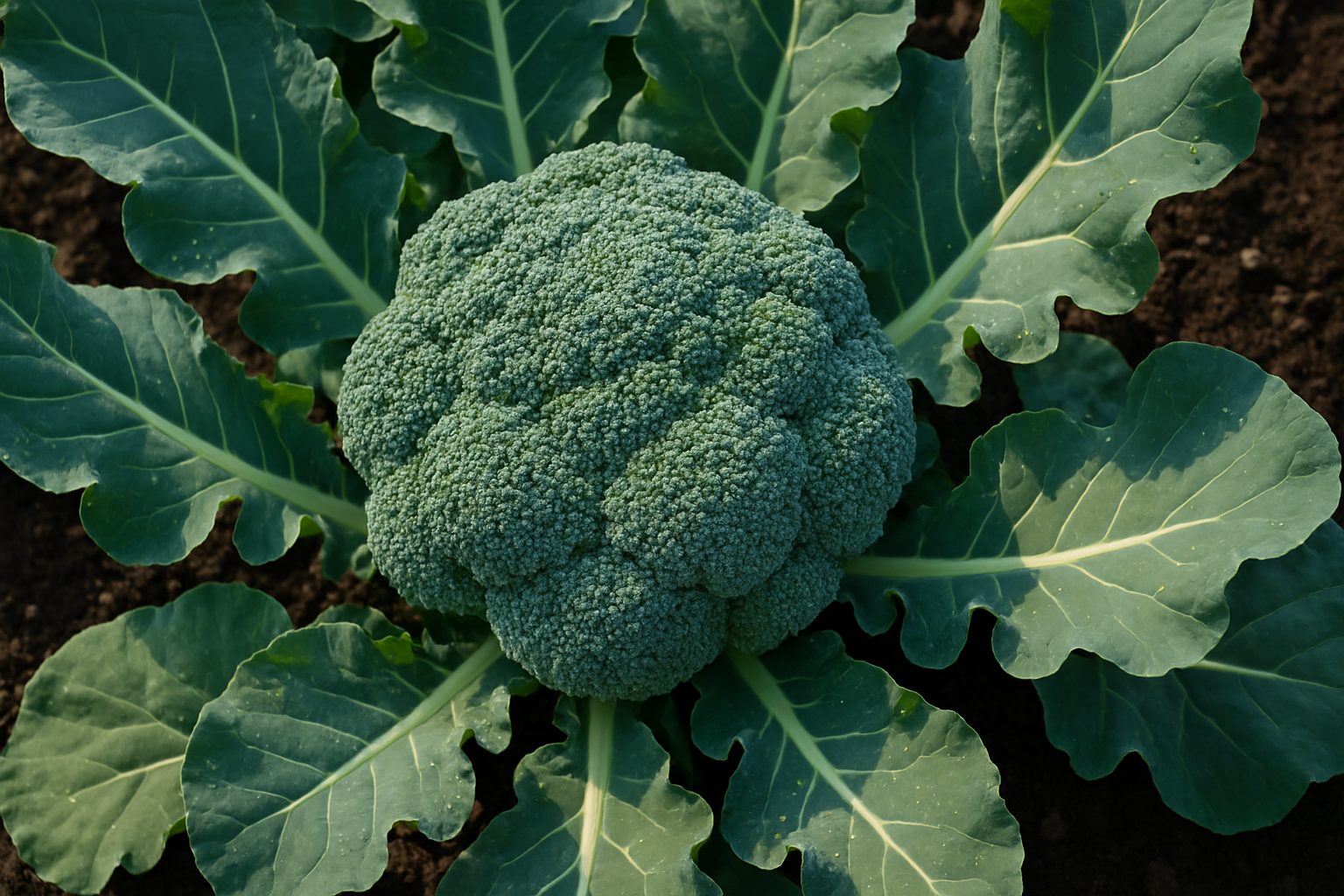
After seeding, broccoli develops a central head surrounded by firm, tight florets. When the head reaches 4 to 8 inches across—before the buds begin to open—it’s time to harvest. Look for a blue-green color and dense, tightly packed buds as your visual cues.
Waiting too long can cause the heads to loosen, with yellow petals appearing as the broccoli starts to flower—a sign it’s overripe. Temperature also plays a big role: cooler weather tends to extend the growing period, while higher temperatures may speed up flowering and harvest times.
Varieties differ too—some mature quickly, while others take their time, so always check your seed packet for guidance.
If your broccoli heads do begin to flower, snip them off right away; the rest of the plant may still produce side shoots for future harvests. By closely monitoring these factors and reacting quickly, you can maximize your yield without sacrificing future harvests.
How to Tell When Broccoli Is Ready to Pick
Knowing exactly when to harvest broccoli can make all the difference in taste and texture. Look for broccoli heads that are firm, compact, and about 4 to 7 inches wide, depending on the variety. The buds should be tightly packed together and a deep green color—avoid waiting until you see yellow petals or the buds start to loosen, as this means the broccoli is beginning to flower and will lose its sweetness and crisp bite.
When checking your plants, gently squeeze the head; it should feel dense, not spongy. Gardeners often use the “thumbnail test”—if your thumb leaves only a slight mark on the buds, your broccoli is likely ready. Be sure to harvest in the morning when heads are still cool and at their peak freshness.
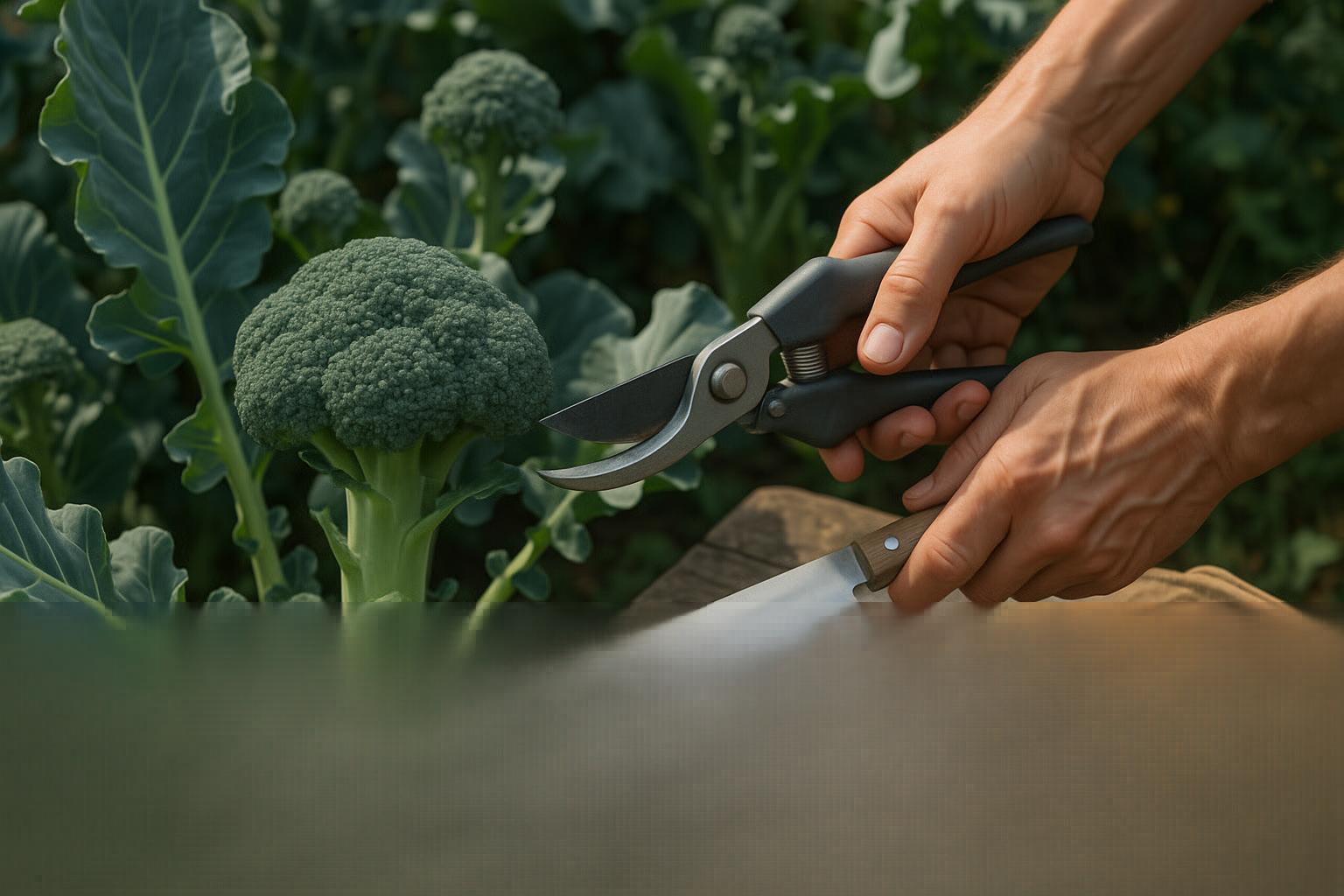
If you notice any yellowing at the edges or the first signs of separation between the tiny buds, harvest immediately to avoid bitterness. Use a sharp knife to cut the main stem several inches below the head, which can also encourage side shoots for a second, smaller crop.
Regularly checking your broccoli every day or two, especially as the weather warms, ensures you won’t miss the perfect picking window.
How to Harvest Broccoli: Step-by-Step
When it’s time to harvest your broccoli, timing and technique are key to getting the best flavor and keeping your plants healthy. First, check that the central head is firm and compact, with tight, dark-green buds. Avoid waiting until the yellow flowers open, as that means the broccoli is past its prime.
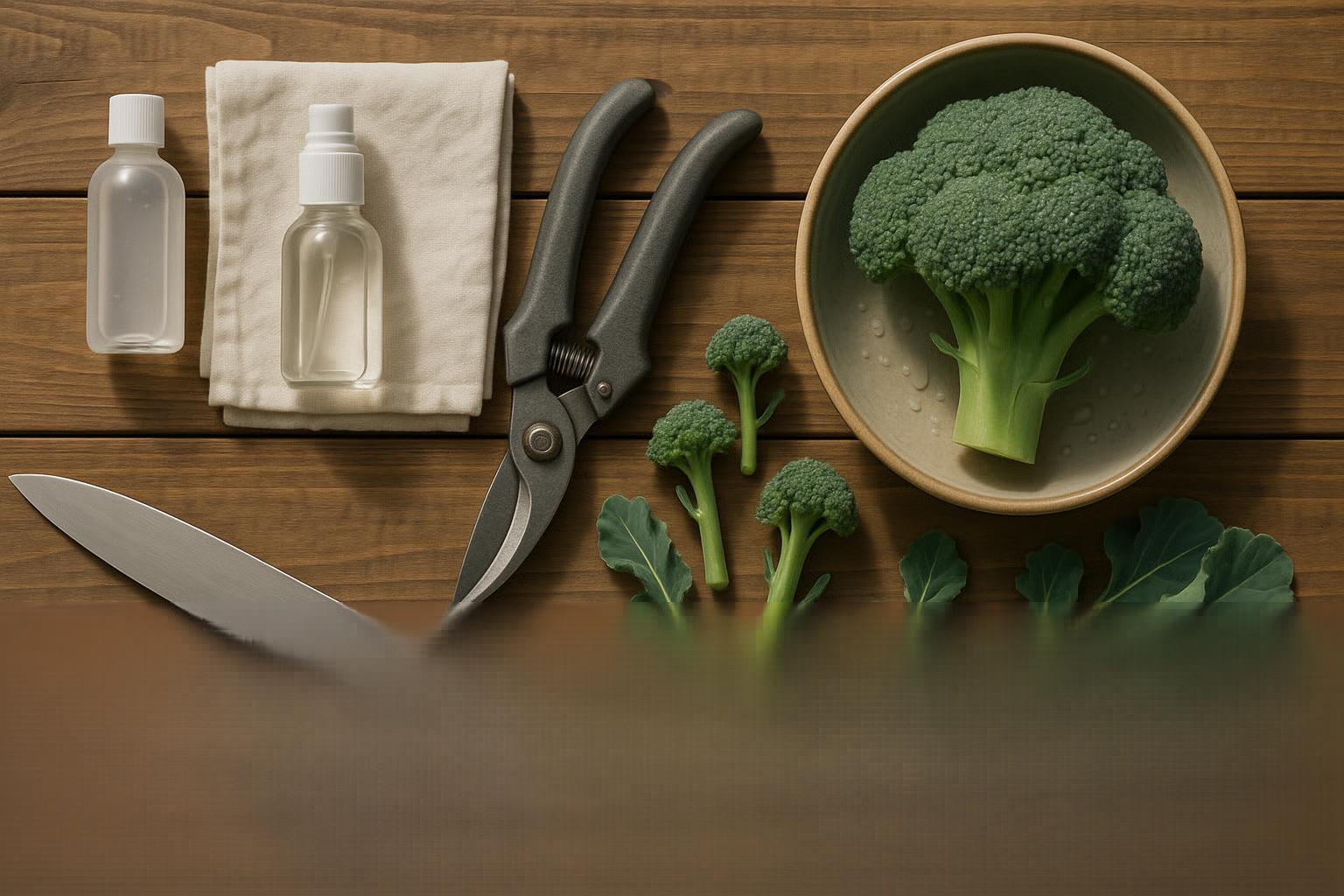
Use a sharp knife or sturdy garden shears for the job. Be sure to clean your tool with rubbing alcohol before cutting to prevent spreading disease. Hold the stalk steady and cut the main head about 5 to 6 inches below the crown, angling your cut slightly so water drains away instead of pooling on the stalk—this helps discourage rot.
Try to keep the surrounding leaves and side shoots intact, as they encourage further growth. After harvesting the main head, continue to water and care for your plants regularly—they’ll soon produce smaller side shoots that you can pick every few days.
By using clean, precise cuts and avoiding damage to the plant, you’ll maximize your harvest and keep your broccoli plants healthy, resulting in several rounds of delicious homegrown broccoli.
How Long You Can Harvest Broccoli
Broccoli offers a generous harvesting window if cared for properly. The main head usually matures about 60 to 90 days after planting, or roughly 55 to 60 days from transplanting. Once the central head is dense and before the yellow flowers start to open, it’s ready for harvest—cut it off with a sharp knife.
After this, many varieties produce smaller side shoots that can be harvested every few days for several weeks, extending your picking period. With regular clipping and cool weather, a healthy broccoli plant can keep producing well into late spring or early summer.
Watch for signs that the harvest is winding down:
- Side shoots become noticeably smaller
- Heads may loosen up
- Yellow blossoms may appear
When shoots are sparse and the plants start to look tired or bolt (send up tall flower stalks), it’s time to let them finish their cycle and plan for your next crop.
Storing Fresh Broccoli After Harvest
Properly storing fresh broccoli after harvest helps lock in flavor and nutrients for as long as possible. Start by gently rinsing the broccoli under cool running water to remove any dirt or insects, but don’t soak it, as excess moisture can speed up spoilage. Pat the heads dry with a clean towel before storing.
For short-term refrigeration, wrap the broccoli loosely in damp paper towels and place it in a perforated plastic bag or the crisper drawer—this provides the humid environment it needs without trapping too much moisture. Use within five days for the best taste and texture.
For long-term storage, blanch the broccoli by cutting it into florets, boiling for three minutes, then plunging into ice water. Drain thoroughly and spread the florets on a baking sheet to freeze them individually before transferring to airtight freezer bags. Properly blanched and frozen broccoli can last up to a year.
Avoid common mistakes like sealing freshly washed broccoli in airtight containers without drying—this can lead to mold growth and slimy spots. Also, keep broccoli away from high-ethylene-producing fruits like apples, which hasten aging.
With these easy habits, you’ll keep your broccoli crisp, tasty, and ready to use whenever you need it.
Troubleshooting Common Broccoli Harvest Issues
Harvesting broccoli can come with its fair share of challenges, but most problems have manageable solutions.
One common issue is bolting, where the plant flowers prematurely due to high temperatures or long daylight hours. To prevent this, plant broccoli in early spring or late summer and provide shade during heat waves.
Another frequent problem is small head size, often caused by nutrient deficiencies or crowded plants. Ensure your soil is rich in nitrogen and space plants about 18 inches apart to allow room for growth.
Pests such as aphids or cabbage worms can damage heads and leaves—regularly inspect your plants and use row covers or organic insecticidal soap if infestations arise.
Discoloration, particularly yellowing, usually signals over-maturity or water stress. Harvest heads when they are tight and deep green, and keep soil consistently moist.
If repeated problems occur, consider rotating your crops to fresh soil, testing and amending soil as needed, and choosing disease-resistant varieties for the next season.
Sometimes, when heads are stunted or severely affected by pests, it’s best to remove the plant and try replanting in improved conditions to ensure a healthy and productive harvest.