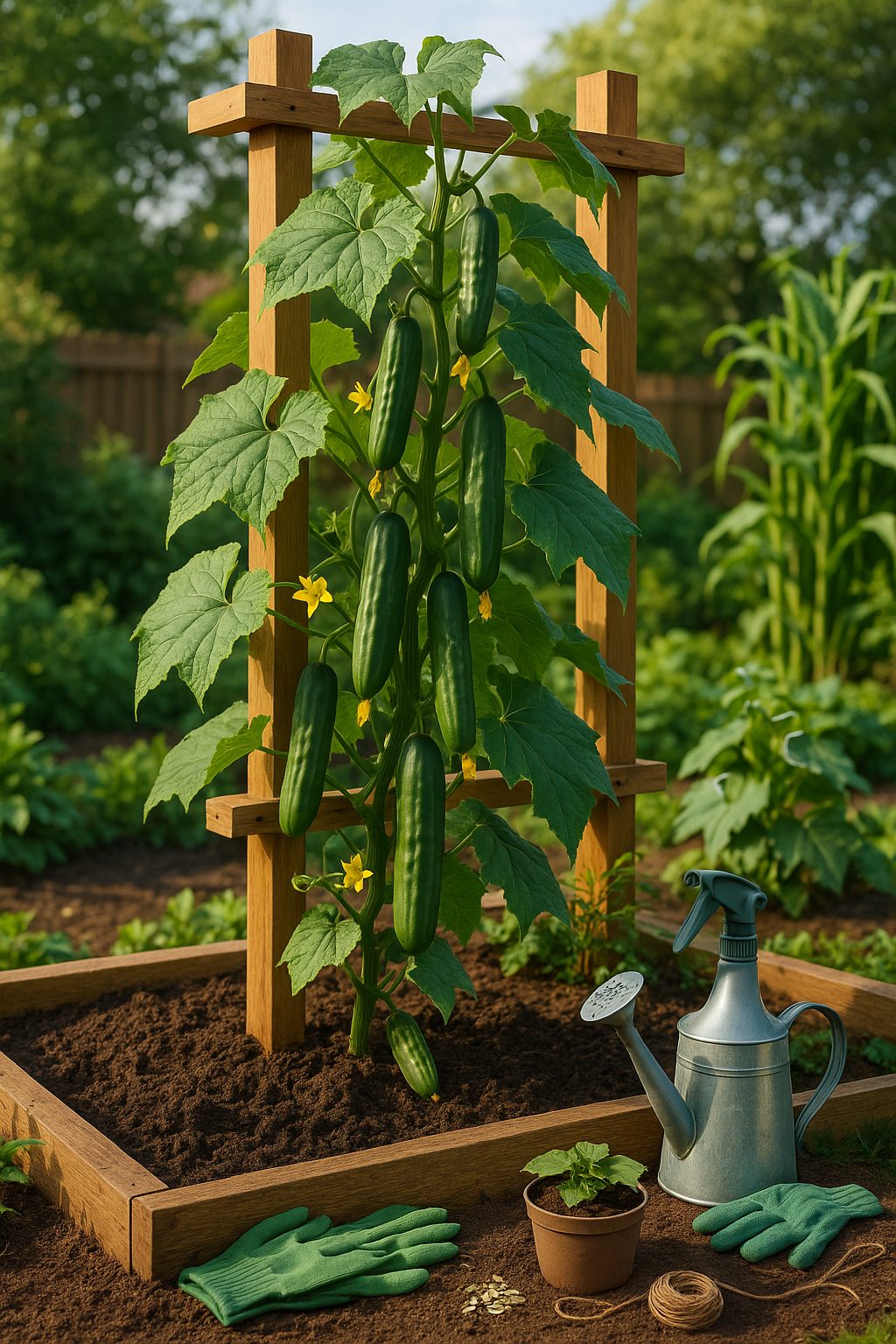
Why Grow Cucumbers on a Trellis?
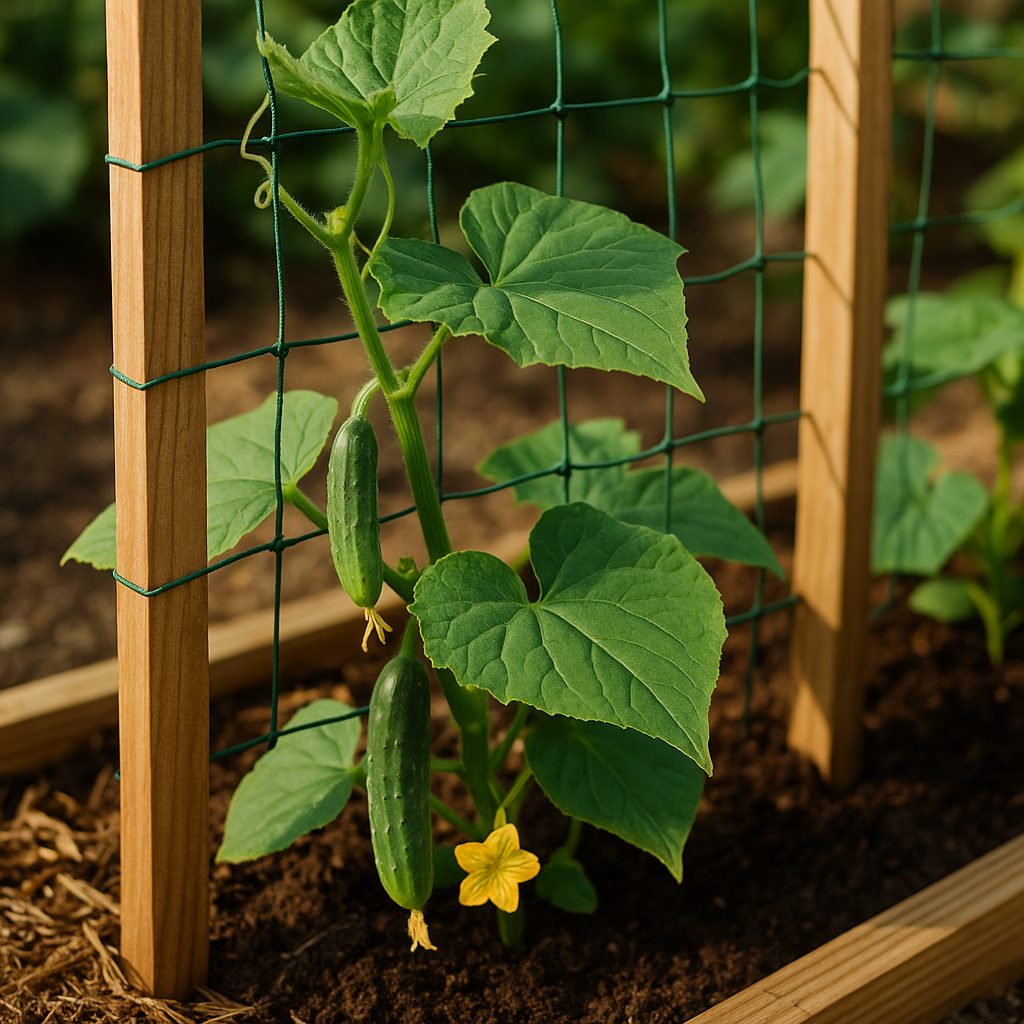
Vertical cucumbers are becoming a favorite among gardeners who want to maximize limited space and boost their harvests. Growing cucumbers on a trellis is a clever way to keep your garden organized and productive, especially if you’re working with a small backyard, balcony, or patio.
Trellising helps your plants climb upward, using vertical space instead of sprawling across precious ground real estate. This gives your vines access to better airflow, which is key in reducing humidity-related diseases and discouraging pests like slugs and cucumber beetles.
Another big plus? Trellised cucumbers are much easier to spot and pick, often hanging at eye level instead of hiding in dense ground foliage. That means less bending and searching, and fruit that stays cleaner and less prone to rot.
Healthy air circulation around the leaves also keeps foliage dry and deters the spread of powdery mildew, while each cucumber gets more sunlight, leading to straighter, tastier fruits.
Vertical gardening with cucumbers isn’t just a trend—it’s a practical solution for urban gardeners, container growers, and anyone looking to get more from their space. Whether you’re a beginner or a seasoned pro, experimenting with a trellis system can make your cucumber harvests more satisfying and your vegetable patch more efficient.
Choosing the Right Cucumber Variety for Trellising
When it comes to growing cucumbers on a trellis, vining varieties are your best bet. Unlike bush types, which stay compact and spread horizontally, vining cucumbers naturally climb and produce long, flexible stems that can be trained upward, making them perfect for vertical gardening.
Some standout vining varieties include Marketmore 76, Straight Eight, and Lemon cucumber—these not only thrive when trellised but also deliver consistent yields and crisp flavors.
If you’re gardening in a short-season or cooler climate, look for fast-maturing options like Early Fortune or disease-resistant hybrids for the best results. For small spaces, mini varieties such as Mini Munch pack a lot of growth into a small footprint while still climbing well.
Think about what you want in terms of flavor; for example, Armenian cucumbers offer a mild taste and minimal seeds, while pickling types like Boston Pickling give you that classic crunch for homemade pickles.
When selecting a variety, read seed packet information carefully for disease resistance, days to maturity, and size—all of which play a role in your garden’s success.
Ultimately, matching the right vining cucumber to your space, local climate, and taste preference makes trellising easier and gives you a more rewarding harvest.
Selecting and Building Your Cucumber Trellis
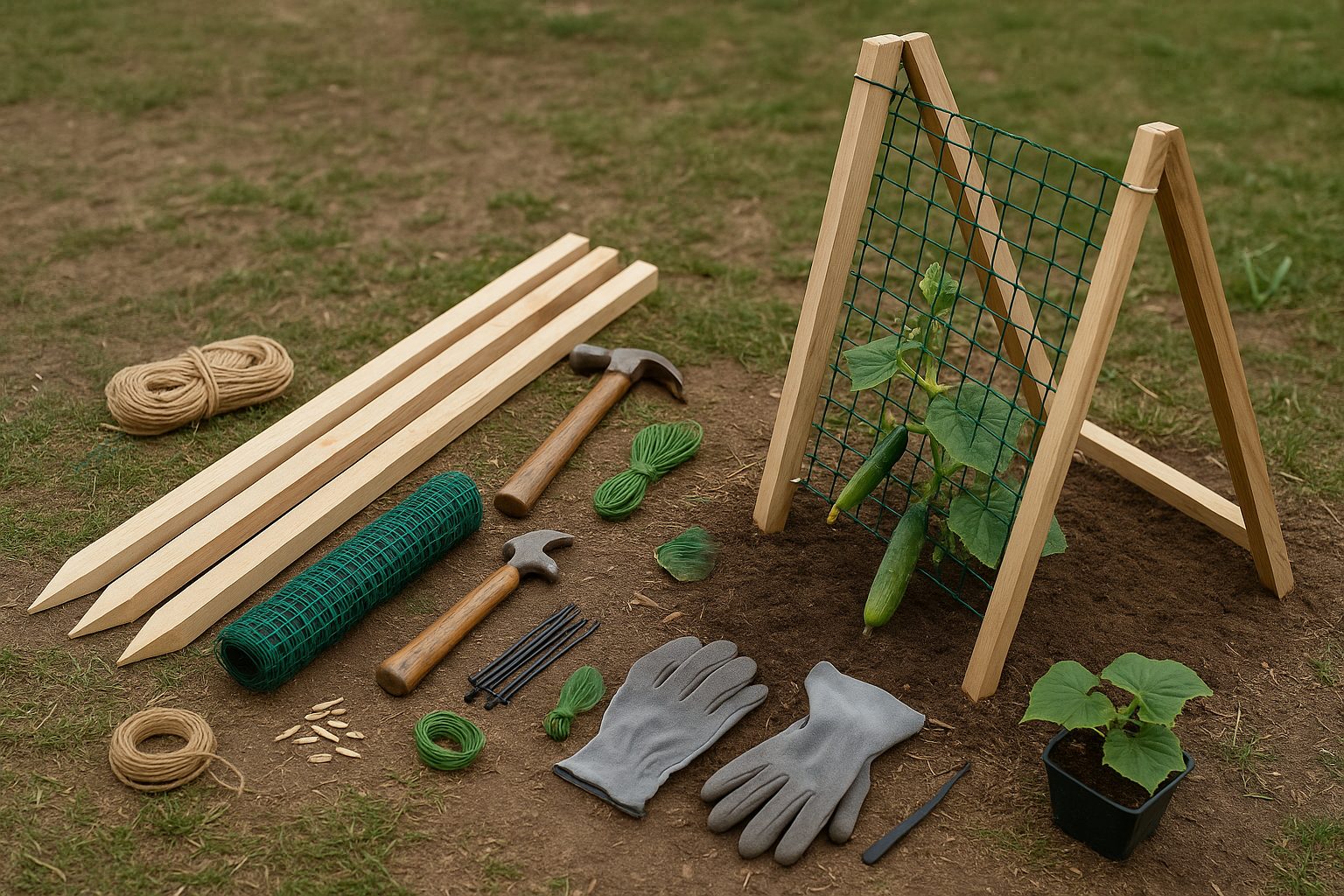
Choosing the right cucumber trellis starts with considering your garden space, budget, and available materials. Popular options include the A-frame trellis, which offers strong support and works perfectly in small gardens; all you need are wooden boards or sturdy branches fixed into a peak.
Vertical stakes are the simplest option—a few tall poles or tomato cages will do the trick and fit well in tight spaces. Trellis netting or wire mesh, easily found at garden centers, can be stretched between posts to create a DIY wall that keeps vines off the ground.
For an even thriftier approach, string trellises can be rigged up with twine strung between stakes, or you can repurpose old items like ladders, shelving units, or bed frames to give cucumber vines a place to climb.
Think about the space between plants, as cucumbers need airflow to prevent disease—vertical or netted designs work best in limited spaces. If you want to build a cost-effective trellis, grab two sturdy stakes and any type of mesh or net. Hammer the stakes about three feet apart in your cucumber bed, then zip-tie or staple the mesh securely between them, leaving 5-6 feet in height for vines to climb.
Plenty of step-by-step videos online can guide you through DIY trellis builds using just basic tools and reclaimed materials. The key is to ensure your structure is stable enough to hold the weight of mature vines and fruits and tall enough for the plants to grow upward without tangling.
Whichever style you pick, your cucumbers will enjoy greater airflow and sun exposure, making them easier to harvest and less susceptible to pests and disease.
Planting and Training Cucumbers to Climb
When planting cucumbers for vertical growth, proper spacing is essential for healthy plants and a bountiful harvest. Sow cucumber seeds about one inch deep, placing two seeds per hole and spacing the holes 12 to 18 inches apart along the base of your trellis. This spacing results in roughly one plant per square foot, giving each cucumber enough room to thrive without competing for light or nutrients.
After the seedlings emerge and develop their first true leaves, thin to one vigorous seedling per spot to ensure optimal airflow. Position your trellis before planting to avoid disturbing young roots later. Water consistently to keep the soil evenly moist, and add mulch or straw to retain moisture and suppress weeds.
As the vines begin to grow, gently guide young shoots toward the trellis by threading the tendrils through the mesh or loosely tying stems to the support with soft garden twine. Avoid tight knots, which can damage the stems. Check the vines every few days and repeat the process. While cucumber vines naturally want to climb, early guidance helps them catch on quickly and prevents stems from sprawling across the ground.
This simple hands-on training leads to straighter fruits, healthier plants, and an easier harvest.
Caring for Cucumbers on a Trellis
Growing cucumbers on a trellis is a smart way to boost productivity and keep your garden tidy, but they do have specific needs to thrive. Consistent watering is key—aim to keep the soil evenly moist, not soggy. Drip irrigation or soaker hoses work well, as they deliver water right to the roots without splashing leaves, reducing the risk of fungal disease.
Mulch around the base with straw or shredded leaves to lock in moisture and decrease evaporation, especially during hot spells. For fertilization, feed your cucumber plants every three to four weeks with a balanced liquid or slow-release fertilizer; cucumbers are heavy feeders that need a steady supply of nutrients to produce abundant fruit.
Train the vines gently onto the trellis as they grow, using soft ties or stretchy garden tape so you don’t damage the stems. As cucumbers climb, regular maintenance is easier: prune any yellowing leaves and check the undersides for pests like cucumber beetles or aphids.
Vertical growth also boosts air circulation, which significantly cuts down on common diseases like powdery mildew and makes harvesting less of a game of hide-and-seek. Another benefit—fruit stays cleaner and is less likely to rot or get nibbled by ground pests.
By sticking to these routines and making the most of the vertical setup, you’ll set yourself up for a healthier cucumber crop that’s both easier to manage and more productive throughout the season.
Harvesting and Enjoying Trellised Cucumbers
Knowing when to harvest cucumbers grown on a trellis is key to enjoying crisp, flavorful fruits. Look for firm, bright green cucumbers with a uniform shape—usually 6 to 8 inches long for slicers and 3 to 5 inches for pickling types. Avoid waiting until they turn yellow or become overly large, as this means they’re overripe and could taste bitter.
To pick, grasp the stem just above the cucumber and carefully snip with garden shears or twist gently to avoid damaging the vine. Trellising makes the job much easier since fruits hang down in plain sight, reducing bending and minimizing the risk of accidentally stepping on or missing hidden cucumbers.
It also encourages straight, evenly developed fruits because gravity helps them grow uniformly and keeps them off the soil, which lowers the chance of rot or pest damage.
Freshly picked cucumbers shine in salads, sandwiches, or simply sliced with a sprinkle of salt. For the freshest taste, store them unwashed in the refrigerator, ideally in the crisper drawer inside a paper or perforated plastic bag to maintain humidity while preventing excess moisture. Enjoy your harvest within a week to capture their peak crunch and flavor!
Common Mistakes and Troubleshooting Tips
One common mistake gardeners make is using flimsy trellis materials or underestimating the support needed for climbing plants like tomatoes, peas, or cucumbers. Weak supports can collapse as plants grow heavier, so opt for sturdy wooden stakes, metal cages, or heavy-duty netting. Installing them before planting helps prevent root disturbance later.
Another frequent issue is improper watering—whether it’s overwatering, which can lead to root rot, or underwatering, causing stress and slow growth. Use mulch to retain soil moisture and check soil dampness before watering. Generally, plants need about an inch of water per week, depending on weather conditions.
Overlooked pest problems, such as aphids or caterpillars, can quickly ravage your hard work if not addressed early. Inspect plants regularly and use natural solutions like neem oil or introduce beneficial insects such as ladybugs.
Most importantly, don’t be discouraged by setbacks; every mistake is a chance to learn and refine your techniques. Keeping a garden journal helps track what worked and what didn’t, setting you up for bigger harvests and fewer headaches in future seasons.