Introduction
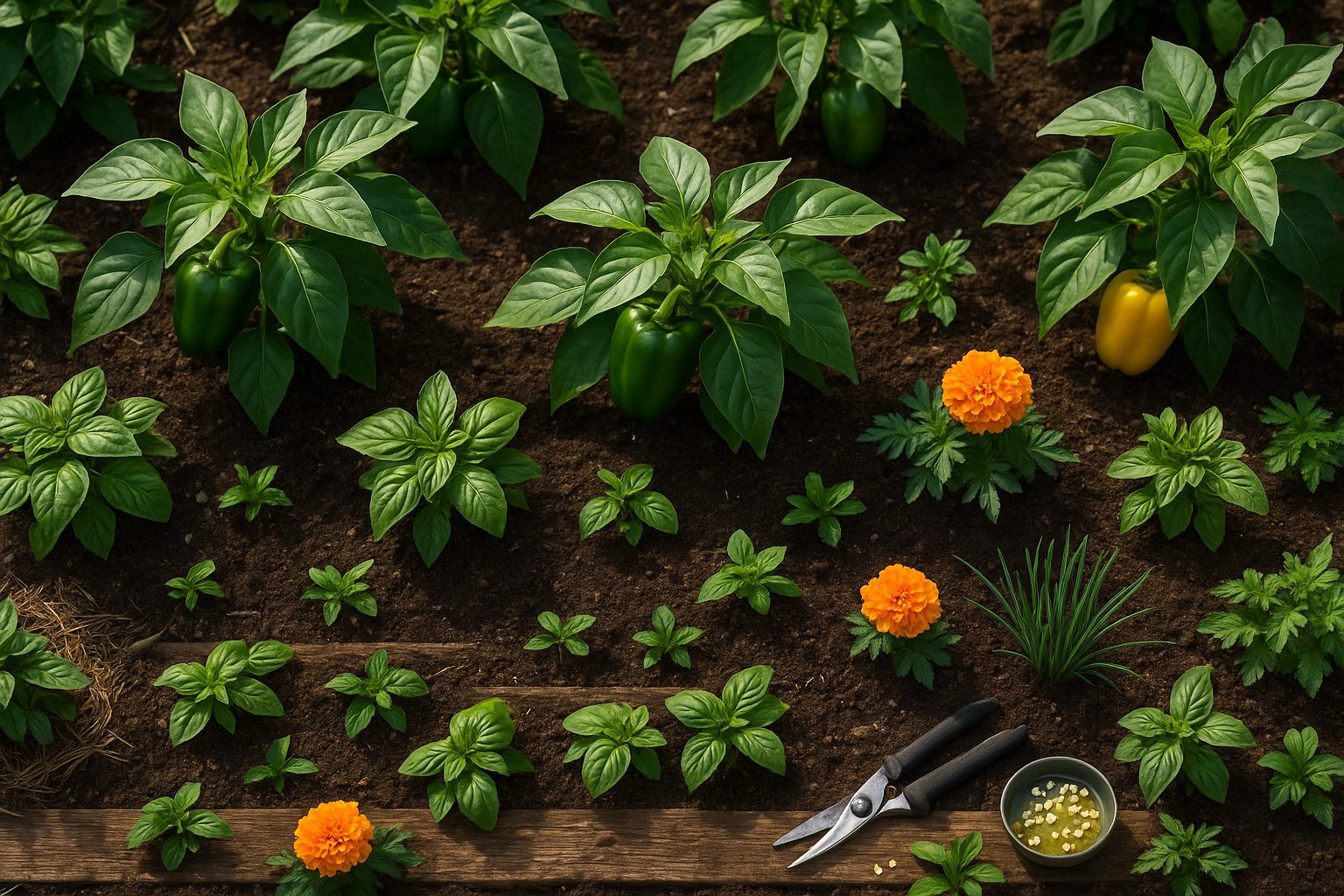
If you want healthier plants, bigger harvests, and fewer pests, a great strategy is to grow bell peppers with herbs right in your garden beds. Companion planting—a gardening method that places certain plants together for mutual benefit—works wonders with peppers and herbs like basil, chives, and parsley. Not only do these aromatic herbs repel harmful insects, but they can also boost pepper flavor and growth.
For example, basil reportedly keeps aphids and spider mites at bay, while chives may deter pesky thrips. And the best part? You don’t need to be an expert gardener to see results.
Throughout this guide, you’ll find practical, easy steps for planting, maintaining, and harvesting bell peppers alongside the best companion herbs. Ready to transform your pepper patch into a thriving ecosystem? Let’s dive into the simple, proven techniques that seasoned gardeners rely on—no green thumb required.
What is Companion Planting (and Why Does it Matter for Peppers)?
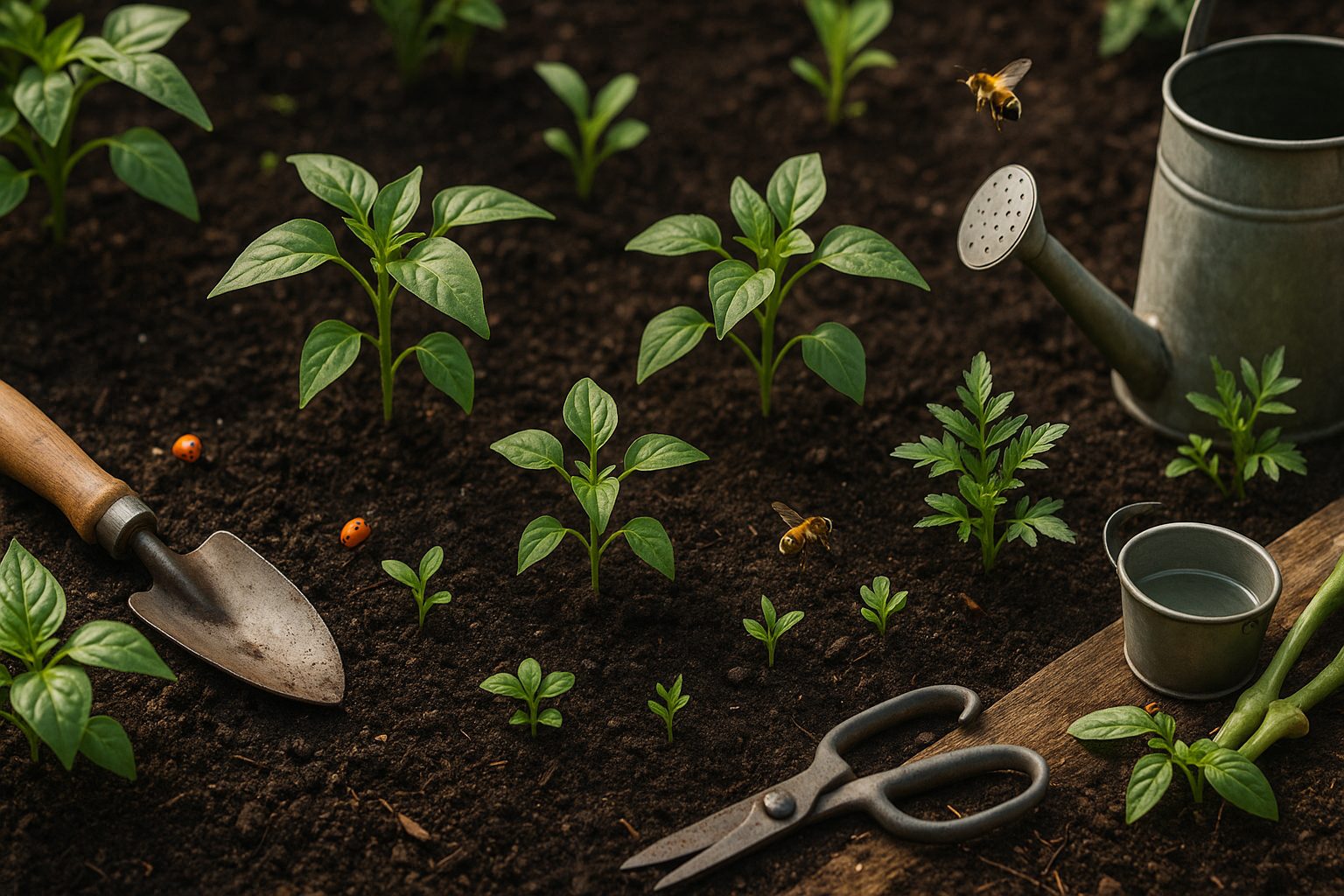
Companion planting is a gardening technique where different plant species are grown close together to help each other thrive naturally. Instead of relying solely on fertilizers or pesticides, you harness the power of nature by pairing plants that offer mutual benefits—like repelling pests, boosting each other’s growth, or improving the soil.
For example, growing basil next to peppers can deter aphids and spider mites, while marigolds nearby help keep harmful nematodes at bay. Beans are another great pepper companion because they fix nitrogen in the soil, giving peppers a nutrient boost without extra chemicals.
Peppers are particularly well-suited to companion planting since they can be vulnerable to common garden pests and often benefit from richer soil, which companions can provide. By carefully choosing what you plant alongside your peppers, you can cut down on the need for synthetic sprays, grow healthier and more robust plants, and even produce better-tasting peppers.
This natural teamwork saves time, supports biodiversity, and leads to a more resilient garden ecosystem—meaning fewer problems and lusher harvests for you.
How Peppers Grow Best: Key Growing Conditions
Peppers thrive when their growing environment is tailored to their specific needs. Start by planting them in well-drained, loamy soil rich in organic matter—amend your beds with compost or aged manure to boost fertility and improve drainage. Aim for a soil pH between 6.0 and 6.8 to optimize nutrient uptake.
Sunlight is crucial: peppers need at least 6–8 hours of direct sunlight daily. If you’re growing them in a shadier spot or indoors, consider supplementing with grow lights to ensure strong, healthy growth.
Watering should be deep but infrequent. Keep the soil evenly moist but not soggy to prevent root rot and blossom-end rot. A good rule of thumb is to water when the top inch of soil feels dry—usually about once or twice a week, depending on your climate.
Proper spacing is also important: set pepper plants at least 18 to 24 inches apart, with rows 24 to 36 inches apart. This spacing provides adequate airflow, reducing disease risk, and gives each plant plenty of room to spread.
Choose a garden site with good drainage and full sun, away from larger plants that might cast unwanted shade. Establishing these ideal conditions before adding companion plants is essential. Peppers stressed by poor soil, crowded roots, or insufficient sunlight are less resilient and won’t benefit from companion planting as much.
When the basics are right, companion plants can help with pest control or provide shade, but the foundation must always be strong.
Top Companion Plants for Peppers
When planning your pepper patch, choosing the right companion plants can make a big difference in plant health and harvest quality. Basil is a classic partner—its strong scent confuses pests like thrips and aphids that target peppers, and many gardeners claim basil even improves pepper flavor. Simply interplant basil in the same row or nearby.
Marigolds are another winner; they repel nematodes and beetles, so try planting a border of marigolds around the pepper bed. Onions help resist aphids and other insects while taking up little space; tuck onion sets around the outer edges of your pepper plants.
Carrots grow well with peppers as they break up soil, improving drainage and root growth for both crops—just sow carrot seeds between the pepper rows. Spinach thrives in the shade of taller pepper plants and acts as a living mulch, helping to keep soil cool and moist.
Beans, meanwhile, fix nitrogen in the soil, providing pepper plants with vital nutrients. Pole beans can even climb a trellis behind peppers to save space. Oregano is a hardy herb that attracts beneficial pollinators and can be planted as a low border around your peppers.
Finally, nasturtiums are not just pretty; their pungent scent deters aphids and whiteflies, and their trailing habit makes a great ground cover under pepper plants. For each of these companions, keep spacing in mind to allow for good airflow and light.
Group plants with similar water and sun needs, and try rotating spots each season to keep soil healthier and pests guessing. By carefully choosing your pepper companions, you’ll boost growth, keep pests away, and enjoy a more productive garden.
Plants to Avoid Near Peppers
Certain plants can hinder the growth of your peppers, so it’s important to know which ones to avoid as garden neighbors. For instance, fennel releases natural chemicals that stunt the growth of nearby vegetables, including peppers, making it a poor companion choice.
Beans, while popular in many gardens, share common pests and diseases with peppers, such as bacterial spot, which can quickly spread and devastate both crops. Similarly, plants from the brassica family—like broccoli, cabbage, and cauliflower—compete heavily for nutrients and space, often outcompeting slower-growing peppers and leading to reduced yields.
Instead of these problematic varieties, consider planting basil, marigolds, or carrots near your peppers.
- Basil helps deter pests like aphids and spider mites.
- Marigolds can ward off nematodes and enhance pollination.
- Carrots grow underground, minimizing nutrient competition.
By strategically choosing pepper companions, you’ll cultivate a stronger, more resilient, and productive garden.
Planning Your Pepper Companion Garden
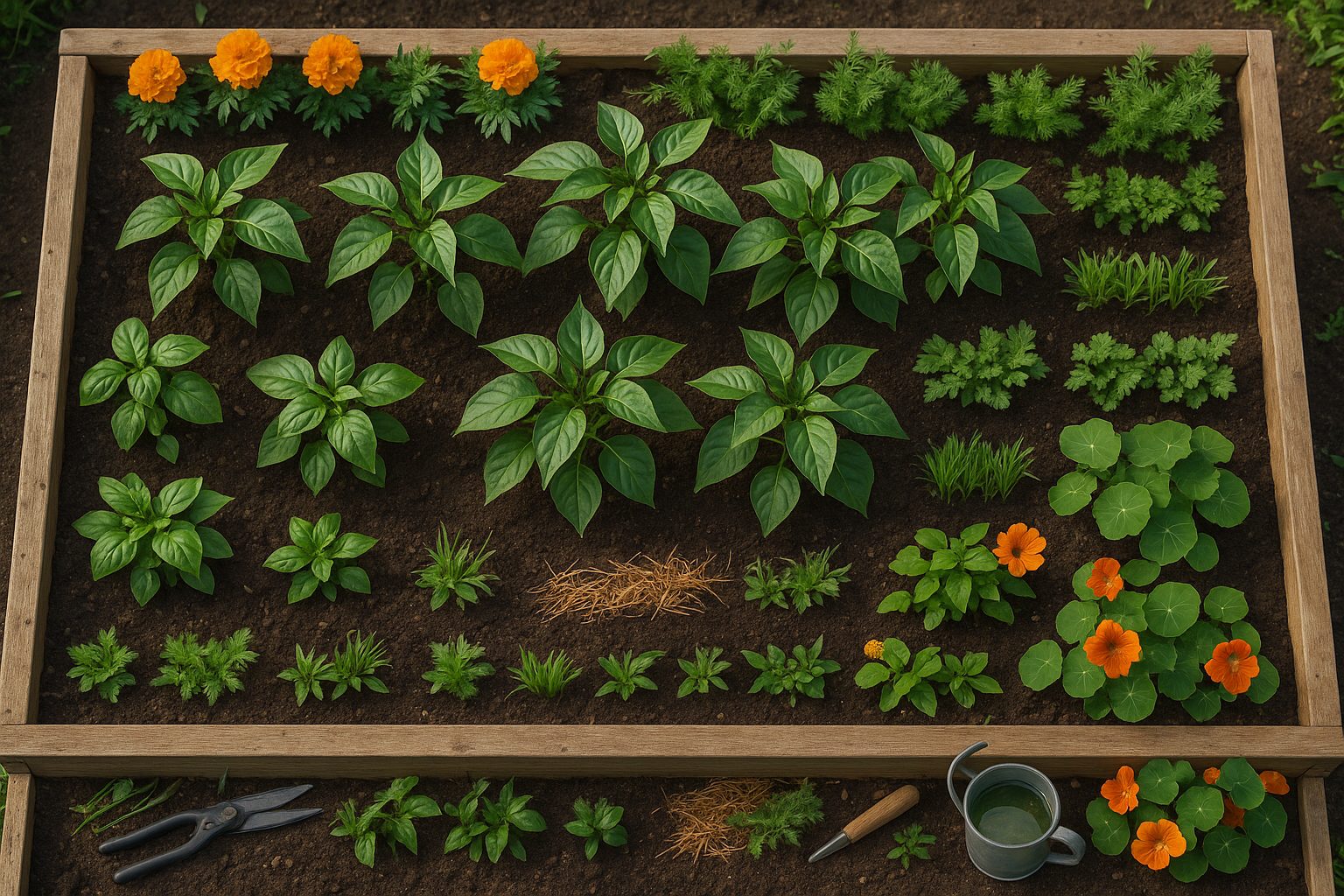
When planning your pepper companion garden, start by grouping plants that benefit each other through pest control, nutrient sharing, and growth habits. For example, peppers grow well alongside basil, which helps repel pests like aphids, while marigolds can deter nematodes and beetles when planted around the bed’s perimeter.
Consider a raised bed layout that dedicates the center two rows to peppers, leaving about 18 inches between plants. Use the front row for compact herbs like basil or chives. Place marigolds or nasturtiums at the corners and in any gaps to maximize their pest barrier effect.
Between pepper plants, add carrots or spinach—both occupy lower soil profiles and won’t compete for sunlight. If gardening in containers, group a couple of pepper plants with a handful of basil and a short marigold for a mobile, attractive, and pest-resistant setup.
To keep your pepper bed productive year-round, practice crop rotation by alternating pepper plantings with legumes like beans each season; these fix nitrogen in the soil and help replenish nutrients. Succession planting is also key—after an early crop of lettuce or radishes, slip pepper seedlings into their place, ensuring the soil remains covered and active.
This rotation and layering approach not only protects pepper plants from disease buildup but also maintains healthy, balanced beds for higher yields and fewer garden headaches all season long.
Pepper Companion Planting FAQs & Pro Tips
Wondering if you can plant peppers with tomatoes? Absolutely—peppers and tomatoes pair well since they share similar sunlight and watering needs. Just make sure to leave at least 18–24 inches between each plant to ensure good airflow and reduce disease risk.
Another common question is what to avoid planting near peppers. Steer clear of fennel and brassicas (like cabbage or broccoli), as these can stunt pepper growth. On the other hand, basil, carrots, and onions make excellent companions, helping to repel pests and enhance flavor.
For expert results, try mulching around the base of pepper plants to retain moisture and suppress weeds. Rotate your garden crops each year to prevent disease buildup in the soil, and avoid overwatering—peppers thrive when the soil has a chance to dry slightly between waterings.
Most importantly, don’t be afraid to experiment with new companion combinations or adjust spacing based on your specific conditions. Every garden is unique, and the best way to find what works is to observe, adapt, and learn from each season’s successes and setbacks.