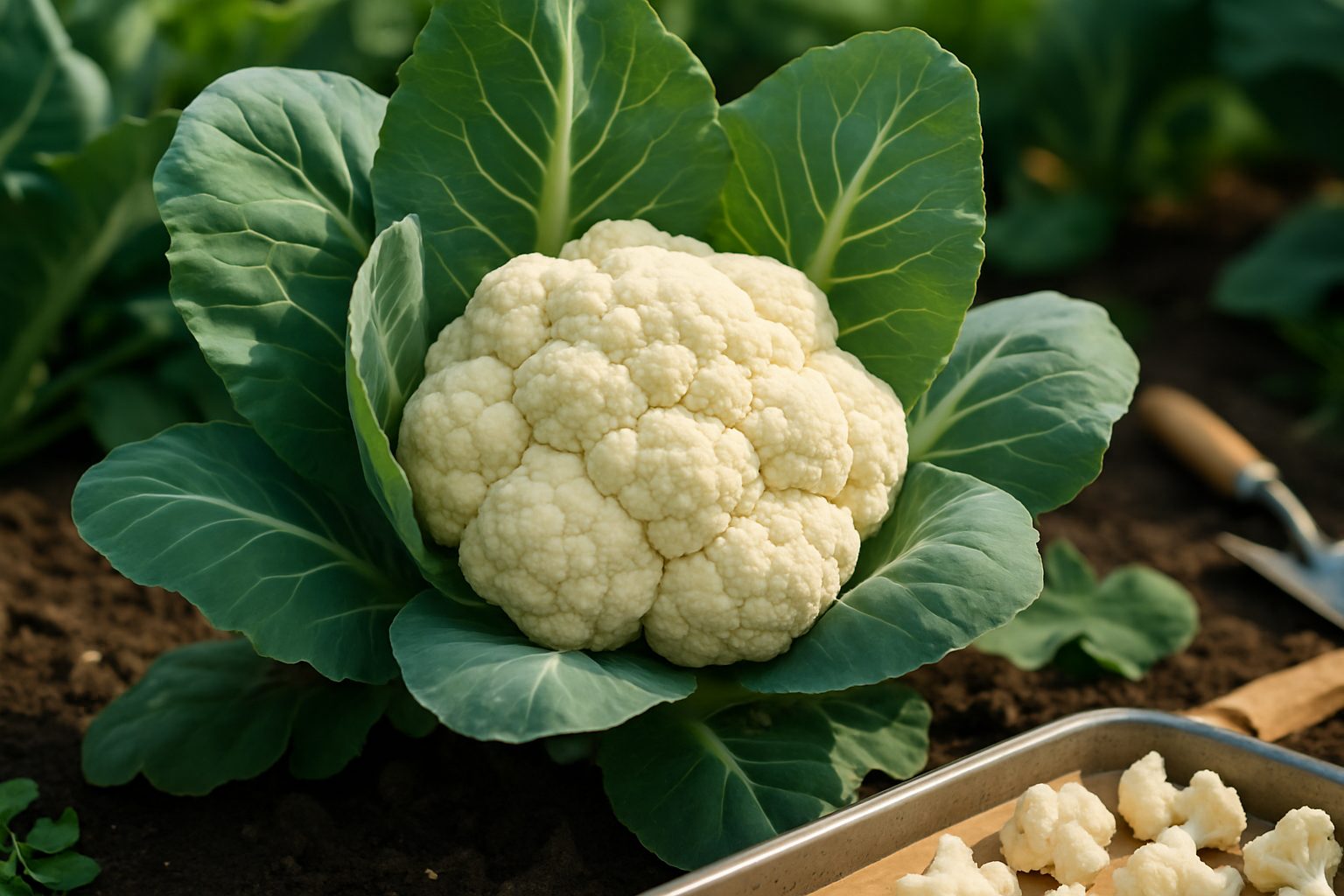
When is Cauliflower Ready to Harvest?
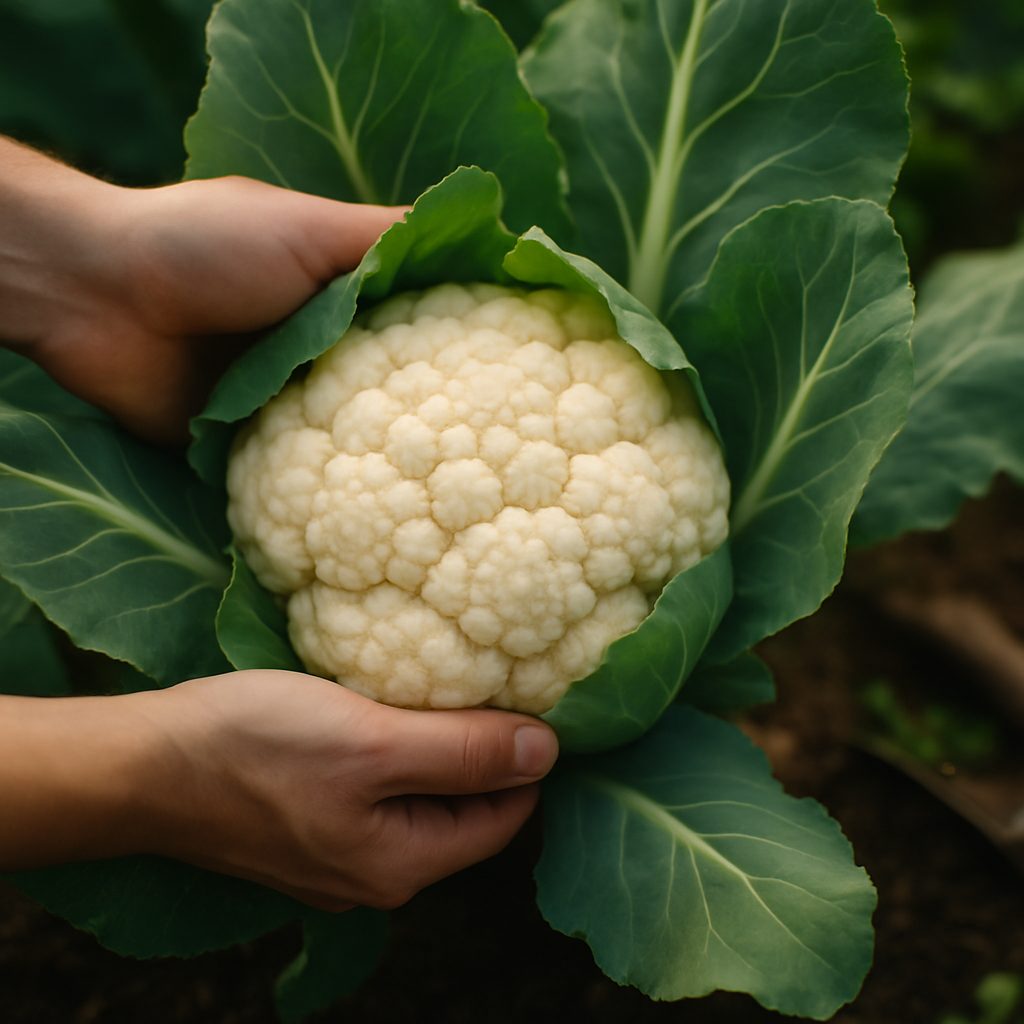
Knowing when to harvest cauliflower is crucial if you want those creamy-white heads to be at their peak flavor and texture. A ready-to-harvest cauliflower is all about the right look and feel—keep an eye out for compact heads that are firm to the touch and about 6-8 inches in diameter. The curds should be tightly packed without any “ricey” or separated texture, and the heads should have an even, creamy white (or sometimes purple or orange, depending on the variety) color with no blotching or yellowing. If you give the head a gentle squeeze and it feels solid, that’s a good sign your cauliflower is ready.
Timing and Growth Differences
Timing can differ depending on whether you’re harvesting in spring or fall. In spring, plants mature faster due to increasing daylight and warmth, so heads might be ready as soon as 50-60 days after transplanting. In contrast, fall harvests often take a bit longer—cooler temperatures slow growth, but they help prevent heads from separating or turning bitter. A good tip: check your cauliflower patch every other day once the heads begin to form, especially during a warm spell, because heads can mature quickly.
Why Harvest Timing Matters
Harvesting at the right time truly matters for both taste and yield. If you pick your heads too soon, you’ll wind up with small, underdeveloped florets that can taste bland. Wait too long, and heads may loosen, become bitter, or even bolt (send up a flower stalk), making them unusable for eating. In hot weather, these risks multiply—cauliflower is especially sensitive! For the best result, cut the heads while they are firm, creamy-colored, and before any separation occurs. Trust your senses—if the head looks right and feels right, it’s time to harvest, ensuring a delicious addition to your table.
How to Prepare for Harvesting Cauliflower (Including Blanching)
Blanching is a simple gardening technique that involves shielding the developing cauliflower head (or “curd”) from direct sunlight. This process isn’t about boiling; instead, it’s about protecting the head by tying the plant’s own leaves over it. The main goal is to keep the head white and tender—sun exposure can cause it to yellow, toughen, or develop a bitter flavor.
To know when to start blanching, keep an eye on your plants: once the head reaches about 2–3 inches in diameter (around the size of a large egg), it’s time to act.
Step one is to gently lift and gather several large, healthy outer leaves over the top of the curd.
Step two is to secure the leaves loosely with a soft tie, clothespin, or even a rubber band, making sure not to crush the head or restrict growth. This leafy canopy should completely shade the cauliflower while still allowing airflow to prevent moisture buildup, which can lead to rot.
Check occasionally to ensure the head remains covered and dry, especially after rain or strong winds.
After about 7 to 12 days of blanching, the head should reach a harvestable size (typically 6–8 inches across) and have a creamy white color. At that point, you can remove the covers and pick it immediately for peak flavor.
Not all cauliflower varieties need this extra care; some, labeled “self-blanching” or “self-wrapping,” naturally fold their leaves over the head. For example, varieties like ‘Self-Blanche’ or ‘Snowball Self-Blanching’ reduce the need for manual blanching. Always check your seed packet—it will indicate if manual blanching is necessary.
By following these simple steps and identifying the type you’re growing, you’ll ensure your cauliflower harvest is tasty, appealing, and protected from sun damage.
Harvesting Cauliflower: Best Techniques
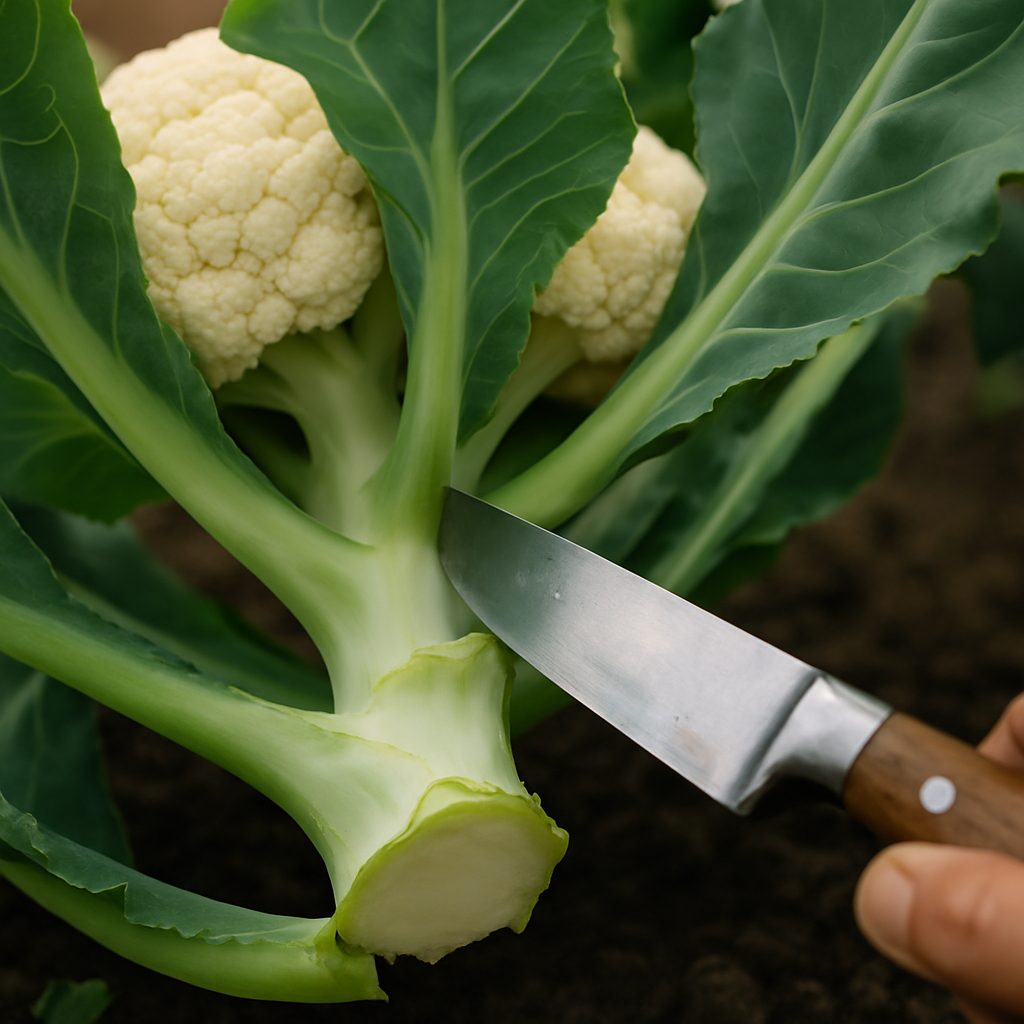
Harvesting cauliflower at just the right time ensures the heads are firm, white, and delicious. Start by checking that the curds are tightly packed and about six to eight inches across.
Use a sharp, clean knife or garden shears to make a smooth, angled cut through the main stalk below the head, leaving several outer leaves attached. These leaves protect the curd and support any side shoots that might form later. Try to avoid tearing or twisting the stem, as this can injure the plant and make it more susceptible to disease.
For the best freshness and flavor, harvest early in the morning when temperatures are cool and the plants are well hydrated. Avoid harvesting during the heat of the day, as heads may wilt more quickly. Harvesting after a spell of dry weather also helps prevent excess moisture from causing rot.
If you’d like more cauliflower from the same plant, leave as many healthy leaves as possible attached and water the plant well after harvest. With a little luck, you may see smaller “side heads” start to develop in the weeks ahead.
Always handle the heads gently to avoid bruising. If you’re not using them right away, keep them cool and dry to maintain peak quality.
After the Harvest: Storage and Preservation
Once you’ve harvested your cauliflower, start by removing any outer leaves and cutting off the excess stem. Then rinse the head thoroughly under cold water to remove dirt or insects. Let it air-dry or gently pat it dry so that excess moisture doesn’t cause spoilage during storage.
For short-term storage, wrap the cleaned, dry cauliflower loosely in a paper towel, place it in a perforated plastic bag, and store it in your refrigerator’s crisper drawer. The vegetable should last up to a week before starting to lose its crunch and flavor.
For longer preservation, freezing is a great option: simply cut the cauliflower into florets, blanch them in boiling water for three minutes, cool quickly in ice water, drain, and pack them in airtight freezer bags. This method keeps quality for up to a year, though the texture will be a little softer once thawed.
Pickling provides a tangy twist and extends shelf life for several months. You just need a simple vinegar brine, sterilized jars, and your favorite seasonings. Keep in mind the finished product will taste more like a condiment than fresh cauliflower.
Fermenting cauliflower in a saltwater brine yields a unique, probiotic-rich snack, offering gut-health benefits and an intriguing flavor. However, it can take a few weeks to develop the right taste, and results may vary based on temperature and method.
Each preservation option gives you flexibility—choose fridge storage for freshness, freezing for convenience, pickling for bold flavor, or fermenting for health benefits—so you can enjoy your cauliflower long after harvest.
Troubleshooting and FAQs
Cauliflower growers often face a few recurring issues, but most can be resolved with a quick fix or a small tweak in technique.
If your heads aren’t forming and instead produce only leaves, the culprit is usually inconsistent temperatures or lack of nutrients. Try planting in early spring or late summer to avoid heat, and enrich your soil with compost before planting.
Pest damage, especially from cabbage worms and aphids, is another common headache. Look for tiny holes or chewed edges, and treat with natural solutions like neem oil or hand-picking pests.
When heads begin spreading out instead of forming tight clusters, it’s often due to harvesting too late. Watch for firm, compact heads and cut promptly.
Wondering if you can harvest individual florets? While it’s possible, it’s best to harvest the whole head once it reaches the ideal size (about 6-8 inches across), as cutting florets from a mature plant can stress it and reduce overall harvest quality.
Cauliflower leaves are perfectly edible—try sautéing or roasting them for a nutritious side dish.
To prevent future issues:
- Rotate crops each year to prevent soil-borne diseases.
- Cover young plants with row covers to block pests early on.
- Keep soil evenly moist during head formation.
With a little observation and care, you’ll be enjoying beautiful, delicious cauliflower from garden to table.