
Introduction to Raised Bed Gardening for Cauliflower
When planning your vegetable patch this season, understanding the best cauliflower bed layout can make all the difference in your harvest. Raised bed gardening is becoming increasingly popular among home gardeners because of its ease of use, improved soil control, and higher yields. These elevated beds aren’t just for looks—they’re practical, especially for crops like cauliflower that require extra care.
Cauliflower is a cool-weather vegetable with high nutrient needs and a reputation for being fussy if conditions aren’t just right. Growing it in a raised bed gives you a major advantage: you can easily adjust soil structure, ensure excellent drainage, and keep weeds under control, setting your cauliflower up for success.
In this article, we’ll guide you through smart raised bed design principles specifically tailored for cauliflower. You’ll find practical tips on spacing, soil composition, and sunlight management to boost both plant health and yields. Whether you’re new to raised beds or looking to improve your approach, this guide will help you create a thriving, productive cauliflower patch that shines in any backyard garden.
Benefits of Raised Beds for Cauliflower Success
Raised beds offer a range of advantages that can greatly enhance your cauliflower bed layout, setting you up for a robust and healthy harvest. One of the key benefits is improved soil control. Raised beds make it easy to create the perfect growing environment by allowing you to select and amend your soil mix for optimal fertility, texture, and drainage—all crucial for cauliflower’s relatively demanding needs.
The loose and well-aerated soil in raised beds allows roots to develop more extensively compared to the often-compacted and dense ground found in traditional gardens. This better aeration also improves drainage, which is vital for cauliflower; standing water can cause root rot and stunt growth, but raised beds let excess moisture escape efficiently.
Soil temperature regulation is another hidden perk: raised beds warm up faster in spring and cool off more gradually, giving your cauliflower a longer, more stable growing season. Raised beds are also easier to cover with hoops or row covers, helping to shield your crop from temperature swings and protect cauliflower heads from pests like cabbage worms and aphids.
Physical barriers can be easily installed along the edges of beds to reduce encroachment from soil-borne pests and weeds. In terms of accessibility, raised beds are game-changers—you can plant, weed, and harvest without bending uncomfortably or stepping into your growing area, minimizing soil compaction around delicate cauliflower roots.
All these factors combine to give you better control, healthier plants, and a much more enjoyable gardening experience.
Choosing the Ideal Dimensions and Location
Designing an effective cauliflower bed layout starts with selecting the right raised bed dimensions. Each cauliflower plant needs plenty of space for its broad leaves and deep roots to grow well. A bed width of 3 to 4 feet works best—it’s wide enough to plant in staggered rows but narrow enough to reach from either side easily. Depth is important, too: aim for at least 12 to 18 inches so roots can develop strongly and water drains well, helping to prevent diseases. The length is more flexible; a 6 to 8-foot bed provides enough space for a family-sized crop without overwhelming smaller gardens.
When choosing a spot for your raised bed, pick a location that gets full sun—at least 6 hours of direct sunlight each day—as cauliflower thrives in bright light. In very hot climates, some afternoon shade can be beneficial, but avoid placing your bed in full shade. Because wind can damage delicate cauliflower heads, consider situating the bed near a fence, wall, or shrubbery to offer natural protection, or use a temporary windbreak if your area is exposed.
Access to water is another key factor. Place your raised bed near a hose, rain barrel, or irrigation system to make watering easy and consistent during dry periods. If you have limited garden space—such as a small urban backyard or patio—reduce the bed length or use modular raised beds and containers. Even a compact two-foot by three-foot bed, or several large fabric pots, can support a few healthy cauliflower plants when spaced about 18 to 24 inches apart.
For rooftop or balcony gardens, verify that the surface can support the weight of a fully planted and watered bed. By customizing bed size and location to your available space, you can grow productive, manageable cauliflower crops, even in compact settings.
Soil Mix and Amendments for Cauliflower in Raised Beds
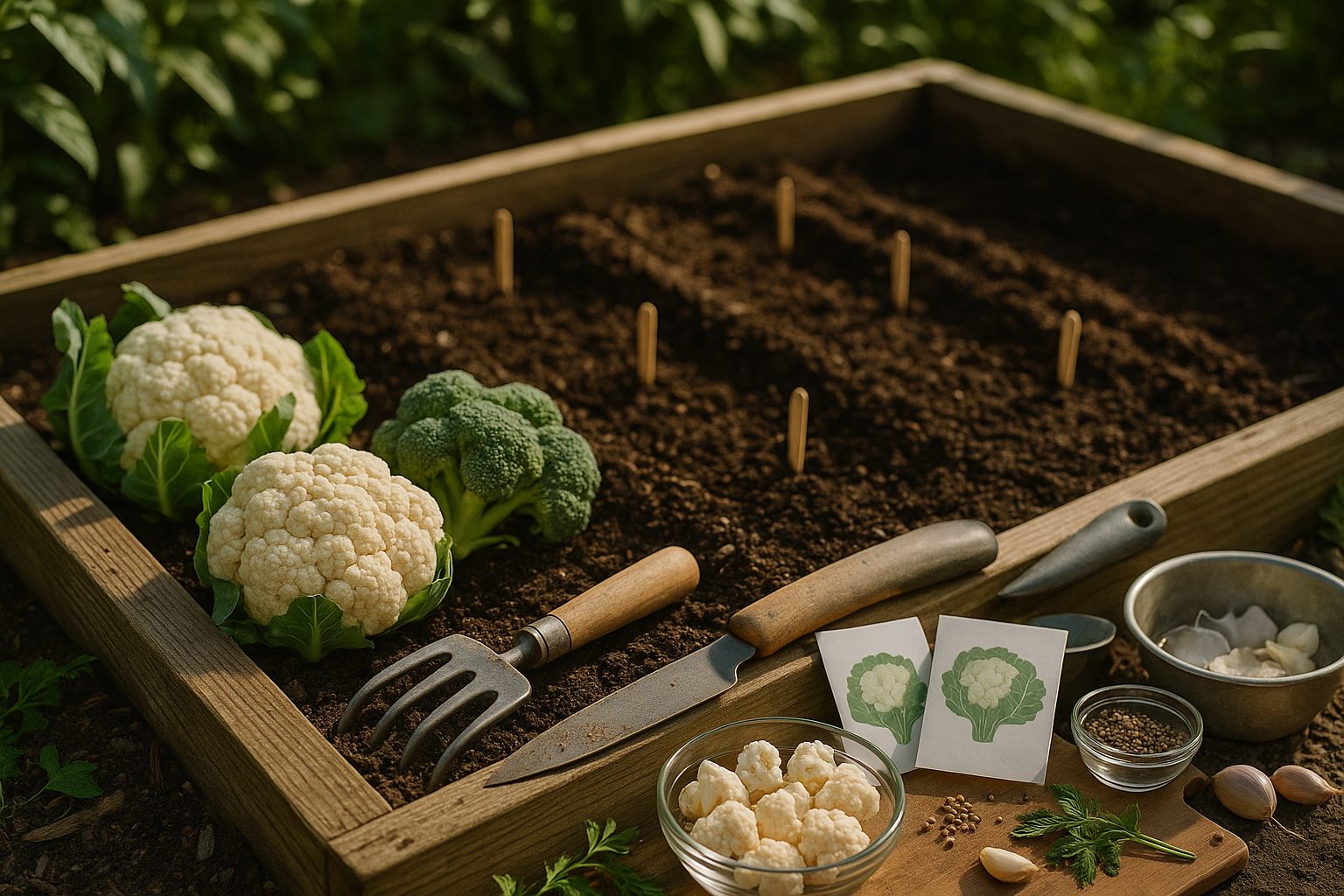
Creating the perfect soil mix is key for a successful cauliflower bed layout. Cauliflower thrives in loose, fertile soil with excellent drainage and a slightly alkaline pH. Aim for a blend of about 40% high-quality topsoil, 40% well-rotted compost, and 20% coarse sand or perlite. This mix ensures the roots get both moisture and air without becoming waterlogged.
Compost is essential in this blend, providing a steady supply of nutrients and beneficial microbes that promote strong head development. Adding aged manure, such as cow or chicken manure, boosts fertility by supplying nitrogen, potassium, and trace minerals. Be sure the manure is well-composted to avoid burning roots or introducing pathogens.
Cauliflower prefers a soil pH between 6.5 and 7.5, so adding garden lime can help raise the pH if your soil is too acidic. This step is crucial because acidic soil often locks up key nutrients needed for growth. Don’t skip soil testing before planting; home kits or lab analyses can reveal your soil’s nutrient profile and pH, allowing you to tailor amendments precisely.
If your soil test shows low nitrogen, top-dress the beds with blood meal or fish fertilizer. For calcium deficiencies—a common cause of “buttoning” (poor head formation)—add gypsum or more lime. Magnesium shortages, which appear as yellowing leaves, can be corrected with Epsom salts. Regularly working organic matter into your beds not only feeds your plants but also improves soil structure and moisture retention.
By carefully preparing your soil this way, you create a thriving environment where cauliflower can develop deep roots and produce large, healthy heads. Think of soil preparation as the most important investment in your raised bed; a little extra effort now will pay off with a delicious, high-yielding harvest.
Irrigation and Mulching Strategies
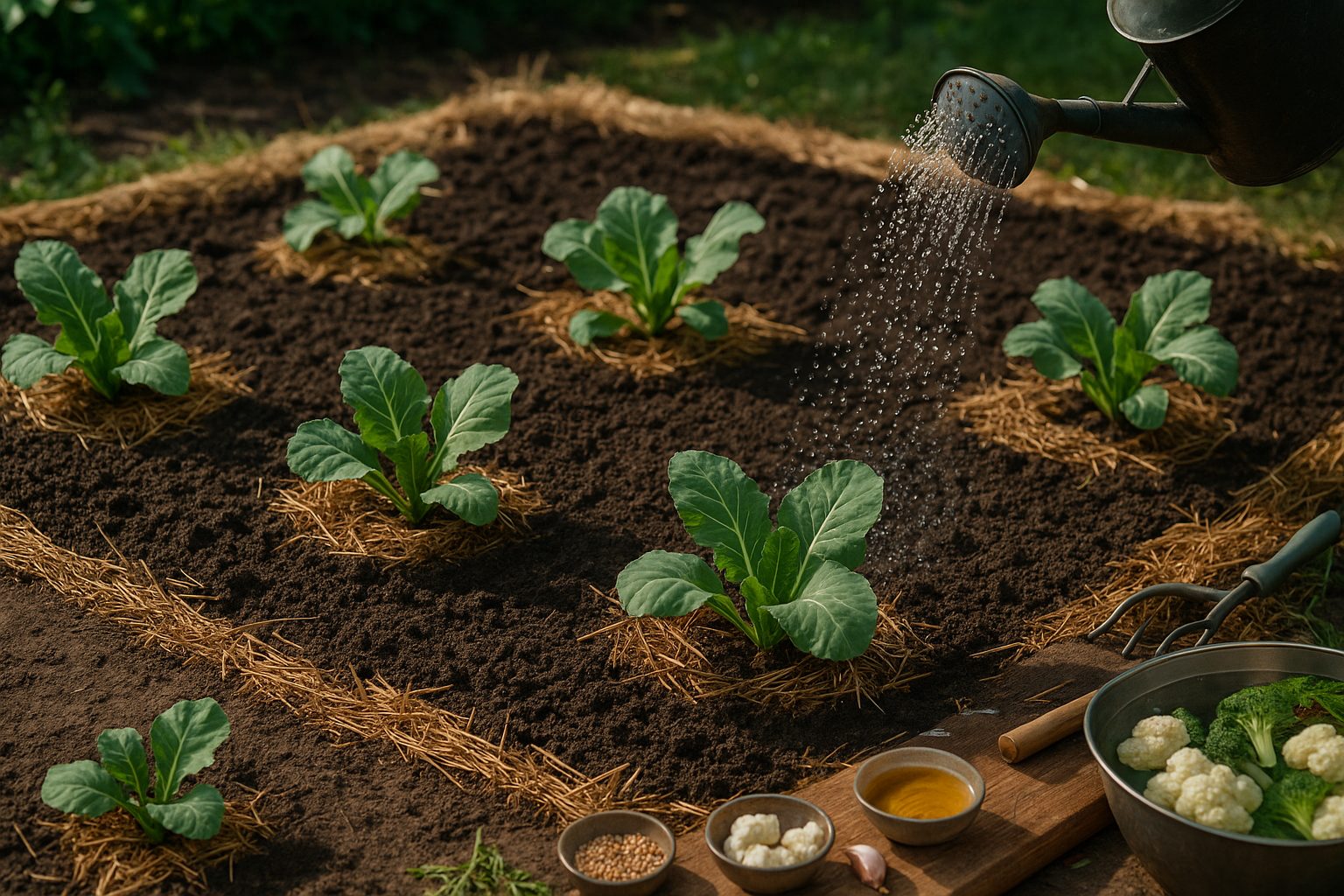
Consistent moisture is crucial for cauliflower, as even brief dry spells can cause poor head formation or premature bolting. When planning your cauliflower bed layout, incorporating efficient irrigation helps keep the soil evenly moist and supports healthy, robust growth. Drip irrigation is an excellent choice for raised beds because it delivers water directly to the roots without wetting the foliage, reducing the risk of disease. These systems can be installed along each row or beneath the mulch, ensuring every cauliflower plant receives a steady water supply.
Soaker hoses provide a simpler setup—just snake the hose through the raised bed close to the base of your plants and let water seep gradually into the soil. Whichever system you pick, using a timer can automate watering, ensuring consistency and saving you time.
To further help your cauliflower thrive, apply an organic mulch after transplanting seedlings. Straw is a popular option because it retains soil moisture and breaks down to enrich the bed over time, but untreated grass clippings or shredded leaves also work well. Apply a two- to three-inch layer around (not against) the cauliflower stems, making sure water still reaches the soil.
Mulching not only reduces how often you need to water but also suppresses weed growth, which is important since weeds compete for nutrients and moisture. With the right combination of drip or soaker irrigation and a well-planned mulch layer, your cauliflower bed layout will maintain steady moisture levels and lead to a bigger, better harvest.
Spacing, Companion Planting, and Crop Rotation
Proper spacing is crucial when planning your cauliflower bed layout. Each cauliflower plant needs about 18 to 24 inches of space on all sides to grow healthy, robust heads. This space allows the large leaves to expand and ensures good airflow between plants, reducing the risk of fungal diseases like clubroot and powdery mildew. In a typical 4-foot-wide raised bed, you can stagger two rows of cauliflower in a zigzag pattern for optimal use of space.
Companion planting is another effective strategy to boost your cauliflower’s success. Aromatic herbs like dill, sage, and thyme can help repel common pests such as cabbage moths and aphids when planted nearby. Root vegetables like beets and onions also make excellent neighbors because they grow at different soil depths, minimizing competition.
Avoid planting cauliflower with other brassicas like cabbage, kale, or broccoli, as they attract the same pests and are prone to similar diseases. It’s also best to keep cauliflower away from strawberries and tomatoes, which compete for nutrients and space.
Finally, practice crop rotation to maintain healthy soil in your raised bed. Wait at least three years before replanting cauliflower or other brassicas in the same spot to reduce the risk of soil-borne diseases. Rotate with legumes, carrots, or leafy greens between brassica crops to disrupt pest cycles and replenish essential nutrients.
By combining thoughtful spacing, strategic companion planting, and disciplined crop rotation, your cauliflower crop will thrive year after year.
Design Upgrades: Support Structures and Season Extension
To elevate your cauliflower bed layout, consider integrating subtle yet effective design upgrades that support plant health and extend your growing season. Although cauliflower heads are generally sturdy, heavy rain or wind can sometimes cause stems to tip or heads to rest on damp soil, increasing the risk of disease or deformity. Simple support solutions—such as hoops made from wire stakes or bamboo canes gently placed around each plant—help keep heads upright and clean without disrupting your garden’s appearance.
For a longer harvest window or earlier plantings, try season extension methods like floating row covers or cold frames. Light, breathable row covers protect young transplants from chilly spring nights and insects, while clear plastic cold frames create a mini greenhouse effect, trapping warmth and allowing you to start seeds weeks before the last frost. These protective elements not only boost yields but are easy to remove once temperatures rise.
For aesthetics, choose natural materials—like untreated wood for frames or decorative edging for beds—to blend your supports and covers seamlessly into the landscape. Adding a border of edible flowers or herbs can further soften the look and attract pollinators, making your cauliflower bed layout as visually appealing as it is productive.
Conclusion and Key Design Takeaways
Designing an effective cauliflower bed layout starts with well-built raised beds that are at least 12–18 inches deep to ensure excellent drainage and promote healthy root development. Space your cauliflower plants 18–24 inches apart in rows to encourage good air circulation and support strong growth. Maintaining consistent, even soil moisture and providing plenty of sunlight are essential for producing robust, productive heads. By carefully planning your beds—using high-quality soil, mulching, and practicing crop rotation—you can grow healthier cauliflower crops and enjoy better yields. Give these raised bed design strategies a try in your garden, and feel free to share your results or ask any questions below!