Introduction
Wondering if you can regrow carrot tops from those leftover bits in your kitchen? Regrowing food from kitchen scraps has become a popular way to reduce waste and add a splash of greenery to your home—especially when it comes to carrot greens. Many people are surprised to learn that, while you can’t grow whole new carrots from store-bought tops, you can regrow lush carrot tops that are both beautiful and edible.
Carrot greens, or the leafy foliage attached to the roots, are often overlooked but pack a punch of flavor and nutrients—contrary to the common belief that they’re unsafe or inedible. In this article, you’ll discover whether regrowing carrot tops is possible, how to do it successfully, and creative uses for the resulting greens. Plus, we’ll share real-world tips, explain misconceptions, and help you make the most out of every carrot in your kitchen.
Are Carrot Greens Edible and Safe?
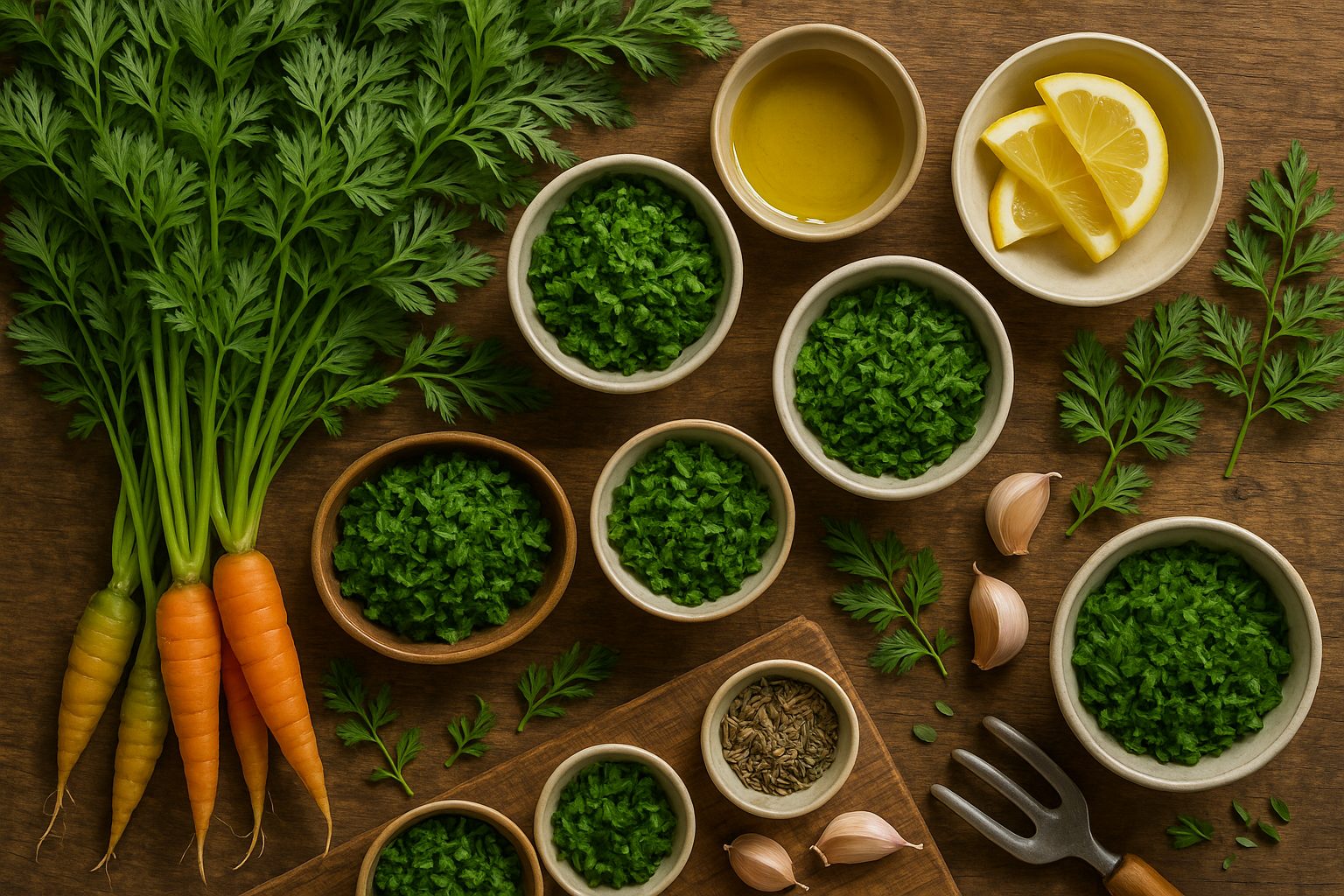
Many people believe carrot greens are toxic, but this is a common myth. In reality, carrot greens—the leafy tops of carrots—are not only edible but also packed with nutrients like vitamin C, potassium, calcium, and antioxidants. Their flavor is slightly bitter and earthy, often compared to parsley with a hint of carrot, making them a great addition to fresh salads, pestos, soups, or as a garnish.
However, it’s important to prepare them properly. Always wash carrot greens thoroughly to remove dirt and potential pesticides, and avoid eating them if they appear wilted or slimy. Some individuals may be sensitive to the greens, so it’s wise to try a small amount first if you’re new to them.
Also, remember that, like many leafy greens, carrot tops contain alkaloids. While these are naturally occurring plant compounds, consuming very large amounts might cause stomach upset for some people. To get the most out of carrot greens safely, use them as a flavorful accent in your dishes rather than the main ingredient, and source them from organic or trusted growers whenever possible.
Reducing food waste and adding nutrition, carrot greens are an underrated kitchen resource worth exploring.
How to Regrow Carrot Tops Successfully
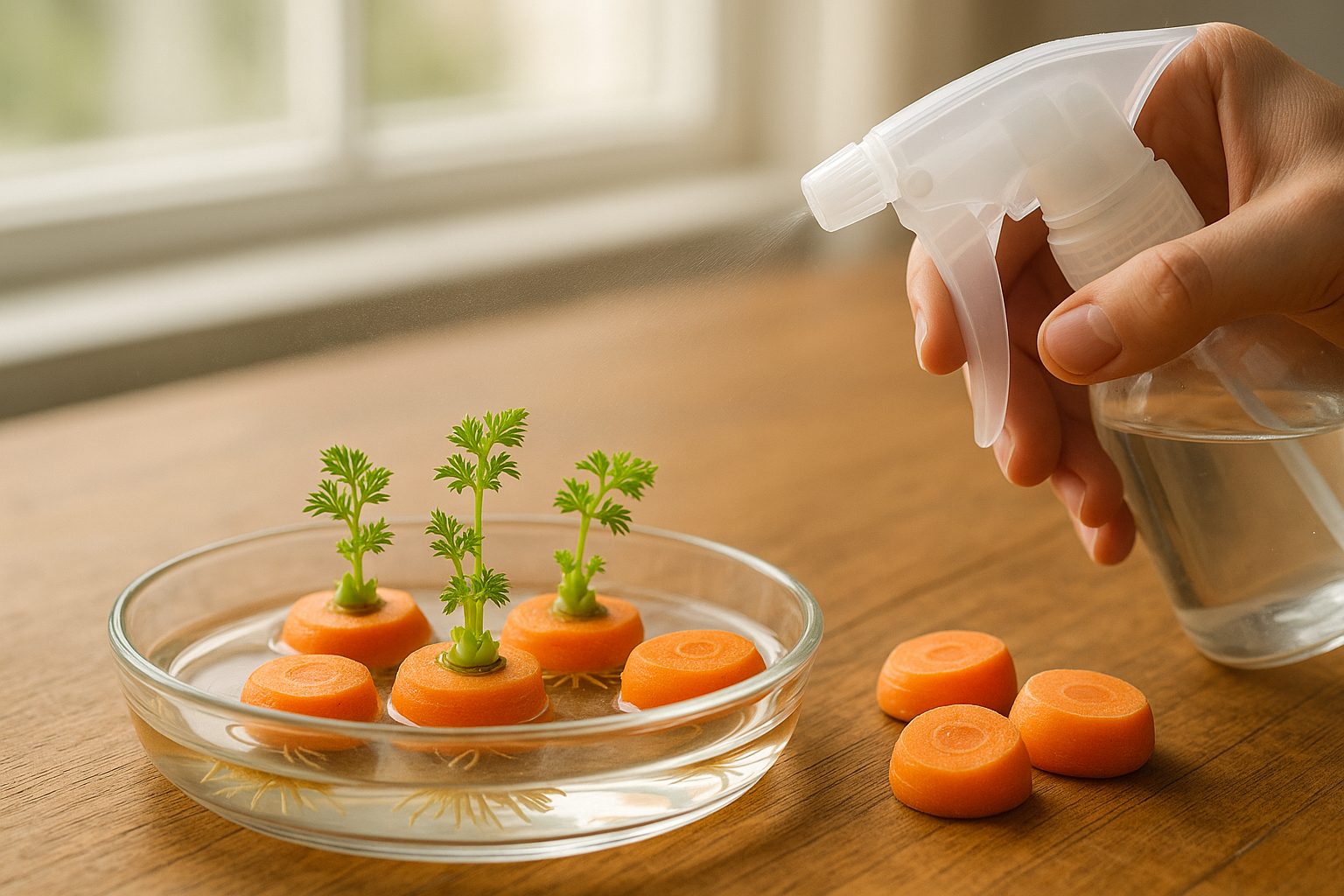
Regrowing carrot greens from carrot tops is a fun and easy project that requires just a few simple materials and a bit of patience. Start by slicing off the top 1-2 inches of a fresh carrot—make sure the base is healthy and not dried out.
Place the carrot tops cut-side down in a shallow dish or small container. Fill the dish with enough water to just cover the bottom of the carrot tops, but don’t submerge them completely.
Position the dish on a sunny windowsill where it gets plenty of indirect light—a kitchen window is perfect. Carrots prefer a warm spot, so keep the temperature between 65°F and 75°F if possible, and change the water daily to prevent mold and keep the tops fresh.
Within a week, you’ll notice tiny green shoots sprouting from the tops and delicate roots forming underneath. Mist the leaves lightly with water every day to keep them hydrated.
After about two weeks, you should see fuller, frilly green foliage—these edible greens typically grow to about 3-6 inches tall if cared for properly. Use the flavorful leaves as garnishes or in salads for a burst of fresh, homegrown taste.
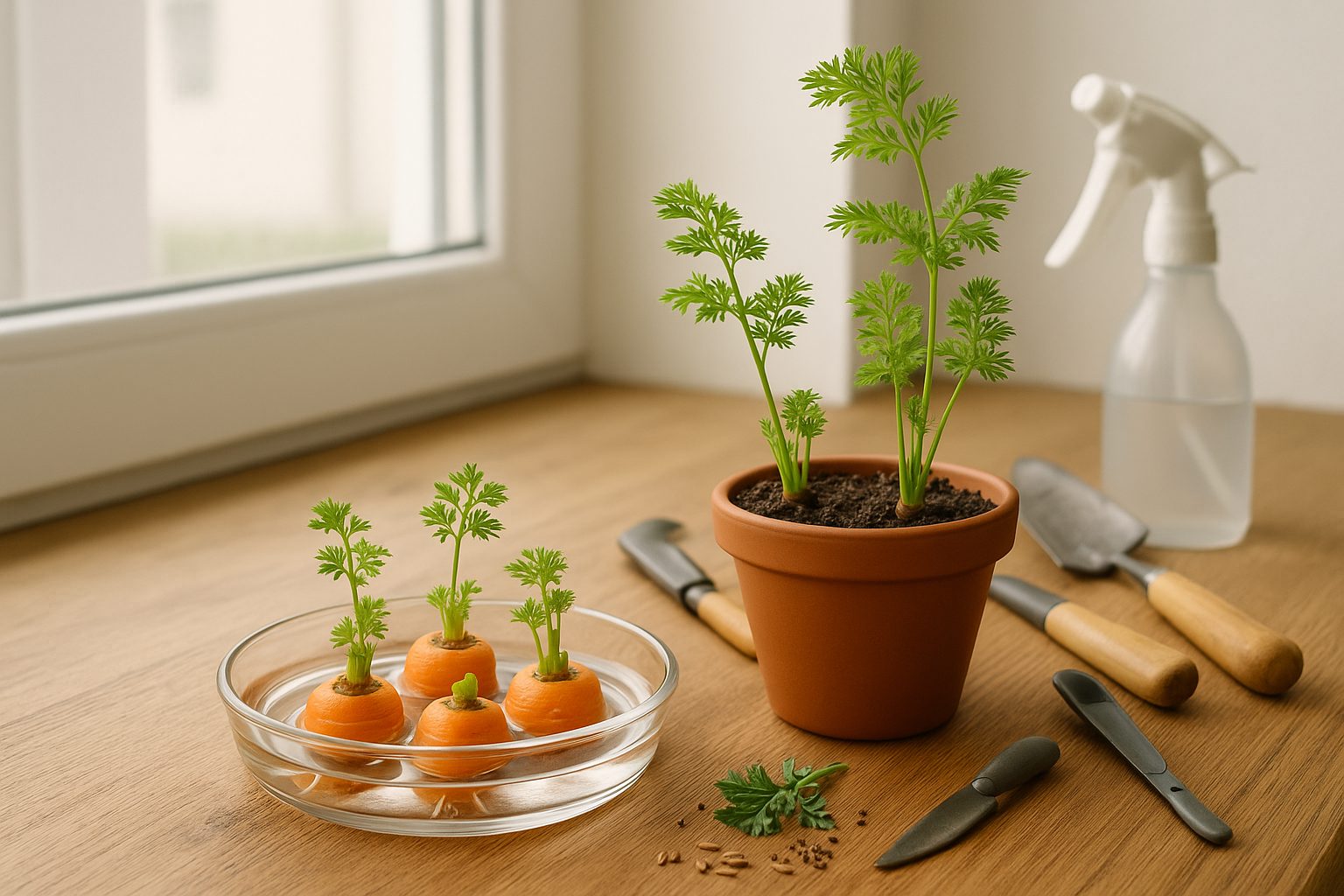
If you want to extend their life, you can even transplant the tops into a pot of soil once the greens are established. Just keep the soil lightly moist and continue providing bright, indirect sunlight.
This easy project is not only a great way to reduce food waste, but also offers a hands-on lesson for kids about plant growth and sustainability.
Growing Carrot Greens in Soil: Going Beyond Water Propagation
Once your carrot tops have sprouted roots in water, transferring them into soil helps grow sturdier, more resilient greens. To start, choose a small container with drainage holes to prevent soggy roots—recycled yogurt cups or plant pots work well.
Fill the container with a loose, well-draining potting mix; a blend of equal parts peat moss, perlite, and compost is ideal to encourage healthy root development. Gently nestle the rooted carrot tops about an inch deep into the soil, making sure any green growth stays above the surface.
Place your containers on a sunny windowsill or somewhere that gets at least 6 hours of bright, indirect light daily. Water lightly after transplanting and keep the soil evenly moist, but avoid overwatering to prevent root rot. You can check moisture by touching the soil surface—if it feels dry, it’s time to water.
Regularly trim yellow or wilted leaves to encourage new growth and keep the plant healthy. With these simple steps, you’ll enjoy lush carrot greens perfect for salads or garnishes. Plus, it’s a fun, eco-friendly way to get more out of your kitchen scraps!
Ways to Use Carrot Greens in the Kitchen
Don’t toss those carrot greens—they’re a flavorful, nutrient-rich ingredient that deserves a spot in your kitchen. One popular way to use carrot tops is turning them into a vibrant pesto: just blend the washed greens with garlic, nuts (like almonds or walnuts), Parmesan, lemon juice, and olive oil for a zesty spread perfect on pasta or sandwiches.
Carrot greens also shine in salads; chop them finely and toss with mixed greens, tomatoes, and a light vinaigrette for extra freshness and a hint of parsley-like flavor. For a comforting twist, add chopped carrot tops to soups and stews during the last few minutes of cooking—they’ll add color and a subtle herbal note.
To prepare carrot greens, always separate them from the root as soon as possible, because they draw moisture and nutrients away from the carrots. Rinse thoroughly to remove grit, then pat dry. To store, wrap the greens loosely in a damp paper towel and place them in a reusable bag in the fridge; they’ll stay crisp for up to a week this way.
Avoid wilting by keeping them away from excess moisture and using within a few days for the best taste and texture. With a bit of care, these “scraps” become a delicious asset rather than food waste, helping you get more from every produce purchase.
Fun Learning Moments: What Kids and Adults Can Discover
Engaging in this project offers a treasure trove of educational benefits for both kids and adults. As you nurture seeds into thriving plants, everyone gets hands-on lessons in botany—watching roots form, leaves unfurl, and flowers blossom provides a front-row seat to nature’s magic.
Along the way, the process naturally encourages patience, since growth takes time and consistency. Careful observation becomes key, whether tracking changes in plant height or spotting the first budding bloom.
These moments also open up conversations about sustainability. By growing your own food, families learn where produce comes from and how to minimize waste. Kids and adults alike begin making mindful choices, appreciating the time and resources required to bring vegetables from soil to table.
Not only does this spark curiosity, but it also instills new habits that can lead to a healthier, more environmentally conscious lifestyle.
FAQs and Troubleshooting Growing Carrot Tops
If your carrot tops are turning mushy or rotting, you’re likely using too much water or letting them sit in stagnant moisture. To avoid this, place the carrot tops cut-side down in a shallow dish with just enough water to cover the base, and refresh the water daily.
If growth is slow or nonexistent, make sure your carrot tops were cut from fresh carrots and placed in a spot with bright, indirect sunlight—low light often hinders sprouting. Keep the temperature moderate; extreme heat or cold can also stunt growth.
Curious about fertilizing? It’s not needed for regrowing greens in water, but you can move well-sprouted tops into a pot with soil and lightly fertilize for bushier leaves.
Wondering how long it takes? Healthy growth usually appears within 5–7 days.
Can you eat carrot greens? Yes, as long as they’re from clean, organic carrots and thoroughly washed.
Are carrot tops reusable? They won’t grow new carrots, but you can harvest the leaves several times before the tops run out of energy.
With a few small tweaks, regrowing carrot greens is easy and can provide you with fresh, homegrown garnish all year round!
Conclusion
Regrowing carrot tops at home is a fun and easy project that anyone can try, even if you don’t have a green thumb. Not only does it help reduce food waste and benefit the environment, but it also provides fresh greens for salads, garnishes, or pestos right from your windowsill.
Give it a go next time you’re cooking with carrots—just save the tops and watch them sprout! If you try this sustainable kitchen hack, we’d love to hear how it goes. Share your stories or ask questions in the comments to keep the conversation growing.