Introduction
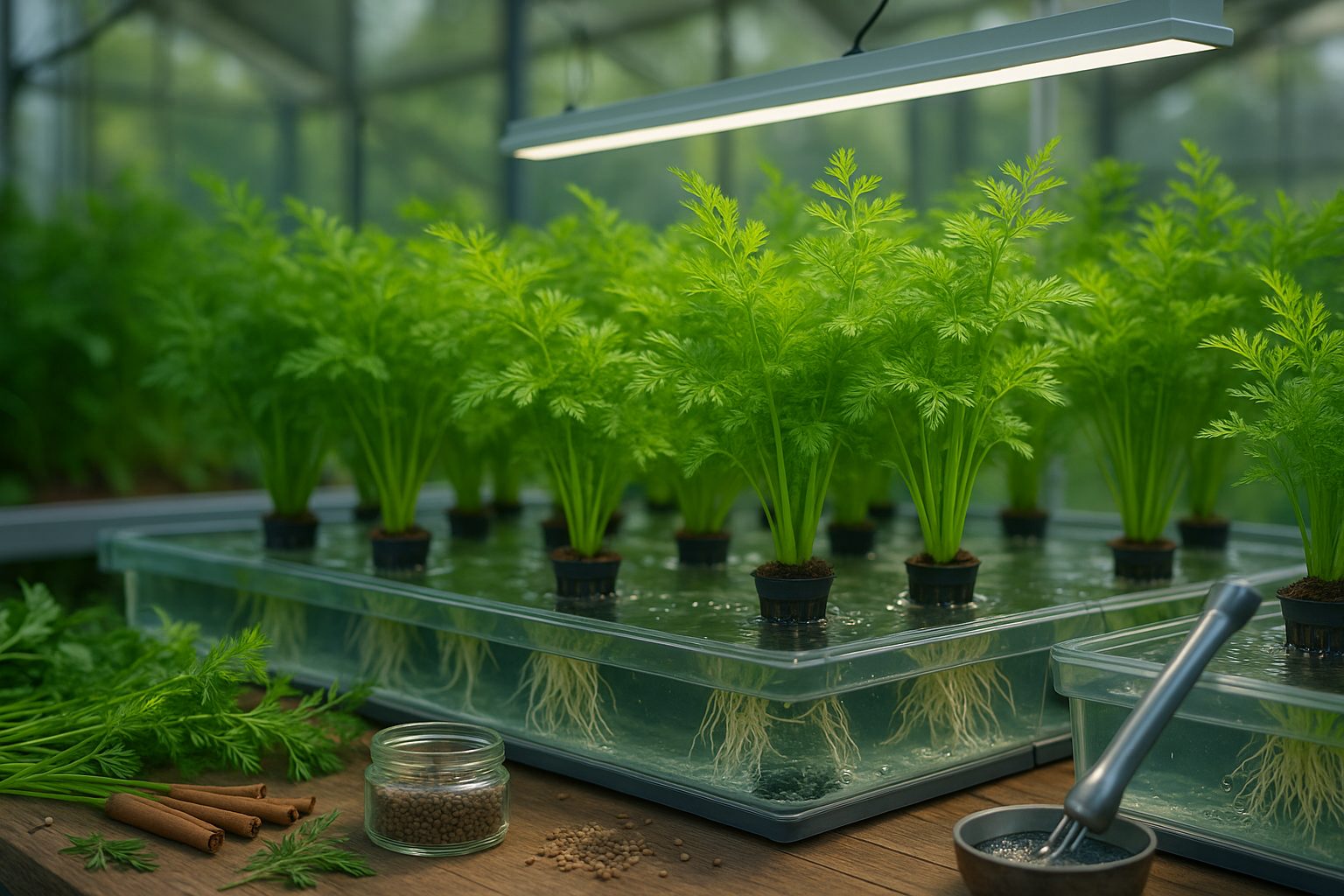
Hydroponic carrots are changing the way gardeners grow this beloved root vegetable, and it’s easy to see why they’re gaining attention. Growing carrots without soil—using nutrient-rich water solutions instead—offers several advantages over traditional gardening. With hydroponics, you get faster growth, fewer pests, and more control over the environment. It’s also a space-saver, perfect for those with limited backyard space or who want to garden indoors. In this article, you’ll discover whether carrots really can thrive hydroponically, the specific challenges involved, and tips to help you produce crisp, healthy carrots at home using modern hydroponic systems.
Choosing the Right Carrot Varieties
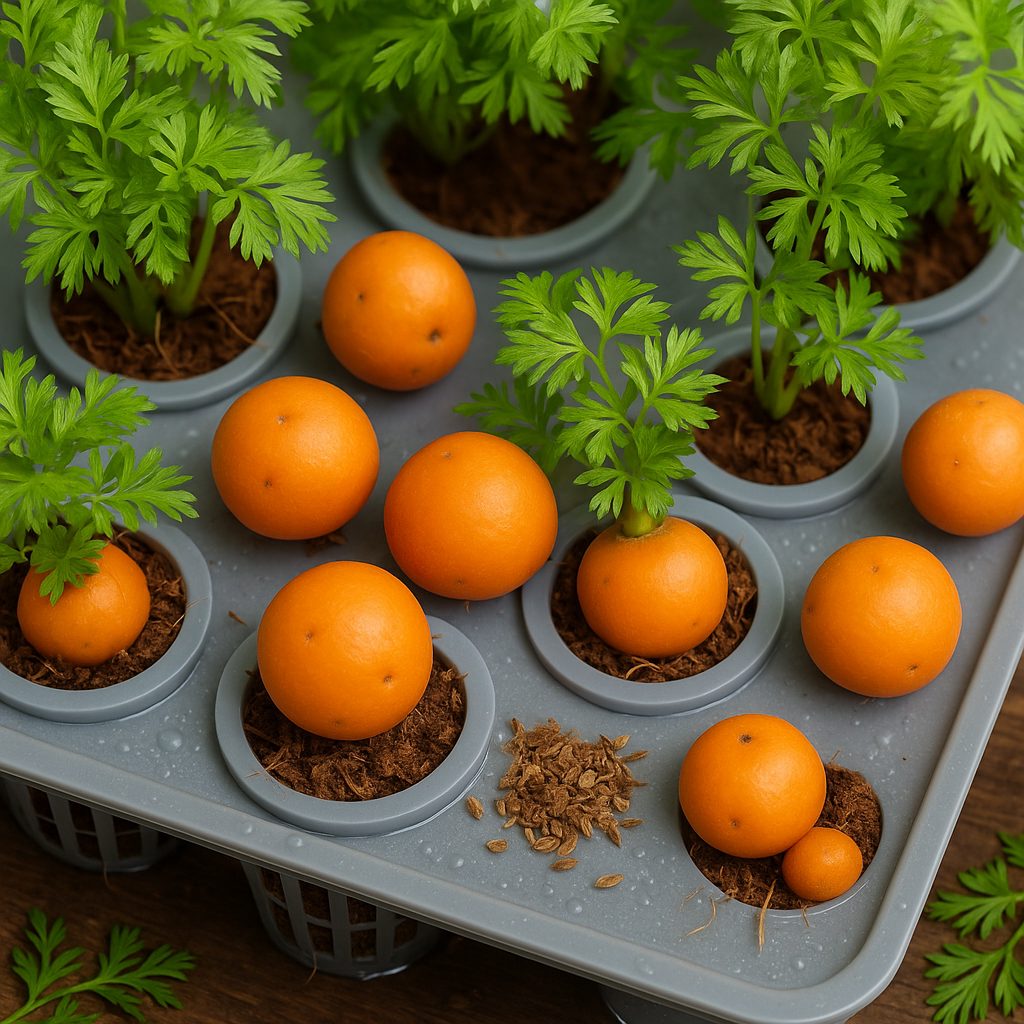
Selecting the right carrot variety can make a big difference in your hydroponic setup, especially since space and root growth are limited compared to traditional gardens. For the best results, look for short or round varieties like ‘Parisian’, ‘Thumbelina’, or ‘Atlas’, which produce small, globe-shaped carrots ideal for shallow hydroponic beds.
These varieties mature quickly and are less likely to become misshapen due to system constraints. Another reliable option is ‘Little Finger’, a mini carrot that grows only a few inches long and thrives in compact conditions.
Avoid large, traditional varieties unless you have a deep system designed to accommodate them. Beginners should stick to smaller, fast-maturing types for easier harvesting and consistent yields, reducing frustration as you learn the ropes.
Setting Up Your Hydroponic System
When setting up a hydroponic system for growing carrots, choosing the right method is crucial. Deep Water Culture (DWC) and Nutrient Film Technique (NFT) are both popular, but carrots thrive best in DWC or other systems that provide plenty of vertical space for their long roots.
To prevent your carrots from becoming stunted or misshapen, use grow trays or containers that are at least 12 inches deep, and ensure each carrot has about two inches of spacing to develop properly.
Essential materials include:
- Sturdy grow trays or buckets
- A reliable water and nutrient reservoir
- Air pumps and air stones to oxygenate the water
- Growing medium like coco coir or perlite to support the seedlings
- Net pots or mesh cups
- A quality nutrient solution formulated for root vegetables
- A pH meter to monitor water quality
- LED grow lights if you’re gardening indoors
Setting everything up carefully at the start saves frustration and helps ensure your carrots have the best chance for straight, healthy growth.
Planting and Germination Process
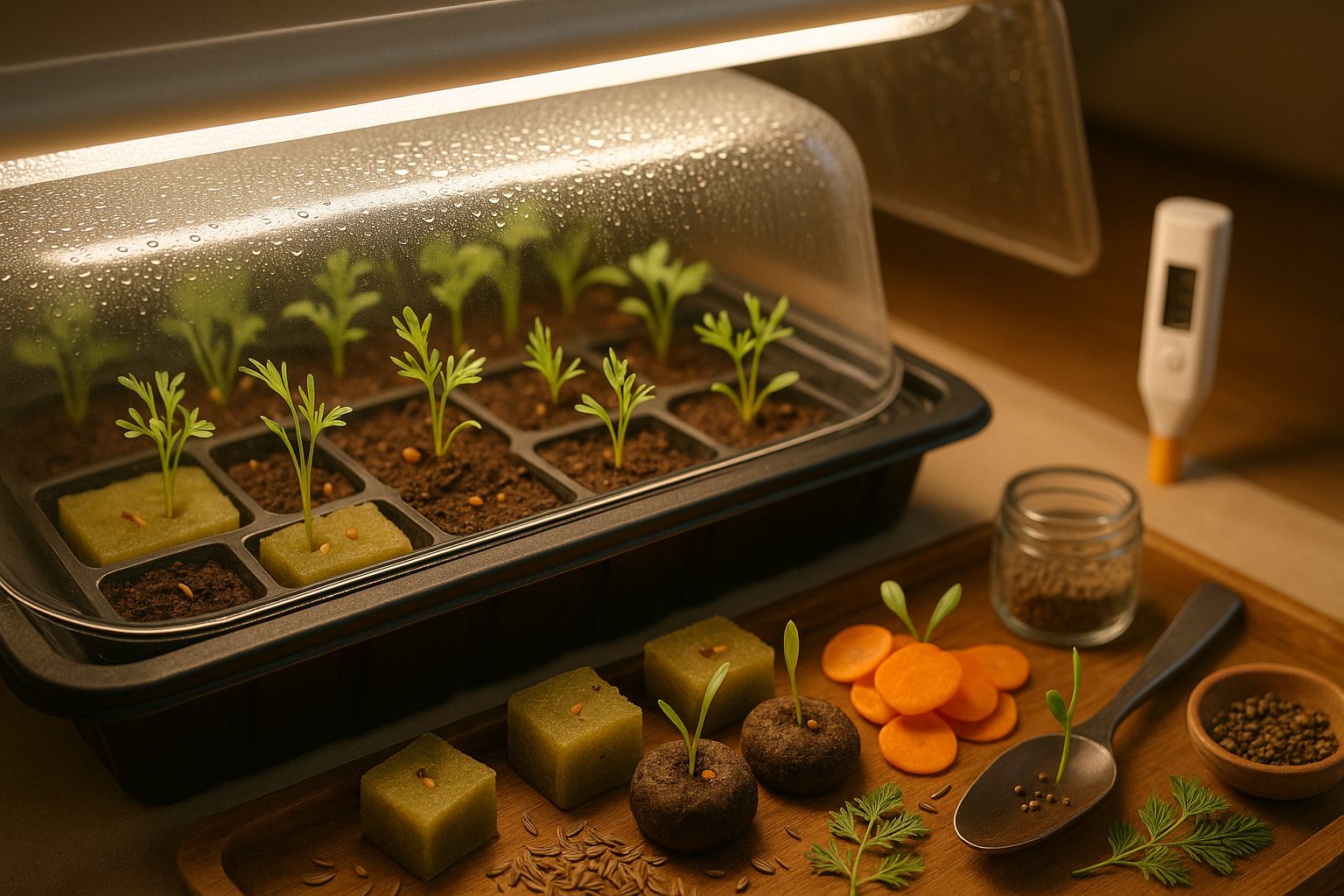
To start seeds in a hydroponic system, begin by choosing a sterile, inert substrate like rockwool cubes, coco coir, or peat pellets. These materials support seedlings without soil. Gently insert one or two seeds per cube at a shallow depth (about 1/4 inch), spacing the cubes at least two inches apart to allow room for roots to grow.
Place the seeded substrate in a tray and keep it moist with pH-balanced water—avoid letting it dry out or become waterlogged. For successful germination, maintain temperatures between 70–75°F and provide gentle light from a fluorescent lamp or a sunny windowsill. Covering the tray loosely with plastic wrap helps retain humidity until the sprouts appear.
Maintenance and Care Tips
Proper maintenance is key to a thriving hydroponic system. Regularly monitor nutrient levels using a reliable test kit, and top up your solution as needed to keep your plants well-fed. Check the pH every few days—most plants prefer a range between 5.5 and 6.5—and adjust with pH up or down solutions to avoid nutrient lockout.
Keep the water temperature between 65°F and 75°F; too warm can encourage root rot, while too cold slows growth. Prevent algae by covering exposed water surfaces and using opaque containers. Ensure good airflow around your roots with an air pump or bubbler to deter diseases.
If you notice slimy or brown roots, clean them gently and replace any affected plants. A quick daily check-in helps catch problems early, so your plants stay happy and healthy.
Troubleshooting and Common Problems
Growing carrots can sometimes be tricky, with issues like poor germination, uneven growth, or pesky pests cropping up.
If your seeds don’t sprout well, make sure the soil is loose and stays moist—carrots need consistent moisture and fine soil to start.
Uneven growth often signals overcrowding; thin seedlings early to give each root space.
Watch for pests like carrot flies by covering your beds with fine mesh or planting strong-smelling companions like onions nearby.
To check if carrots are ready to harvest, gently brush back some soil around a root; they’re usually mature when tops are about 1/2 to 1 inch thick.
Harvest when the color looks deep and vibrant for the sweetest, most flavorful carrots.
Conclusion
Embracing these strategies can boost your results, so try out what works best for you. For deeper insights, explore our related articles and resources linked below to continue building your knowledge.