Introduction to Brussels Sprout Companion Planting
Wondering if you can grow brussels sprouts and other brassicas like kale or cabbage side by side in your garden? Companion planting—growing different crops together for mutual benefit—is a smart, time-tested method, especially for vegetables in the brassica family. For home gardeners, understanding how Brussels sprouts and brassicas interact is key to maximizing your space and boosting your harvest. When planned thoughtfully, companion planting can help keep pests at bay, improve plant health, and even increase your yields.
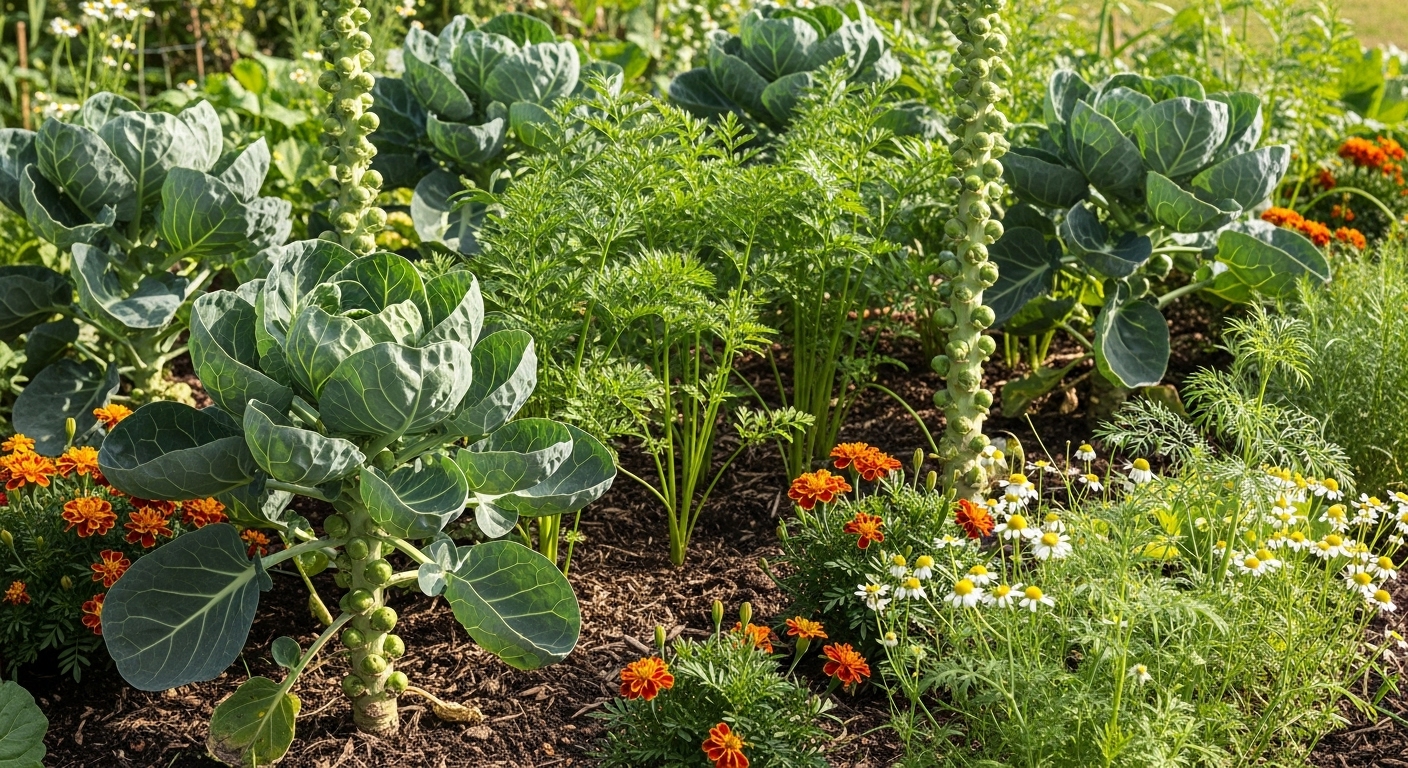
Brussels sprouts and their brassica cousins share similar soil, nutrient, and sunlight requirements, which can make growing them together seem easy. Still, there are a few tricks to make this partnership work. For instance, growing Brussels sprouts with kale or cabbage may create a larger target for pests like cabbage worms, but by mixing in aromatic herbs like dill or planting marigolds nearby, you can naturally repel pests and reduce damage without chemicals. These living “bodyguards” act as distraction crops or repel destructive bugs, making your job easier and your garden healthier.
Boosting yields isn’t just about protecting crops; it’s about ensuring they don’t crowd each other out or compete too heavily for nutrients. Try planting Brussels sprouts on the north side of your garden bed so their tall growth doesn’t shade lower-growing cabbage or kale. This simple arrangement gives each plant the light it needs for robust growth. By following a few easy strategies, any home gardener can confidently grow Brussels sprouts and brassicas together, reaping the rewards of more resilient plants and better harvests.
Best Companion Plants for Brussels Sprouts
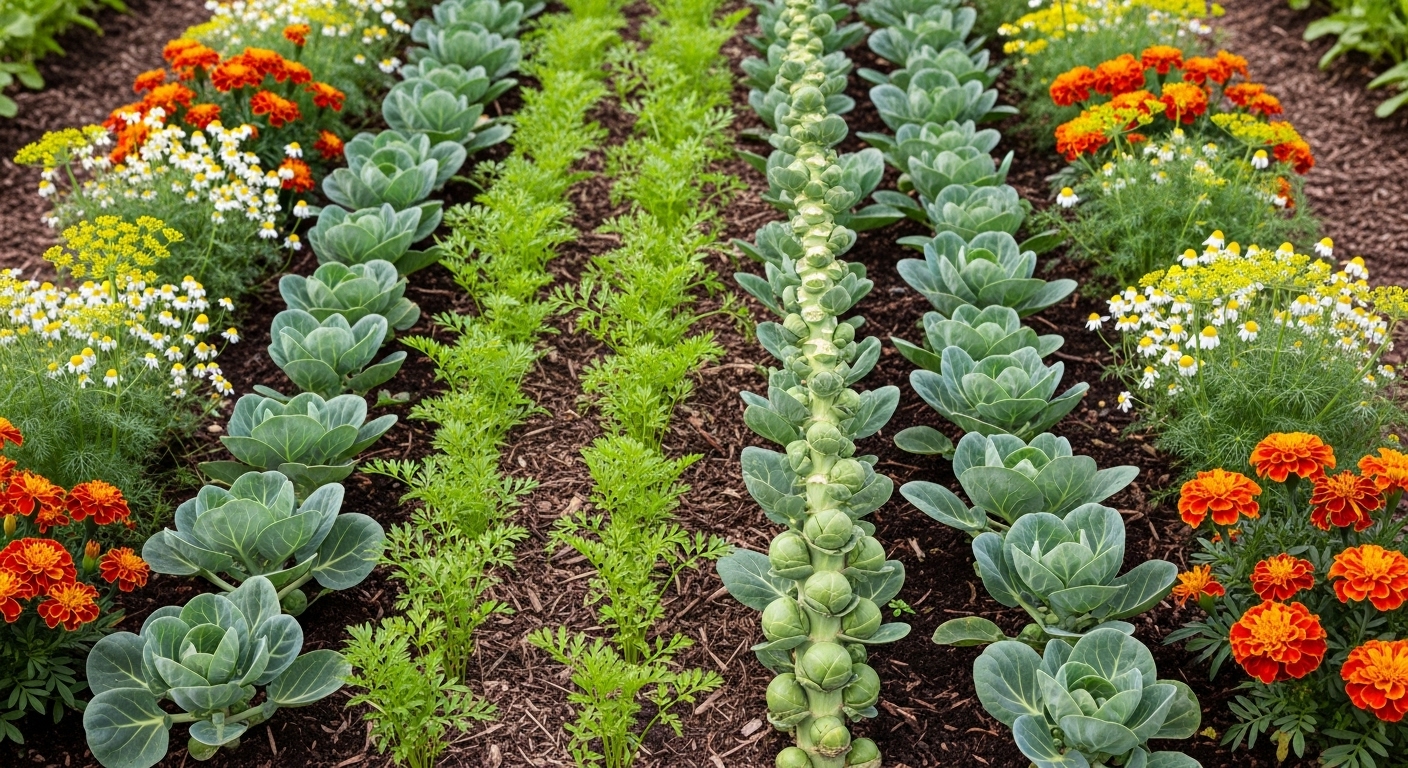
Planting Brussels sprouts alongside the right companions can make a big difference in their growth and harvest. Carrots are a classic match since they take up less vertical space and help naturally aerate the soil as they grow, easing root expansion for Brussels sprouts.
Onions and garlic not only save space with their slender growth but also deter pests like aphids and cabbage worms with their pungent scent, reducing the need for chemical sprays. Celery helps boost soil moisture retention, which is great for Brussels sprouts that appreciate consistent water, and its aroma further masks the scent of brassicas, confusing hungry insects.
Incorporating herbs such as chamomile and dill attracts beneficial insects like ladybugs and hoverflies that prey on common pests, while chamomile may even enhance Brussels sprouts’ flavor. Flowers like marigolds and nasturtiums serve double duty—marigolds repel nematodes and beetles with their unique aroma, and nasturtiums act as a ‘trap crop,’ luring aphids away from Brussels sprouts, plus they add a splash of color.
For the best results, try interplanting these companions in alternating rows or clusters around your Brussels sprouts, giving each plant enough room to thrive—keep taller brassicas to the north, so shorter companions get plenty of sun. For example, nestle carrots and onions between Brussels sprouts rows, border the area with marigolds and nasturtiums, and scatter chamomile or dill throughout the bed.
This diverse, layered layout not only wards off pests and boosts pollination but also maximizes every inch of your garden, ensuring healthier, more productive Brussels sprouts that are naturally protected by their botanical buddies.
Plants to Avoid Near Brussels Sprouts
When planning your garden, it’s smart to keep Brussels sprouts away from certain plants that can hinder their growth or attract unwanted pests. For example, strawberries and Brussels sprouts don’t mix well; strawberries can attract pests like aphids and slugs that also harm Brussels sprouts.
Tomatoes and pole beans are also poor companions because they compete heavily for nutrients and space, both above and below the soil, leaving Brussels sprouts weaker and less productive.
It’s best to avoid planting Brussels sprouts with other members of the brassica family, like cabbage, cauliflower, and broccoli. These plants draw the same nutrients and can make it easier for diseases and pests—especially cabbage worms and clubroot—to spread quickly among your crops.
Instead, opt for safer alternatives such as onions, garlic, or marigolds, which can help deter pests and promote healthier growth. Leafy greens like lettuce or spinach are also good neighbors for Brussels sprouts since they have different nutrient needs and help keep the soil shaded and cool.
By choosing the right companions, you’ll create a more productive and resilient garden space.
Key Companion Planting Tips for Brussels Sprouts
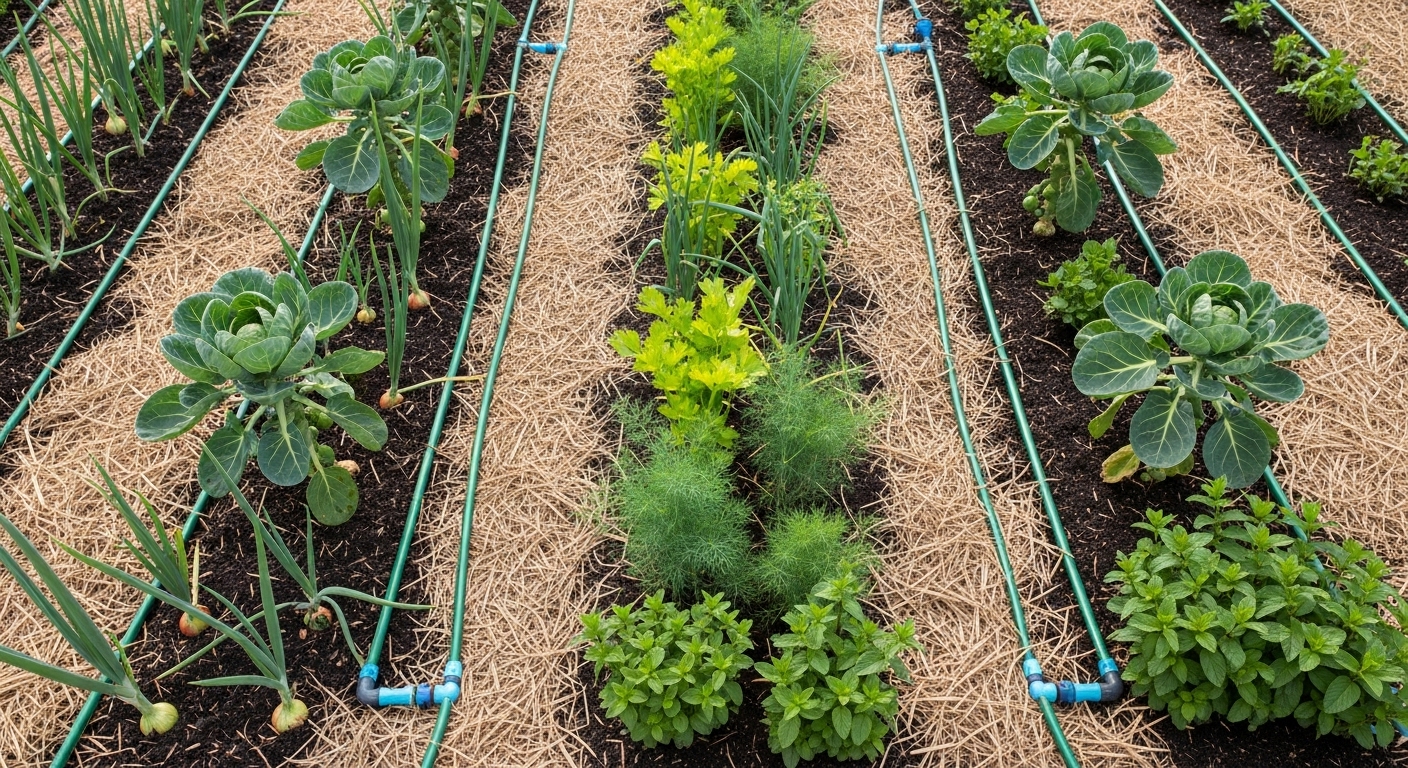
When planning your Brussels sprouts companion bed, start by timing your planting to take advantage of the cool growing season they prefer—aim to sow seeds in early spring or late summer for a fall harvest. Give each plant at least 18-24 inches of space to ensure good air circulation, which helps prevent fungal diseases.
Rotate your Brussels sprouts bed each year, avoiding areas where other brassicas like cabbage, kale, or broccoli were recently grown, to minimize pest and disease buildup in the soil. For soil health, work in plenty of organic compost and consider planting nitrogen-fixing companions, such as beans or peas, nearby; these naturally enrich the soil as they grow.
Prevent common issues like clubroot by adding crushed eggshells or garden lime to raise pH if your soil is acidic. Keep the soil consistently moist but not soggy—drip irrigation or soaker hoses work well, as Brussels sprouts do best with even watering at their roots.
Apply a layer of mulch, like straw or leaf mold, to retain moisture, suppress weeds, and moderate soil temperature. Interplant aromatic herbs such as dill or mint to deter pests like aphids and cabbage worms, but avoid planting Brussels sprouts close to strawberries or tomatoes, which can compete for nutrients or attract similar pests.
Regularly remove yellowing lower leaves to improve airflow and prevent disease, and keep your garden tidy to discourage hiding places for insects. With careful attention to these tips, your Brussels sprouts will thrive alongside their best companions.
Common Questions and Troubleshooting
Many gardeners wonder if companion planting really makes a difference when growing cabbage. The answer is yes—pairing cabbage with compatible plants like dill, nasturtiums, or onions can help reduce common pests such as cabbage worms and aphids.
For example, nasturtiums act as a trap crop, luring pests away from your cabbages, while aromatic herbs like dill attract beneficial insects that keep pests in check. However, not all companions work well; avoid planting cabbage near tomatoes or strawberries, as these can stunt each other’s growth.
If you notice yellowing leaves on your cabbage, check for overcrowding or companions competing for nutrients, and try rotating companion species to find a better balance. Slow growth might indicate the need for more sunlight or that a neighboring plant is overshadowing the cabbage—consider relocating companions to create more space and light.
Persistent pest problems can sometimes mean that companions aren’t enough on their own; manually check leaves for eggs and larvae, and encourage natural predators by planting flowers like calendula nearby.
Every garden is unique, so don’t hesitate to experiment—pay close attention to how your plants respond to different combinations and make notes for future seasons. Observation and tweaking will help you discover the best companions for healthy, thriving cabbages in your own space.
Conclusion & Quick Reference Guide
Companion planting with Brussels sprouts is a simple and effective way to boost your garden’s health and productivity. By pairing your Brussels sprouts with beneficial neighbors like carrots, dill, chamomile, and onions, you can reduce pest problems and encourage better growth.
Avoid planting Brussels sprouts near strawberries, tomatoes, peppers, or pole beans, as these combinations can attract pests or stunt growth.
Here’s a quick reference list to guide your planting:
- Good companions: carrots, celery, onions, mint, dill, chamomile, sage, spinach, and beets.
- Plants to avoid: strawberries, tomatoes, peppers, pole beans, and mustard.
If you’re new to companion planting, start small and observe how different pairings affect your Brussels sprouts crop. Don’t be afraid to experiment—every garden is unique, and what works best may depend on your specific soil and conditions.
We’d love to hear about your successes and any challenges you encounter. Share your experiences or drop your questions in the comments to help us all grow together!