
Introduction
Knowing exactly when to harvest bell peppers can make all the difference between crunchy, flavorful peppers and dull, underdeveloped ones. Whether you prefer green, red, yellow, or purple varieties, recognizing the right time to pick is key to unlocking their best taste and keeping your plants productive. Many gardeners wonder how to tell if a pepper is truly ready—should you go by size, color, or feel? And what’s the best way to harvest without damaging the plant? In this article, you’ll find practical tips to answer these questions, from identifying ripeness by color and firmness to techniques for gentle harvesting that encourage more peppers to grow, helping you make the most of your garden’s harvest.
Signs Your Bell Peppers Are Ready to Harvest

When you’re growing bell peppers, knowing when they’re perfectly ripe can make a big difference in flavor and crunch. The most obvious sign is their color—bell peppers start green and, depending on the variety, mature to vibrant red, yellow, or orange.
A fully mature red bell pepper, for example, will be an even, glossy red all over, while yellow and orange types develop their final shades as they ripen. Don’t just rely on color, though: check the size for your pepper variety. Most standard bell peppers are ready when they reach about four inches long and have a plump, firm feel when gently squeezed. Mini bell varieties are often harvestable at around two inches.
Another handy trick is to look at the skin’s shine. Young peppers are usually glossy; as they fully mature, the skin can start to appear slightly duller, which means it’s time to pick.
Lastly, always check the seed packet or plant tag for your specific variety’s ideal harvesting window, as some are bred to be picked early while others taste best when left to fully color up. A little patience and careful observation will reward you with the sweetest, juiciest peppers from your garden.
Best Timing for Harvesting Bell Peppers
Bell peppers typically take about 60 to 90 days from transplanting to reach harvest, depending on the variety and growing conditions. Early harvesting, when the peppers are still green, gives you firm, crisp peppers with a slightly bitter flavor—great for salads, stir-fries, and salsas.
Leaving them on the plant to fully ripen to red, yellow, or orange allows sugars to develop, producing sweeter, more nutrient-rich peppers packed with vitamins A and C. These are perfect for snacking or roasting. However, waiting for full color means the fruits are exposed longer to pests, weather, and disease.
Environmental conditions play a big role: warm temperatures (70-85°F) and plenty of sunlight help peppers mature faster, while cooler temps or cloudiness can delay ripening. If a cold snap is coming, picking green ensures you don’t lose your crop.
Check peppers by gently squeezing—ripe ones will feel firm, have glossy, deep-colored skin (if allowed to ripen), and snap off the plant cleanly.
How to Properly Harvest Bell Peppers
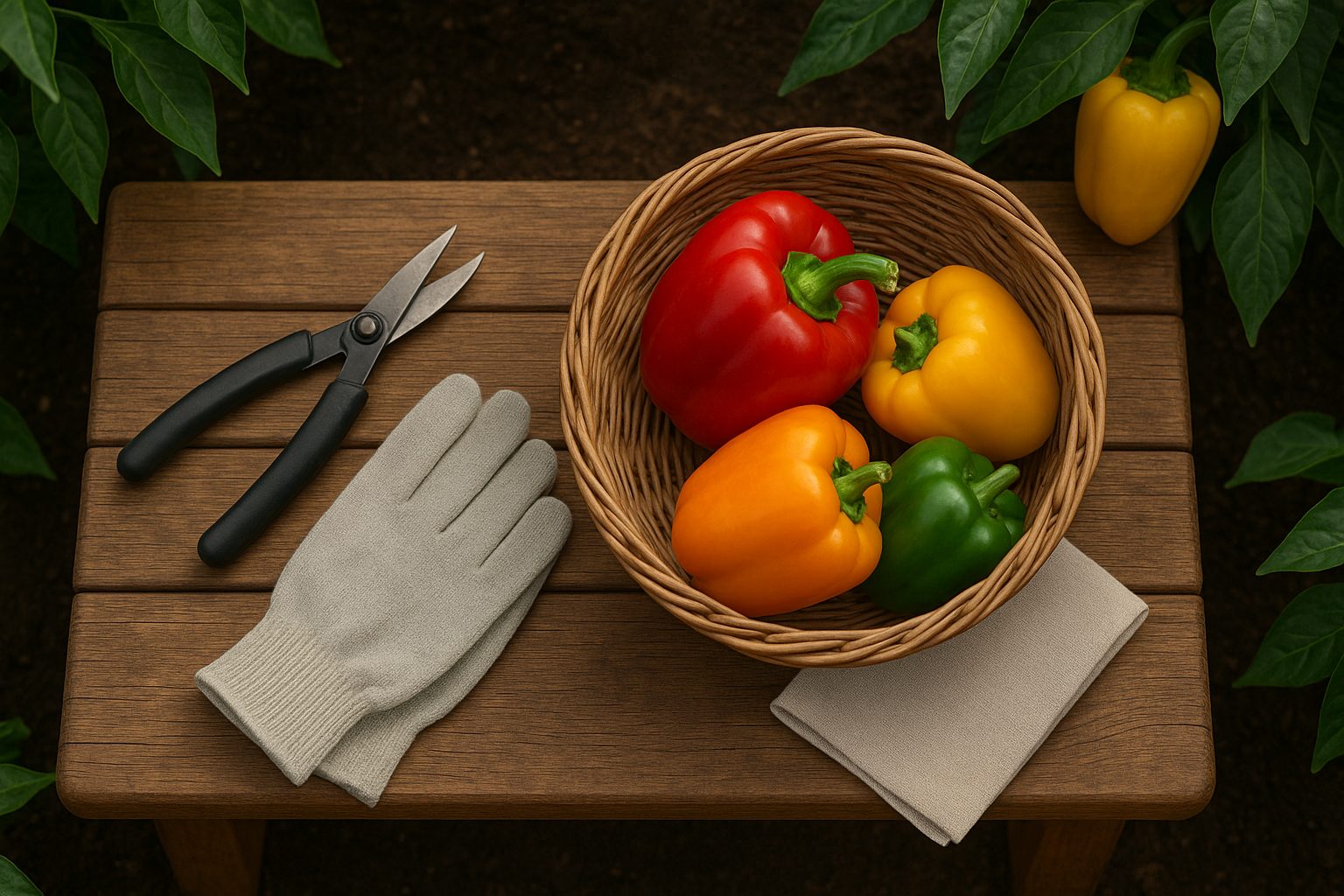
To harvest bell peppers without harming the plant, start by choosing the right time: early morning or late afternoon, when temperatures are cooler and the peppers are less stressed. Wait until the peppers reach their mature color—whether that’s green, red, yellow, or orange, depending on the variety.
For a clean cut that won’t damage the plant, use sharp scissors or garden pruners. Hold the pepper gently in one hand and, with the other, snip the stem about a half-inch above the fruit, leaving a bit of the stem attached to the pepper; this helps it store longer, too. Avoid pulling or twisting the peppers off the plant, as this can break branches and reduce future yields.
Harvesting regularly—every few days—encourages the plant to keep producing more fruit throughout the season, instead of slowing down because ripe peppers are left on the vine. If you’re aiming for bigger bell peppers later, pick the first fruits early to signal the plant to focus energy on new growth.
With careful, frequent harvesting using proper tools, you’ll enjoy a bountiful, extended bell pepper harvest from each plant.
Top Tips for Post-Harvest Care and Storage
After picking your peppers, start by gently brushing off any dirt. If they need washing, rinse them quickly and dry thoroughly to prevent mold. Handle peppers carefully to avoid bruising, as damaged skins can lead to quicker spoilage.
For short-term storage, keep peppers in a ventilated produce bag in your refrigerator’s crisper drawer. They typically last one to two weeks this way. Avoid sealing them in airtight bags, as trapped moisture speeds up decay.
If you want to store peppers for months, slice or chop them and freeze in airtight containers—there’s no need to blanch first. Keep an eye out for signs of spoilage like soft spots, wrinkles, or mold, and discard any affected peppers immediately to protect the rest.
To stretch their shelf life, consider dehydrating or pickling your harvest. Peppers are incredibly versatile—fresh slices are great in salads or salsas, while roasted or sautéed peppers add bold flavor to pastas, stir-fries, and sandwiches.
Preserved peppers shine in soups, casseroles, or as tangy homemade relishes, ensuring none of your harvest goes to waste.
Troubleshooting Common Harvesting Issues
If your peppers aren’t ripening as expected, don’t worry—sometimes they just need a bit more patience. Peppers mature best in consistent warm weather, so make sure they’re getting plenty of sunlight and avoid excessive watering, which can slow ripening.
If frost or cold temperatures are approaching, pull the whole plant and hang it upside down indoors to allow the fruit to finish coloring.
For fruit cracking, it’s usually caused by irregular watering—try to keep soil moisture steady and mulch around the base for better water regulation. Cracked peppers are still edible but use them quickly, as they won’t store well.
At harvest, check for signs of pest damage like holes or soft spots. Trim away affected portions, and consider using insect netting or organic sprays for your next crop.
For underripe peppers, you can ripen them indoors by placing them in a paper bag with a ripe banana, which releases ethylene gas to help the process.
Overripe peppers often wrinkle but are still great for dehydrating or using in sauces, so don’t toss them out!
Conclusion
Harvesting bell peppers at the right time—when they’re firm, full-sized, and richly colored—ensures the best flavor and texture. Use clean garden shears to avoid damaging the plant, and pick regularly to encourage more growth. Remember, each variety matures differently, so check your seed packet for specific guidance.
Don’t be afraid to try different types, from sweet reds to spicy yellows, and learn from each season. Gardening is all about discovery, so keep experimenting and adjusting your methods. If you’ve grown bell peppers before or have questions, share your stories or tips in the comments—we’d love to hear from you!