Introduction
Should you remove suckers from bell pepper plants, or let them grow wild? Pruning pepper plants—especially removing suckers—is a popular topic among gardeners aiming to boost yield and improve plant health. Many choose to prune to encourage stronger stems, bigger fruits, and better airflow.
In this article, we’ll explore the pros and cons of pruning, when to start, a simple step-by-step method to remove suckers from bell peppers, common mistakes to avoid, and extra tips for healthier, more productive pepper plants. Whether you’re a beginner or a seasoned grower, you’ll find practical guidance for your best harvest yet.
Why Prune Pepper Plants?
Pruning pepper plants can make a surprising difference in both yield and overall plant health. By regularly removing excessive leaves and non-productive branches, you encourage the plant to focus its energy on developing more flowers and larger peppers instead of supporting extra foliage.
This results in bushier plants that are sturdier and more productive—especially useful for varieties prone to growing tall and spindly. One of the biggest benefits is improved air circulation. Well-pruned plants are less likely to suffer from common issues like mold, mildew, or pests that thrive in crowded, damp conditions.
Better airflow also means leaves dry faster after watering or rain, which helps prevent disease. Pruning exposes inner branches to more sunlight, leading to even ripening and healthier, stronger stems.
However, not every pepper variety requires aggressive pruning. Some, like bushy ornamentals or compact varieties, do just fine without it. The key is to observe your particular plant and adjust your pruning habits accordingly, rather than following a one-size-fits-all approach.
Don’t be discouraged if you’re new to pruning—start small. Remove just a few lower leaves and suckers, and notice how your plant responds. Your peppers will thank you with a bigger, healthier harvest.
When is the Best Time to Prune Peppers?
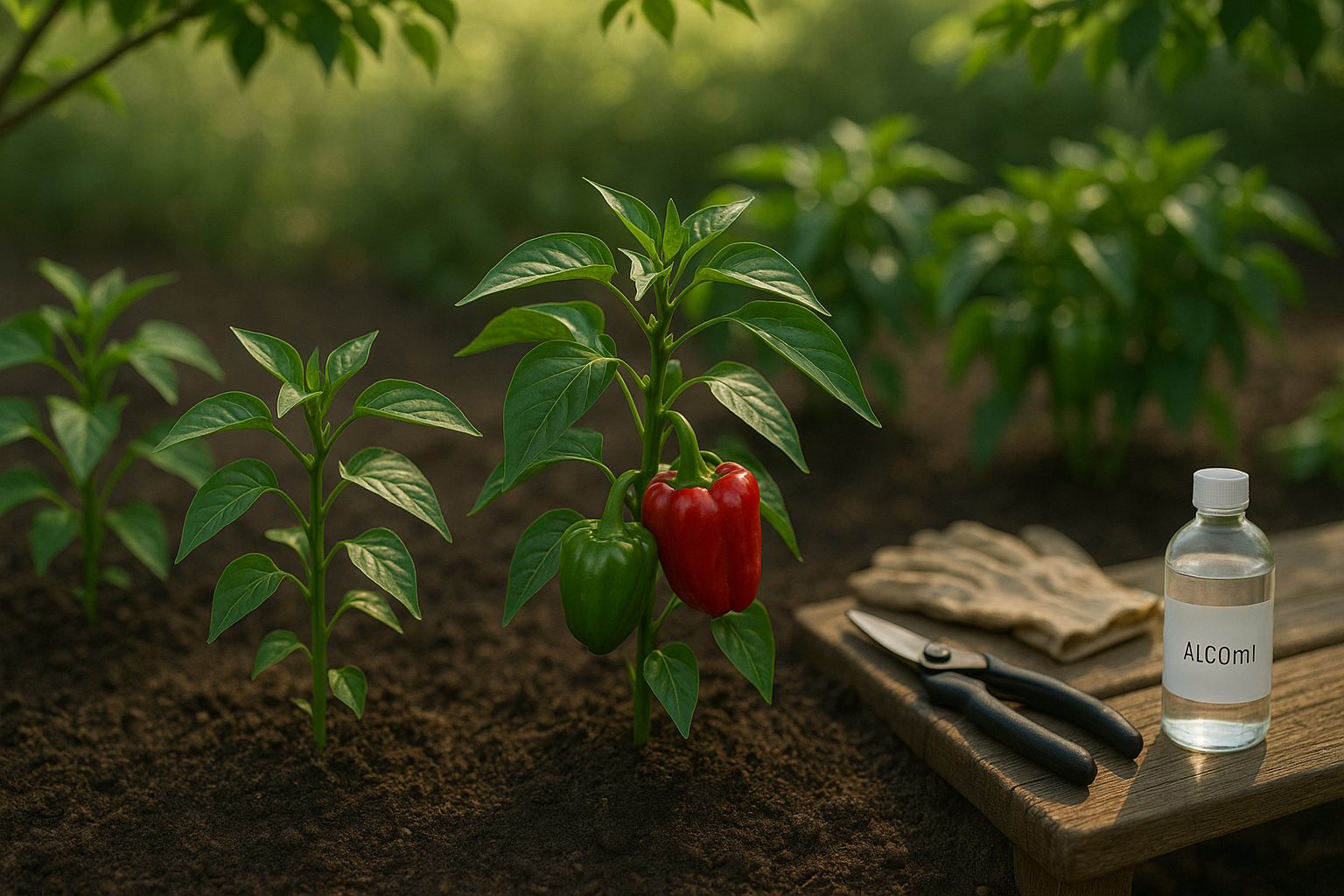
The best time to prune pepper plants depends on their growth stage, and timing makes a big difference in your harvest. Early in the season, start pruning about 2-3 weeks after transplanting, once your peppers are established and showing several sets of true leaves.
At this stage—known as post-transplant pruning—snip off the growing tip to encourage bushier, sturdier growth and more productive side stems.
As the season transitions to pre-flowering, check for signs like dense, leafy canopies that could limit airflow, or any lower leaves touching the soil. A light prune here thins out excess foliage, which helps prevent disease and allows sunlight to reach developing buds.
During mid to late season, as fruit sets and grows, only remove damaged, yellowing, or crowded inner leaves. This fruit development pruning directs energy to peppers, not unnecessary leaves.
Key signals a pepper is ready for pruning include:
- Overcrowded branches
- Shading of fruit or flower buds
- Leaves showing disease or insect damage
Avoid heavy pruning once plants flower heavily or fruit matures, as late-season cuts can stress the plant or reduce overall yield. By matching your approach to each stage and watching for these signs, you’ll help your pepper plants stay healthy and productive all season.
How to Prune Pepper Plants: Step-by-Step
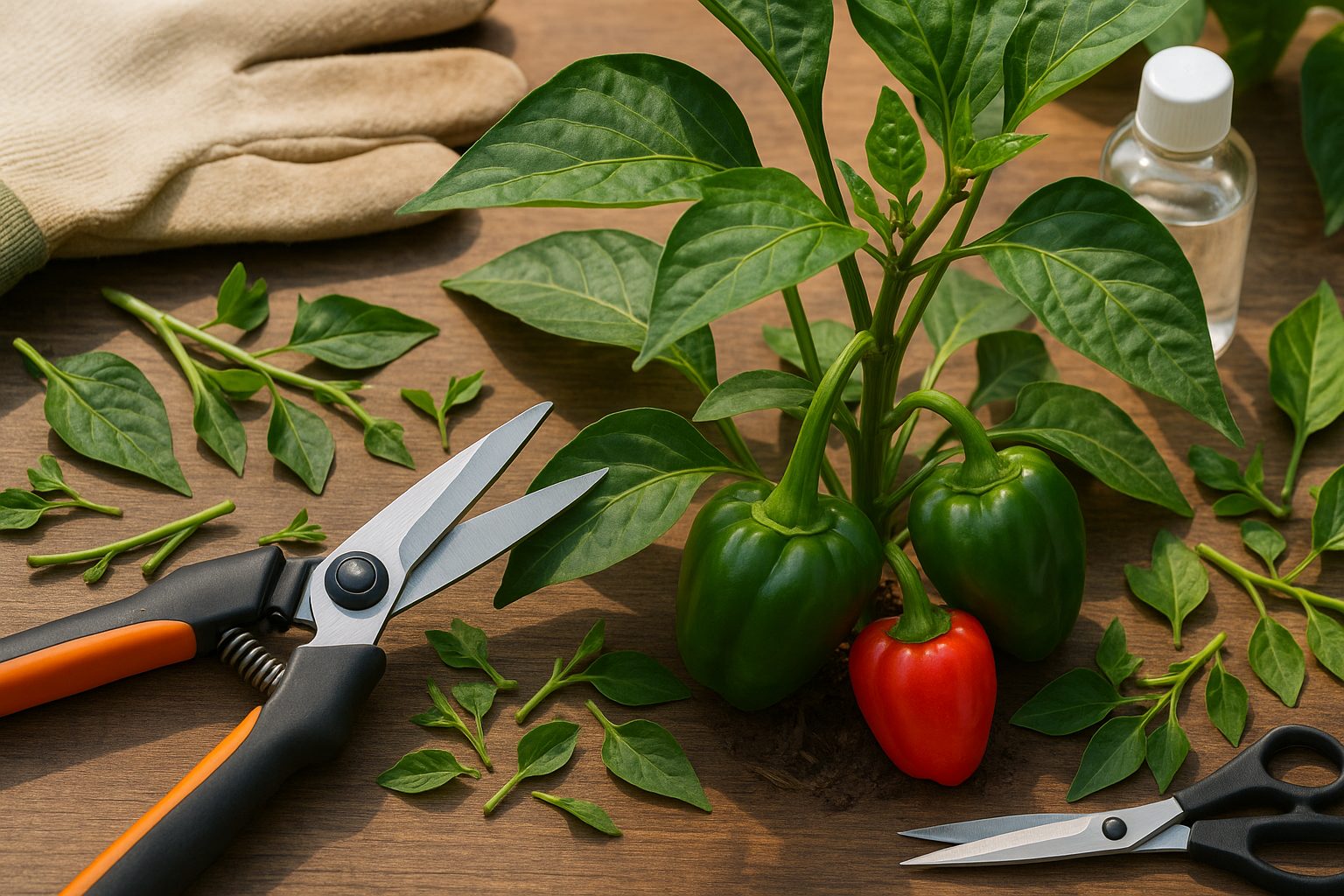
Before you start pruning your pepper plants, gather a pair of sharp pruning shears or scissors, gloves to protect your hands, and a container with rubbing alcohol for sanitation. Always disinfect your tools both before you begin and between plants—this reduces the risk of transmitting diseases.
Start by identifying the main stem of the pepper plant. If your goal is bushier growth and more fruit, perform “topping”: cut the main stem just above a set of healthy leaves, about 6 inches above the soil. Make a clean cut close to a node, where the leaves meet the main stem, but avoid cutting too close to prevent damaging the plant.
Next, trim back any long side shoots growing outward—snip these just above a leaf node, removing no more than one-third of the plant at a time.
Look for small “suckers,” or new shoots sprouting between the main stem and side branches; pinch or snip these off to promote air circulation and focus the plant’s energy on fruit production.
As your peppers grow and start blooming, deadhead any spent flowers by gently pinching or trimming them off. This keeps the plant’s energy focused on developing healthy fruit instead of seeds.
Finally, remove lower leaves and branches that touch the soil or appear yellow, as these are more susceptible to disease and pests. Make your cut close to the main stem, again at a node.
Perform pruning during dry, mild weather so cuts heal quickly and avoid shocking the plant. Remember that less is more—over-pruning can reduce fruit yield, so always err on the side of caution by making just a few careful snips each session for optimal, healthy growth.
Common Pruning Mistakes & How to Avoid Them
Pruning is essential for healthy plant growth, but common mistakes can do more harm than good. Over-pruning, for instance, weakens plants by removing too much foliage, reducing their ability to photosynthesize and recover. Always follow the rule of cutting no more than one-third of a plant at a time.
Another misstep is pruning at the wrong time of year. Many flowering shrubs, like lilacs and hydrangeas, set buds on old wood, so pruning them late in the season can mean missing next year’s blooms. Research your plant’s specific timing before you reach for the shears.
Using unclean tools is another frequent issue that spreads disease. Sanitize blades with rubbing alcohol or a 10% bleach solution before moving between plants.
If your plants show stress after pruning, such as wilting or browning leaves, keep them well-watered, avoid fertilizing immediately, and provide shade on hot days. In most cases, plants will recover on their own, but patience and attentive care make all the difference.
Remember, a gentle, informed approach is the key to keeping your garden healthy and thriving.
Advanced Tips for Healthy Pepper Plants
Experienced gardeners know that advanced techniques can make a noticeable difference in the health and productivity of pepper plants. Selective thinning—removing weak or crowded branches—helps improve airflow and allows sunlight to penetrate the inner canopy, reducing the risk of fungal diseases like powdery mildew.
Later in the season, topping your plants (snipping off the uppermost growing points) can encourage energy to shift toward developing larger, mature fruits instead of new foliage. Shaping plants by gently pinching off lower leaves and suckers directs growth upward, making it easier to spot pests and ensuring the plant doesn’t waste resources on nonproductive branches.
To avoid stressing your peppers, coordinate pruning with your watering schedule—never prune right before a hot, dry spell, as freshly cut plants are more susceptible to wilting. After pruning, apply a balanced fertilizer to support recovery and vigorous fruit set. Always clean your tools before and after pruning to prevent spreading diseases.
Check for common pests like aphids and spider mites immediately after thinning or topping; open plant canopies make it easier to notice and treat infestations early. Thoughtful, well-timed pruning, coordinated with good watering and fertilizing habits, can help your pepper plants stay healthy and impressively productive all season long.
Conclusion & Quick Recap
Pruning is essential for keeping plants healthy, promoting vigorous growth, and shaping them for better blooms or fruit. The best time to prune varies, but late winter or early spring works for most species—just before new growth starts.
Remember to use clean, sharp tools and make cuts at an angle above a healthy bud. Try these simple techniques in your garden—you’ll quickly notice stronger, happier plants.
Have you tried pruning before, or do you have any favorite tips? Share your experiences or questions in the comments below!