Introduction
When learning how to protect bell peppers from wind, many gardeners quickly discover just how vulnerable these colorful, nutritious plants can be. Bell peppers have tender stems and broad leaves, making them especially susceptible to damage from strong gusts and heavy rain. A sudden storm can snap stems, shred leaves, and knock developing fruit off the plant, reducing your harvest or even destroying an entire crop overnight. Excess moisture from rain can also lead to rot and encourage diseases like blossom-end rot or fungal infections, affecting plant health and yields throughout the growing season.
Fortunately, there are practical, proven ways to shield your bell peppers from these elements and promote healthy growth in any backyard. In this post, we’ll guide you through effective strategies, from staking and using windbreaks to mulching and choosing optimal planting locations. We’ll share simple DIY solutions and tips you can implement right away to keep your pepper plants strong, productive, and resilient—no matter what the weather brings. Whether you’re new to gardening or aiming to improve your skills, these protective measures will help you get the most from your bell pepper patch.
Understanding the Risks: Wind and Rain Damage to Bell Peppers
Bell peppers are prized for their vibrant colors and sweet flavor, but they’re surprisingly vulnerable to the elements—especially wind and rain. High winds can seriously damage the plants by breaking stems and branches. Since bell peppers have soft, brittle stems and shallow root systems, even moderate gusts can snap the main stalks or uproot young plants entirely. Winds often strip away leaves, reducing the plant’s ability to photosynthesize and stunt growth. They can also cause blossoms and young fruit to drop prematurely, which can drastically affect your harvest.
Rain introduces its own challenges, starting with soil erosion. Heavy downpours wash away the soil’s top layer, exposing or damaging the delicate roots and making plants less stable and more likely to topple during future storms. Waterlogged soil deprives roots of oxygen, adding stress to the plant. There’s also an increased risk of fungal diseases like phytophthora blight and powdery mildew, which thrive in consistently damp conditions and can harm both leaves and fruit. Another common issue is fruit splitting; sudden heavy rain can cause peppers to swell and crack, making them less appealing and shortening their shelf life.
Because of all these risks, it’s crucial to protect bell peppers from wind and rain, especially in areas with unpredictable weather. Simple steps like staking plants, mulching, and providing shelter can make a big difference in helping your peppers stay healthy and productive despite the elements.
Strategic Site Selection and Garden Layout
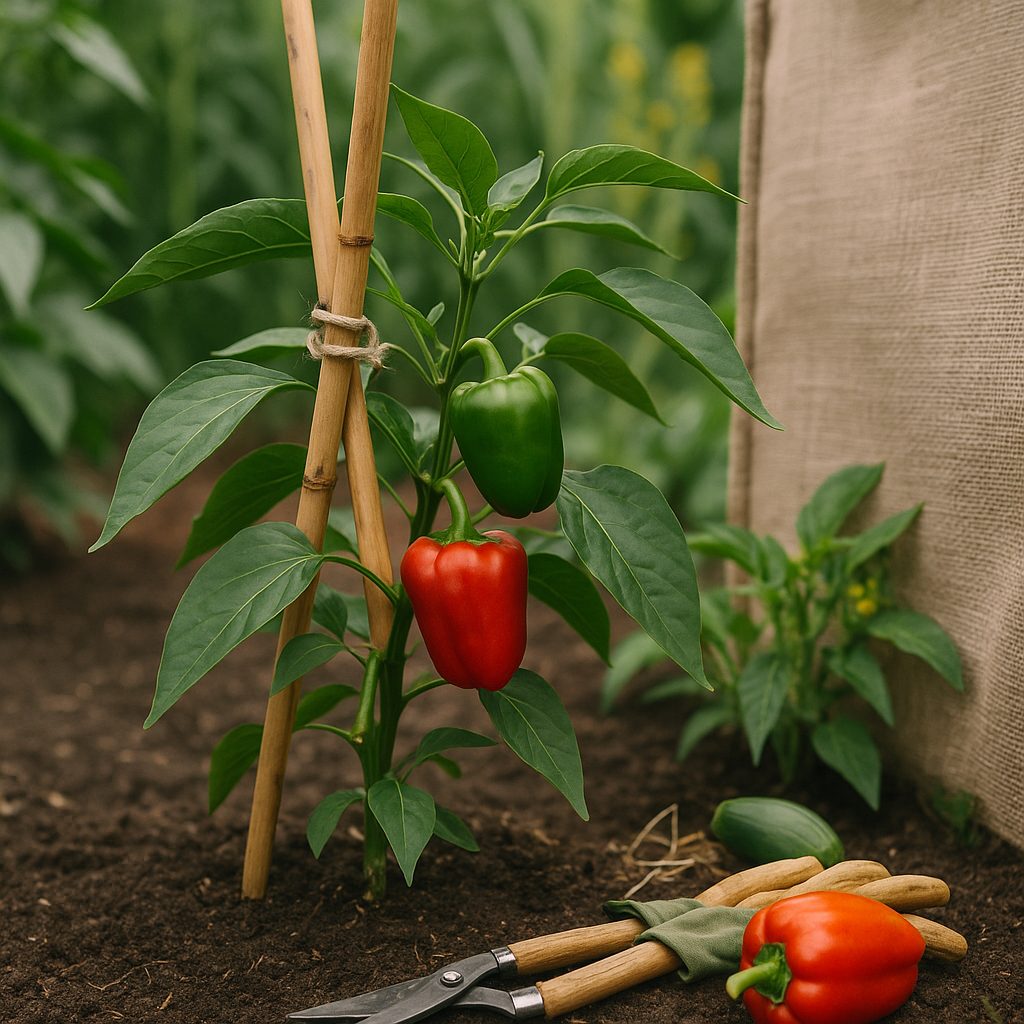
Choosing the right location for your bell pepper plants is the first—and often most important—step to protect bell peppers from wind and rain. Ideally, plant them in a spot naturally sheltered from strong gusts, such as alongside a house, garage, or existing hedge. Structures like fences or rows of dense shrubs act as effective windbreaks, absorbing storms and lessening the wind’s impact on your vulnerable crops.
For gardeners starting fresh, creating a living windbreak is a smart long-term solution. Fast-growing plants like privet or sunflowers can block harsh weather while adding visual appeal to your garden. When designing your garden layout, orient your beds to run parallel to the prevailing wind direction—this reduces direct wind exposure across the entire patch, not just the ends. Position taller crops or trellises on the windward side to shield low-growing peppers.
Additionally, slightly raise your pepper beds and ensure the soil slopes gently away to prevent water from pooling around the roots and causing rot. Planting on a gentle incline or using berms and swales to divert excess water helps reduce flooding during heavy rains. By paying careful attention to your site’s microclimate and layout, you create a strong foundation to effectively protect bell peppers from wind and rain, minimizing the need for quick fixes later in the season.
Physical Barriers and Plant Supports
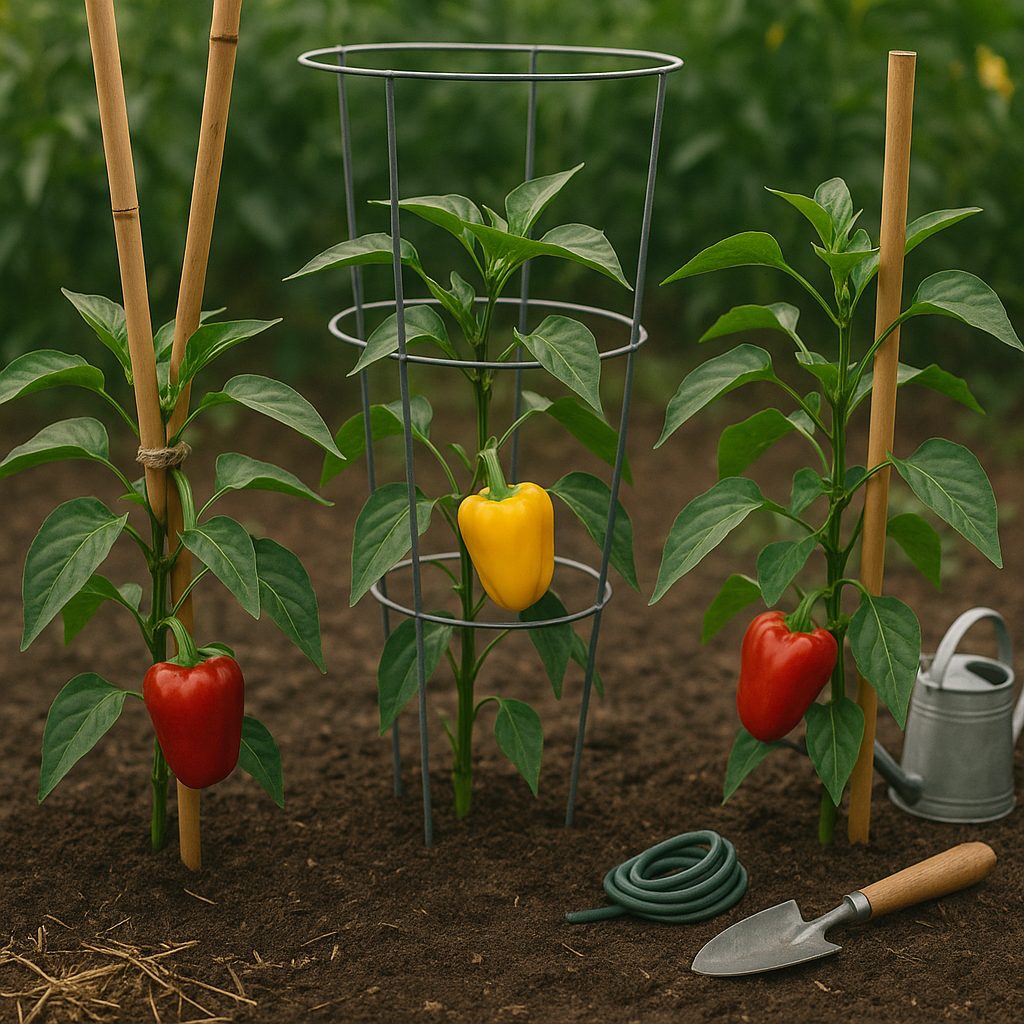
One of the most effective ways to protect bell peppers from wind is by creating physical barriers around your plants. Both DIY and commercial windbreaks can make a big difference—simple options include mesh screens, garden fabric stretched between stakes, or ready-made garden windbreak netting available at most hardware stores. Row covers serve a dual purpose: they not only shield tender plants from wind gusts but also help guard against unexpected temperature drops and rain splatter.
Be sure to secure these materials several inches above the pepper plants, allowing room for air circulation and sunlight while blocking damaging winds. For extra support during especially gusty conditions, staking and caging are vital tools. Insert a sturdy bamboo stake or tomato cage near each bell pepper plant, gently tying the stem with soft plant ties or strips of old t-shirt. This setup prevents the plant from bending or snapping during storms, yet allows stems and leaves to move and grow naturally.
When using supports, always monitor spacing so that foliage isn’t crowded, which could encourage disease buildup—leave at least 6 to 8 inches between plants and avoid tying anything directly around the stem that could restrict growth.
For protection from heavy rain that can stress or bruise delicate peppers, temporary covers like cloches (clear, bell-shaped domes), cold frames, or even large plastic storage bins flipped upside down can shield plants during downpours. Position these covers so air still circulates from the bottom and remove them promptly when the skies clear to prevent overheating.
By combining sturdy windbreaks with smart supports and temporary rain shelters, you can keep your bell peppers upright, healthy, and productive regardless of what the weather throws at them.
Mulching and Soil Management for Rain Resilience
Mulching is one of the most effective ways to protect bell peppers from wind and heavy rain, especially by preserving soil structure and preventing splashback. When raindrops hit bare soil, they can splash particles onto the lower leaves of your pepper plants, increasing the risk of disease. A layer of organic mulch—such as straw, shredded bark, or well-rotted compost—acts as a protective barrier that absorbs rainfall impact and keeps the soil in place.
Mulch also helps reduce erosion, which is crucial during intense downpours that can quickly wash away valuable topsoil and nutrients around your plants’ roots. For bell peppers, apply a 2-3 inch layer of straw, pine bark, or compost around the base of each plant, making sure to keep the mulch about an inch away from the stems to prevent rot.
Along with mulching, focus on improving soil drainage to avoid water pooling around the roots. Raised beds or mounded rows can direct excess water away, while incorporating organic matter like compost enhances soil texture and promotes deep, strong root growth. Good drainage not only lowers the risk of waterlogged roots—a common issue during frequent rainfall—but also helps peppers access oxygen and nutrients more effectively.
By combining thoughtful mulching with proper soil management, you create a resilient environment that helps protect bell peppers from wind and tough weather conditions.
Disease Prevention During Wet Weather
Wet weather can be tough on bell pepper plants because it creates the perfect conditions for diseases like blight and powdery mildew to take hold. When leaves and fruit stay damp for long periods, fungal spores spread easily, causing unsightly spots, leaf drop, and even crop loss. To protect bell peppers from wind and, importantly, wet-weather disease, start by pruning your plants. Remove lower leaves and any crowded growth to improve air circulation, helping water dry faster after rainfall.
Give your peppers plenty of space—planting them about 18 to 24 inches apart allows air to move freely between plants. Regularly harvesting ripe peppers also reduces leaf crowding and helps you spot problems early. For extra protection, use mulch to prevent rain from splashing soil, which can carry fungal spores, onto your plants.
If disease pressure is high, consider applying a copper-based fungicide or an organic alternative like a baking soda spray. Be sure to follow all label instructions and reapply after rain. Remember, light pruning, proper spacing, and careful harvesting not only help protect bell peppers from wind but also make them much less vulnerable to damaging diseases during damp weather.
Routine Monitoring and Emergency Actions
Consistent, hands-on monitoring is essential to protect bell peppers from wind and rain, especially during unpredictable weather. Make it a habit to inspect your plants every few days, checking for signs of wind damage like broken branches, snapped stems, or tattered leaves. After storms or heavy rain, ensure your support systems—such as stakes or cages—are still secure and upright.
If you notice bent or fallen stems, gently re-tie them to their supports using soft garden ties, or prop them up with extra stakes to prevent further breakage. Remove any damaged or diseased leaves promptly to reduce the risk of fungal infections or pests taking hold. Acting quickly at the first signs of stress can prevent minor issues from becoming major problems.
Also, keep an eye on the weather forecast. If high winds, hail, or heavy rain are predicted, take emergency precautions by covering your bell peppers with garden fabric, buckets, or portable cloches to shield them from harsh elements. By staying vigilant and responding promptly, you can effectively protect bell peppers from wind and minimize damage caused by severe weather.
Conclusion and Seasonal Planning
Proactively working to protect bell peppers from wind and rain is one of the smartest moves gardeners can make for a successful harvest. Strong winds can break stems and tear leaves, while heavy rain can cause root rot or wash away soil, putting all your hard work at risk. By thinking ahead—using windbreaks, staking, mulching, or row covers—you create a stable, nurturing environment for your pepper plants all season long.
Make it a habit to review your garden’s exposure to the elements when planning your planting each year, and consider these protective measures as essential as soil preparation and watering. Not only will this save you from emergency fixes, but it will also greatly increase your chances of enjoying robust, delicious bell peppers.
With some thoughtful planning and care, you’ll grow stronger, healthier plants and enjoy an abundant, resilient harvest—rain or shine.