Introduction
Wondering how to prune bell peppers for bigger, healthier harvests? Pruning bell pepper plants means removing certain growth, like excess stems or crowded foliage, to boost airflow, sunlight, and fruit production. Many gardeners debate whether pruning is really necessary—or if it works for every pepper variety. The truth is, while it’s not essential for all types, strategic pruning can make a significant difference for many commonly grown sweet bell peppers, especially in small spaces or humid climates.
You might be unsure about where to start or worried about harming your plants. Don’t worry—this guide offers simple, practical steps for both beginner and intermediate gardeners, so you’ll know exactly how and when to prune for the best possible yield.
Why Pruning Pepper Plants Matters
Pruning pepper plants might seem optional, but it plays a crucial role in helping your plants thrive. By carefully trimming away excess leaves and stems, you encourage the plant to funnel its energy into producing more fruit instead of just growing taller or denser.
This leads to increased fruit production, as the plant focuses on developing larger, healthier peppers rather than overcrowding itself with foliage. Pruning also promotes bushier growth, making it easier for sunlight to reach the center of the plant and for air to circulate around the leaves.
This improved airflow is essential for reducing the likelihood of fungal diseases and pest infestations, which often thrive in damp, crowded conditions. For example, regularly snipping off lower leaves helps prevent soil-borne diseases from splashing onto your peppers during watering or rain.
The overall goal of pruning is to produce robust, high-yielding plants that are less susceptible to common problems—meaning more beautiful, flavorful peppers for your table. Even just removing a few problem stems or yellowing leaves each week can make a noticeable difference in your pepper harvest.
When to Prune Pepper Plants
Pruning pepper plants at the right time can make a big difference in plant health and fruit yield. For seedlings and young plants, it’s best to wait until they have at least 8–10 true leaves before giving the first gentle trim—this encourages bushier growth without shocking the plant.
Early in the season, as your pepper plants start to establish, light pruning helps shape the plant and remove any weak or crowded shoots. As the growing season progresses into mid- to late summer, shift your focus to removing lower leaves, small side shoots, and any leaves that show signs of disease. This improves airflow and helps ripen fruit.
About a month before your expected first frost or harvest, consider topping the plants—cutting off the growing tips—to redirect energy into ripening any remaining peppers.
Keep in mind that timing can vary based on your climate:
- In hot regions, earlier pruning may help control size and prevent sunscald.
- In cooler areas, a more conservative approach might be better.
Also, certain pepper varieties like bell peppers benefit from heavier early-season pruning, while smaller hot peppers often need less. Always check your specific variety’s needs for the best results.
Early Season Pruning
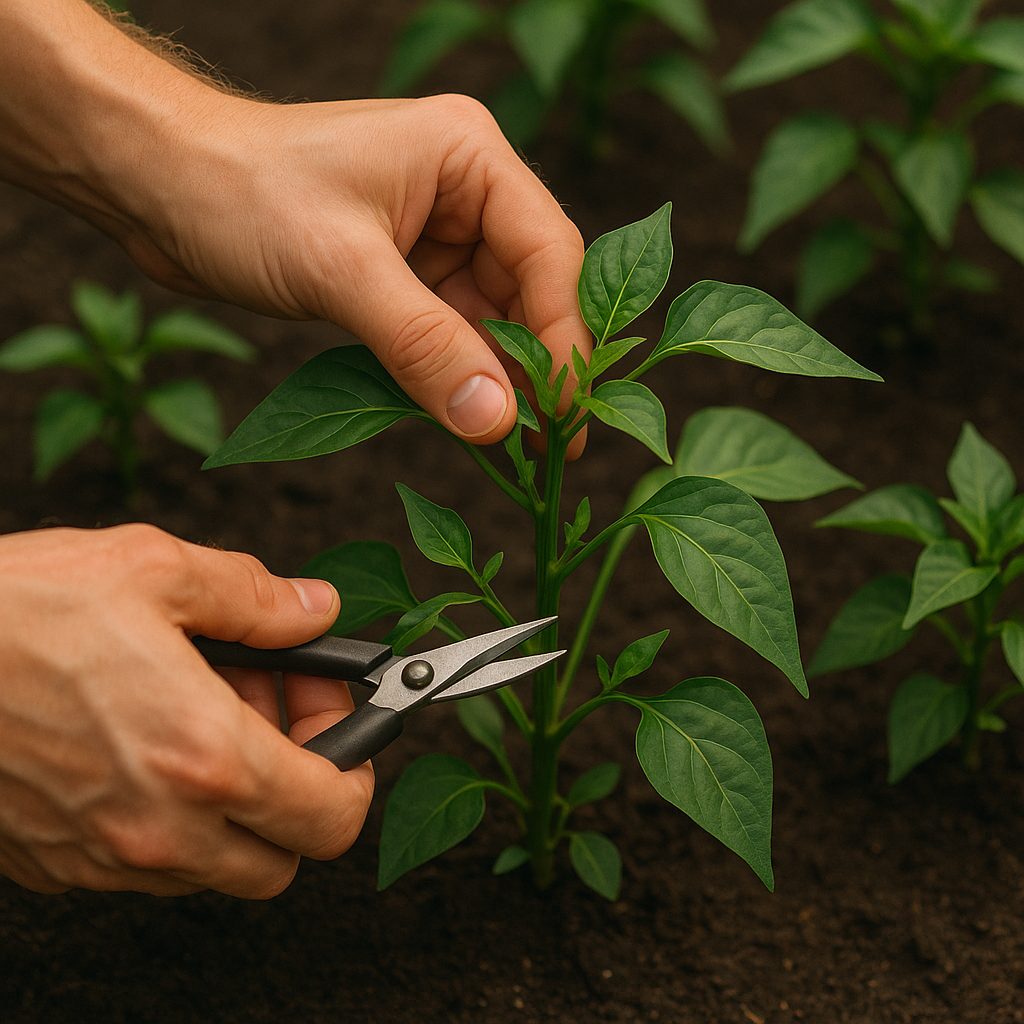
Early season pruning is a smart way to help your seedlings and young plants grow stronger and healthier. By carefully trimming the tops of young plants, you encourage them to produce more side branches, leading to a bushier and sturdier shape.
This technique is especially helpful for vegetables like tomatoes, peppers, and herbs, as it can boost your eventual harvest.
Another key tip is to pinch off any early flowers you spot. While it might feel counterintuitive, removing these blooms helps the plant direct its energy toward developing robust roots and lush foliage instead of rushing into fruit or seed production.
Also, don’t be afraid to remove weak or crowded shoots and leaves in the early stage. This early thinning trains your plants to build a solid structure that supports heavy fruits or flowers later on.
Use sharp scissors or your fingers for gentle pruning, and watch your garden thrive all season long.
Mid and Late Season Pruning Techniques
During the mid-season, effective pruning can make a big difference in plant health by boosting airflow and keeping diseases and pests in check. Begin by removing the lower leaves close to the soil, as these tend to harbor moisture and fungal spores. Next, snip off excess shoots and suckers, especially those growing at leaf joints, to prevent your plant from becoming too bushy and dense.
This thinning process allows sunlight and air to reach the inner parts of the plant, reducing the chances of mold and pests settling in. Keep an eye out for branches that cross or rub against each other, trimming them to minimize wounds where infections can start.
As the growing season winds down, shift your focus to late-season pruning. Topping your plants—trimming off the main growth tip—helps direct the plant’s remaining energy toward ripening fruit instead of producing new leaves or stems. Removing late-forming growth and any damaged branches also ensures the fruits get maximum resources, increasing the chances of a healthy, flavorful harvest.
Step-by-Step Guide to Pruning
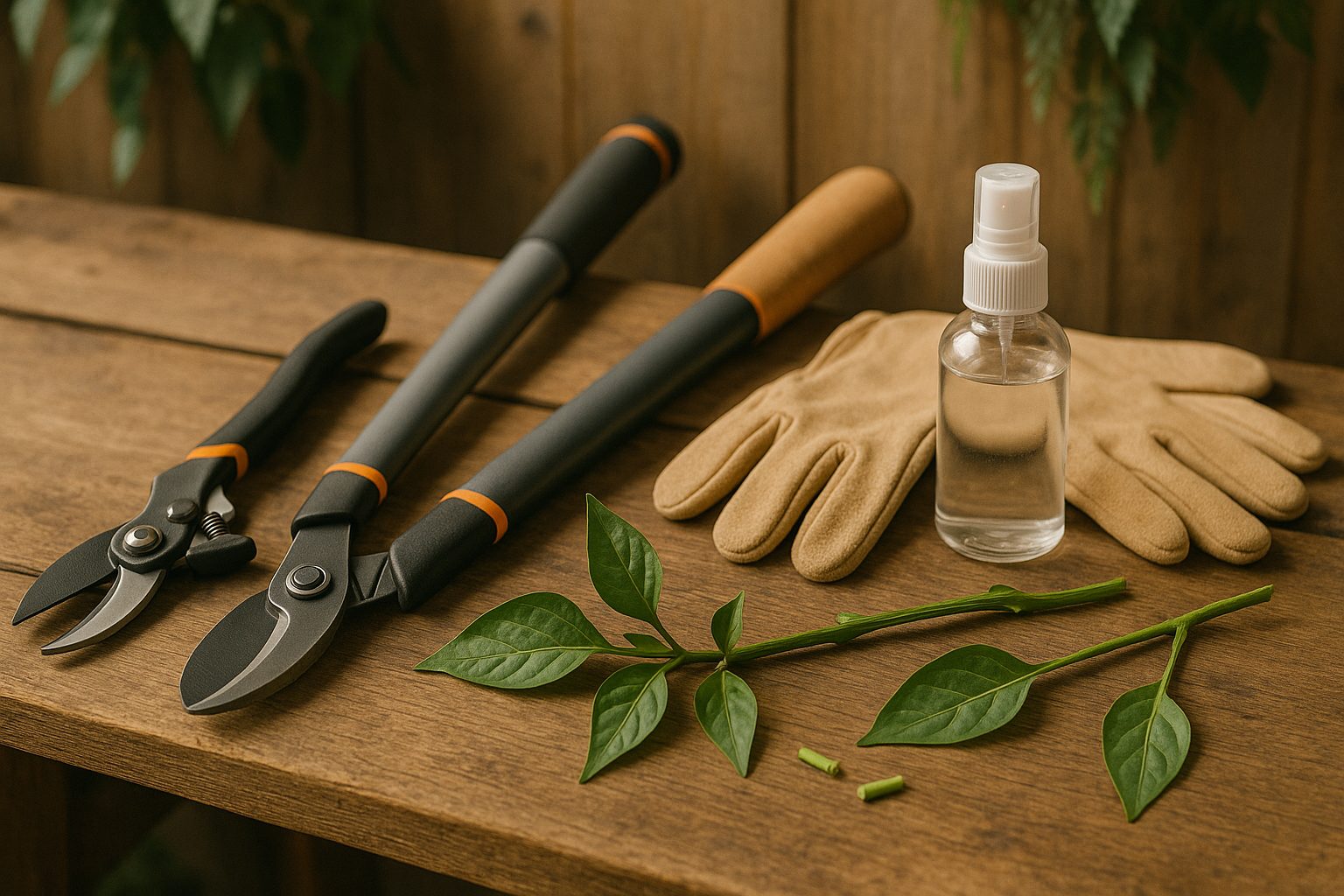
Start by gathering your pruning tools—a pair of sharp, clean bypass pruners for small branches, loppers for bigger limbs, and gardening gloves for protection. Before you touch your plant, disinfect your tools with rubbing alcohol to prevent spreading disease.
In early spring, prune young plants by removing weak or crossing branches just above a bud facing outward; this helps shape the plant and promotes healthy growth.
For mature plants, cut away dead, damaged, or diseased wood first, then thin out crowded stems to improve air circulation. Always cut at a 45-degree angle about a quarter-inch above a healthy bud or branch junction.
Avoid pruning more than one-third of the plant at once—over-pruning can shock it and stunt future growth. Don’t prune during flowering or fruiting unless necessary, as poor timing can reduce blooms or yield.
Regularly check for cleanliness, and resist the urge to prune too quickly or heavily.
Common Questions & Extra Tips
Many gardeners wonder how much to prune their pepper plants. Generally, aim to remove no more than a third of the plant at a time to avoid stressing it. Pruning can boost yields by encouraging bushier growth, especially in hot pepper varieties. However, some mild peppers, like bell peppers, benefit less and may not need aggressive pruning.
Always mulch around the base after pruning to retain moisture, and water thoroughly to help the plant recover. Keep an eye out for wilting or yellowing, which are signs your plant may be stressed. Avoid pruning if your pepper plants are already flowering heavily or look weak, as this can do more harm than good.