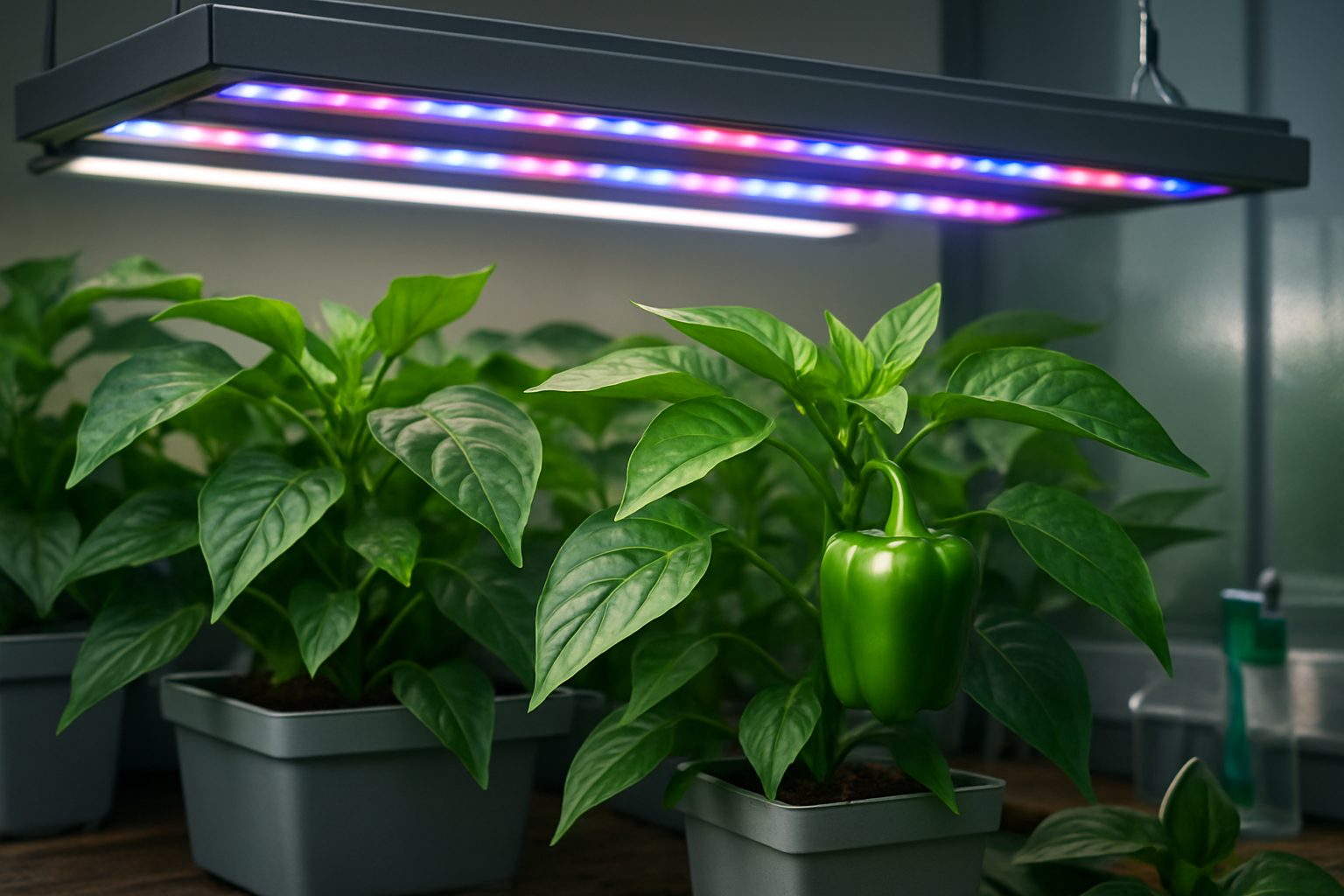
Understanding the Light Needs of Pepper Plants
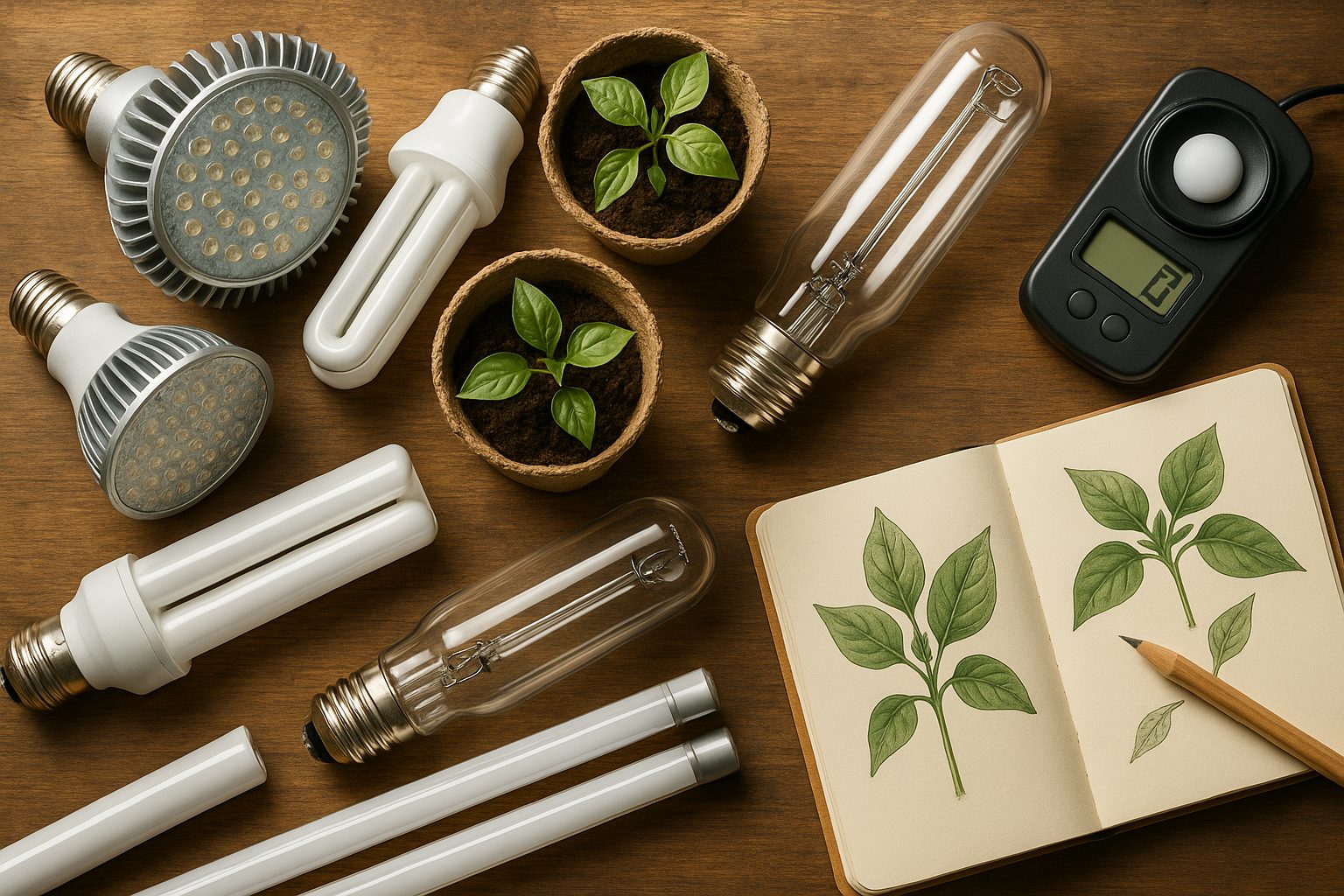
When it comes to thriving indoor crops, grow lights for bell peppers play a crucial role in mimicking the sun’s essential functions, ensuring your plants get the energy they need at each stage of growth. Light isn’t just about visibility for these vibrant veggies; it drives photosynthesis, the life-giving process where leaves convert light into energy, fueling strong roots, lush foliage, and ultimately, plump, flavorful peppers. Without enough quality light, bell pepper plants become leggy and underdeveloped, often setting few, if any, fruits.
One of the secrets to a successful pepper harvest is understanding how light needs shift as your plants mature. In the seedling stage, your bell peppers require moderate but continuous light—usually 14-16 hours a day—to encourage compact, healthy growth. At this stage, intensity should be gentle to avoid scorching delicate leaves but strong enough to prevent stretching.
As peppers transition to the vegetative stage, they crave more robust light, pushing them to develop thick stems and abundant foliage. Flowering and fruiting demand even higher light intensity and perfect timing; with 16-18 hours of bright, full-spectrum light each day, your plants will efficiently flower and set fruit. If you’re aiming for large, sweet peppers, paying attention to both hours of exposure (duration) and the brightness (intensity) is non-negotiable.
But let’s not overlook light quality, often referred to as “spectrum.” Blue light helps peppers grow sturdy in the early stages, while red wavelengths are essential for successful flowering and big yields. The best grow lights for indoor bell peppers are full-spectrum options that balance these wavelengths for all-around health.
Remember—every variable matters:
- Intensity promotes strong stems and leaves,
- Duration ensures plants have enough time for daily growth cycles, and
- Spectrum fine-tunes development at every stage.
By tailoring these three factors with a reliable grow light setup, you’ll replicate the ideal outdoor conditions peppers crave—right on your countertop or in your home garden.
Comparing Indoor vs. Outdoor Light Conditions for Peppers
Growing peppers indoors or outdoors presents unique lighting challenges that can significantly impact your yield and plant health. Outdoors, peppers thrive under natural sunlight, which delivers a full spectrum of light that’s hard to replicate. Sunlight shifts throughout the day, offering varying intensities that help drive healthy growth, blooms, and fruiting.
However, outdoor gardeners must contend with unpredictable weather—cloudy days, excessive heat, or unexpected storms can reduce light exposure or cause damage. In contrast, growing peppers indoors lets you control the environment, but artificial grow lights may fall short if they’re not bright enough or don’t cover the full light spectrum peppers need.
Placement is key in both scenarios:
- Outdoors, plant your peppers where they’ll receive at least 6-8 hours of direct sunlight, ideally south-facing for the most consistent exposure.
- If possible, use reflective mulch to bounce extra sunlight toward lower leaves.
- For indoor setups, invest in quality LED or fluorescent grow lights designed for vegetables, positioning them just a few inches above the plants and keeping them on for 12-16 hours daily to mimic the long sunlit days peppers love.
- Rotate plants regularly to ensure even light distribution, and periodically clean light bulbs or fixtures so dust doesn’t block out precious rays.
Whether you’re at the mercy of the weather or optimizing an indoor setup, staying mindful of your plants’ changing light needs—from seedlings to fruiting—is crucial for juicy, flavorful harvests.
Choosing and Using Grow Lights for Indoor Peppers
When growing peppers indoors, choosing the right grow light can make all the difference in your harvest. The most popular options are LED, fluorescent, T5, and full-spectrum lights.
LED grow lights are a favorite among pepper growers because they offer high intensity, low energy consumption, and full-spectrum output that closely mimics natural sunlight. Look for models with red and blue diodes for robust fruiting and healthy leaves.
Fluorescent lights, particularly T5 fixtures, are more affordable upfront and suitable for small to medium setups, but they use more electricity and may lack the intensity needed for larger, fruiting pepper plants.
Full-spectrum lights, whether LED or fluorescent, ensure your peppers get the wavelengths they need for every stage of growth.
When setting up, keep the lights about 12-18 inches above the leafy canopy—too close and you risk burning the plants; too far and they’ll stretch and weaken. Aim for 14-16 hours of light daily to mimic long summer days, using an automatic timer for consistency.
Avoid common mistakes such as overcrowding plants under a single lamp or forgetting to adjust the lamp’s height as your peppers grow.
When shopping, prioritize lights with sturdy cooling systems, adjustable hanging kits, and solid warranties. Experienced growers often recommend brands like Spider Farmer, VIPARSPECTRA, and Hydrofarm for their reliability and even light distribution.
Remember, while budget options exist, investing in energy-efficient, durable lights will save money (and peppers) in the long run.
Adapting to Seasonal Changes and Light Variations
Seasonal changes significantly affect how much natural light your pepper plants receive, and both daylight duration and intensity are important for healthy growth. During the winter months, shorter days and cloudy weather can lead to stunted plants, fewer blossoms, and poor fruit development—especially if you’re growing peppers indoors or in regions far from the equator.
To counter these effects, consider using grow lights to provide your peppers with the consistent, bright light they need. LED or fluorescent lamps placed a few inches above the plants can mimic natural sunlight, ideally running for about 12 to 16 hours per day. If you’re not keen on high-tech solutions, opt for pepper varieties known to adapt well to lower light, like ‘Jalapeño’ or ‘Hungarian Wax,’ which are more forgiving during darker seasons.
As spring approaches and the days get longer, transitioning your pepper plants from a cozy indoor spot to an outdoor garden should be done gradually—a process called hardening off. Start by placing your plants outside in a shaded area for just an hour or two each day, then slowly increase their time outdoors by an hour each day, gradually exposing them to direct sunlight over one to two weeks. This helps the plants acclimate without being shocked by sudden changes in temperature, wind, or ultraviolet light.
For gardeners who move peppers between greenhouses and open beds, keeping an eye on sudden weather changes—like late frosts or heatwaves—is crucial, as peppers are sensitive to abrupt swings. By anticipating seasonal light variations and carefully managing transitions between growing environments, you’ll help your pepper plants not just survive, but thrive year-round.
Optimizing Light for Maximum Flowering and Fruiting
Getting the right light conditions is crucial for encouraging your plants to produce abundant flowers and fruit. For most flowering and fruiting plants, you’ll want to provide bright, direct light—ideally 12 to 16 hours daily during the active growing season.
Using full-spectrum grow lights that mimic natural sunlight can make a huge difference indoors. Look for bulbs in the 4000K-6500K color temperature range, as they balance the blue light that encourages leafy growth with the red tones plants need for flowering and fruit initiation.
Too little light often leads to leggy, stretched stems and fewer blooms, while intense direct light for too long can cause scorched foliage or premature flower drop.
If you notice weak, spindly plants or flowers falling off before fruit sets, start by repositioning your grow lights closer (but not so close that they burn the leaves), and use a timer to ensure consistent light exposure.
Rotate your plants weekly so all sides receive even lighting, and consider supplemental side lighting in larger grow setups.
In greenhouses or outdoor gardens, monitor for shading from neighboring plants or structures, and prune as needed to allow sunlight to reach all areas.
Always match light intensity and spectrum to your plant’s specific growth stage—using cooler light for foliage and shifting to warmer, red-heavy light as you transition into the flowering and fruiting phase. This tailored approach helps ensure sturdy, productive plants and maximizes your harvest.
Monitoring Pepper Plant Growth and Response to Light
Keeping a close eye on your pepper plants’ growth and appearance is key to ensuring they get just the right amount of light. When peppers aren’t receiving enough light, you’ll likely notice leggy stems stretching toward the nearest source of brightness. Their leaves might appear pale green, yellow, or even start to drop off. In contrast, too much light—especially from intense artificial sources—can cause the leaves to look scorched, develop brown spots or crispy edges, and sometimes curl downward as a sign of stress.
Regularly checking the plant’s overall shape is helpful: a healthy, well-lit pepper plant tends to be compact with vibrant green leaves spaced evenly along sturdy stems. To take the guesswork out of light assessments, consider investing in a simple light meter, which quickly tells you how much light (in foot-candles or lux) your plants are actually receiving—this is especially handy when growing indoors or in variable sunlight conditions.
If you don’t have a light meter, try tracking sunlight patterns by observing how many direct sunlight hours your plants get each day, or by noting how the sun shifts through your space as the seasons change. As your peppers grow—from seedlings to budding, to fruit-bearing—it’s important to routinely reassess their light needs. Young plants may require softer light, while those beginning to flower or fruit generally thrive with more intense illumination.
Set a regular schedule to check on your plants, perhaps every few days, looking for the telltale signs of light stress. Adjust their position, the height of your grow lights, or the duration of exposure as needed. This hands-on, observant approach helps your pepper plants stay healthy and productive, allowing you to catch and correct lighting issues before they limit growth or reduce your harvest.
Troubleshooting Common Light-Related Issues in Pepper Plants
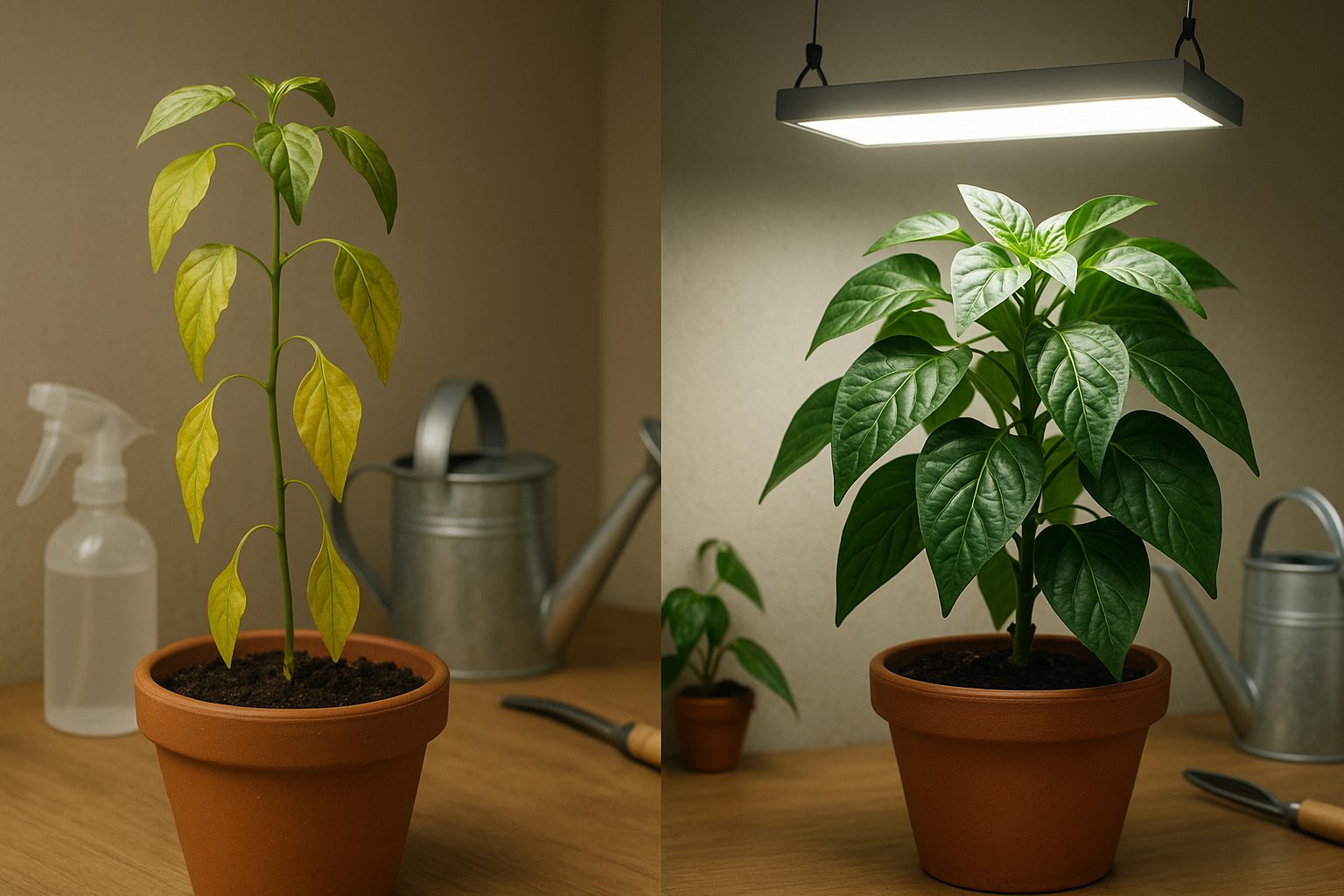
Pepper plants are sensitive to their light environment. Issues like stunted growth, yellowing leaves, fruit failure, and leaf scorch often point to light-related problems.
If your peppers are growing slowly or staying small, they may not be getting enough light. Similarly, yellowing leaves that start at the bottom of the plant can be a sign of insufficient sunlight but may also result from overwatering or nitrogen deficiency. Be sure to check soil moisture and feeding routines as well.
Fruit failure—when flowers drop off without producing peppers—is commonly caused by inadequate light, but temperature extremes can also be a trigger. Leaf scorch, where leaves turn crispy or develop brown edges, often signals too much intense direct sun, especially in hot climates. This differs from the more uniform yellowing seen with nutrient issues.
Fixing Light Problems Indoors
Make sure your pepper plants get at least 12–16 hours of bright, indirect light per day. Use full-spectrum grow lights placed 6–12 inches above the plants, and rotate pots weekly to avoid uneven growth.
Fixing Light Problems Outdoors
Peppers need 6–8 hours of direct sunlight. If growth seems slow or leggy, relocate them to the sunniest spot available. If you’re dealing with leaf scorch—especially in regions with very hot afternoons—consider using shade cloth during peak heat hours to protect your plants.
Observing Symptoms in Context
- Underwatered peppers will wilt at all times of day.
- Pepper plants lacking light will remain upright but pale.
- Nutrient issues often come with uneven leaf color or visible veins.
By comparing these signs and gradually adjusting light exposure, you can help your pepper plants thrive, whether they’re in your garden or on a sunny windowsill.