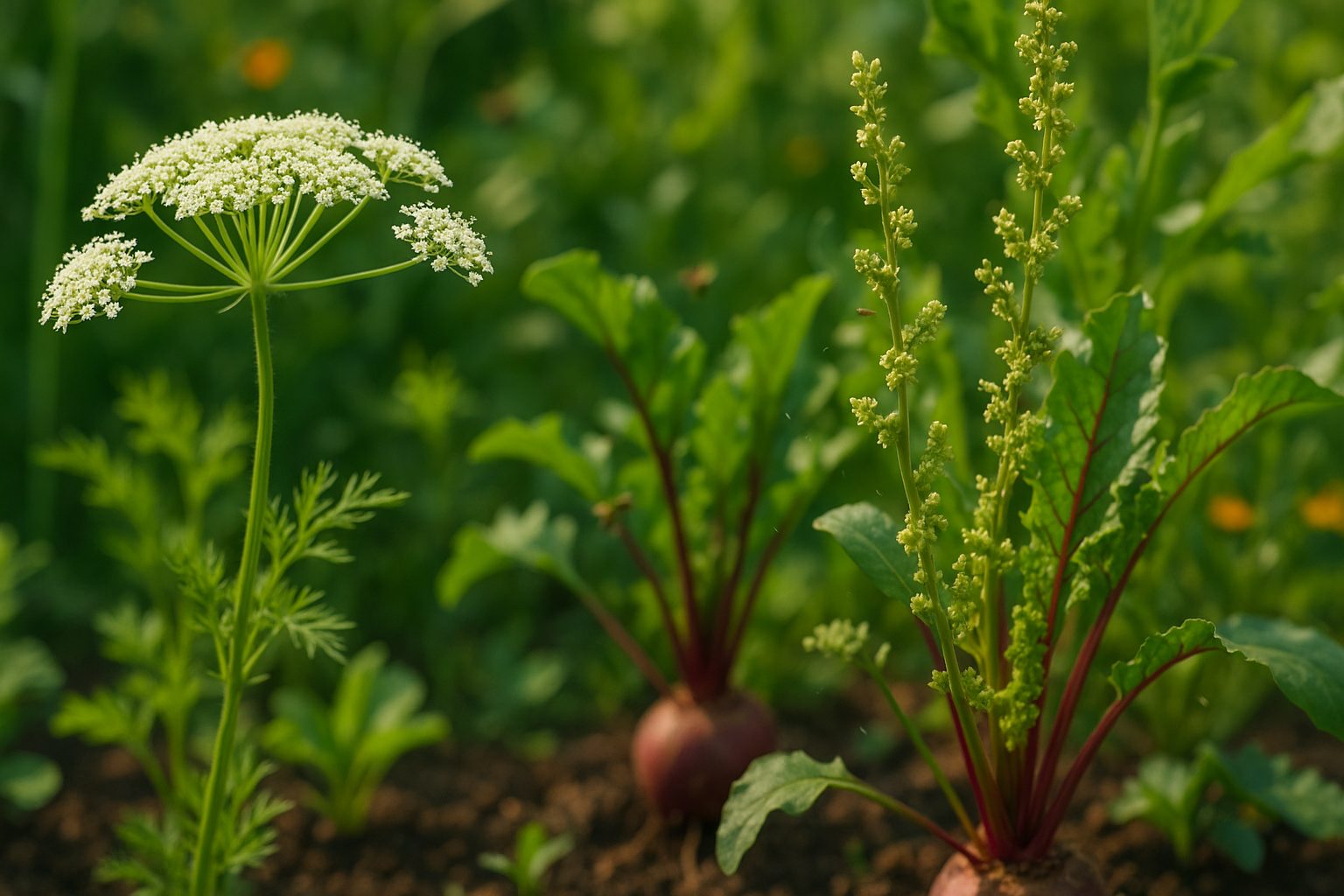
Understanding Carrot and Beet Flower Structures
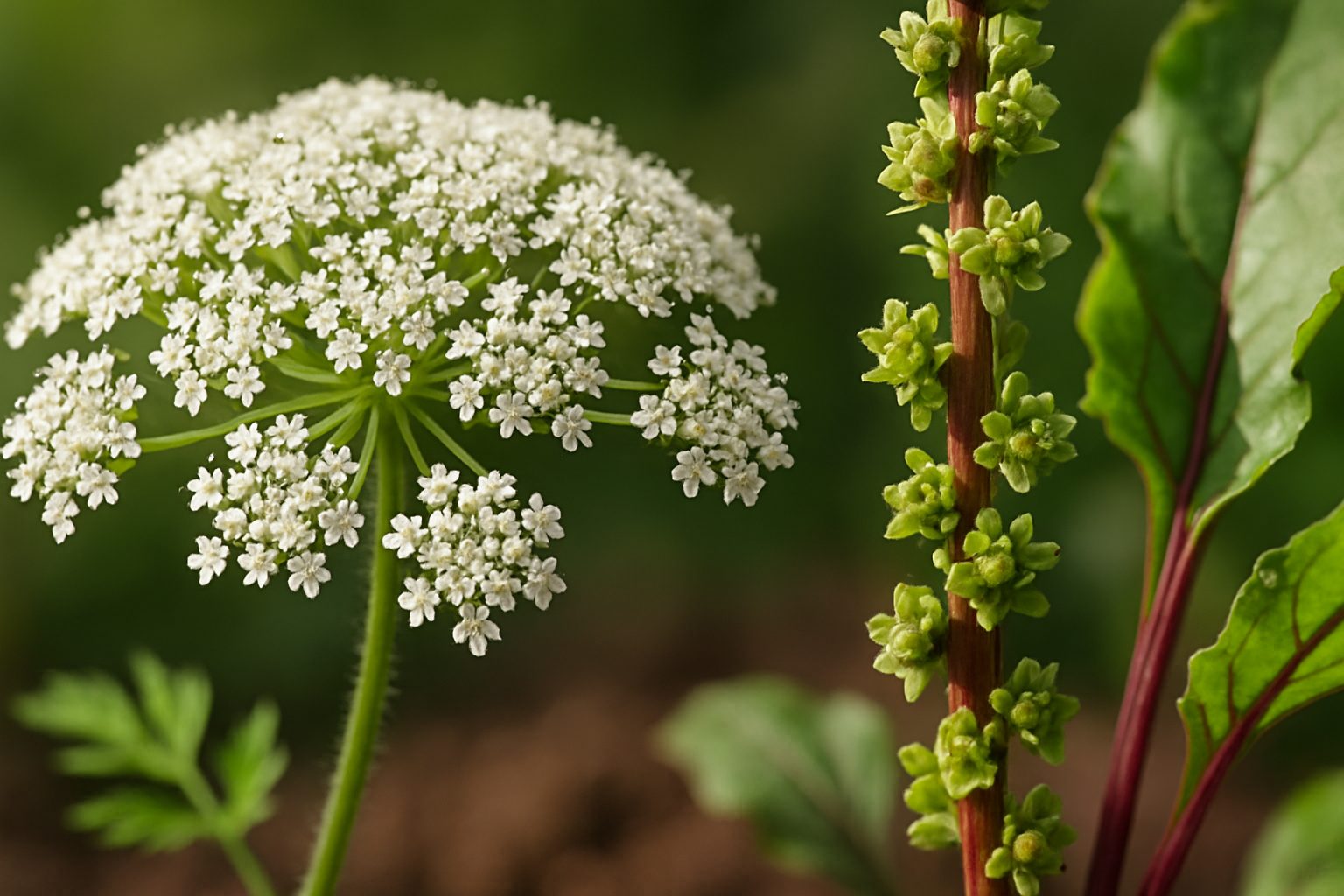
Beets and pollinators share a fascinating relationship, and understanding how that works starts with looking at the flower structures of beets compared to other common crops like carrots. While beets produce small, greenish, less noticeable flowers clustered together, carrots display umbels—a large, umbrella-shaped array of tiny white florets that are highly attractive to a range of insects.
These structural differences play a major role in how each plant interacts with pollinators. beet flowers typically rely on wind for pollination, and their subtle appearance does little to entice bees or butterflies. By contrast, carrot umbels serve as a visual beacon, drawing in bees, flies, and other beneficial insects, effectively increasing pollination rates through animal visitors rather than just wind.
The practical takeaway for gardeners and farmers is that understanding flower anatomy is crucial for successful pollination strategies. For example, if you’re aiming for seed production in carrots, encouraging pollinators to visit by planting nectar-rich companion flowers can substantially boost your yields. Meanwhile, since beets are more wind-pollinated, focusing on optimal plant spacing and airflow is key.
Recognizing these differences helps you manage plantings for more reliable harvests and promotes healthier gardens overall. Not only does flower structure dictate how plants reproduce, but it also determines which types of pollinators, if any, they’ll attract, shaping your approach to garden biodiversity and crop planning.
How Pollination Works in Carrots and Beets
Pollination is the process by which pollen is transferred from the male part of a flower (anther) to the female part (stigma). This is a crucial step in seed production for many crops, including carrots and beets.
Carrots, which are biennial and produce seeds in their second year, rely mainly on insects like bees, hoverflies, and wasps for pollination. These insects are attracted to the carrot’s small white flowers and carry pollen from one plant to another, enabling cross-pollination. Cross-pollination is important for carrots because it promotes genetic diversity and produces higher quality seeds.
In contrast, beets can self-pollinate since their flowers contain both male and female parts. However, wind usually plays a bigger role—rustling beet flowers releases light pollen grains that easily travel to neighboring plants. Some insects, like bees and beetles, also visit beet flowers, but wind pollination remains the primary method.
Tips for Gardeners and Seed Savers
- Plant carrots at least 800 feet away from wild relatives like Queen Anne’s lace to avoid unwanted cross-breeding.
- Group beets together to boost wind-driven pollination.
- Encourage pollinator activity by planting nearby flowers that attract bees, which can improve seed yield and quality—especially in isolated gardens.
Natural vs. Hand Pollination
Natural pollination happens when insects like bees, butterflies, birds, or even the wind move pollen from one flower to another—an essential process for many fruits, vegetables, and flowers. In most gardens and farms, natural pollination is ideal because it requires no extra effort or cost, often resulting in more extensive and diverse plant breeding.
However, there are times when natural pollinators are scarce, such as in greenhouses, urban areas, or during periods of declining bee populations. In these cases, hand pollination can ensure successful fruit or seed production.
Hand pollination means using tools like a brush, cotton swab, or even fingers to transfer pollen directly, offering precise control—especially useful for saving rare plants or when breeding for specific traits.
Pros and Cons
- Natural pollination: Less labor-intensive, cost-effective, and promotes genetic diversity, but it’s unpredictable and relies heavily on environmental conditions.
- Hand pollination: Provides reliable results and enables selective breeding, but it’s labor-intensive, time-consuming, and impractical for large-scale crops.
For home gardeners with just a few plants or specialized breeders aiming for specific plant characteristics, hand pollination is worth the effort. For larger fields or casual gardeners, natural pollination is preferred—if conditions allow.
Step-by-Step Hand Pollination Techniques
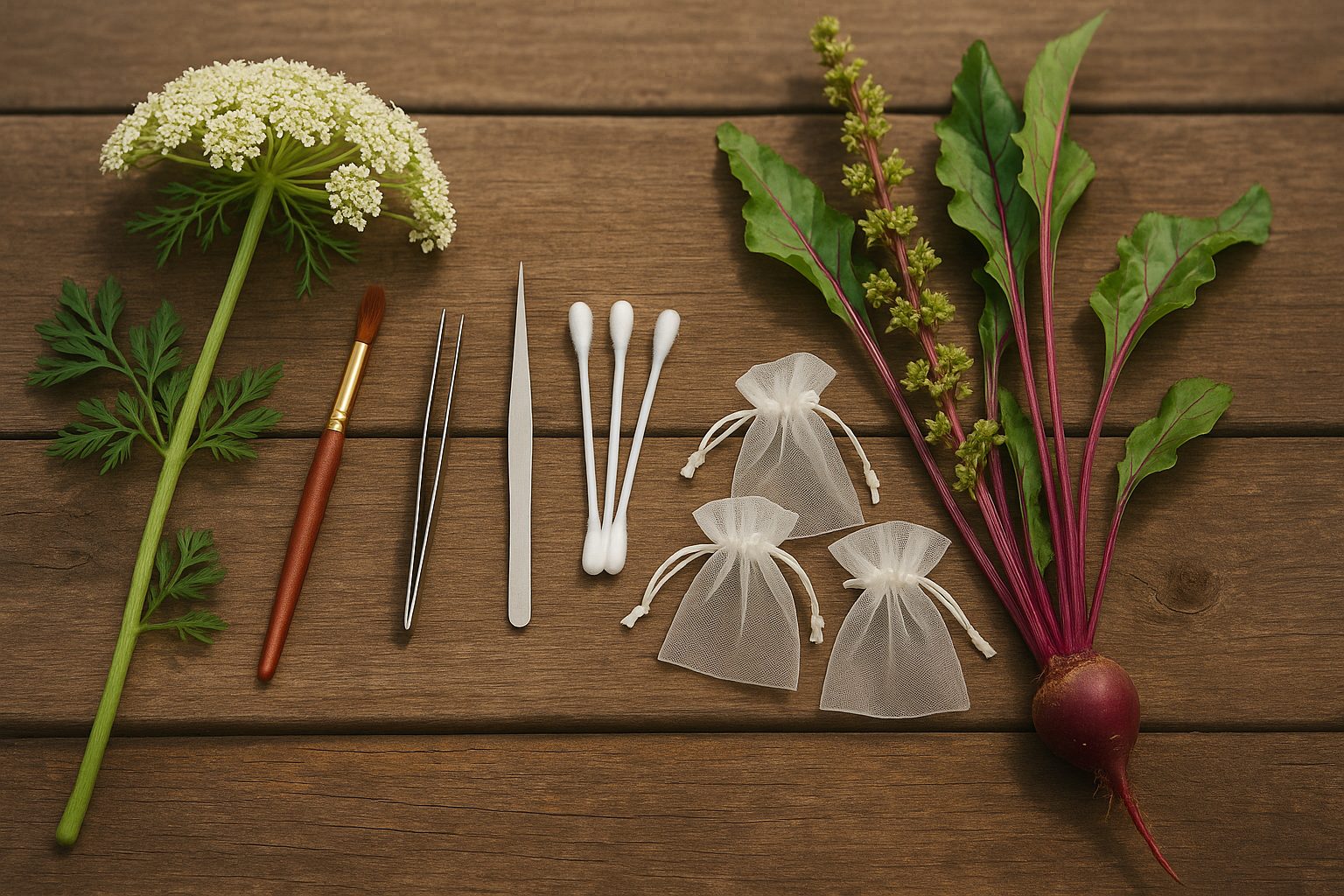
To start hand pollination, you’ll need a fine artist’s brush or soft paintbrush, a pair of tweezers, clean cotton swabs, and small paper bags or mesh cages to cover pollinated blooms.
For carrot flowers, first identify the delicate umbels that form clusters of tiny blossoms. In the morning, when flowers are freshly opened and pollen is most available, gently use your brush to collect pollen from the male (outer) florets, then dab it onto the female (inner) florets on a different plant to encourage cross-pollination—this helps avoid inbreeding. Use tweezers or your brush to transfer pollen carefully. Once pollinated, cover the umbel with a mesh bag to prevent unwanted insects from interfering.
With beets, the process differs slightly because beet flowers are very small and grow closely along a stalk. Gently use a cotton swab or brush to transfer pollen between the tiny flowers from one plant to another, again favoring cross-pollination. Since beet flowers are less visually distinct, take care to gently tap or stroke several flowers on each stalk to spread pollen, and cover as needed afterward.
For best results, pollinate in the early morning when flowers are receptive, and always label your pollinated stems to track success. Thoroughly identifying flower types (male vs. female, or flower position) is key—research your crop’s flower structure if unsure.
Finally, avoid pollinating during wet weather, since moisture can make pollen clump and reduce effectiveness. Periodically clean your tools between plants to prevent the spread of disease.
Supporting Natural Pollinators in Your Garden
Attracting and protecting natural pollinators in your garden is easier than you might think, and the benefits go far beyond beautiful blooms—these helpful insects are essential for fruit and vegetable harvests, too.
Start by planting a variety of nectar-rich flowers that bloom from early spring through late fall, ensuring pollinators always have food. Native wildflowers and herbs like lavender, coneflower, and thyme are especially attractive to bees and butterflies.
Try companion planting—growing different species together, such as tomatoes with basil or marigolds. This not only boosts flavor and fights pests but also attracts more pollinators.
Create simple habitats by leaving small patches of bare ground for ground-nesting bees, building a bee hotel with drilled wooden blocks, or letting a pile of twigs and leaves sit undisturbed.
Always choose organic methods and avoid chemical pesticides, as even small doses can harm bees and other beneficial insects. If pests become a problem, use physical barriers or introduce friendly predators like ladybugs instead of spraying.
By combining these approaches, you’ll transform your garden into a thriving, pollinator-friendly sanctuary that produces healthier plants and supports a stronger local ecosystem.
Common Pollination Challenges and Solutions
Gardeners often face frustrating pollination issues like poor seed set, flower drop, and environmental barriers that can impact crop yields and flower health.
Poor seed set, where few or no seeds develop, might stem from a lack of pollinators such as bees or butterflies, or from planting varieties that require cross-pollination but don’t have compatible partners nearby. To tackle this, attract more pollinators by growing native flowering plants, avoid pesticides during bloom, and, for self-pollinating crops like tomatoes, gently shake the blossoms to help release pollen.
Flower drop—when blossoms fall off without forming fruit—can be caused by temperature extremes, insufficient watering, or nutrient imbalances. Monitoring weather forecasts, maintaining consistent soil moisture, and feeding your plants with a balanced fertilizer can reduce this issue.
Environmental barriers, including wind, rain, or physical obstructions like nets, may stop pollinators from reaching flowers. Position plants in sheltered spots, use row covers sparingly, and hand-pollinate with a small brush when conditions are challenging.
Simple steps like grouping similar plants, keeping the garden tidy, and providing bee-friendly habitats all help ensure that pollination is successful, leading to a healthier and more productive garden.